Stainless steel vs non-stick cookware (and granite): which suits your kitchen?
By FITTO Trade Desk · Last updated 29 October 2026
In the stainless steel vs non-stick cookware choice, stainless steel wins for heavy, high-heat restaurant use and long life, while non-stick and granite-coated pans win for eggs, fish and low-oil cooking. Granite is a speckled non-stick coating, not solid stone. Most busy kitchens run both: stainless for volume, coated pans for delicate food.
Key takeaways
- Stainless steel tolerates metal tools, scrubbing and dishwashers, so it lasts longest on a busy line.
- Non-stick and granite pans release food with little oil but need medium heat and soft utensils.
- Granite cookware is usually aluminium with a stone-look non-stick coating, with the same care rules.
- Coated pans and sets catch shoppers' eyes on a resale shelf; stainless suits buyers who want long-life pots.
The wrong pan material shows up fast. Eggs weld to a stainless pan in a café rush, or a coated pan loses its surface in weeks under metal tongs. Both mean wasted food and an early replacement order. This comparison settles which material belongs where.
At FITTO Kitchen, a wholesale cookware supplier in the UAE, we stock all three types for restaurants, cafés and kitchenware shops. This guide is for chefs, café owners, resellers choosing what to stock and serious home cooks comparing a non-stick pan (مقلاة غير لاصقة) with bare steel.
What is the real difference between stainless steel, non-stick and granite cookware?
The difference is the cooking surface. Stainless steel is bare metal that browns food well but sticks without enough heat and oil. Non-stick and granite pans have a coating that releases food easily but wears with high heat and metal tools.
- Stainless steel is an iron alloy with chromium (and often nickel) that resists rust. Pans usually have a thicker or clad base to spread heat, because steel alone conducts heat slowly.
- Non-stick usually means an aluminium pan with a smooth, slick coating, often black or coloured inside.
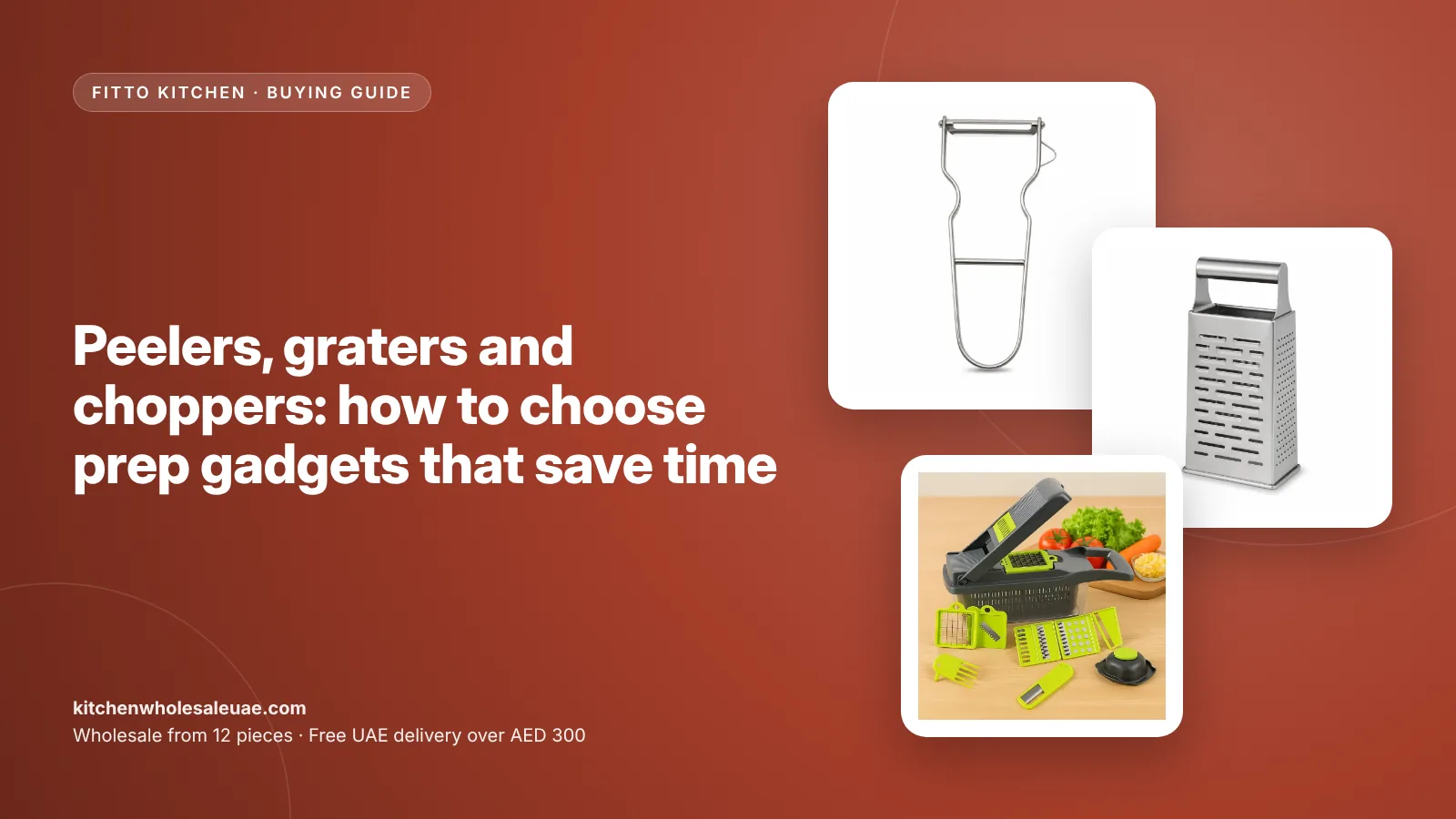
- Granite (sometimes sold as stone or marble coating) is a non-stick coating with a speckled, stone-like finish, usually on an aluminium body.
So the real comparison is bare steel against coated aluminium. Granite and plain non-stick differ mainly in look and coating quality, not in how you cook with them.
Stainless steel vs non-stick cookware: how do they compare side by side?
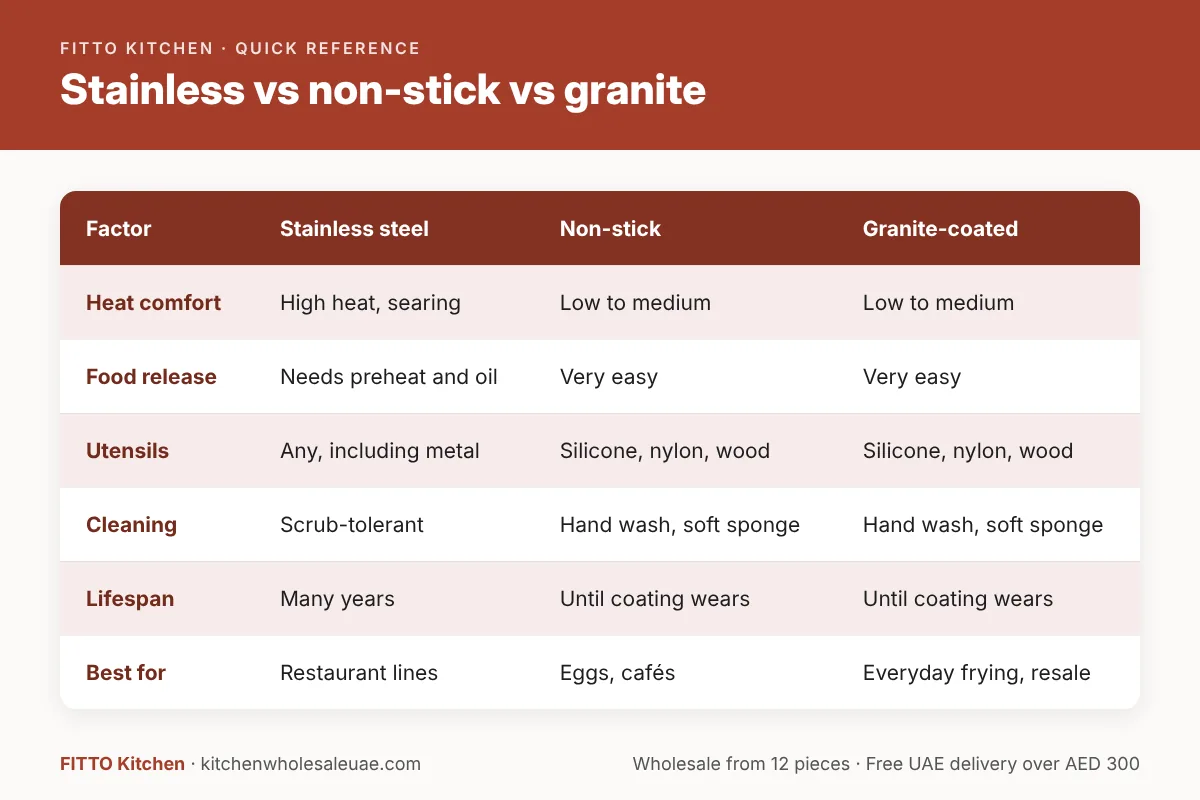
Stainless steel scores higher on durability, heat tolerance and cleaning toughness. Non-stick and granite score higher on easy release, low-oil cooking and lightness. Neither wins every row, so match the pan to the job.
| Factor | Stainless steel | Non-stick (coated aluminium) | Granite-coated aluminium |
|---|---|---|---|
| Heat-up speed | Slower; depends on base | Fast | Fast |
| Heat comfort | High heat, searing | Low to medium | Low to medium |
| Food release | Sticks unless preheated and oiled | Very easy | Very easy |
| Oil needed | More | Little | Little |
| Utensils | Any, including metal | Silicone, nylon, wood | Silicone, nylon, wood |
| Cleaning | Scrub-tolerant, often dishwasher-safe | Hand wash, soft sponge | Hand wash, soft sponge |
| Weight | Medium to heavy | Light | Light to medium |
| Price tier | Mid to high | Budget to mid | Budget to mid |
| Typical lifespan | Many years with basic care | Until the coating wears | Until the coating wears |
| Induction | Usually yes (magnet test) | Only with an induction disc | Only with an induction disc |
Coated pans have a working life tied to their surface. In a busy kitchen, treat them as replaceable tools and budget for them.
Which material is best for a busy restaurant line?
Stainless steel is best for a busy restaurant line because it handles high heat, metal tools and hard scrubbing every service. Keep a small set of coated pans for eggs, crêpes and delicate fish, and label them so they never meet metal tongs.
On a 40 to 80 cover line, sauté pans, saucepans and stock pots in stainless steel take the daily punishment. Coated pans live at the breakfast or fish station. Our restaurant cookware guide covers gauge, handles and core sizes.
Which material suits a café or cloud kitchen?
Non-stick or granite-coated pans usually suit a café or cloud kitchen best. Menus lean on eggs, pancakes, halloumi and toasties, staff turnover is high, and light pans with easy release cut waste and cleaning time.
The trade-off is lifespan. Give staff soft turners, keep the flame at medium and replace coated pans on a set cycle rather than waiting for complaints. See non-stick frying pans: sizes and coatings that last.
What works best on a kitchenware shop shelf?
Coated pans and cookware sets are the easier sell on a UAE resale shelf, because shoppers see the easy-release surface and colour straight away. Stainless steel sells to buyers who want pots that last for years and are happy to pay a little more.
- Granite-coated pans in brown or purple finishes catch the eye and work well as gifts.
- Non-stick sets with glass lids give a clear value story at one price point.
- Stainless steel casserole sets suit family buyers and new-home gifting.
A small range of all three lets customers trade up or down. Our cookware wholesale buyer's guide covers sizes and range planning in more depth.
Which is better for a family kitchen at home?
For most UAE family kitchens, the best mix is one or two coated frying pans plus stainless steel pots. Coated pans handle eggs and quick frying with little oil; stainless pots handle rice, stews and curries for years.
Check the hob first. Induction is common in newer apartments, so test pans with a fridge magnet or choose pans labelled for induction.
How do you make each material last longer?
Each material lasts longer when it is used within its heat range and cleaned the right way. Most early failures come from overheating coated pans and scraping stainless steel instead of soaking it.
- Preheat stainless steel for a minute or two before adding oil, then add food.
- Soak burnt stainless steel in warm soapy water before scrubbing.
- Keep coated pans on low to medium heat and never heat them empty on high.
- Use silicone, nylon or wooden utensils on non-stick and granite.
- Cool every pan before washing; cold water on a hot pan causes warping.
Soft tools from our wholesale kitchen utensils and gadgets protect coatings and make a natural add-on sale for shops.
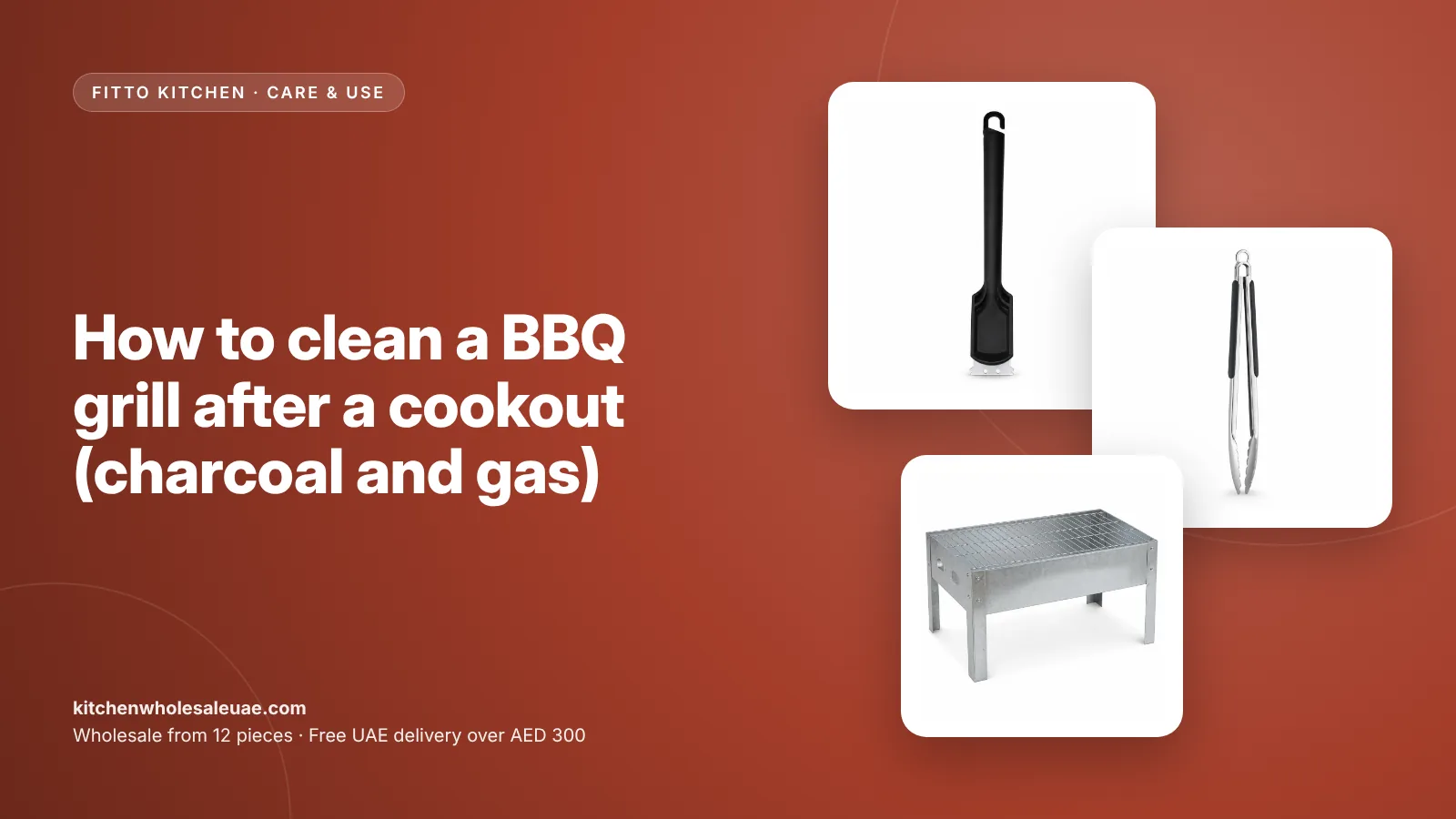
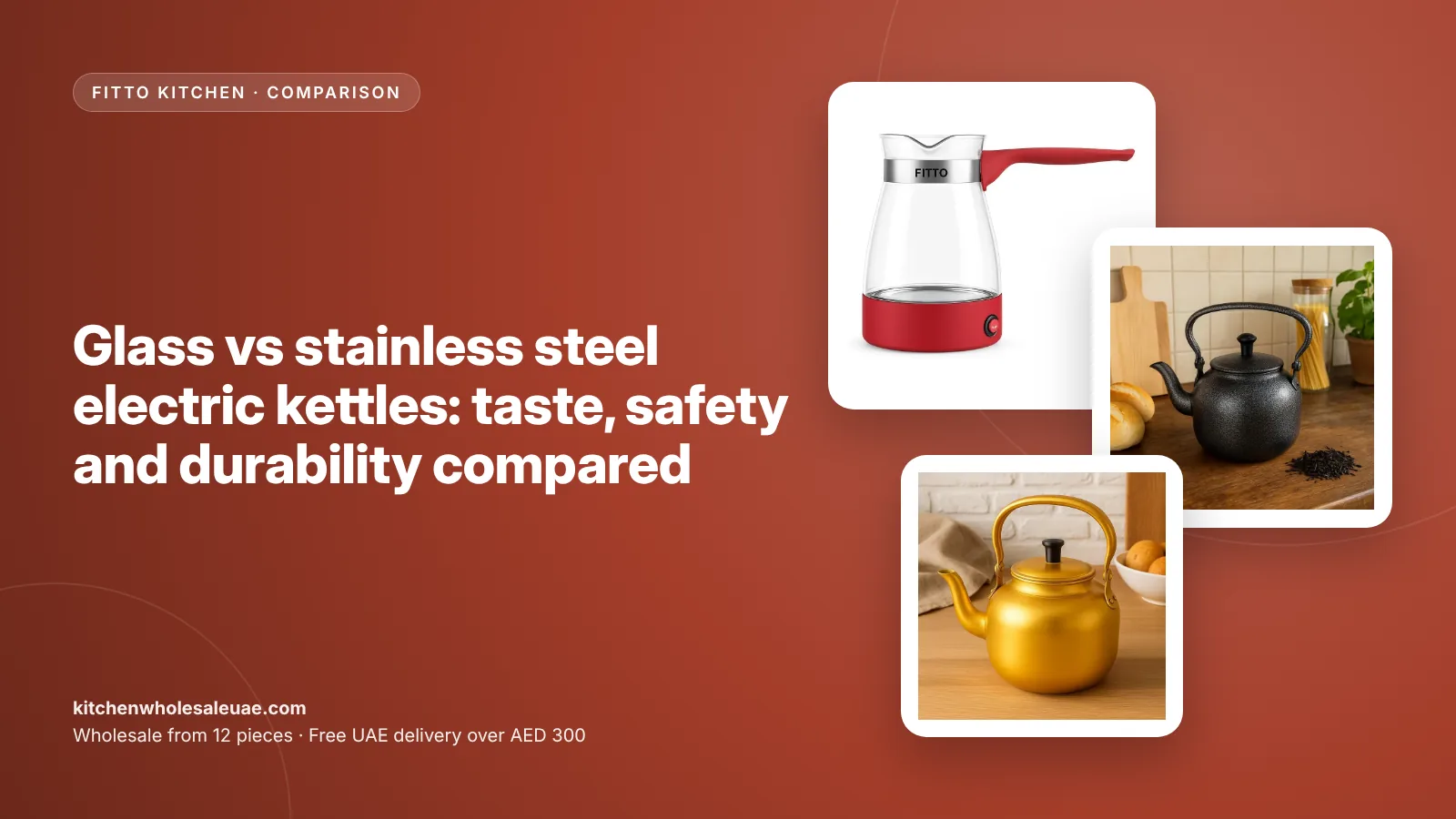
FITTO Trade Pick: One pan of each, tested before you commit Compare the stainless steel frying pan with handle, the 28 cm black non-stick frying pan and the 24 cm purple granite-coated fry pan in your own kitchen. Order each as a sample at the single-piece price, and the cost is credited on a bulk order of AED 2,000+ within 30 days.
The bottom line
Stainless steel is the workhorse for high heat and long life. Non-stick and granite are the specialists for easy release and low oil. Most kitchens and shops do best with both, each in the job it does well.
See the full range of wholesale cookware and pans, request a quote for a mixed carton, or order samples to test first. Wholesale prices start from 12 pieces, and the trade team can help you choose sizes on WhatsApp at +971 55 672 6947. FITTO Kitchen: fit for the way you cook.
FAQ
Is granite cookware better than non-stick?+
Granite cookware is a type of non-stick, so it is not better or worse by default. It is usually an aluminium pan with a speckled stone-look coating. Release, heat limits and care are similar to other coated pans. Judge quality by the coating, base and handle, as with any non-stick pan.
Can I use metal utensils on non-stick or granite pans?+
Avoid metal utensils on non-stick and granite pans. Metal turners and tongs scratch the coating, and scratched coatings lose their release and wear out faster. Use silicone, nylon or wooden tools instead. If you run a restaurant, label coated pans and keep soft tools at that station so they are never mixed up.
Why does food stick to my stainless steel pan?+
Food usually sticks to stainless steel because the pan was not hot enough when oil and food went in. Preheat the pan on medium for a minute or two, add oil, wait until it shimmers, then add food. Let proteins sear before moving them; they release naturally once a crust forms.
Which cookware is best for induction hobs?+
Magnetic stainless steel works on most induction hobs. Non-stick and granite pans only work if they have a steel induction disc in the base. Test any pan with a fridge magnet: if it sticks firmly to the underside, it will heat on induction. Shops should label induction-ready pans clearly to avoid wrong-hob returns.
Should a restaurant buy stainless steel or non-stick cookware?+
A restaurant should buy mostly stainless steel for sauté pans, saucepans and stock pots, because it handles high heat and constant use. Add a few non-stick or granite pans for eggs and delicate fish, and replace them on a cycle. That split keeps quality high and replacement costs predictable.