Non-stick frying pans: how to choose sizes and coatings that last
By FITTO Trade Desk · Last updated 29 October 2026
When buying non-stick frying pans wholesale, choose a thick, flat aluminium base, a coating suited to the user and riveted or solidly fixed handles. Stock 24 and 28 cm as core sizes, with 20 and 30–32 cm as extras. Confirm induction compatibility on the product page, and pair every pan with care advice to cut coating complaints.
Key takeaways
- A thicker base, such as forged aluminium, resists warping and protects the coating from hot spots.
- Classic non-stick gives the easiest release; granite-effect and ceramic coatings trade some release for a different look or higher heat tolerance.
- Most coating failures come from overheating, metal tools and dishwashers, not from the pan itself.
- Only sell a pan as induction-ready when the product page says so or a magnet sticks firmly to the base.
A non-stick frying pan (مقلاة غير لاصقة) that starts sticking after a month is a familiar complaint at any cookware counter. For a café or cloud kitchen, it means burnt eggs and wasted food. For a retailer, it means returns, refunds and an unhappy customer who will not come back.
At FITTO Kitchen, a wholesale cookware supplier in the UAE, we supply non-stick and granite-coated pans to kitchenware shops, cafés, cloud kitchens and families. This guide is for buyers who want pans that last and customers who come back for more.
Which non-stick coating should you choose?
Choose classic non-stick for the easiest release, granite-effect coatings for a durable look that sells well, and ceramic for users who cook on higher heat. All three need gentle tools and medium heat to last.
| Coating | Release | Heat tolerance | Typical wear point | Best for |
|---|---|---|---|---|
| Classic non-stick | Excellent | Low to medium | Scratches from metal tools | Eggs, crêpes, fish |
| Granite-effect coating | Very good | Medium | Overheating, abrasive scourers | Everyday family cooking, gifting |
| Ceramic coating | Good when new | Medium to high | Release fades with use | Cooks who like more heat |
"Granite" describes the speckled, stone-effect finish, not a slab of real stone. Underneath, it is a coating like any other, so the same care rules apply. Read the label for the coating type and any maximum temperature, and pass that information on to buyers.
Non-stick and granite are only half the story. For how they compare with stainless steel, see our guide to stainless steel vs non-stick cookware (and granite).
Why does base thickness matter?
A thicker base spreads heat evenly, resists warping and keeps the coating away from scorching hot spots. Thin pans warp on strong gas burners, and the hottest spot wears through first.
Most non-stick pans are aluminium, because it heats quickly and evenly. How the body is made affects thickness:
- Pressed (stamped) aluminium is lighter and cheaper, fine for home cooks on medium heat.
- Forged aluminium is pressed into shape under high force, usually giving a thicker base and walls. The forged aluminium frying pan, 24 x 4.7 cm is an example.
- Cast aluminium is often the heaviest, with good heat retention.
To check a sample, place it on a flat counter and press the rim. It should not rock. Compare two pans of the same size; the heavier one usually has the thicker base.
Which frying pan sizes should you stock?
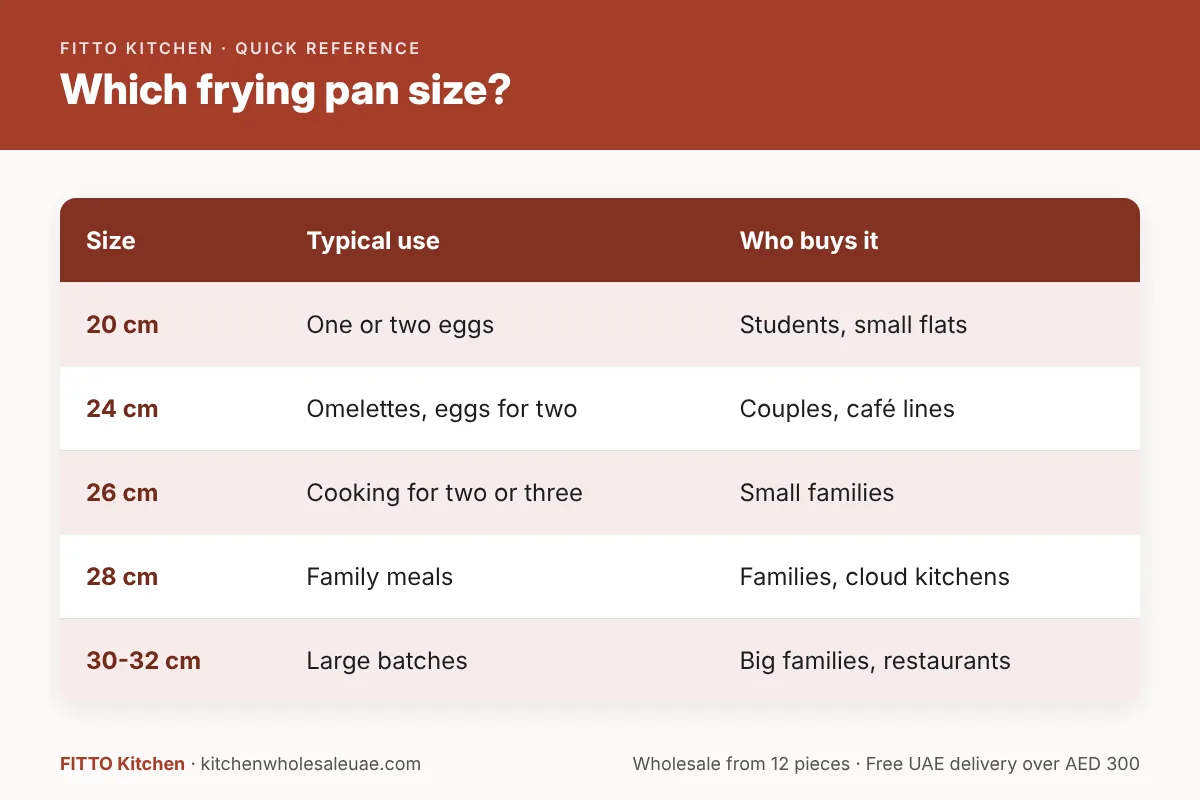
Stock 24 and 28 cm as core sizes, then add 20 cm for single portions and 30–32 cm for families and restaurants. Size is measured across the top rim, so the flat cooking area is smaller.
| Size | Typical use | Who buys it |
|---|---|---|
| 20 cm | One or two eggs, a single portion | Students, small flats, cafés |
| 24 cm | Omelettes, eggs for two, side dishes | Couples, café breakfast lines |
| 26 cm | Everyday cooking for two or three | Small families |
| 28 cm | Family meals, chicken, vegetables | Families, cloud kitchens |
| 30–32 cm | Large batches, restaurant service | Big families, restaurants |
A 3-piece set covers the small, medium and large range in one box, which suits gift buyers and first homes. Cafés and cloud kitchens usually buy single sizes in bulk, matched to their burners and menu. For the wider range of pots and pans, see our cookware wholesale buyer's guide.
How do you check handles and induction compatibility?
Choose handles that are riveted or solidly fixed, stay cool enough to hold, and give a firm grip; sell a pan as induction-ready only when that is confirmed.
Check the handle on a sample by holding the pan full of water at arm's length. It should not flex or twist. Most plastic and bakelite handles are not oven-safe, so tell buyers to keep those pans on the hob.
Induction hobs need a magnetic base. Plain aluminium does not work on induction unless the pan has a steel plate fixed into its base. Two ways to check:
- Read the product page for "induction" or an induction symbol.
- Do the magnet test on a sample: a fridge magnet should stick firmly to the base.
If your customers live in apartments with induction hobs, label induction-ready stock clearly on the shelf. That single step heads off the "it does not work on my hob" return.
How do you cut coating complaints and returns?
Most coating failures are caused by use, not manufacture, so the fix is clear care advice at the point of sale. A short care card with every pan pays for itself.
| Cause | What happens | What to tell buyers |
|---|---|---|
| Empty pan on high heat | Coating degrades and can give off fumes | Heat on low to medium, always with oil or food |
| Metal utensils | Scratches through the coating | Use silicone, wood or nylon tools |
| Dishwasher | Harsh detergent dulls the coating over time | Hand wash with a soft sponge |
| Thermal shock | Cold water on a hot pan warps the base | Let the pan cool before washing |
| Cooking sprays | Sticky film builds up on the surface | Use a little liquid oil instead |
Pair pans with soft tools on the shelf. A 12-piece silicone cooking utensils set next to the frying pans is both a care tip and an easy add-on sale. For restaurants, our guide to restaurant cookware for busy UAE kitchens explains when stainless steel is the better choice on the main line.
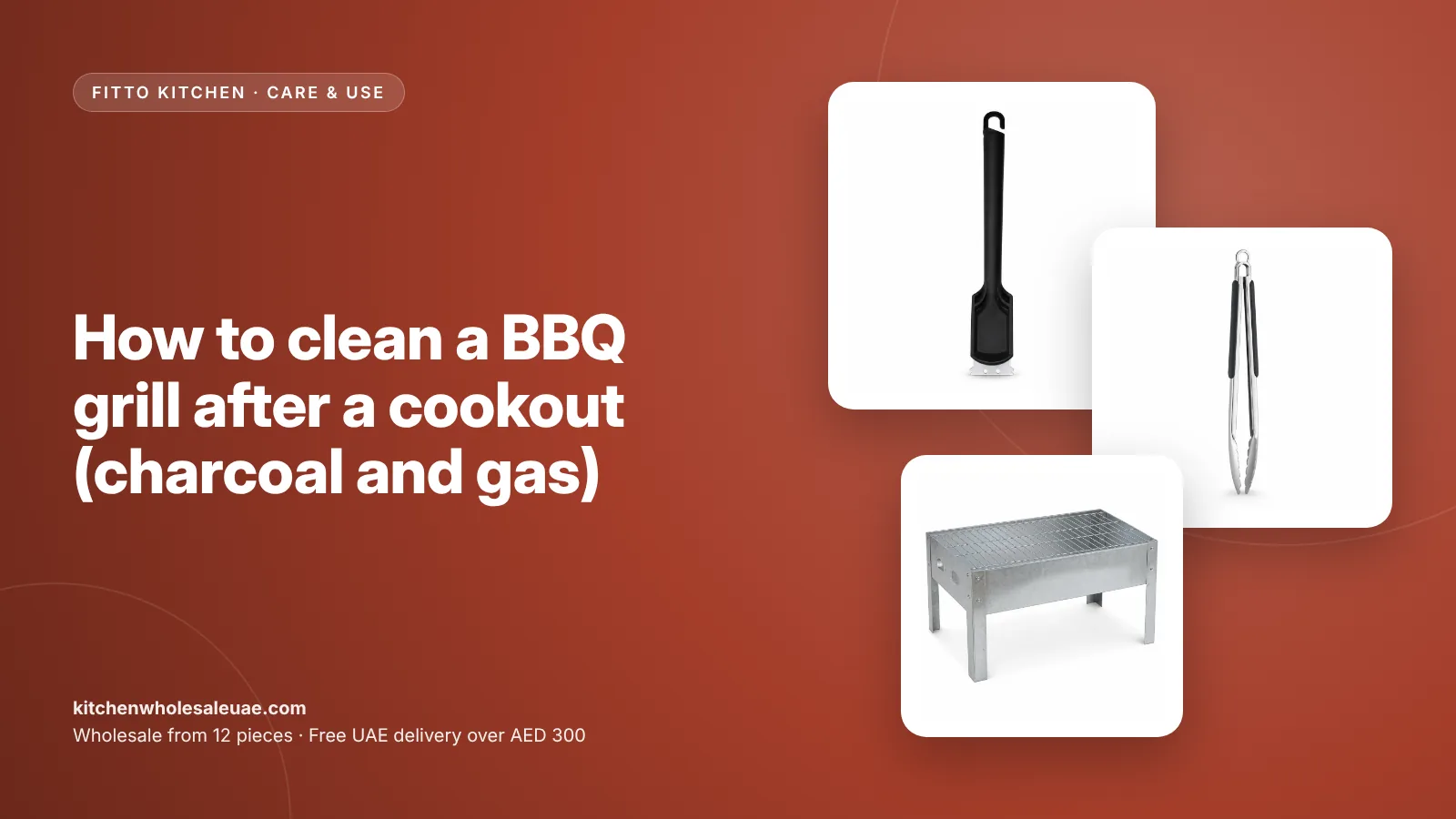
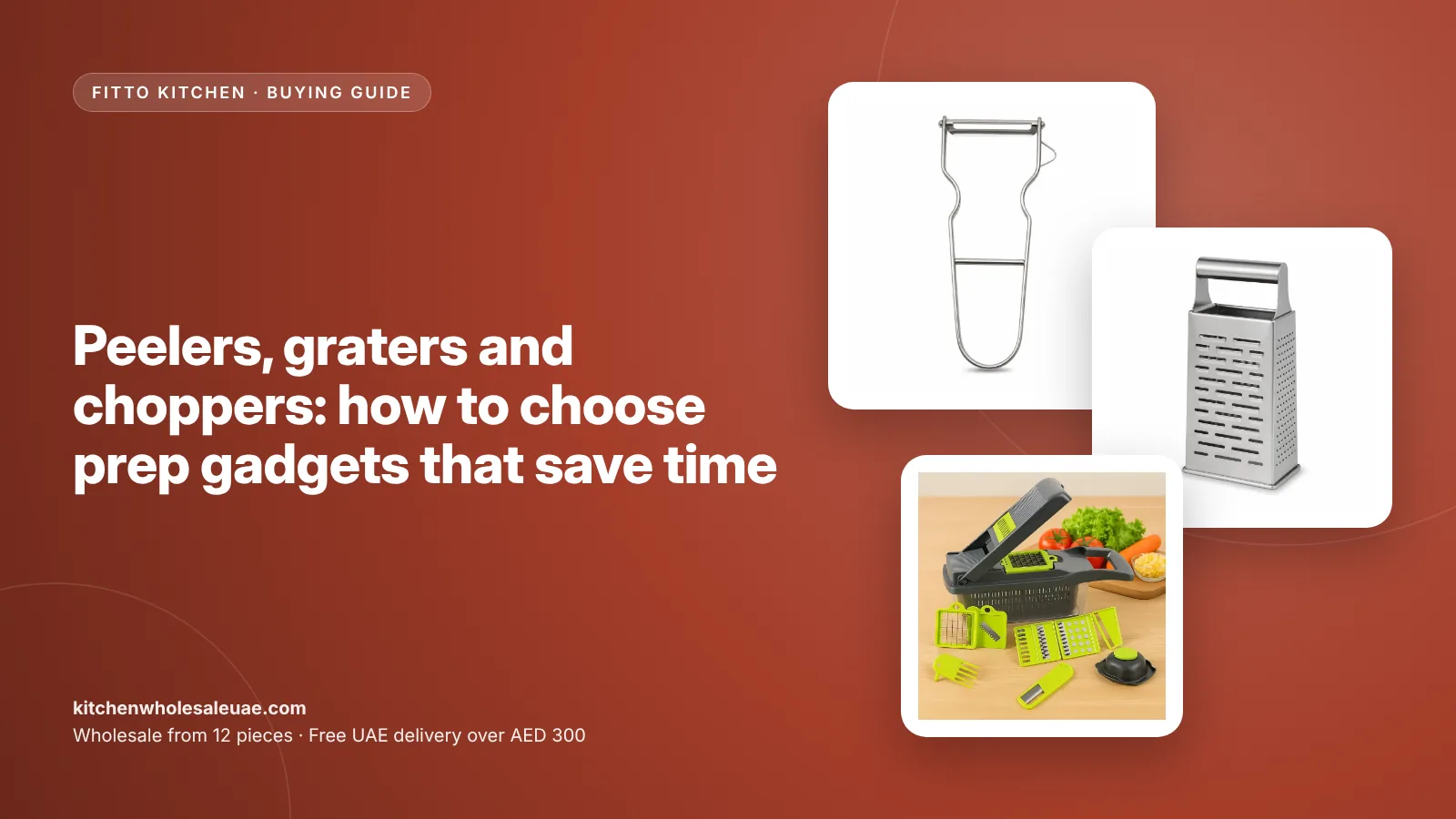
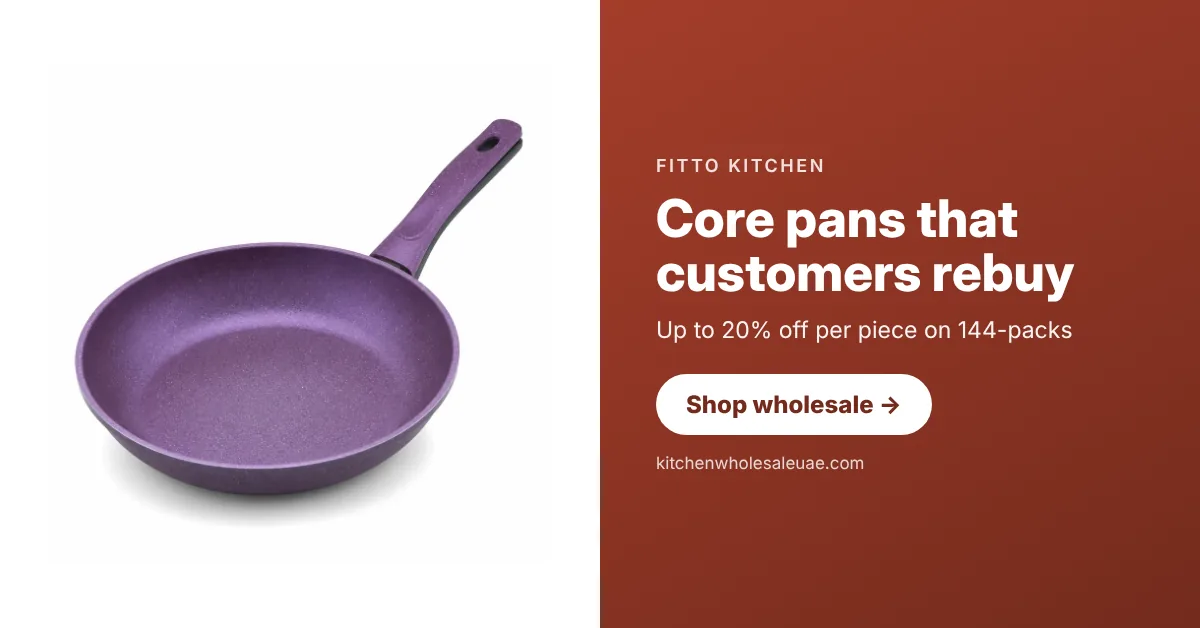
FITTO Trade Pick: Core pans that keep customers coming back Build the shelf around the 24 cm red non-stick frying pan and the 28 cm granite-coated fry pan. Wholesale packs run from 12 to 144 pieces, and the per-piece price drops by up to 20% on the largest pack.
The bottom line
The pans that last have thick bases, honest coating labels and buyers who know how to look after them. Stock 24 and 28 cm in depth, label induction-ready pans clearly, and sell every pan with soft tools and a care card.
Browse our wholesale cookware and pans, request a quote for mixed sizes, or order a sample to test the coating on your own hob. Delivery is free over AED 300, and the Trade Desk is on WhatsApp at +971 55 672 6947. FITTO Kitchen: fit for the way you cook.
FAQ
How long does a non-stick frying pan last?+
It depends far more on use than on price. A pan used on medium heat with soft tools and hand washing can stay non-stick for years, while one heated empty on high flame or scrubbed with steel wool can fail within months. Replace it once food sticks badly or the coating is scratched through.
Is granite-coated cookware the same as non-stick?+
Granite-coated pans are a type of non-stick pan. "Granite" describes the speckled, stone-effect finish rather than real stone. The coating releases food like other non-stick surfaces and needs the same care: medium heat, soft utensils, hand washing and no cooking sprays. Check the product label for the coating type.
Can you use a non-stick pan on high heat?+
It is better not to. Most non-stick coatings perform and last best on low to medium heat, and an empty pan on high heat degrades the coating fastest. For searing steaks or very hot stir-fries, use a stainless steel, cast iron or carbon steel pan and keep the non-stick pan for eggs, fish and everyday cooking.
Do non-stick pans work on induction hobs?+
Only if the base is magnetic. Plain aluminium pans do not work on induction unless they have a steel plate fitted in the base. Check the product page for an induction mention, or hold a magnet to the base of a sample: if it sticks firmly, the pan should work on induction.
Which size non-stick frying pan is most useful?+
For most homes, a 28 cm pan is the most versatile, because it handles family meals and still fits a standard burner. A 24 cm pan is the best second pan for eggs and small portions. Cafés often prefer 24 cm for single breakfasts, while restaurants use 28–32 cm for larger batches.