Restaurant cookware: how to choose pots and pans that survive a busy UAE kitchen
By FITTO Trade Desk · Last updated 29 October 2026
Restaurant cookware in the UAE has to survive high gas flames, constant scrubbing and hundreds of covers a week. Choose stainless steel pots and sauté pans with thick bases, riveted handles and tight lids. Keep a few coated pans for eggs and fish, and standardise on a few sizes so reorders stay simple.
Key takeaways
- Thick, flat bases stop warping and scorching on high-output gas burners.
- Riveted handles outlast screwed ones under daily heavy loads.
- A 40 to 80 cover kitchen runs on a short list: stock pots, 16 to 20 cm saucepans, 28 to 32 cm pans and a wok if the menu needs it.
- Standardise sizes across stations so lids, storage and reorders match.
A warped pan on a busy line costs you twice: once in scorched food and once in the replacement. In UAE kitchens running long lunch and dinner services, thin cookware fails fast. Here is how to choose pots and pans that last, and how many you actually need.
At FITTO Kitchen, a wholesale cookware supplier in the UAE, we deliver pots and pans to restaurants, hotels and catering kitchens across the seven emirates. This guide is for restaurant owners, head chefs and HORECA purchasing managers.
What makes restaurant cookware different from home cookware?
Restaurant cookware is built for heat, load and repetition. It needs a thicker base, stronger handle fixings, lids that survive drops and a surface that tolerates metal tools and hard scrubbing several times a day.
A home pan sees one or two meals a day on a medium flame. A restaurant pan runs through lunch and dinner on a high-output burner. Restaurant cookware (أواني المطاعم) is therefore judged on durability first.
Which material should a restaurant choose for each job?
Use stainless steel for most pots and sauté pans, aluminium for big-batch pots where weight matters, coated pans for eggs and delicate fish, and carbon steel for woks.
| Job | Best material | Why |
|---|---|---|
| Stocks, soups, rice | Stainless steel or heavy aluminium | Stainless lasts; aluminium is lighter when full |
| Sauces and reductions | Stainless steel saucepan | Non-reactive with tomato, vinegar and citrus |
| Searing and sauté | Stainless steel or carbon steel | High heat, metal tools, hard scrubbing |
| Eggs, crêpes, delicate fish | Non-stick or granite-coated | Easy release with little oil |
| Stir-fry | Carbon steel wok | Heats fast and takes very high heat |
For a full side-by-side, read our comparison of stainless steel vs non-stick cookware (and granite).
How thick should restaurant pots and pans be?
Restaurant pans should have a base that is clearly thicker and heavier than the walls. A thick base spreads the heat of a strong gas burner, prevents a scorched centre and resists warping after hundreds of heat cycles.
Gauge describes metal thickness: the lower the gauge number, the thicker the metal. Product titles rarely state gauge, so check it in person:
- Place the pan on a flat counter and press the rim; it should not rock.
- Compare the weight of two pans of the same diameter; the heavier base usually performs better.
- Look for a clad, encapsulated or copper-bottomed base on stainless steel, which spreads heat more evenly.
What should you check on handles, rivets and lids?
Choose riveted handles, lids that sit flat and handles long enough to keep hands away from the flame. These parts usually fail before the pan body does.
- Rivets hold under heavy loads; screwed handles loosen and need regular tightening.
- Long handles on saucepans and frying pans keep hands clear of high flames.
- Side handles on stock pots and casseroles matter when a full pot weighs several kilos.
- Lids should match the pot diameter exactly, so one lid size can serve several pots.
Which pots and pans does a 40 to 80 cover kitchen need?
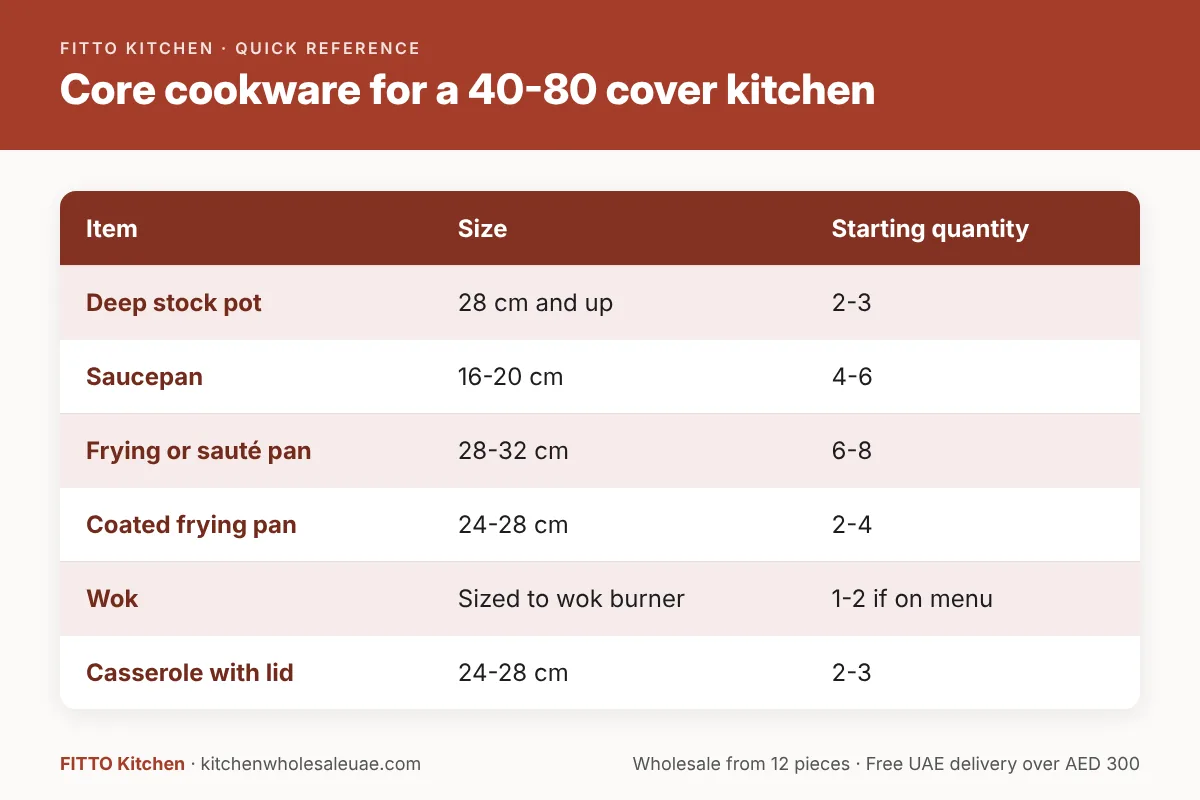
A 40 to 80 cover kitchen typically runs on stock pots, saucepans, sauté or frying pans and, if the menu needs it, a wok. The quantities below are a rule-of-thumb starting point; adjust them for your menu and the number of cooks per service.
| Item | Size | Suggested starting quantity | Notes |
|---|---|---|---|
| Deep stock pot | 28 cm and up | 2 to 3 | Stocks, soups, rice and biryani batches |
| Saucepan | 16 to 20 cm | 4 to 6 | Sauces, garnishes, reheating |
| Frying or sauté pan | 28 to 32 cm | 6 to 8 | Main line workhorse |
| Coated frying pan | 24 to 28 cm | 2 to 4 | Eggs and fish only |
| Wok | Large, sized to your wok burner | 1 to 2 | Only if the menu includes stir-fry |
| Casserole with lid | 24 to 28 cm | 2 to 3 | Braises, curries, holding |
Our restaurant kitchen equipment checklist covers prep, storage and coffee stations too.
How do you stop restaurant pans warping and wearing out early?
Most early failures come from thermal shock, empty-pan overheating and the wrong tools. Simple kitchen rules prevent most of them.
- Cool hot pans before they go into the sink; cold water on hot metal causes warping.
- Avoid heating coated pans empty on a high flame.
- Match pan size to burner size so flames do not lick up the sides and scorch the handles.
- Keep silicone or nylon tools at the egg station so coated pans never meet metal.
- Soak burnt stainless steel instead of attacking it with steel wool.
Put soft tools from our wholesale kitchen utensils and gadgets range on the same order, so the rules are easy to follow.
How should a restaurant plan and replace cookware?
Standardise sizes, test before you scale and replace on a schedule rather than in a crisis. A planned cycle keeps quality steady and spreads the cost.
- Standardise on two or three diameters per item. Matching sizes mean lids, racks and storage all fit.
- Test a new pan on your own burners for a week of real service before ordering for every station.
- Review cookware monthly. Retire coated pans when food starts to stick, and pans of any material once they rock on a flat surface.
- Plan ahead of busy periods such as Ramadan iftar service, the winter tourist season and big events, when kitchens cannot afford to run short.
For a wider view of materials, sizes and stock planning, see our cookware wholesale buyer's guide.
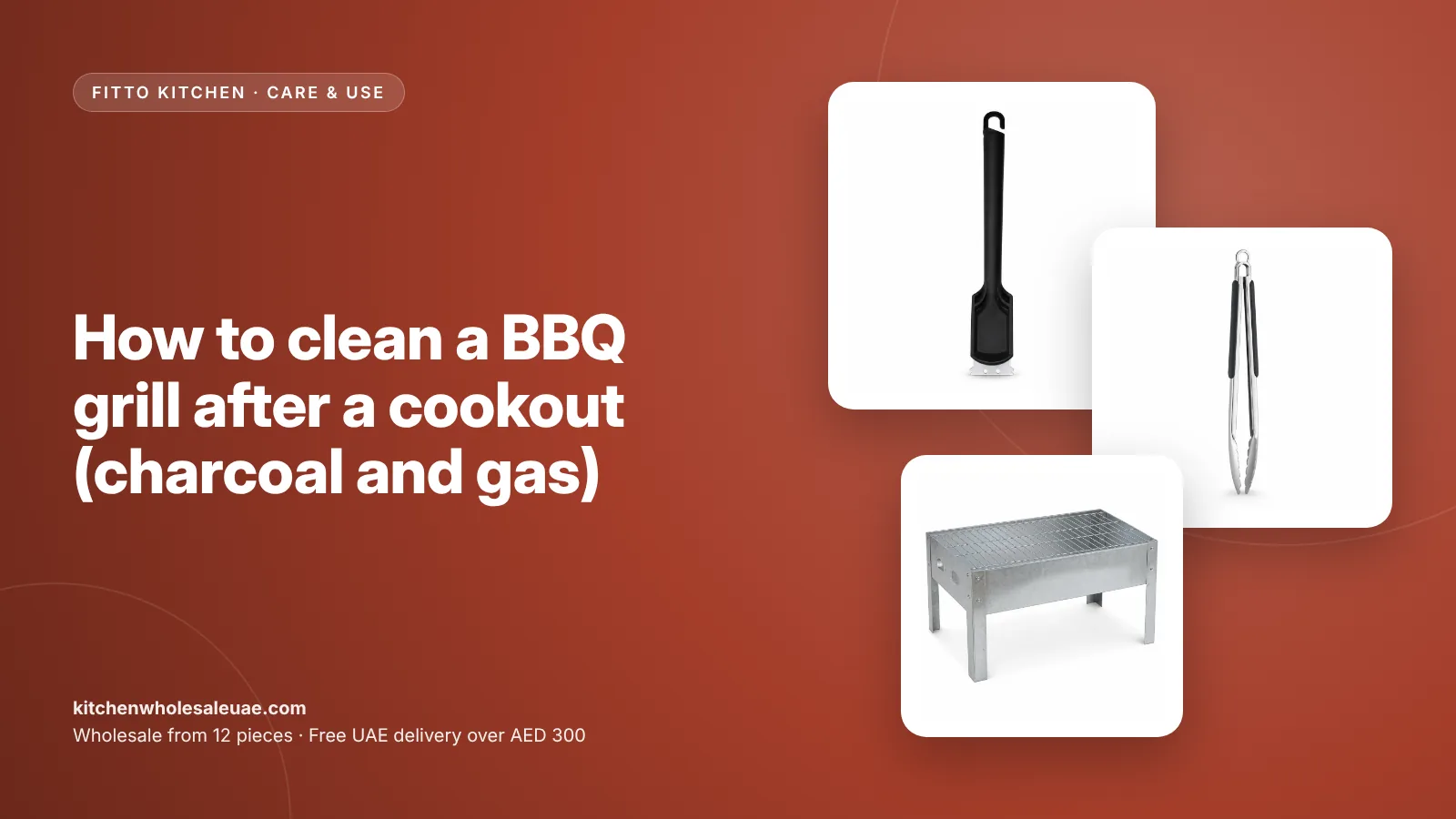
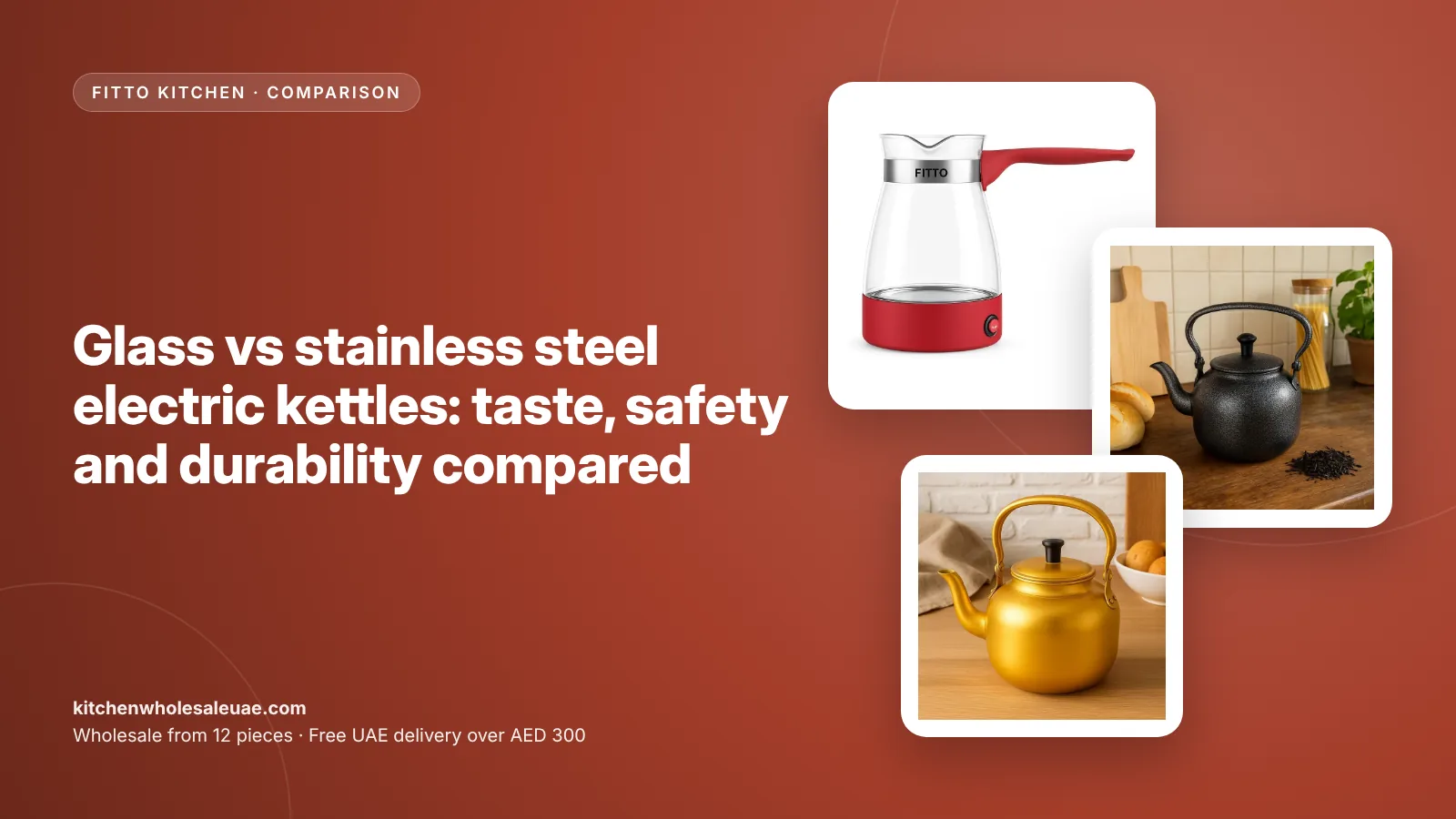
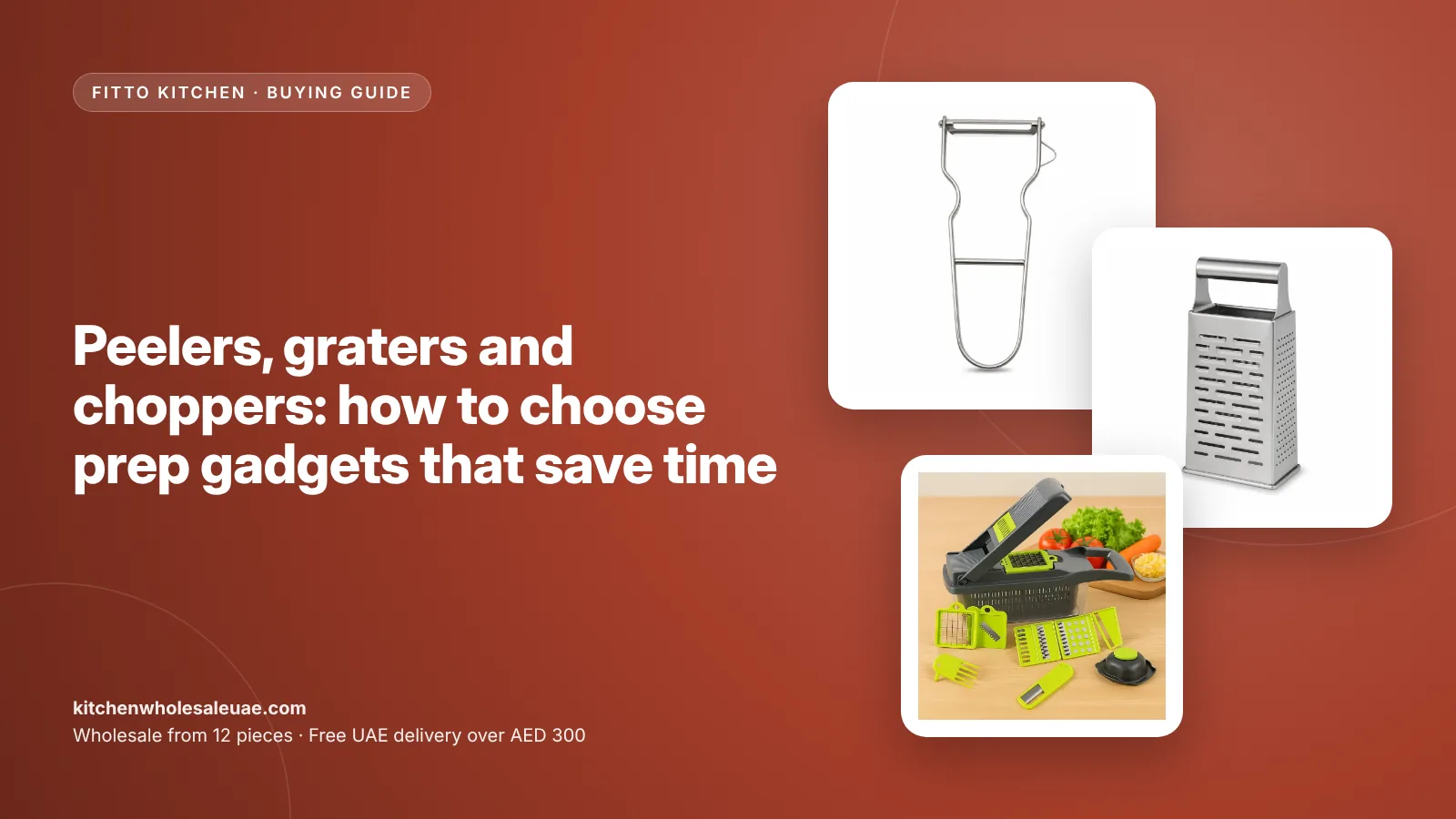
FITTO Trade Pick: Line-ready cookware for long services Start with the stainless steel deep cooking pot, 28 x 28 x 22 cm, the deep stainless steel saucepan, 20 cm, the 32 cm red non-stick frying pan and the carbon steel wok, 50 x 36 x 12 cm. Try one on your own burners first: order a sample, and we credit it on a bulk order of AED 2,000+ within 30 days.
The bottom line
Restaurant cookware is judged at the end of a long service, not on the shelf. Thick bases, riveted handles and a short list of standard sizes give you fewer replacements and more predictable costs.
Browse our wholesale cookware and pans, request a quote for a full kitchen order or mixed cartons, or order a sample to test first. Wholesale prices start from 12 pieces, delivery is free over AED 300, and the trade team is on WhatsApp at +971 55 672 6947. FITTO Kitchen: fit for the way you cook.
FAQ
What is the best cookware material for a restaurant?+
Stainless steel is the best all-round material for restaurant pots, saucepans and sauté pans because it handles high heat, metal tools and constant scrubbing. Add carbon steel woks for stir-fry and a few non-stick or granite-coated pans for eggs and fish. Aluminium works well for large pots where a lighter weight helps staff.
How many frying pans does a restaurant need?+
As a rule of thumb, a 40 to 80 cover restaurant starts with 6 to 8 frying or sauté pans of 28 to 32 cm on the main line, plus 2 to 4 coated pans for eggs and fish. Adjust for your menu and the number of cooks per service, and keep spares for pans waiting in the dish pit.
Why do restaurant pans warp?+
Restaurant pans usually warp from thermal shock, such as a hot pan plunged into cold water, or from long empty heating on a high flame. Thin bases warp fastest. Choose pans with thick, flat bases, cool them before washing and match pan size to burner size to keep them flat.
Is aluminium or stainless steel better for large stock pots?+
Both work. Stainless steel lasts longer, resists dents and does not react with acidic sauces, so it suits kitchens that want one pot for years. Aluminium heats faster and weighs less when full, which helps staff lifting big batches of rice or soup.
How often should a restaurant replace non-stick pans?+
There is no fixed interval, because it depends on heat, tools and washing. Replace a coated pan once eggs or fish start to stick, the surface is scratched through, or the coating flakes. Using soft tools, medium heat and hand washing keeps coated pans in service much longer.