Cookware wholesale in the UAE: how to choose pots and pans that last, sell and cook evenly
By FITTO Trade Desk · Last updated 29 October 2026
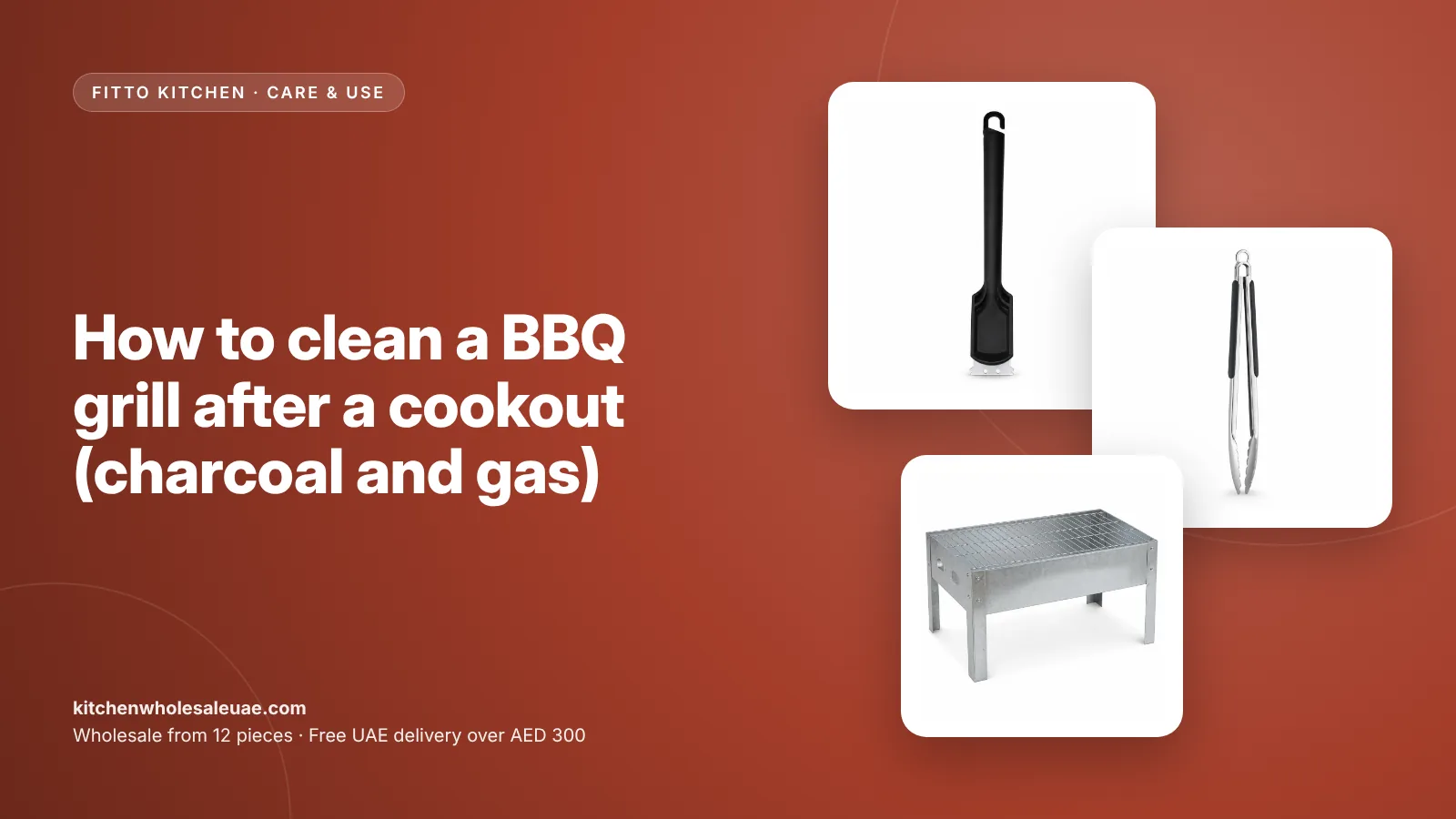
Cookware wholesale in the UAE works best when you match material, base thickness and hob type to the kitchen or shelf you are buying for. Stainless steel suits heavy daily use, aluminium heats fast and costs less, and granite or non-stick pans suit home cooks. Start with a tight core of sizes and expand what sells.
Key takeaways
- Match the material to the job: stainless steel for stocks and sauces, coated aluminium for eggs and quick frying, carbon steel or iron for high-heat searing.
- A thicker base spreads heat evenly and resists warping on strong gas burners.
- Check hob fit before you order: plain aluminium will not work on induction.
- Frying pans of 24, 26 and 28 cm plus pots of 20 to 28 cm cover most daily cooking.
- Clear care guidance on the shelf or in the kitchen prevents most coating and warping complaints.
A warped pan costs far more than its price. It burns one side of every omelette, it earns a complaint, and in a busy kitchen it is replaced within months. This guide settles which pots and pans to buy, in which sizes and materials, so they cook evenly and keep selling.
At FITTO Kitchen, a wholesale cookware supplier in the UAE, we deliver pots and pans to restaurants, cafés, hotels, kitchenware shops and resellers across all seven emirates. This guide is for anyone buying cookware (أواني الطبخ) by the dozen rather than by the piece.
What should you check before buying cookware wholesale in the UAE?
Check five things before you order: material, base thickness, hob compatibility, handle fixing and lid fit. Those five decide how evenly a pan cooks, how long it lasts and how often customers bring it back.
Most cookware problems trace back to one of them:
- Material sets heat speed, weight, care and price.
- Base thickness decides whether the pan warps and whether food scorches in the centre.
- Hob type decides whether the pan works at all. Gas, induction and ceramic hobs all appear in UAE kitchens.
- Handles must stay cool enough to hold and stay tight. Riveted handles suit heavy commercial use; screwed handles can loosen and need tightening from time to time.
- Lids should sit flat with no rocking. Glass lids let cooks check food without losing steam.
Read each product title for the size, piece count and material. FITTO titles state them, for example "28 x 12 cm" on a casserole or "Set of 5" on a pot set. If the title does not answer your question, ask before you commit to a full pack.
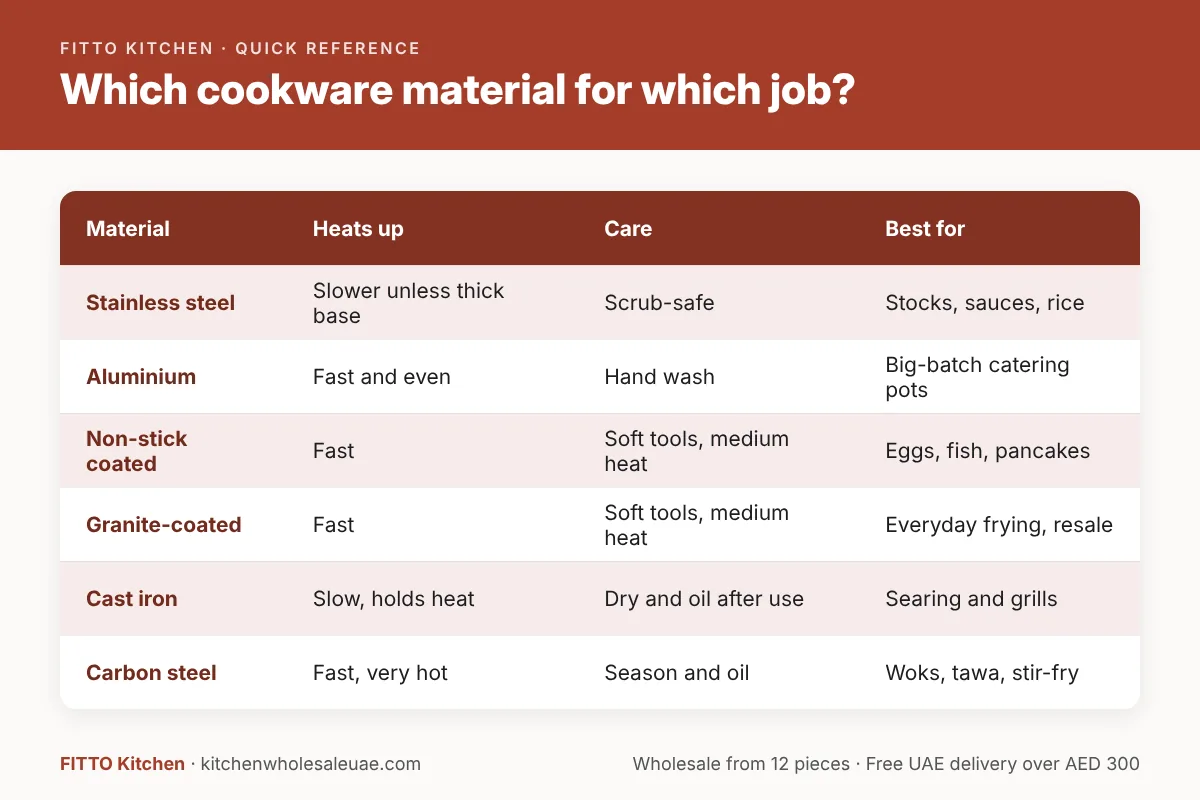
Which cookware material suits which kitchen?
There is no single best material. Stainless steel lasts longest under heavy use, aluminium heats fastest for the money, coated pans release food easily, and cast iron or carbon steel gives the hardest sear. The right choice depends on what you cook and who uses the pan.
| Material | Heats up | Weight | Care | Best for | Watch out for |
|---|---|---|---|---|---|
| Stainless steel | Slower, unless the base is thick or clad | Medium to heavy | Tolerates scrubbing and most dishwashers | Stocks, sauces, rice, restaurant lines | Food sticks without enough heat and oil |
| Aluminium (plain or anodised) | Fast and even | Light | Hand wash; avoid harsh alkaline cleaners | Big-batch pots, catering, budget ranges | Dents; plain aluminium does not work on induction |
| Non-stick coated aluminium | Fast | Light | Hand wash, soft utensils, medium heat | Eggs, pancakes, fish, home cooks | Coating wears with metal tools and overheating |
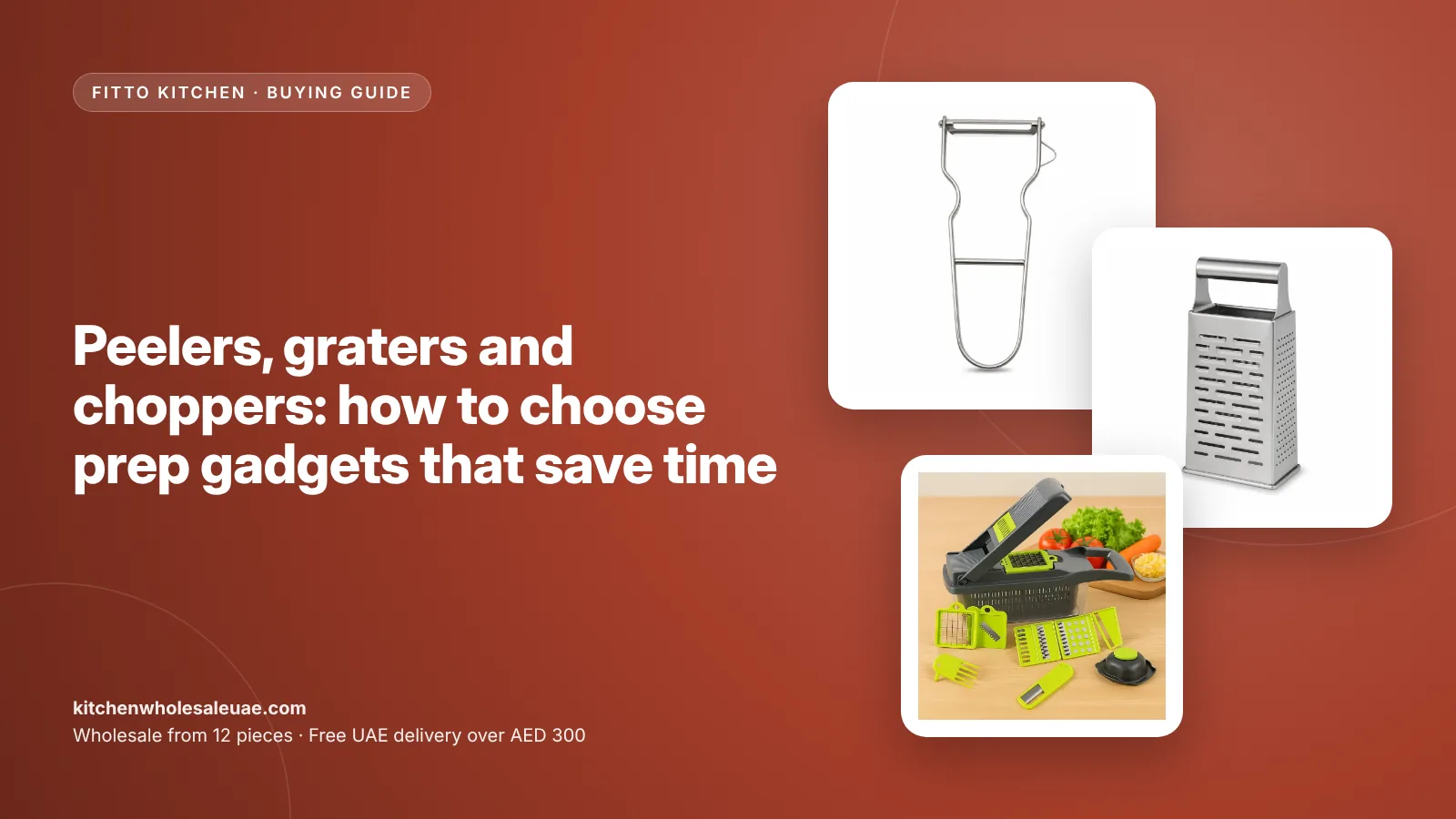
| Granite-coated aluminium | Fast | Light to medium | Same as non-stick | Everyday frying, gift and resale shelves | Same coating care rules as non-stick |
| Cast iron | Slow, then holds heat | Very heavy | Dry fully and oil; rusts if left wet | Searing, grills, oven dishes | Weight, rust in humid months |
| Carbon steel and black iron | Fast and very hot | Medium | Season and oil like cast iron | Woks, tawa, high-heat stir-fry | Rust if stored wet |
Granite is a coating style, not solid stone. Granite-coated pans are usually aluminium bodies with a speckled non-stick surface, so they follow the same care rules as other coated pans.
For a busy restaurant line, stainless steel pots plus a few coated pans kept for eggs is the usual mix. For a café with a short menu, coated aluminium is often good enough and lighter for staff to toss. For a resale shelf, granite and non-stick pans are easy to demonstrate because customers can see the smooth release surface.
Stainless steel with a copper bottom is a useful middle option. FITTO lists stainless steel cooking pans with a copper bottom from 16 to 29 cm, and the copper layer spreads heat across the base. Note that copper is not magnetic, so check the hob before you sell these to induction homes.
We compare the three most asked-about materials side by side in stainless steel vs non-stick cookware (and granite).
How thick should the base of a pot or pan be?
A thicker base spreads heat more evenly and resists warping, so it matters most for frying pans used on high gas flames. Thin bases heat fast but develop hot spots, and they can bow after repeated heating and cold-water shocks.
Look for these signs of a solid base:
- The pan sits flat on a level counter and does not spin when you tap the rim.
- The base feels noticeably heavier than the walls.
- Forged aluminium pans are usually thicker than pressed ones at the same diameter.
- Induction-ready pans often have a separate steel disc pressed or bonded into the base.
The fastest way to warp any pan is to plunge it into cold water while it is hot. Tell your staff, and print it on shelf cards if you resell. It is the cheapest way to cut warped-pan complaints.
Will the cookware work on gas, induction and ceramic hobs?
Gas and ceramic hobs work with almost any flat-based pan. Induction only works with a magnetic base. Test with a fridge magnet: if it sticks firmly to the underside, the pan will heat on induction.
| Hob type | Works with | Does not work with |
|---|---|---|
| Gas | All materials | Very small pans on large burners waste heat and scorch handles |
| Ceramic or electric | Flat-based pans of any material | Warped or domed bases |
| Induction | Magnetic stainless steel, cast iron, carbon steel, pans with an induction disc | Plain aluminium, copper, glass, coated aluminium without a disc |
Induction hobs are common in newer apartments, while many restaurant lines still run on gas. If you sell to households, label induction-ready stock clearly, for example "induction" in the shelf ticket or listing title. Wrong-hob returns are the easiest returns to avoid.
Which pot and pan sizes do kitchens actually use?
Frying pans of 24, 26 and 28 cm and pots of 20 to 28 cm cover most daily cooking. Restaurants add 30 to 32 cm pans and large stock pots; most home cooks rarely need anything beyond 28 cm.
| Item | Common sizes | Typical use |
|---|---|---|
| Frying pan (مقلاة) | 20, 24, 26, 28, 30, 32 cm | 20 cm for one or two eggs; 24 to 28 cm for family meals; 30 to 32 cm for restaurant sauté |
| Saucepan | 16, 18, 20 cm | Sauces, milk, single portions of rice |
| Casserole or cooking pot (قدر) | 20 to 28 cm | Stews, rice and curries for a family or a small section |
| Deep stock pot | 28 cm and up | Stocks, soups, biryani and catering batches |
| Wok and kadai | 25 to 30 cm for homes, larger for restaurants | Stir-fry, deep frying, Indian and Asian dishes |
| Tawa | 30 to 36 cm | Flatbreads, dosa, parathas |
Pan sizes are measured across the top rim, not the base, so a 28 cm pan has a smaller flat cooking area. Tell customers this, because it explains most "smaller than expected" returns.
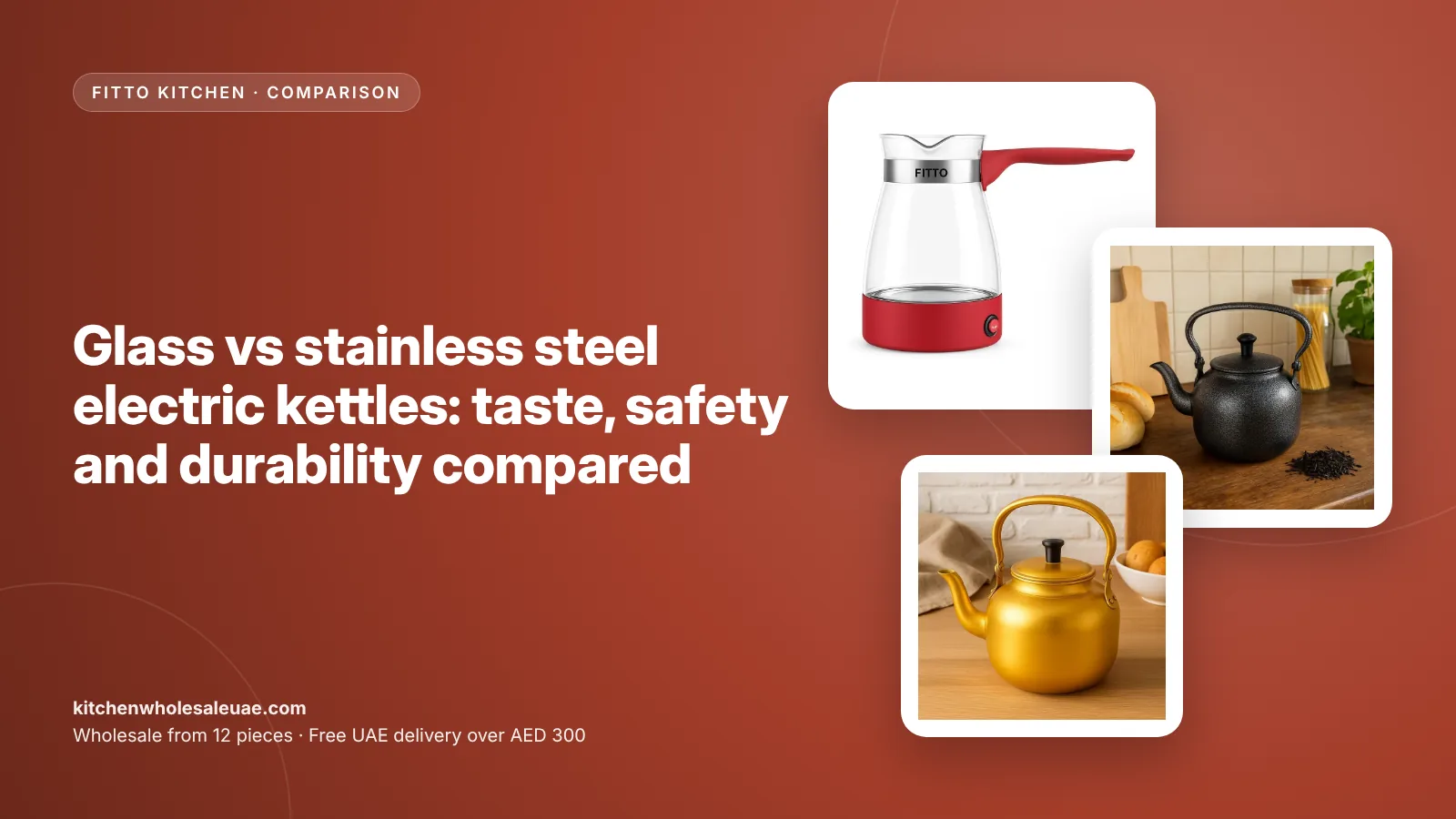
For a household, a 24 cm pan, a 28 cm pan, a 20 cm saucepan and a 24 cm pot handle almost everything. For a kitchenware shop, three frying-pan sizes rather than six keep shelves tidy and free cash for faster sellers. FITTO's red aluminium non-stick frying pans, for example, run from 18 to 32 cm, so you can pick the two or three sizes your customers ask for and add a 30 cm red non-stick frying pan for restaurant buyers.
Which cookware should a restaurant, café or shop stock first?
Start with the pieces that get used or sold every day, then add specialist items once you know your sell-through. A small core range of reliable sizes beats a wide range of slow movers.
Restaurant or hotel kitchen
- Deep stainless steel pots for stocks, rice and sauces
- 28 to 32 cm frying pans, with a few coated pans kept only for eggs and fish
- A carbon steel wok if the menu includes stir-fry
- Saucepans of 16 to 20 cm for sauces and garnishes
Our guide to restaurant cookware for busy UAE kitchens covers gauge, handles and the core set per kitchen size.
Café or cloud kitchen
- 24 and 28 cm non-stick or granite-coated frying pans
- One or two 16 to 20 cm saucepans
- A medium casserole for soups or sauces
Kitchenware shop or online seller
- Cookware sets in two or three colours, because sets tell a clear gift and value story
- Single frying pans in 24, 26 and 28 cm
- A small range of stainless steel casserole sets for customers who want long-life pots
- Regional pieces such as tawa, kadai and pressure cookers, which South Asian households buy all year
Ramadan, Eid and the cooler months from November to March bring more home entertaining, so larger pots and serving casseroles deserve extra shelf space ahead of those dates.
How much of each line should you order?
Order by sell-through, not by catalogue size. Test a new line in a small quantity, then move the sizes that sell out reliably into larger orders where the price per piece is lower.
Here is a simple planning routine that works for shops and kitchens alike:
- List your core sizes and the weekly use or sales of each.
- Test new materials, colours or set sizes in the smallest pack before committing.
- Scale proven sizes up first, because they carry the least risk.
- Count sets correctly. A product title that says "Set of 5" or "4-Piece" tells you how many pots arrive per set, so 12 sets of a 5-piece casserole set means 60 pots with lids on the shelf.
- Reorder early before peak periods, allowing for dispatch and delivery time plus time to price and display stock.
For a full walkthrough of pack sizes, pricing and lead times, see how ordering, pack sizes and delivery work.
How do you cut cookware returns and complaints?
Most cookware complaints come from heat, utensils and cleaning, not from the pan itself. Clear care guidance at the point of sale prevents most of them.
- Coated pans: cook on low to medium heat, never heat empty on high, and use silicone, nylon or wooden utensils.
- Stainless steel: preheat before adding oil to reduce sticking, and soak rather than scrape burnt food.
- Aluminium: hand wash and dry; harsh alkaline cleaners dull the surface.
- Cast iron, carbon steel and iron tawa: dry on the hob straight after washing and wipe with a thin film of oil, especially in humid coastal months.
- All pans: never plunge a hot pan into cold water.
If you resell, put these lines on a shelf card or in your online listing. Pairing coated pans with soft tools from our wholesale kitchen utensils and gadgets also protects the coating and raises the basket value.
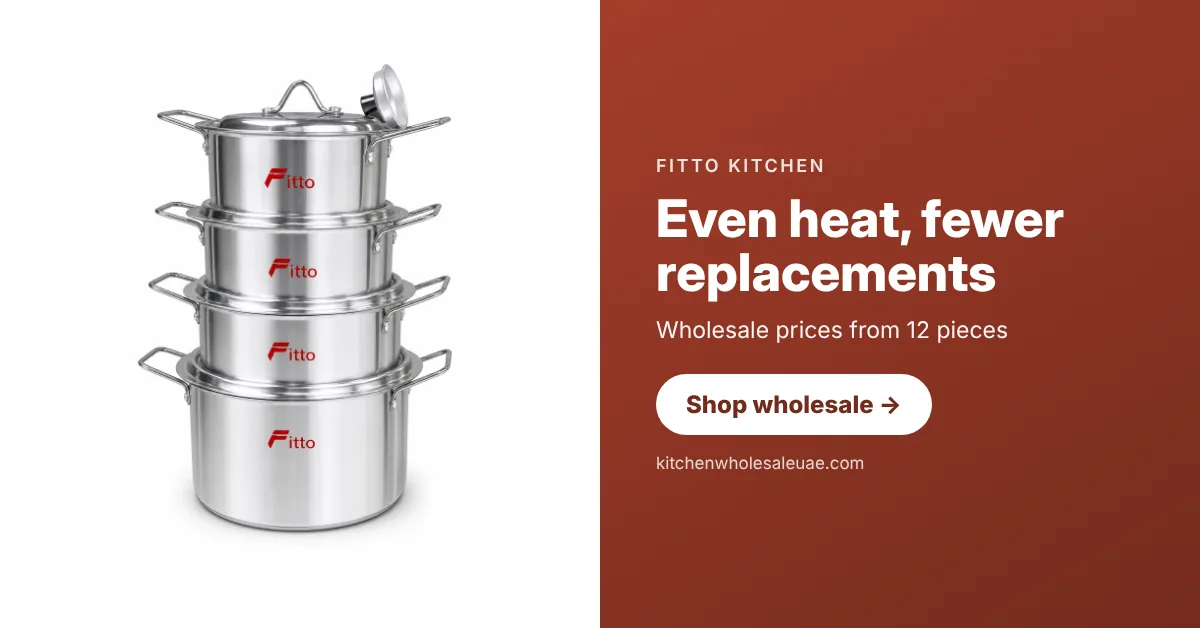
FITTO Trade Pick: Core cookware that cooks evenly and sells Build a starter range from three dependable lines: the stainless steel casserole pot set with lids, medium, set of 5, the granite-coated 28 cm fry pan and the pressed aluminium induction casserole with glass lid, 28 x 12 cm. Wholesale prices start from 12 pieces, with up to 20% off per piece on 144-piece packs, and a single sample is credited back on a bulk order of AED 2,000+ within 30 days.
The bottom line
Good wholesale cookware is the right material for the job, a base thick enough to stay flat, and a hob match your buyers can trust. Start with a tight core of sizes, test new lines small, and scale up the sizes that sell.
Browse our wholesale cookware and pans, request a quote for mixed cartons or regular supply, or order a sample first. Delivery is free across the UAE on orders over AED 300, and the trade team is on WhatsApp at +971 55 672 6947. FITTO Kitchen: fit for the way you cook.
FAQ
Which cookware material lasts longest in a restaurant?+
Stainless steel usually lasts longest under heavy restaurant use because it tolerates scrubbing, dishwashers and metal utensils. It needs a thick or clad base to cook evenly. Many kitchens pair stainless steel pots with a few coated pans kept only for eggs and fish, and replace those coated pans as the surface wears.
Does aluminium cookware work on induction hobs?+
Plain aluminium does not work on induction because it is not magnetic. Aluminium pans with a bonded steel disc in the base do work. Test with a fridge magnet: if it sticks firmly to the underside, the pan will heat on induction. Label induction-ready stock clearly on the shelf or listing to avoid wrong-hob returns.
What is the difference between granite and non-stick cookware?+
Granite cookware is usually an aluminium pan with a speckled non-stick coating that looks like stone. It is not solid granite. Care is the same as for other coated pans: low to medium heat, soft utensils and hand washing. Buyers often choose granite finishes for the look, so they suit gift and resale shelves.
Why do frying pans warp, and how do you prevent it?+
Pans warp when the metal heats or cools unevenly, most often when a hot pan meets cold water or sits empty on a high flame. Thin bases warp fastest. Choose a heavier base for gas lines, match the pan to the burner size, heat gradually and let pans cool before washing.
Which frying pan sizes should a kitchenware shop stock first?+
Start with 24, 26 and 28 cm, which cover most family cooking in UAE homes. Add a 20 cm pan for eggs and small households, and a 30 or 32 cm pan only if you serve restaurants or large families. Track which sizes sell out first and widen the range from there.
How long does a non-stick or granite pan last?+
There is no fixed lifespan; it depends on heat, utensils and washing. A coated pan used on medium heat with soft tools and washed by hand lasts far longer than one heated empty on high and scrubbed with steel wool. Replace it once food starts sticking or the coating flakes or peels.