Peelers, graters and choppers: how to choose prep gadgets that save time
By FITTO Trade Desk · Last updated 29 October 2026
The vegetable peeler and grater worth buying are the ones you use every day: a sharp Y-shaped peeler for potatoes and carrots, a serrated peeler for soft skins, a sturdy box grater and a fine zester. Add a dicer or pull-cord chopper only if you prepare onions, salsa or salad in volume.
Key takeaways
- A Y-shaped peeler is faster than a straight peeler on potatoes and carrots; a serrated blade handles tomatoes, peaches and kiwi.
- One stainless steel box grater covers cheese, carrot, cucumber and potato; add a fine zester for citrus, ginger and garlic.
- Press-down dicers and pull-cord choppers save real time on onions and salsa for four or more people, or for café prep.
- Single-job gadgets earn their space only when that job happens daily.
- Clean blades straight after use and dry them; dried-on starch and hard water are what dull them.
Most kitchen drawers hold a gadget that was used twice. For a café, a dull peeler wastes product and a slow grater holds up service. This guide sorts the tools that cut prep minutes from the ones that only look clever.
At FITTO Kitchen, a wholesale kitchen utensils and gadgets supplier in the UAE, we supply peelers, graters and choppers to home cooks, cafés and gadget retailers.
Which peeler should you buy: Y-shaped, straight or serrated?
Buy a Y-shaped peeler first, then a serrated one if you peel soft fruit or tomatoes. The Y shape lets you peel in long strokes toward you, which suits wide vegetables and large batches.
A peeler (مقشرة) comes in three main blade layouts:
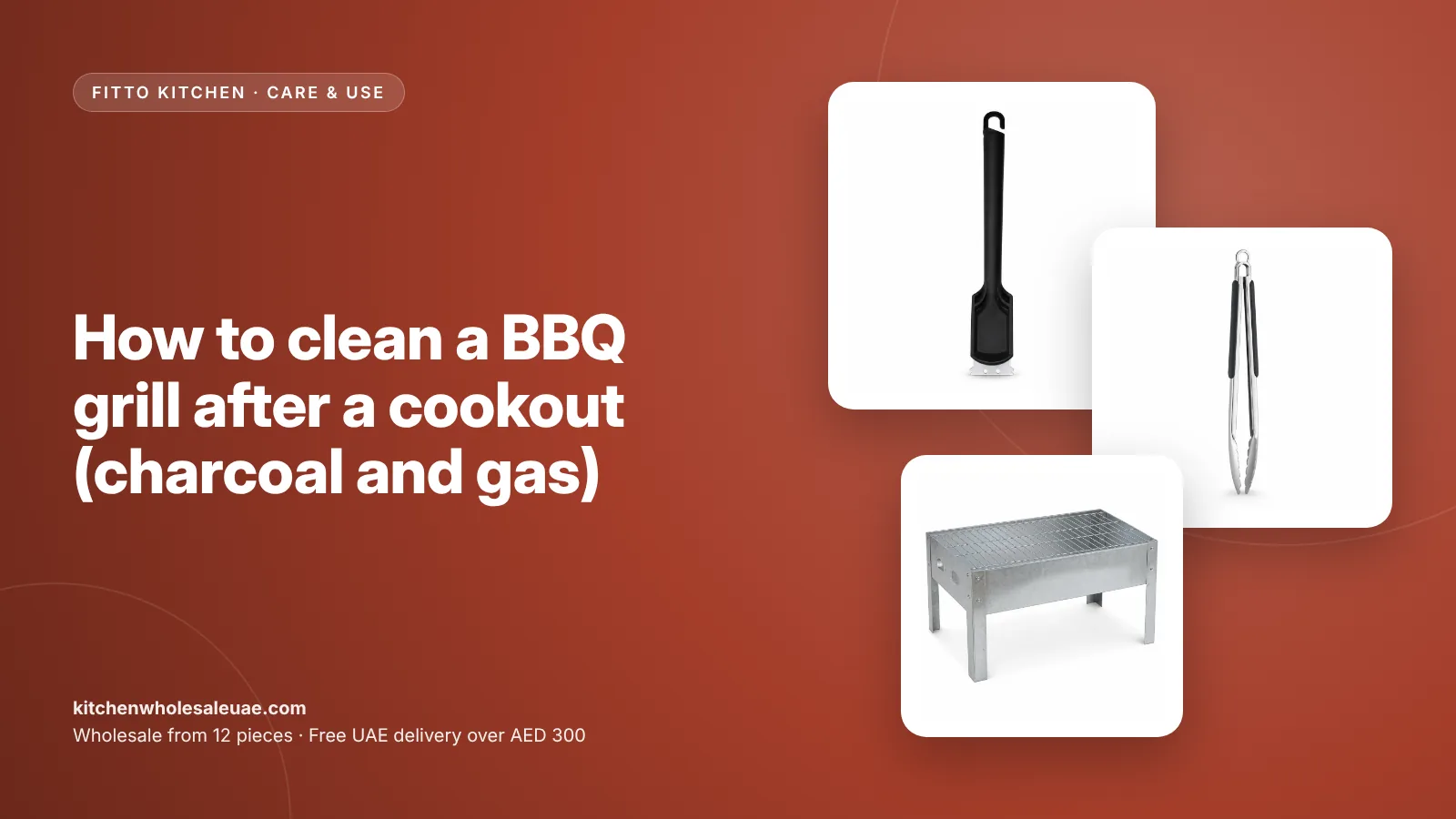
- Y-shaped: the blade sits across the handle, so you pull it down the vegetable like a razor. The 17 cm stainless steel Y-shaped peeler has a steel blade and frame and works for left and right hands.
- Straight or swivel: the blade runs in line with the handle. Many cooks find it easier for apples, carrots and cucumbers held in the hand.
- Serrated: small teeth grip slippery skins. The serrated peeler with red handle takes a thin layer off tomatoes, peaches and kiwi without crushing them.
A 3-in-1 rotary peeler puts three blade options on one handle. It suits a small kitchen that wants one tool instead of three.
Grip matters more than looks. Thin metal handles suit quick jobs; thicker plastic or wooden handles are kinder to the hand on a sack of potatoes.
Which grater does a kitchen actually need?
Most kitchens need one box grater and one fine zester. Everything else is a convenience.
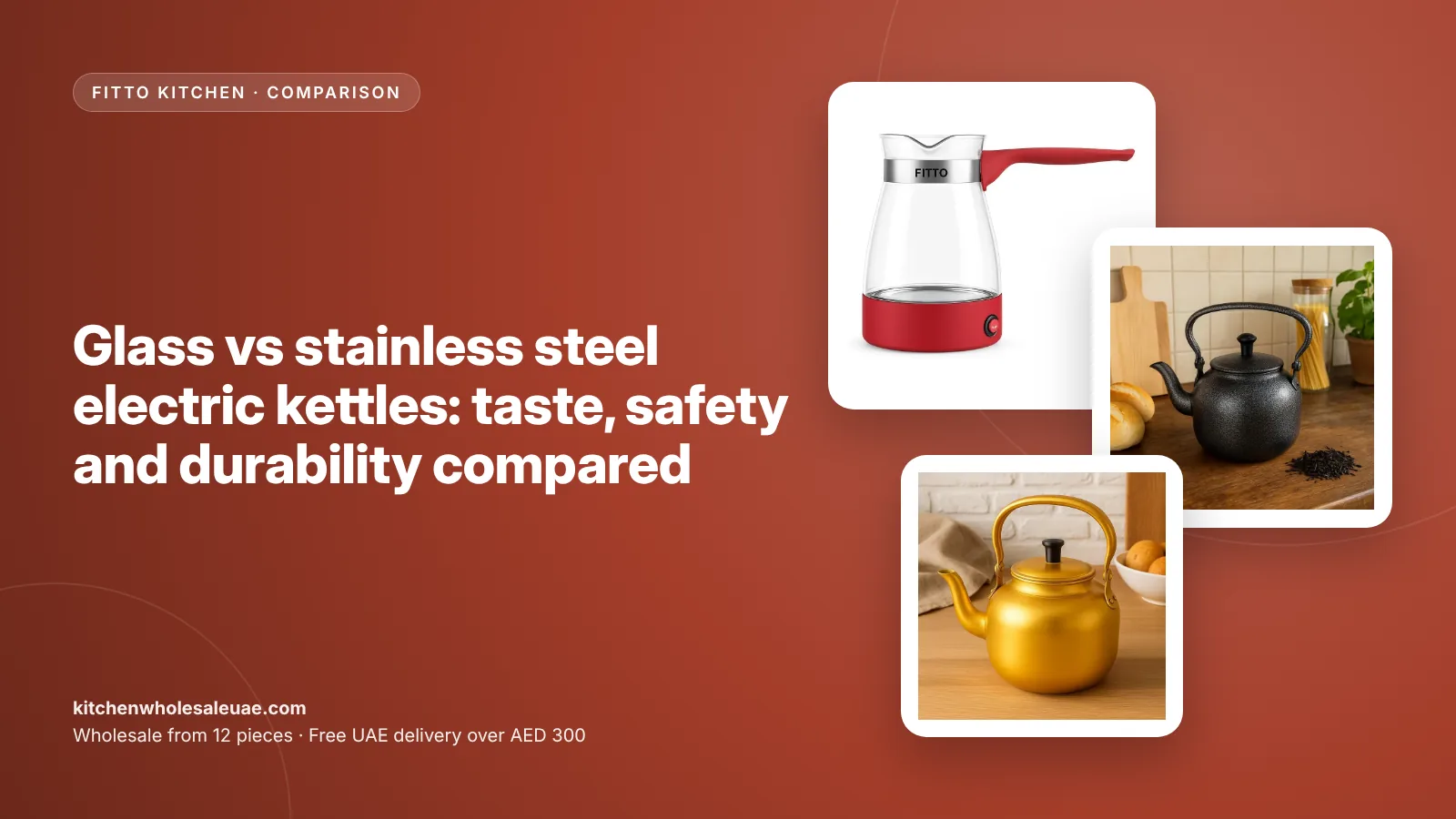
A grater (مبشرة) is judged by its faces and its stability. A box grater stands on the board, so you push with your whole arm. The 24 cm stainless steel box grater handles cheese for manakish and pasta, carrot and cucumber for salads and potato for hash browns.
A fine zester takes the coloured skin off a lemon without the bitter white pith, and turns ginger and garlic into paste. The zester grater, 24 x 6 x 3 cm has a stainless steel head and handle.
| Grater type | Best for | Skip if |
|---|---|---|
| Box grater | Cheese, carrot, cucumber, potato | You grate less than once a week |
| Flat or paddle grater | Grating over a pan or bowl | You need a stable base for big batches |
| Fine zester | Citrus zest, ginger, garlic, nutmeg | You never bake or use fresh ginger |
| Rotary drum grater | Hard cheese and nuts at the table | It is your only grater; it is slow for vegetables |
Do vegetable choppers really save time, or are they gimmicks?
Choppers save real time on repetitive cuts in volume; for one onion, a knife is faster once you count washing up. The deciding factor is batch size, not the gadget.
As a rule of thumb, a dicer starts paying off at three or more onions, or a full bowl of salsa or salad. For a café making the same salad every morning, the gain is consistent cube size as well as speed.
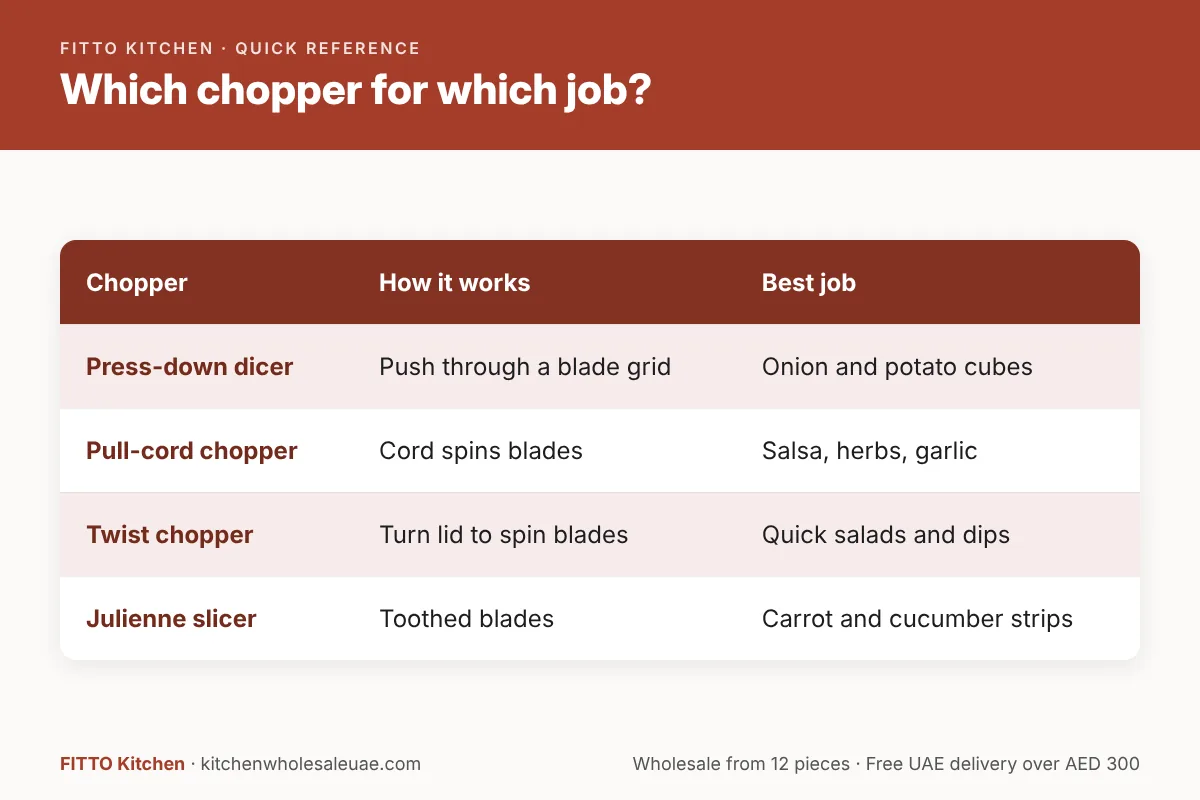
The main types work differently:
| Chopper type | How it works | Best job | Watch out for |
|---|---|---|---|
| Press-down dicer | Push food through a blade grid | Onion, cucumber, potato cubes | Clean the grid straight away |
| Pull-cord chopper | Pull a cord to spin blades in a bowl | Salsa, herbs, garlic, nuts | Small bowl; work in batches |
| Twist chopper | Turn the lid to spin blades | Quick salads and dips | Hand effort on hard vegetables |
| Julienne slicer | Push food across toothed blades | Carrot and cucumber strips | Use the hand guard every time |
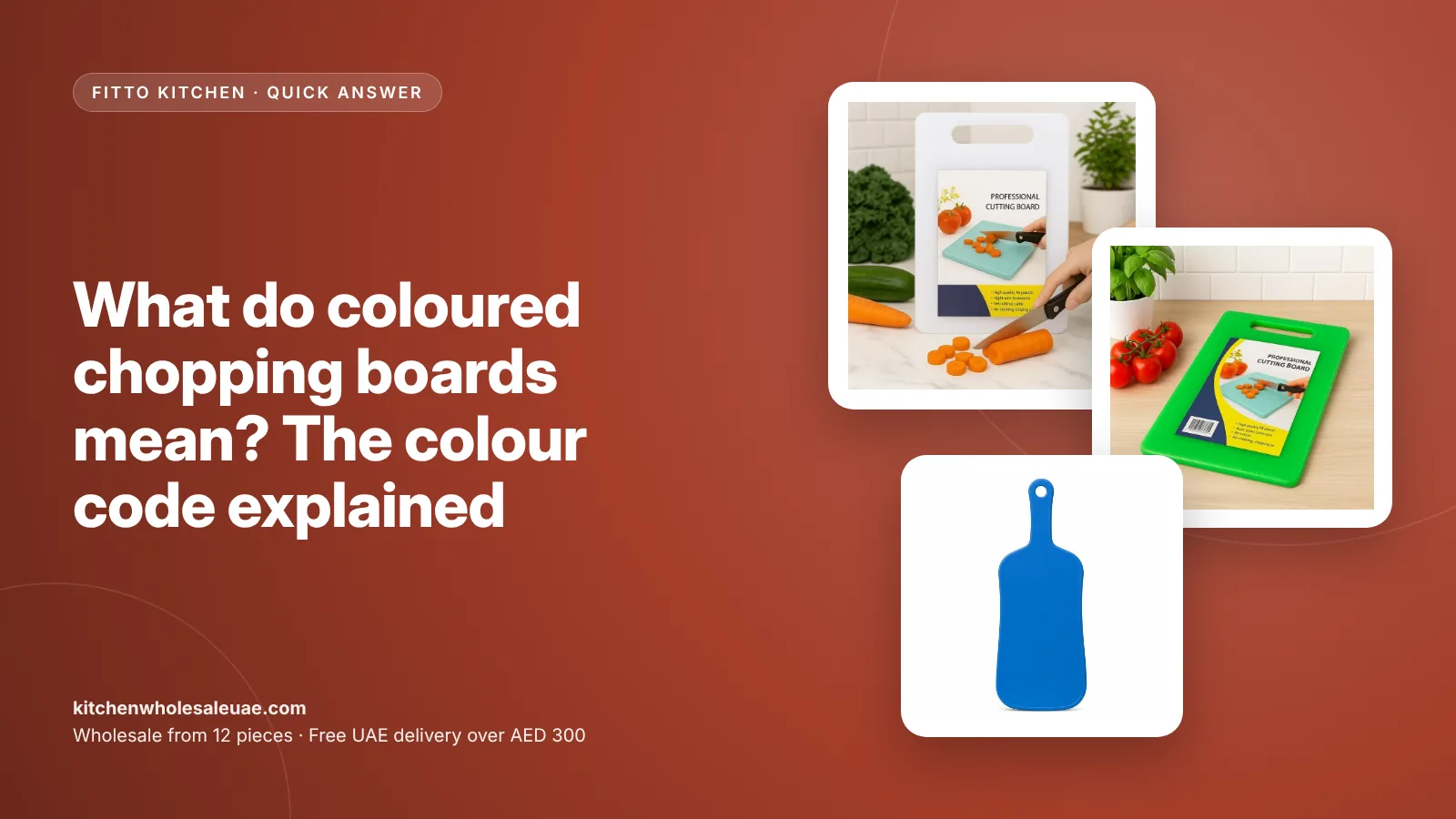
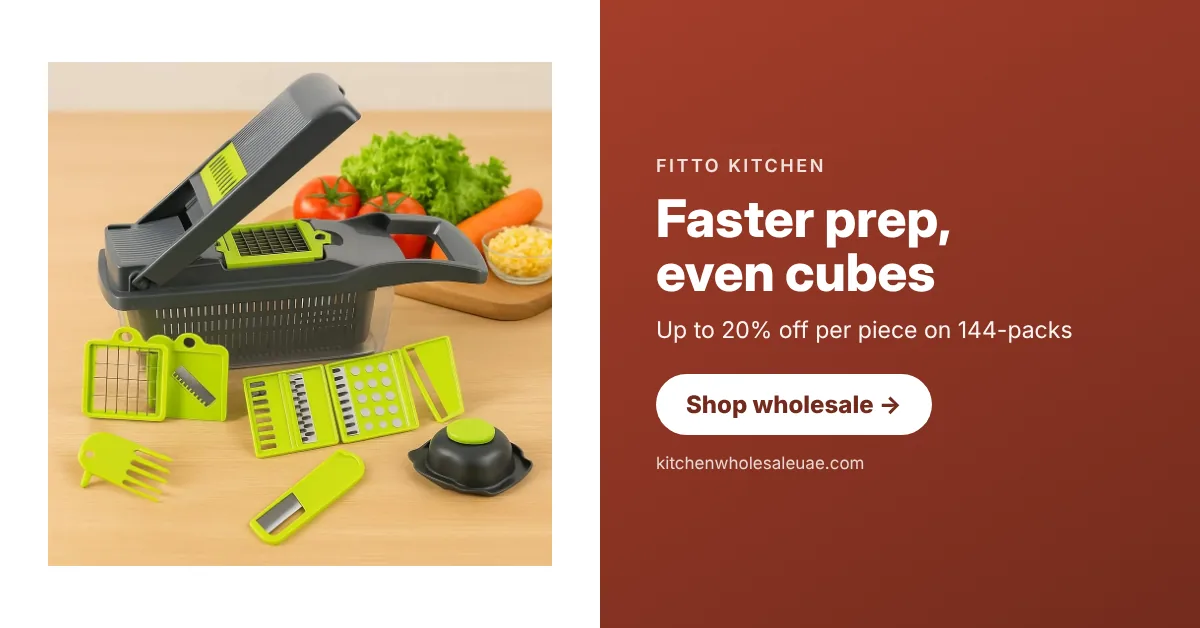
The 5-blade, 12-in-1 vegetable chopper chops, dices, slices and grates, has detachable parts and is listed as dishwasher-safe. The pull-cord food chopper measures 15 x 12 x 12 cm and needs no power.
Where gadgets become gimmicks: single-task tools such as avocado slicers, egg slicers and apple corers only earn drawer space if that job happens most days. A sandwich café slicing eggs every morning should buy an egg slicer; most homes will not miss one.
How do you clean peelers, graters and choppers so they last?
Rinse straight after use, brush along the blades and dry fully. Dried-on starch, cheese and UAE hard water spots are what make blades feel dull.
- Rinse under running water before food dries on, especially starch from potatoes.
- Brush graters from the back and along the holes, never with a sponge across the face, which shreds the sponge and risks your fingers.
- Push stuck onion out of dicer grids with the cleaning tool or a brush, not your fingertips.
- Use the dishwasher only where the product label allows it; hand wash wooden handles.
- Dry stainless steel blades with a cloth to avoid water spots, then store blades covered or in a drawer divider.
For a full drawer plan, see our kitchen utensils wholesale guide.
What should a gadget retailer stock first?
Stock the everyday tools deep and the clever gadgets shallow. Peelers and graters are repeat purchases; choppers are impulse buys that sell best when shown in use.
A practical shelf has Y-shaped and serrated peelers in two or three handle colours, one box grater, one zester and two chopper styles. Show choppers working on video for online listings. Our list of best-selling kitchen gadgets shows which lines tend to move fastest.
FITTO Trade Pick: The everyday prep trio Pair the 17 cm Y-shaped peeler, the 24 cm box grater and the 5-blade vegetable chopper for a kit that covers most daily prep. Packs run from 12 to 144 pieces, with up to 20% off per piece on the largest pack.
The bottom line
Buy the tools you will use every day first: a Y-shaped peeler, a box grater and a zester. Add a dicer or pull-cord chopper when your batch sizes justify it, and skip single-job gadgets unless the job is daily.
Browse our kitchen utensils and gadgets range, request a quote for a mixed gadget order, or order a sample to test a chopper first. Delivery is free over AED 300, and the Trade Desk answers on WhatsApp at +971 55 672 6947. FITTO Kitchen: fit for the way you cook.
FAQ
Is a Y-shaped peeler better than a straight peeler?+
For wide vegetables such as potatoes, carrots and butternut squash, most cooks find a Y-shaped peeler faster because you pull it in long strokes. A straight swivel peeler can feel more natural for apples and fruit held in the hand. Neither is wrong; if you peel large batches, start with a Y-shaped peeler.
What is a julienne peeler used for?+
A julienne peeler or slicer has toothed blades that cut vegetables into thin matchstick strips instead of flat peel. Use it for carrot and cucumber strips in salads, stir-fries and garnishes. Always use the hand guard or hold a large piece, because the blades are very sharp and the last centimetre is where most cuts happen.
Why does my grater feel blunt?+
Most graters feel blunt because of dried-on food and water spots, not worn steel. Brush the holes straight after use and dry the grater fully. If a cheap grater still tears food instead of cutting it after cleaning, the faces may be bent or worn, and a sturdier stainless steel box grater is worth the upgrade.
Can manual choppers handle hard vegetables like carrots?+
Press-down dicers handle carrot slices and potato, but whole raw carrots are hard work. Cut hard vegetables into smaller pieces first and use firm, even pressure. Pull-cord and twist choppers manage carrot best in small chunks and small batches. For large volumes of hard vegetables, a sharp knife or an electric processor is usually quicker.
Are vegetable choppers dishwasher-safe?+
Some are and some are not, so check each product label. The 5-blade FITTO vegetable chopper is listed as dishwasher-safe with detachable parts. Even then, rinse the blade grid straight after use, because dried onion and potato starch are hard to shift in a dishwasher.