Glass vs stainless steel electric kettles: taste, safety and durability compared
By FITTO Trade Desk · Last updated 29 October 2026
In the glass vs stainless steel kettle choice, neither boils faster; wattage decides speed. Glass shows limescale and looks good on a counter but breaks if dropped and gets hot to touch. Stainless steel hides scale, survives knocks and suits offices and hotel rooms. Choose glass for a careful home, steel for shared or busy spaces.
Key takeaways
- Boiling speed depends on wattage and water volume, not body material.
- Glass lets you see limescale and water level; steel hides scale, so descale on a schedule rather than by sight.
- Both single-wall glass and steel bodies get hot; keep kettles at the back of the counter around children.
- Steel survives drops and heavy use, which is why most offices and hotel rooms use it.
- Taste differences usually come from plastic parts and scale, not from the glass or steel itself.
Almost every UAE home, office pantry and hotel room uses a kettle daily. Pick the wrong one and you pay in cracked jugs, flaky scale in the tea or complaints about a hot handle. This comparison settles which body material fits which setting.
At FITTO Kitchen, a wholesale kitchen appliances supplier in the UAE, we supply electric kettles to households, offices and resellers. This guide is for anyone choosing one kettle or a hundred.
Glass vs stainless steel kettle: how do they compare side by side?
Steel wins on durability and hiding wear; glass wins on visibility and looks. Speed, safety features and taste depend more on the model than the material.
| Factor | Glass electric kettle | Stainless steel electric kettle |
|---|---|---|
| Heat-up speed | Set by wattage and fill level | Set by wattage and fill level |
| Limescale visibility | Visible through the body; easy to spot | Hidden; check inside with a torch |
| Breakage | Can crack or shatter if dropped | Dents rather than breaks |
| Outer temperature | Hot to touch when boiling | Hot to touch unless double-walled |
| Taste | Neutral glass; check lid and filter parts | Neutral food-grade steel; check plastic parts |
| Cleaning | Wipe outside; scale and stains show | Fingerprints show on polished finishes |
| Weight | Usually heavier when full | Usually lighter for the same size |
| Look | Modern; some light up while boiling | Classic; many colours and finishes |
| Typical price | Often a step up at the same capacity | Widest choice at entry level |
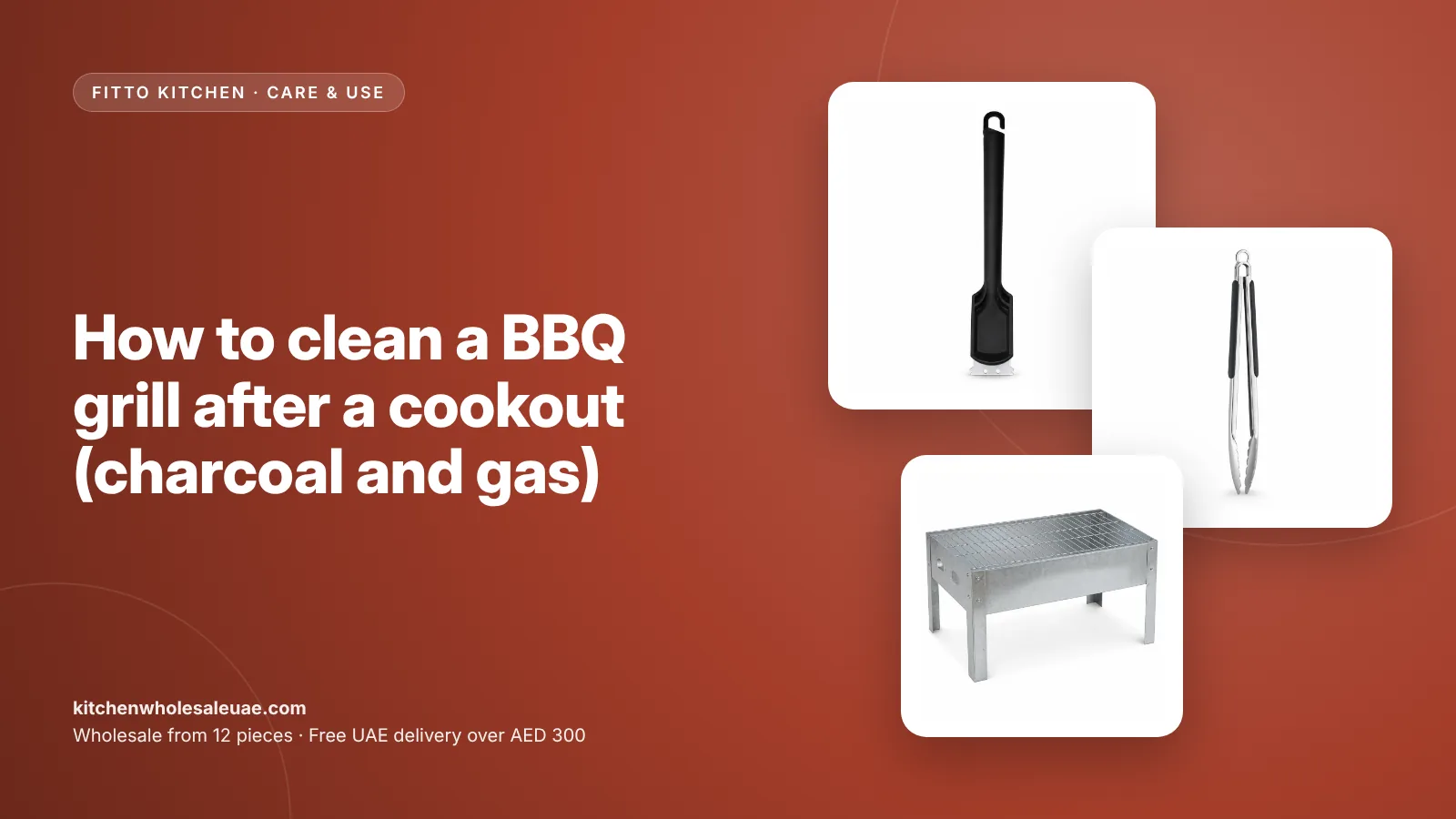
In our own range, the 1.5 litre cordless kettles are stainless steel and sit at a lower price point than the compact glass tea and coffee maker.
Which kettle boils faster, glass or steel?
Neither, in practice; a higher-wattage kettle with less water boils faster whatever its body. The material makes little difference compared with power and fill level.
As a rough guide, heating one litre from room temperature to boiling takes around three to four minutes on a typical 1500 to 2000 W kettle. Boil only what you need: half a litre takes roughly half the time and energy.
In UAE summers, tap water from rooftop tanks often comes out warm, which shortens boiling time further.
Which kettle is better for UAE water and limescale?
Glass is better if you want to see scale; steel is fine if you descale on a schedule. Both build up mineral deposits over time.
Most UAE tap water is desalinated, and scale build-up varies by building, tank and filter. Many households fill the kettle from a bottled water dispenser, which usually leaves less scale. Whatever the source, a white crust or floating flakes mean it is time to descale.
How to descale an electric kettle (غلاية كهربائية):
- Unplug the kettle and fill it halfway with equal parts white vinegar and water, or water with one to two tablespoons of citric acid.
- Bring it to the boil, switch off and leave it for 30 to 60 minutes.
- Pour away, scrub the base gently with a soft brush and rinse well.
- Boil fresh water once or twice and discard it to remove any taste.
As a rule of thumb, descale monthly in an office pantry and every two to three months at home.
Is a glass or stainless steel kettle safer?
Safety comes from the features, not the material: auto shut-off, boil-dry protection, a stable cordless base and a cool handle. Check for these before you compare looks.
Glass carries one extra risk: it can crack if dropped or knocked against a tap. Borosilicate glass resists sudden temperature changes, but not impact.
Steel carries a different one: a single-wall steel body gets very hot. Double-walled kettles stay cooler outside and suit homes with small children. In the UAE, check that the plug is the three-pin Type G used here, or budget for a proper adapter.
Does the kettle material change the taste of tea and coffee?
Rarely; most off-tastes come from new plastic parts, scale or water left standing. Both glass and food-grade stainless steel are neutral in contact with water.
A brand-new kettle may smell of plastic for the first few boils. Fill it, boil and discard the water two or three times before first use. After that, empty the kettle each evening instead of reboiling old water. For tea and coffee setups, our coffee and tea equipment guide covers what pairs well with each kettle.
Which kettle should you choose for an office, hotel room or home?
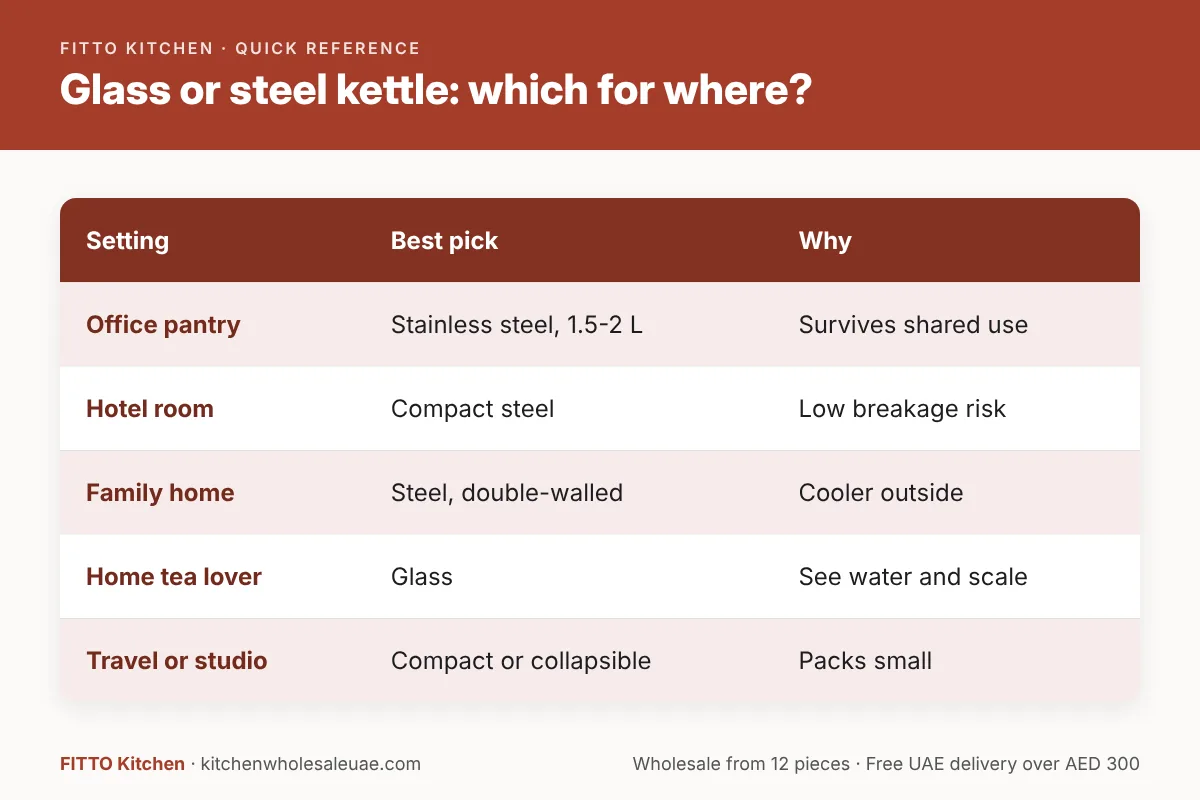
Steel for offices and hotel rooms, glass or steel for homes depending on who uses it.
| Setting | Best pick | Why |
|---|---|---|
| Office pantry | Stainless steel, 1.5 to 2 litres | Survives heavy shared use; scale hidden |
| Hotel room | Compact stainless steel | Low breakage risk; quick single cups |
| Family home with children | Steel, ideally double-walled | Cooler outside; no glass to break |
| Home tea lover | Glass | See the water and the scale; looks good |
| Travel or small studio | Compact or collapsible kettle | Packs small; boils one or two cups |
For green tea or pour-over coffee, a kettle with a temperature display helps. The 2-litre, 1500 W electric kettle with temperature display shows a reading while it heats. For buying in volume for workplaces, see our guide to electric kettles for offices and hotels.
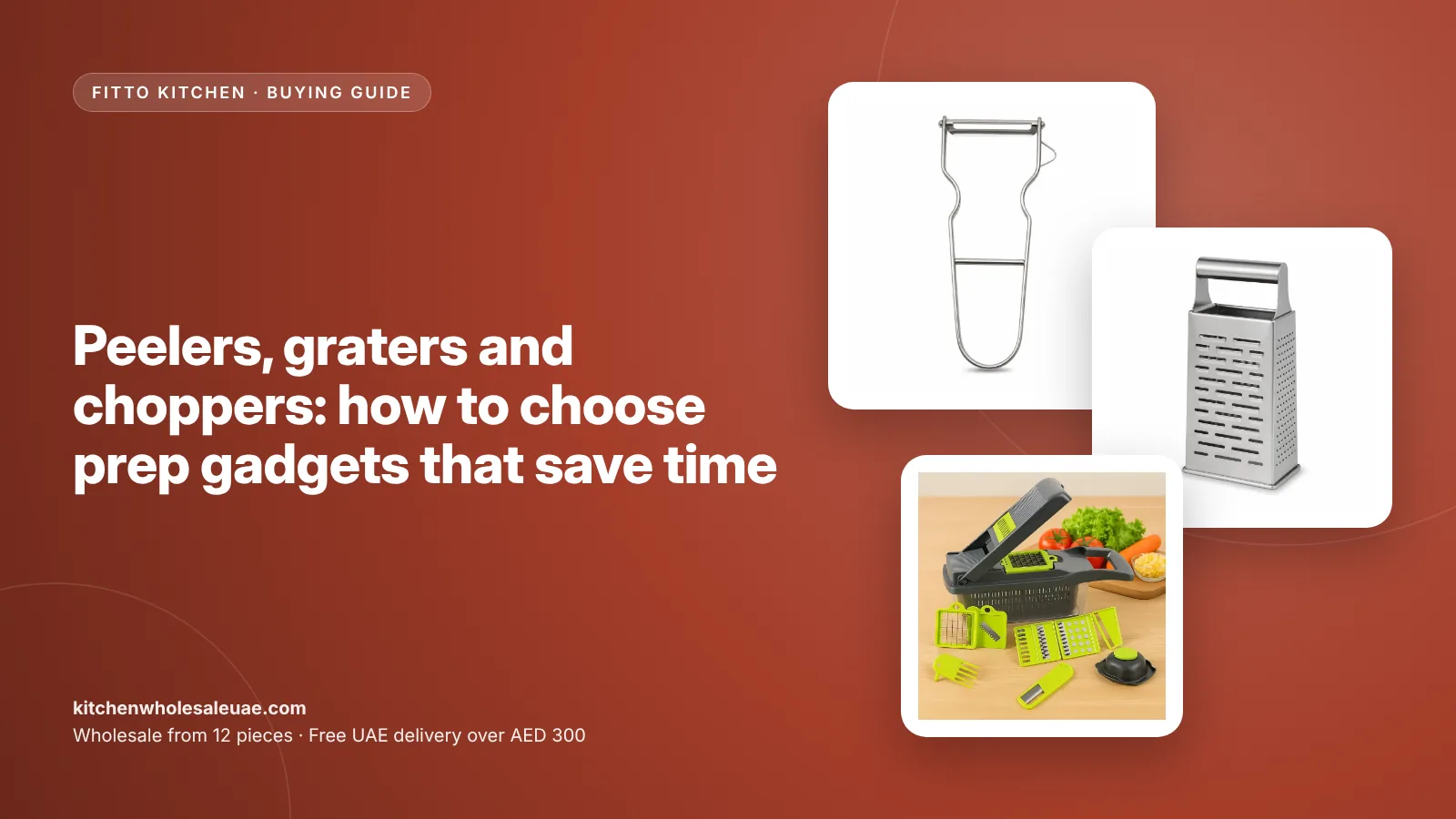
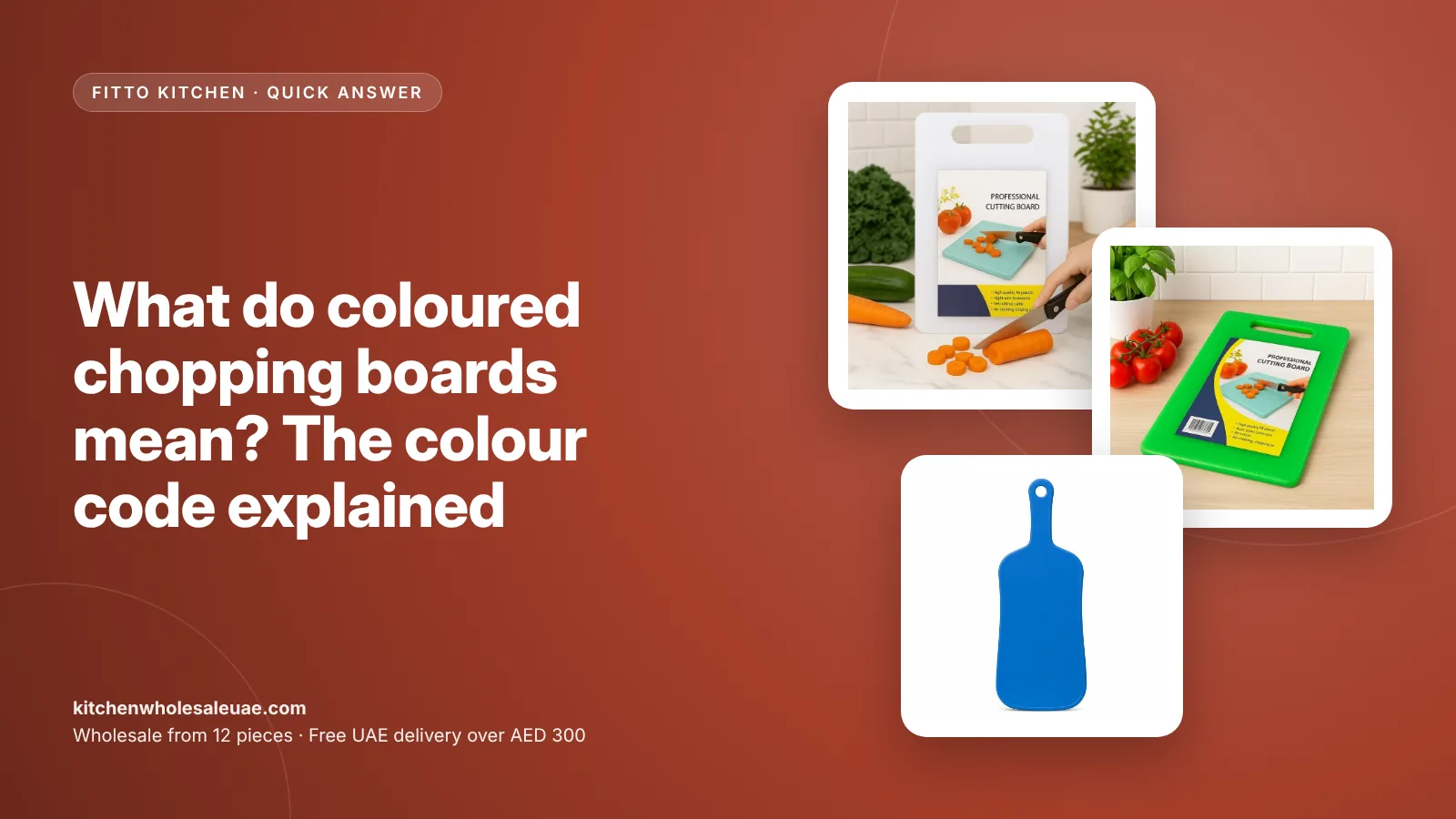
FITTO Trade Pick: A kettle for every setting For offices and homes, the 1.5 L black cordless kettle has auto shut-off and a stainless steel interior, and the 1.5 L golden stainless steel kettle suits guest areas. For a glass option, the 17 oz borosilicate tea and coffee maker brews single servings. Packs run from 12 to 144 pieces, with up to 20% off per piece on the largest pack.
The bottom line
Glass and stainless steel kettles boil at the same speed for the same wattage. Choose steel where kettles are shared, knocked or left unwatched, and glass where one careful household wants to see the water and the scale.
Browse our kitchen appliances range, request a quote for an office or hotel kettle order, or order a sample to check the finish first. Delivery is free over AED 300, and the Trade Desk answers on WhatsApp at +971 55 672 6947. FITTO Kitchen: fit for the way you cook.
FAQ
Is a glass kettle healthier than a stainless steel kettle?+
Neither is healthier in normal use. Borosilicate glass and food-grade stainless steel are both stable materials for boiling water. What matters more is keeping the kettle clean, descaling regularly and not reboiling water that has stood for hours. If you want to limit plastic contact with water, compare lids, filters and water windows rather than the body alone.
Why does my stainless steel kettle have white flakes?+
White flakes are limescale, the minerals left behind when water boils. They are common in kettles of every material and are not a sign of a faulty kettle. Descale with a vinegar or citric acid solution, rinse well and boil fresh water once before use. Filtered or bottled water usually slows the build-up.
Do glass kettles break easily?+
Borosilicate glass handles heat changes well, so it does not usually crack from boiling. The risk is impact: dropping it, knocking it against a tap or putting it down hard on the base. In homes with careful users that is rare, but in offices and hotel rooms with many users, stainless steel is the safer choice.
What size kettle does an office need?+
As a rule of thumb, a 1.5 litre kettle serves a small team of up to ten people, while a 2 litre kettle suits a busier pantry. Larger offices often place two kettles rather than one big one, so a queue does not form at tea time and one unit can be descaled while the other works.
Can I use a UK kettle in the UAE?+
Usually yes. The UAE uses the same three-pin Type G plug and a similar mains supply to the UK, so most UK kettles plug straight in. Check the voltage range on the rating label under the base, and avoid kettles built only for 110 to 120 V markets, which need a converter and are not worth the risk.