Silicone vs wooden vs stainless steel utensils: which should you use and stock?
By FITTO Trade Desk · Last updated 29 October 2026
In the silicone vs wooden utensils choice, both are safe on non-stick and granite pans. Silicone is heat resistant, non-porous and dishwasher-friendly, while wood is cheap, stays cool and suits slow stirring. Stainless steel lasts longest and handles the highest heat, but belongs only on stainless, cast iron, woks and griddles.
Key takeaways
- Non-stick, granite and enamel pans: use silicone or wood, never metal edges.
- Stainless steel, cast iron, woks and tawas: steel turners and ladles scrape and lift best.
- Silicone is usually rated to around 200-230°C; check the rating on each product.
- Wood needs hand washing and drying; silicone and stainless steel survive the dishwasher.
- A mixed kit of all three materials beats any single material in a busy kitchen.
A metal turner can scratch a new non-stick pan in a week, and a cheap silicone spatula can soften when rested on a hot rim. Wooden spoons crack after months in a dishwasher. Each mistake means replacing pans, utensils or both.
This comparison is for home cooks, cafés and kitchenware retailers choosing kitchen utensils (أدوات المطبخ) to use or stock. At FITTO Kitchen, a wholesale kitchen utensils supplier in the UAE, we stock silicone sets, wooden spoons and turners, and stainless steel ladles, turners and skimmers.
Silicone vs wooden utensils vs stainless steel: how do they compare?
Silicone wins on pan protection and easy cleaning, wood on comfort and low cost, and stainless steel on durability and heat. The table sums up the trade-offs.
| Factor | Silicone | Wood | Stainless steel |
|---|---|---|---|
| Heat limit | Usually about 200-230°C (check rating) | Does not melt; scorches if left on hot metal | No practical limit in cooking |
| Scratch risk on non-stick | Very low | Very low | High |
| Hygiene | Non-porous; dishwasher-friendly | Porous; hand wash and dry fully | Non-porous; dishwasher-friendly |
| Staining and smells | Can stain with turmeric and hold garlic smells | Stains and absorbs smells over time | Does not stain |
| Durability | Good; edges can nick on sharp tools | Good if kept dry; cracks if soaked | Longest-lasting |
| Handle feel | Depends on handle material | Stays cool to hold | Metal handles get hot |
| Relative cost per piece | Medium | Usually lowest | Medium; heavy-gauge pieces cost more |
Which utensils are safest for non-stick and granite pans?
Silicone and wood are safest for non-stick, granite and ceramic-coated pans because neither is hard enough to cut the coating. Metal edges create scratches that grow with each use, and a scratched pan starts to stick.
Silicone heads are flexible, so a spatula follows the curve of the pan and scrapes sauce cleanly. Wooden spoons are rigid, which suits stirring thick stews, rice and sauces.
For flipping eggs or pancakes in a non-stick pan, a thin silicone turner slides under food most easily. Our non-stick frying pan guide covers more on keeping coatings intact.
What are the heat limits of each material?
Stainless steel has no practical heat limit for cooking, wood does not melt but can scorch, and silicone is usually rated to around 200-230°C. Ratings vary by product, so check the label.
Silicone handles stirring and flipping at normal cooking temperatures. The risk comes from resting it on a hot pan rim or a burner, where metal can be far hotter than the food.
Wood copes with high-heat stirring because it does not conduct heat to your hand. Left in a hot dry pan, though, the tip darkens and burns.
Stainless steel is the only one of the three for searing on a very hot tawa, wok or griddle. On a grill or plancha, a steel turner also slices through stuck-on bits that silicone would skid over.
Which material is the most hygienic?
Stainless steel and silicone are the easiest to keep hygienic because neither is porous and both go in the dishwasher; wood is safe when washed and dried promptly. The difference lies in care, not in the material alone.
Wood absorbs water, so soaking or dishwasher cycles can crack it and leave gaps where food lodges. Wash wooden spoons by hand in hot soapy water, stand them upright to dry, and rub them with food-safe mineral oil now and then.
Silicone can trap oily residue and strong smells, especially from turmeric-heavy curries and machboos. Soak stained heads in warm water and bicarbonate of soda.
Commercial kitchens should follow their own food-safety plan. Some plans limit wooden utensils in raw food areas, so check before you buy for a licensed kitchen.
How long does each type last?
Stainless steel lasts longest, often for years of daily use; silicone and wood last well with care but wear faster in busy kitchens. Replacement is part of the real cost per piece.
- Stainless steel: look for a solid one-piece build or a riveted handle. Thin, stamped turners can bend under a heavy load.
- Silicone: heads wear at the edge and can be cut by knives. As a rule of thumb, buyers twist a silicone head; if white streaks appear, it may contain fillers.
- Wood: lasts for years if kept dry. Replace spoons with deep cracks or a rough, furry surface.
Dry UAE air-conditioning and humid coastal summers both test wood. Oil wooden spoons more often in summer, and never store them wet.
Which utensil should you use for each pan and kitchen?
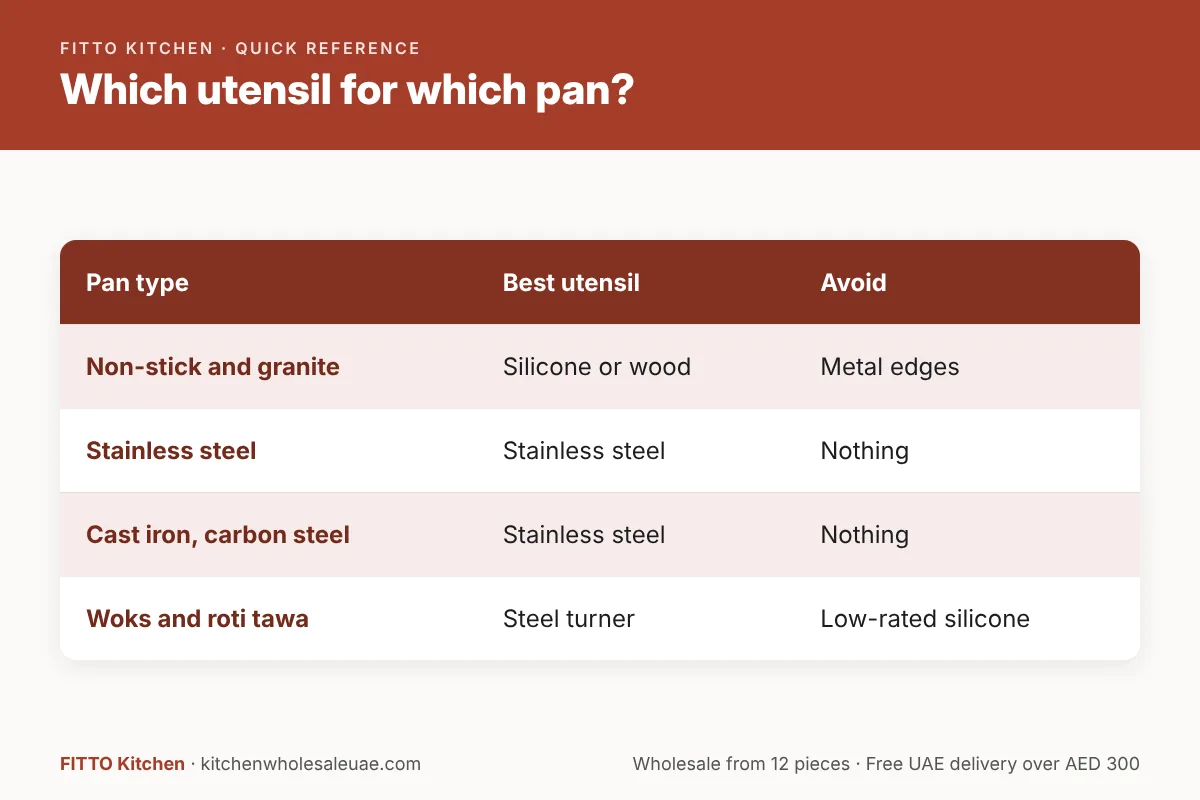
Match the utensil to the pan surface first, then to the job. Our stainless, non-stick and granite cookware comparison explains the pan side of the choice.
| Pan or kitchen | Best utensil | Also fine | Avoid |
|---|---|---|---|
| Non-stick and granite pans | Silicone | Wood | Stainless steel edges |
| Enamelled cast iron | Silicone or wood | Nylon | Sharp metal edges |
| Stainless steel pans | Stainless steel | Silicone, wood | None |
| Cast iron and carbon steel | Stainless steel | Wood | None |
| Woks and roti tawa | Stainless steel turner | Wood | Low-rated silicone |
| Home kitchen with mixed pans | Silicone set plus wooden spoons | One steel ladle | Metal turners on coated pans |
| Café or restaurant line | Stainless steel ladles and turners | Silicone spatulas | Wood if your food-safety plan restricts it |
What should kitchenware retailers stock?
Stock a silicone set for non-stick buyers, wooden spoons as the low-cost line and stainless steel ladles and turners for traditional cooking. Each material serves a different shopper.
Silicone sets in boxed colours sell to new homes and gift buyers. Wooden spoon packs suit price-led shoppers and those who cook slow stews. Stainless steel ladles in several sizes suit families cooking curries, rice and soups in volume. Our kitchen utensils wholesale guide covers the rest of the range.
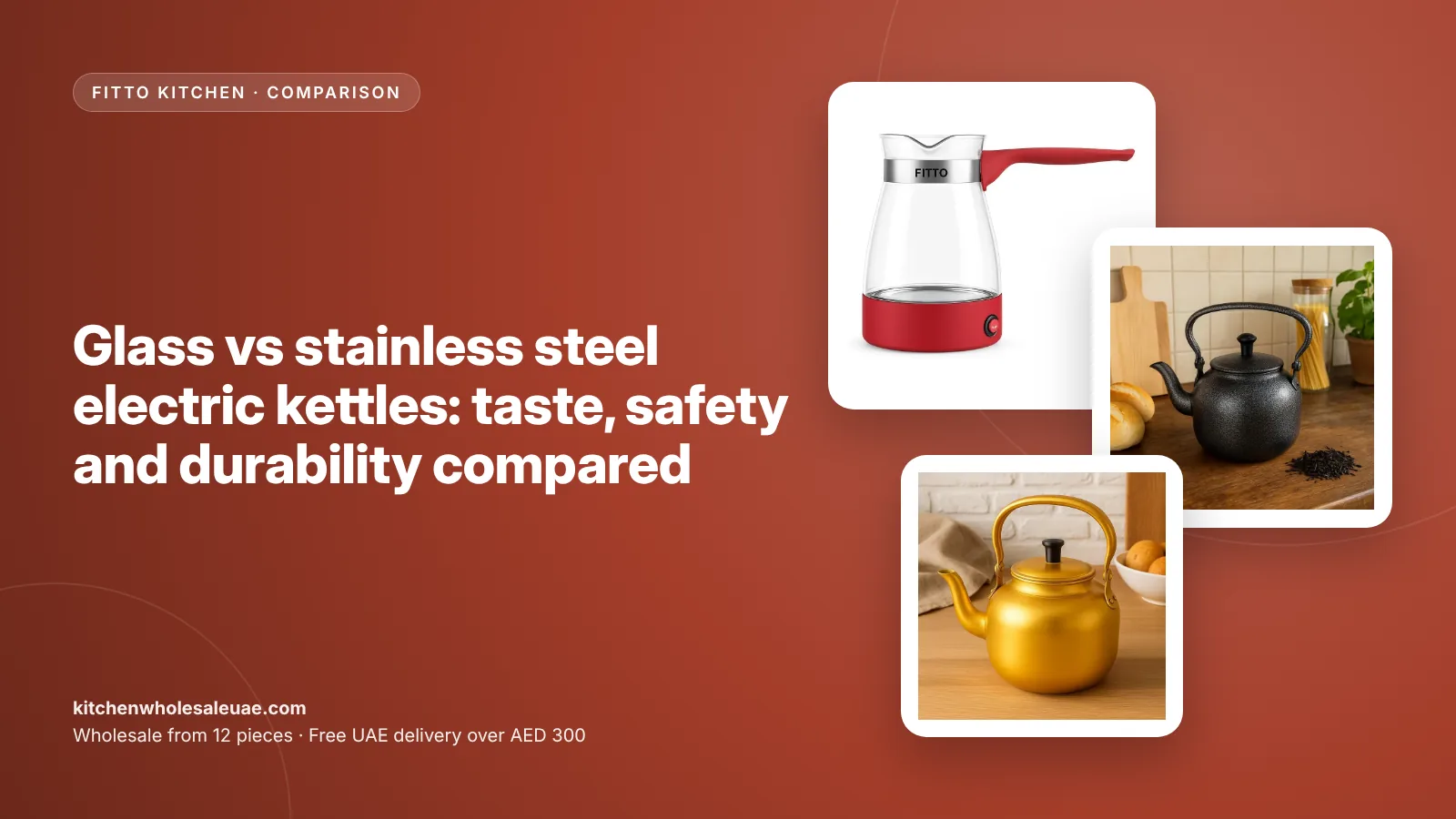
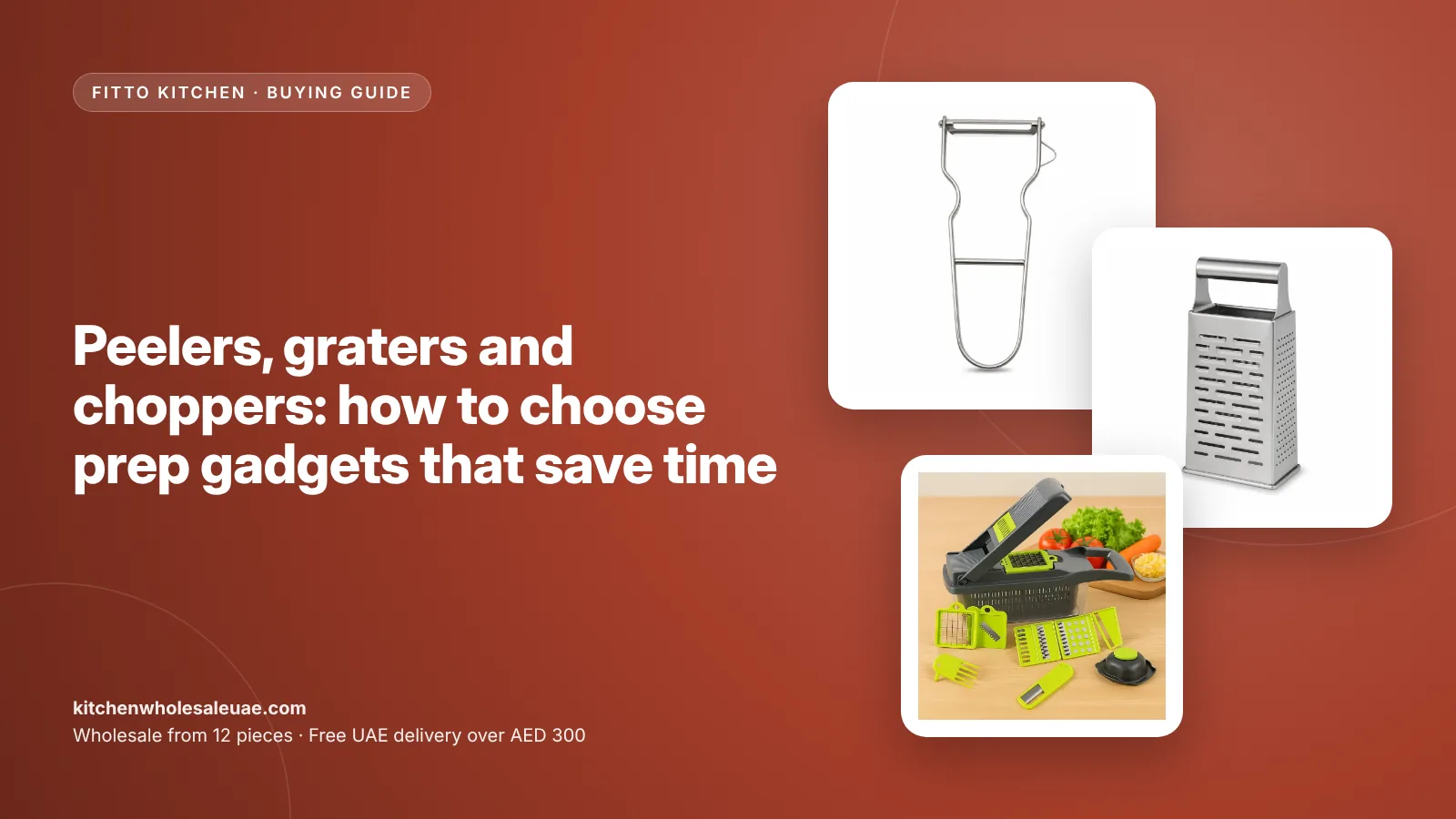
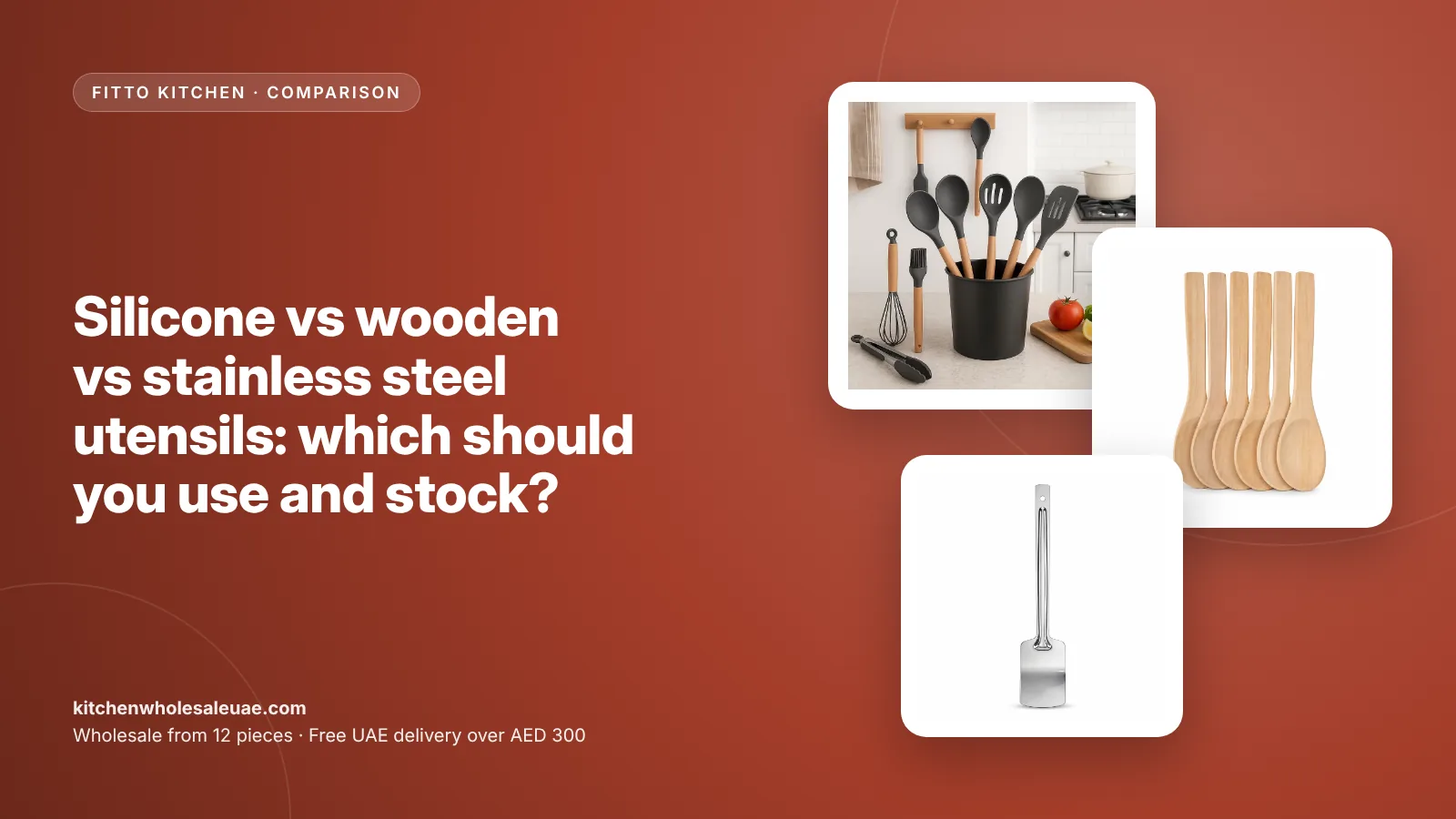
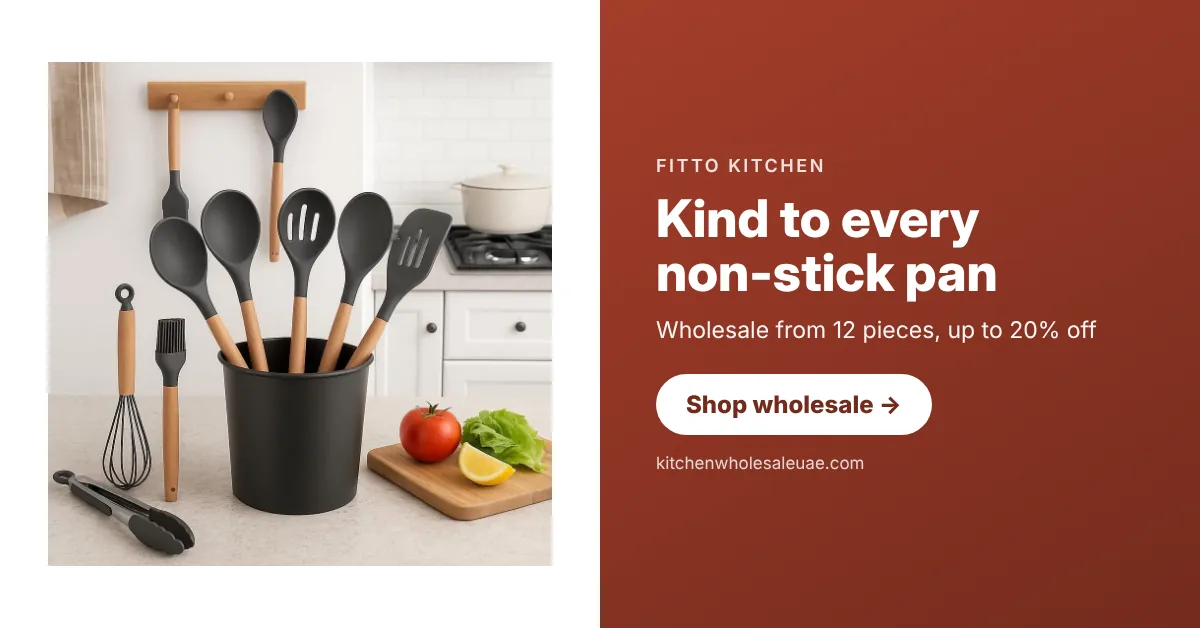
FITTO Trade Pick: One rack, all three materials Stock the 12-piece silicone utensil set with wooden handles, the 6-piece wooden cooking spoon set and the 37 cm stainless steel flat turner to cover every pan type. Wholesale prices start from 12 pieces, with up to 20% saving per piece on 144-piece packs.
The bottom line
Use silicone or wood on non-stick, granite and enamel pans, and stainless steel on steel, cast iron, woks and tawas. Most kitchens are best served by a mix: a silicone set, a few wooden spoons and a steel ladle such as our 28 cm deep curry ladle.
Browse our wholesale kitchen utensils and gadgets, request a quote for a mixed utensil order, or order samples to test the feel first. Delivery is free across all seven emirates over AED 300, and the Trade Desk answers on WhatsApp at +971 55 672 6947. FITTO Kitchen: fit for the way you cook.
FAQ
Are silicone utensils safe for cooking?+
Food-grade silicone is widely used for cooking utensils and is considered stable at normal cooking temperatures. Buy from suppliers who state the material clearly, keep within the heat rating on the label and replace utensils that become sticky, cracked or deeply stained. Do not leave silicone resting on a hot pan rim or burner.
Do wooden spoons hold bacteria?+
Wood is porous, so it can hold moisture and food traces if left wet. Washing in hot soapy water straight after use and drying fully upright keeps wooden spoons hygienic for home cooking. Replace spoons with deep cracks, and avoid soaking or the dishwasher, which open the grain.
Can I use stainless steel utensils on granite cookware?+
It is best not to. Granite-style cookware usually has a non-stick coating, and metal edges can scratch it, even if the surface looks tough. Use silicone or wood instead. Stainless steel suits uncoated pans such as stainless steel, cast iron and carbon steel woks.
How do I remove turmeric stains from silicone spatulas?+
Soak the heads in warm water with bicarbonate of soda, then wash as normal. Leaving the clean utensil in direct sunlight for a few hours also fades turmeric stains. Stains do not affect safety, but oily residue that feels sticky after washing is a sign to replace the utensil.
Are silicone tongs good for non-stick pans?+
Yes. Silicone-tipped tongs grip and turn food without scratching the coating. Our 12 inch silicone tongs are about 31 cm long, which keeps hands back from the heat. Use steel tongs only for grills, cast iron and uncoated pans.