How to make non-stick pans last longer: heat, utensils and cleaning
By FITTO Trade Desk · Last updated 29 October 2026
How to care for non-stick pans comes down to four habits: cook on low to medium heat, never preheat the pan empty on high, use wooden, silicone or nylon utensils, and wash by hand with a soft sponge once the pan has cooled. Replace the pan when food sticks, the coating flakes or the base warps.
Key takeaways
- Heat is the biggest enemy of a non-stick coating; keep the burner at low to medium for most cooking.
- Metal utensils and abrasive scourers cause most scratches, so switch to silicone, wood or nylon.
- Let pans cool before washing; cold water on a hot pan can warp the base.
- Replace a pan when the coating is scratched through, flaking or no longer releases food.
Why do non-stick pans wear out so quickly?
Most non-stick pans wear out early because of three habits: too much heat, metal utensils and harsh cleaning. The coating is a thin layer, and each of these habits removes a little more of it.
A pan that should last years can fail in months. Home cooks lose money, cafés lose speed to sticking eggs, and retailers field coating complaints. This guide gives numbered dos and don'ts, plus clear signs it is time to replace a pan.
At FITTO Kitchen, a wholesale cookware supplier in the UAE, we handle non-stick pans (مقلاة غير لاصقة) for homes, cafés and resellers. These rules suit most non-stick and granite-coated pans; also follow the care guidance supplied with yours.
What heat should you use on a non-stick pan?
Use low to medium heat for most cooking, and medium-high only briefly. A lower flame cooks eggs, pancakes and vegetables well in a non-stick pan.
- Do preheat with a little oil or butter for a minute on medium, rather than heating the pan empty.
- Don't leave an empty pan on a high flame. Very high temperatures break down the coating, and an empty pan reaches them within minutes.
- Do match the pan to the burner. A small pan on a large gas ring overheats the rim and handle.
- Don't use non-stick for fierce searing or wok-style stir-frying. Use stainless steel, cast iron or carbon steel for those jobs.
On UAE gas hobs, keep the flame under the base; if it reaches the sides, turn it down.
Do you need oil in a non-stick pan?
Yes, a little: a teaspoon of oil or butter protects the surface and improves browning.
- Do use liquid oil or butter, spread with a brush or paper towel.
- Don't use aerosol cooking sprays. As a widely shared rule of thumb, their additives can build a sticky film that the coating cannot shed.
- Don't store food in the pan. Acidic sauces can dull the surface over time.
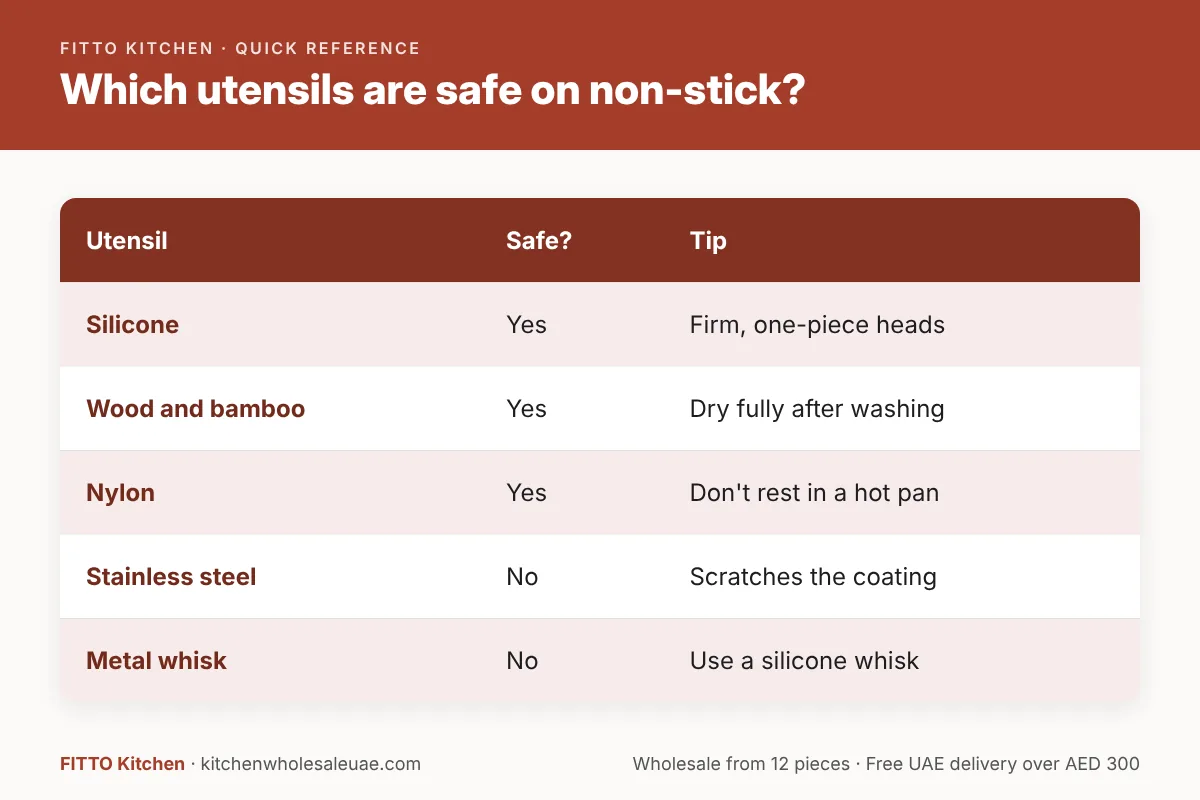
Which utensils are safe for non-stick pans?
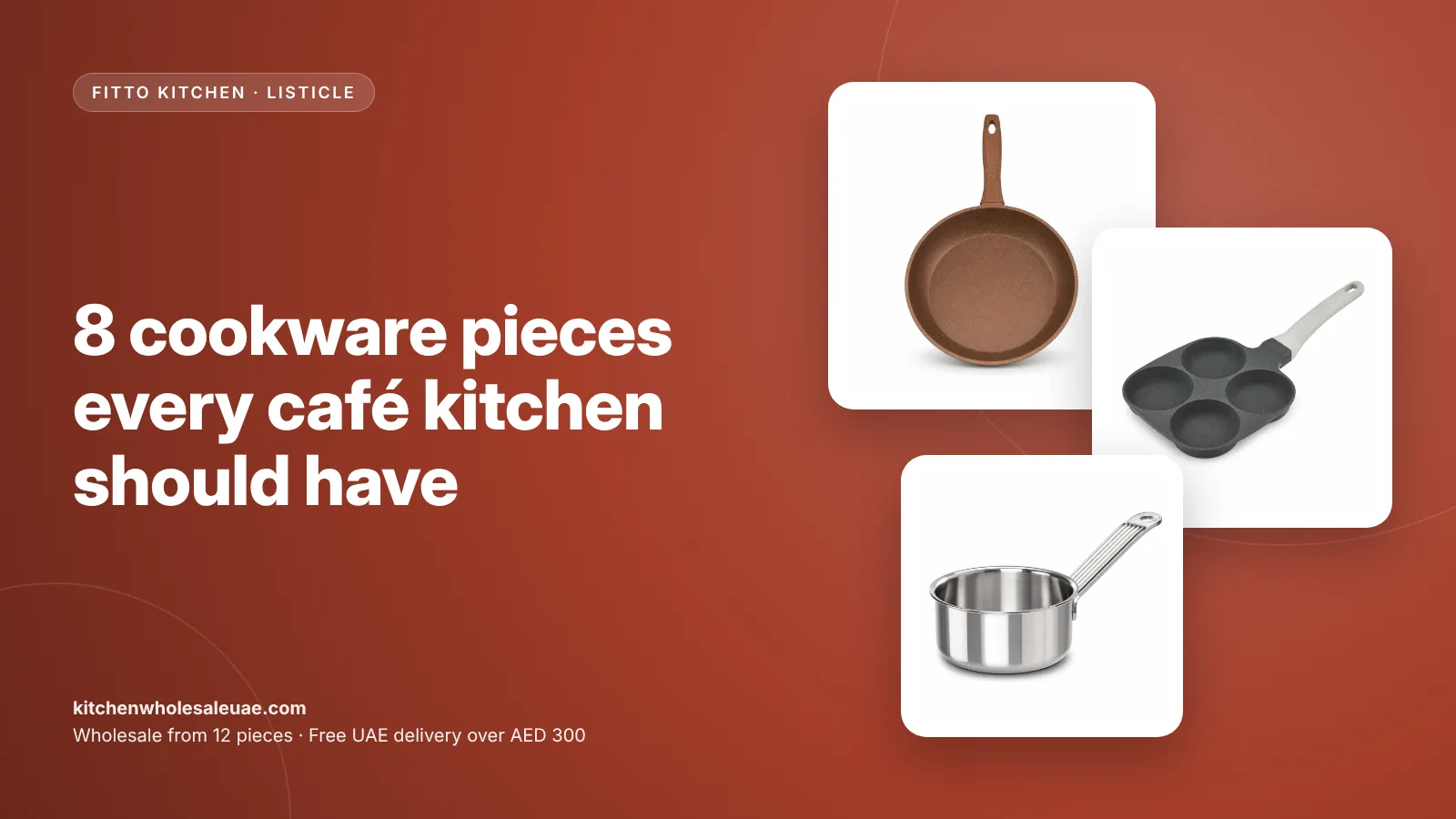
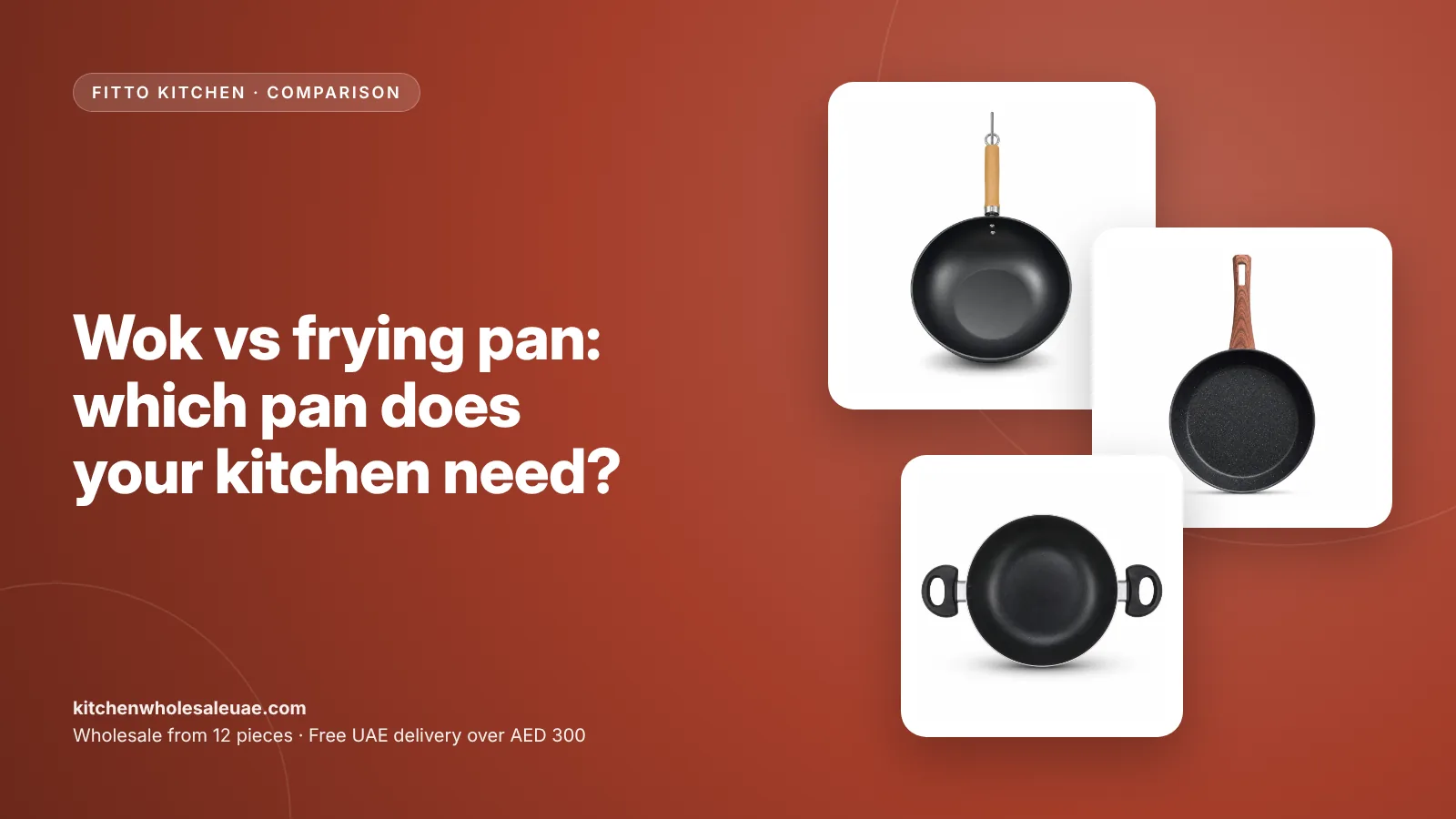
Use silicone, wood, bamboo or nylon utensils, and keep metal spatulas, whisks and forks away. One sharp scrape can cut through the coating.
| Utensil material | Safe for non-stick? | Watch out for |
|---|---|---|
| Silicone | Yes | Choose one-piece heads or firm joints so food cannot trap |
| Wood and bamboo | Yes | Dry fully after washing to prevent cracks |
| Nylon | Yes | Do not rest it in a hot pan; nylon can soften at high heat |
| Stainless steel | No | Scratches the coating, even with gentle use |
| Metal whisk | No | Use a silicone whisk for sauces and eggs |
Practical options from our range include the 12-piece silicone cooking utensil set with wooden handles, the bamboo turner for non-stick cookware and the 33 cm nylon turner. Our silicone vs wooden utensils comparison explains the trade-offs.
How should you wash and store non-stick pans?
Let the pan cool, wash it by hand in warm soapy water with a soft sponge, dry it and store it with a layer of protection.
- Cool first. Plunging a hot pan into cold water can warp the base, so wait a few minutes.
- Hand wash. Dishwasher detergents and heat wear the coating faster, even on dishwasher-safe pans.
- Soak, don't scrub. For stuck food, soak in warm soapy water for 15 minutes, then wipe with the soft side of a sponge.
- Skip abrasives. Steel wool, scouring powder and the green side of a sponge scratch the surface.
- Protect in storage. Hang pans, or put a paper towel between stacked pans.
When is it time to replace a non-stick pan?
Replace a non-stick pan when food sticks even with oil, the coating is scratched through or flaking, or the base has warped.
As a rule of thumb, a well-treated non-stick pan lasts around two to five years at home, often less in a busy café. Check for these signs:
- Eggs stick even with oil on medium heat.
- Deep scratches show bare metal, or the coating peels at the edges.
- The base rocks on a flat surface, so heat is uneven.
For a longer-lasting choice, our non-stick frying pans buying guide compares coatings, and our granite cookware explainer covers granite-coated pans.
How should retailers handle coating complaints?
Ask about heat, utensils, washing and age first; they usually explain the problem. Then give every buyer the care rules at the point of sale.
A printed care card prevents many complaints. Where a pan fails despite correct use, treat it as a quality issue and follow your supplier's returns process.
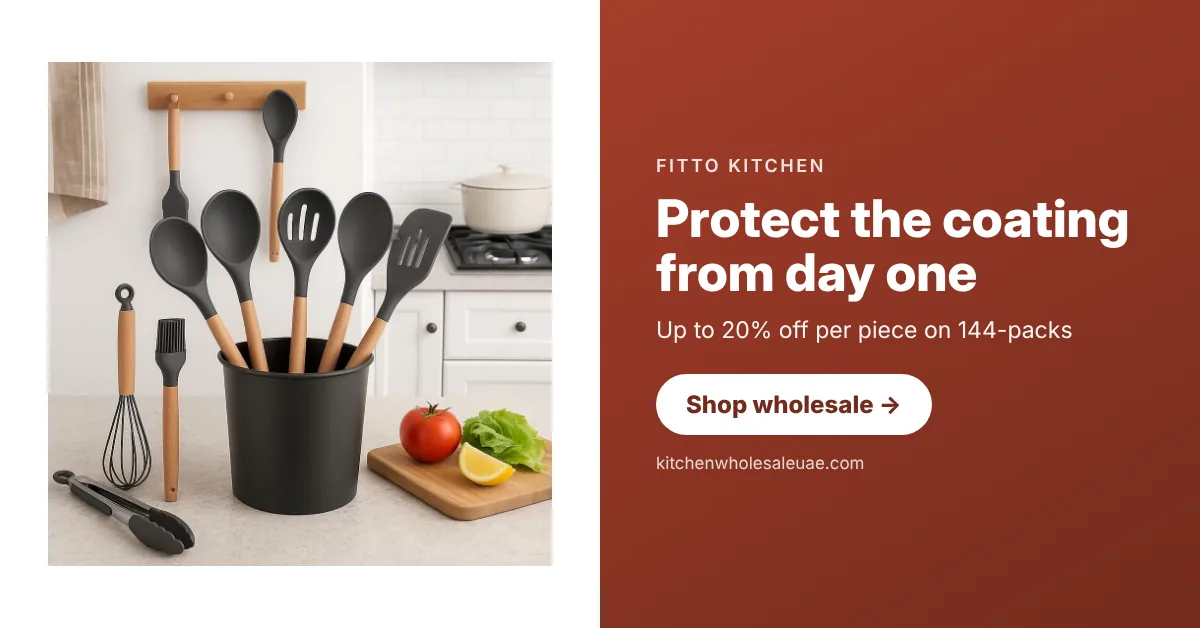
FITTO Trade Pick: Sell the pan with the right utensils Pair the 28 cm non-stick frying pan with the 12-piece silicone utensil set so customers protect the coating from day one. Packs run from 12 to 144 pieces, with up to 20% off per piece on the largest pack.
The bottom line
Non-stick pans last longest on low to medium heat, with soft utensils and gentle hand washing. Replace them when food sticks, the coating flakes or the base warps, and give buyers the care rules from day one.
Browse our cookware and pans range and kitchen utensils and gadgets, request a quote for pans and utensils together, or order a sample to test the coating. Delivery is free over AED 300, and the Trade Desk answers on WhatsApp at +971 55 672 6947. FITTO Kitchen: fit for the way you cook.
FAQ
Can you use metal utensils on non-stick pans?+
It is best not to. Even pans described as scratch-resistant wear faster with metal spatulas, whisks and forks, and one deep scratch can start the coating peeling. Silicone, wood, bamboo and nylon utensils do the same jobs without the damage.
Why is my non-stick pan suddenly sticking?+
The usual causes are a burnt-on film of oil, too much heat or a worn coating. Wash the pan in warm soapy water to remove residue. If food still sticks on medium heat with a little oil, the coating is worn and the pan needs replacing.
Is it safe to keep using a scratched non-stick pan?+
Light surface marks are common and the pan can still be used. If the coating is flaking, peeling or scratched through to the metal, replace it, because food will stick and cook unevenly. If unsure, follow the guidance supplied with your pan.
Can non-stick pans go in the dishwasher?+
Some are labelled dishwasher-safe, but hand washing makes any coating last longer. Strong detergents, hot water and long cycles slowly dull the surface. If you use a dishwasher, choose a gentle programme and keep the pan clear of other items.
How do I remove burnt food from a non-stick pan?+
Fill the cooled pan with warm soapy water and leave it for 15 to 30 minutes. For stubborn spots, simmer water with a spoonful of baking soda for a few minutes, let it cool, then wipe with a soft sponge. Never use steel wool.