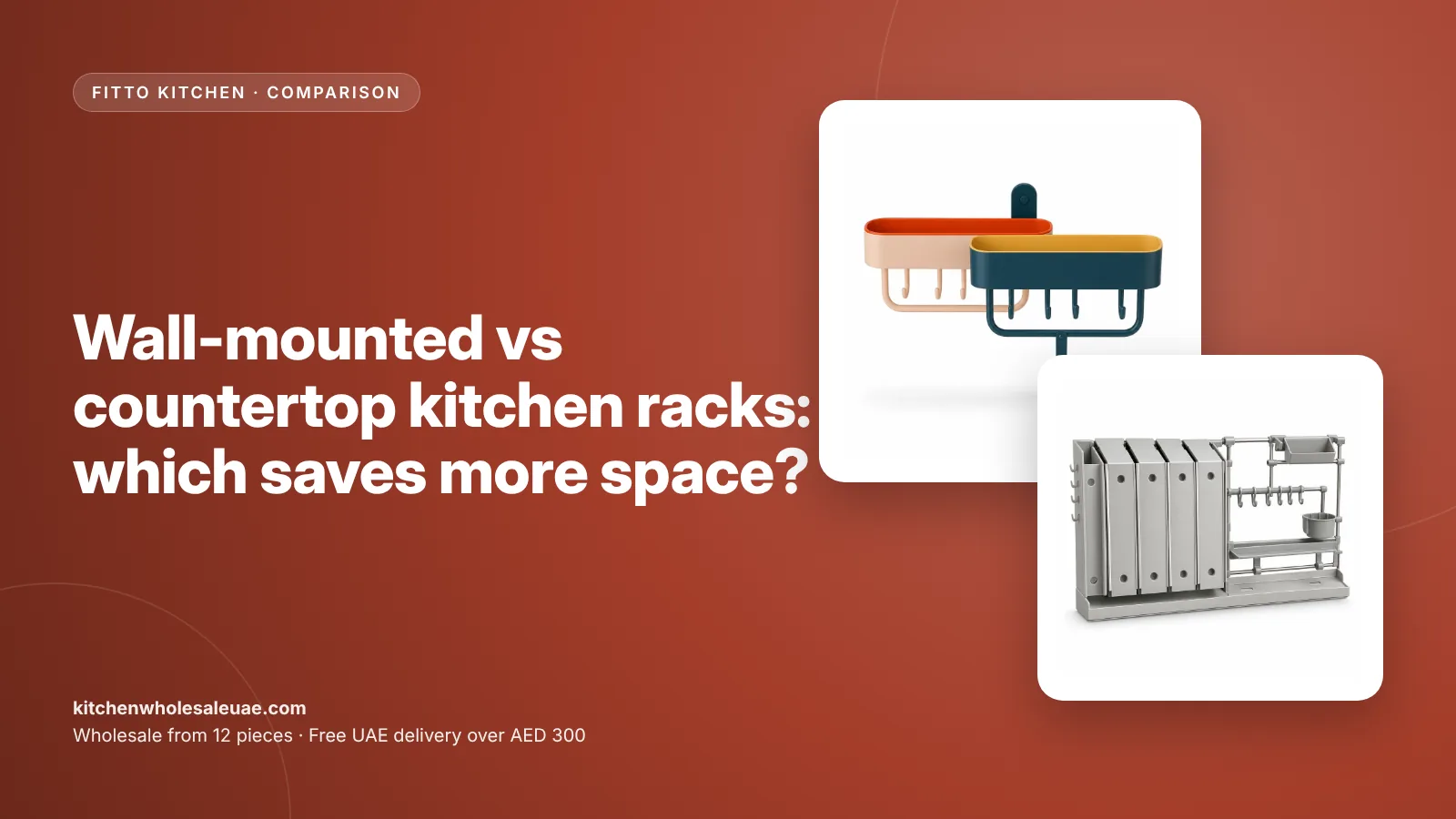
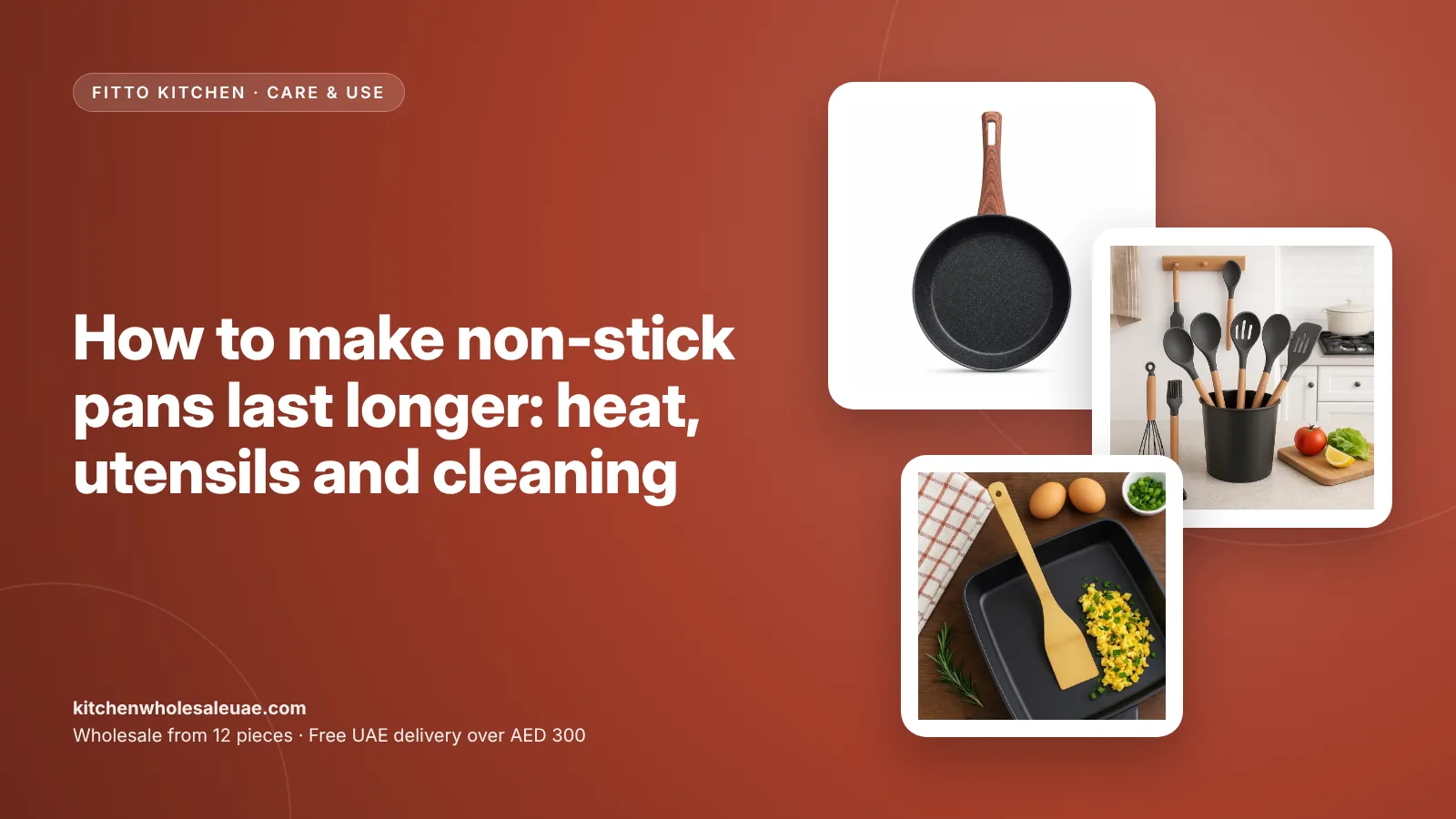
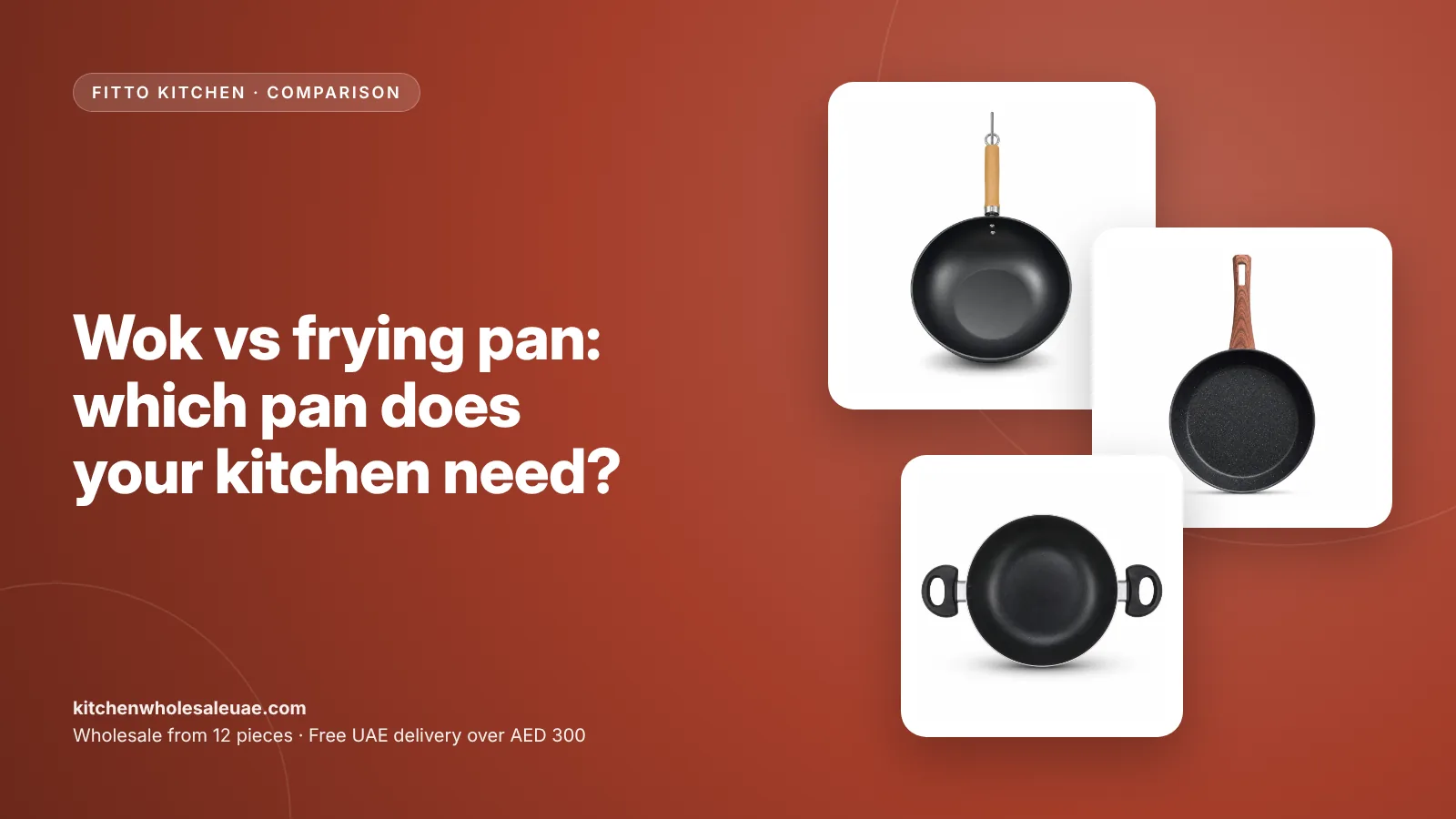
8 cookware pieces every café kitchen should have
By FITTO Trade Desk · Last updated 29 October 2026
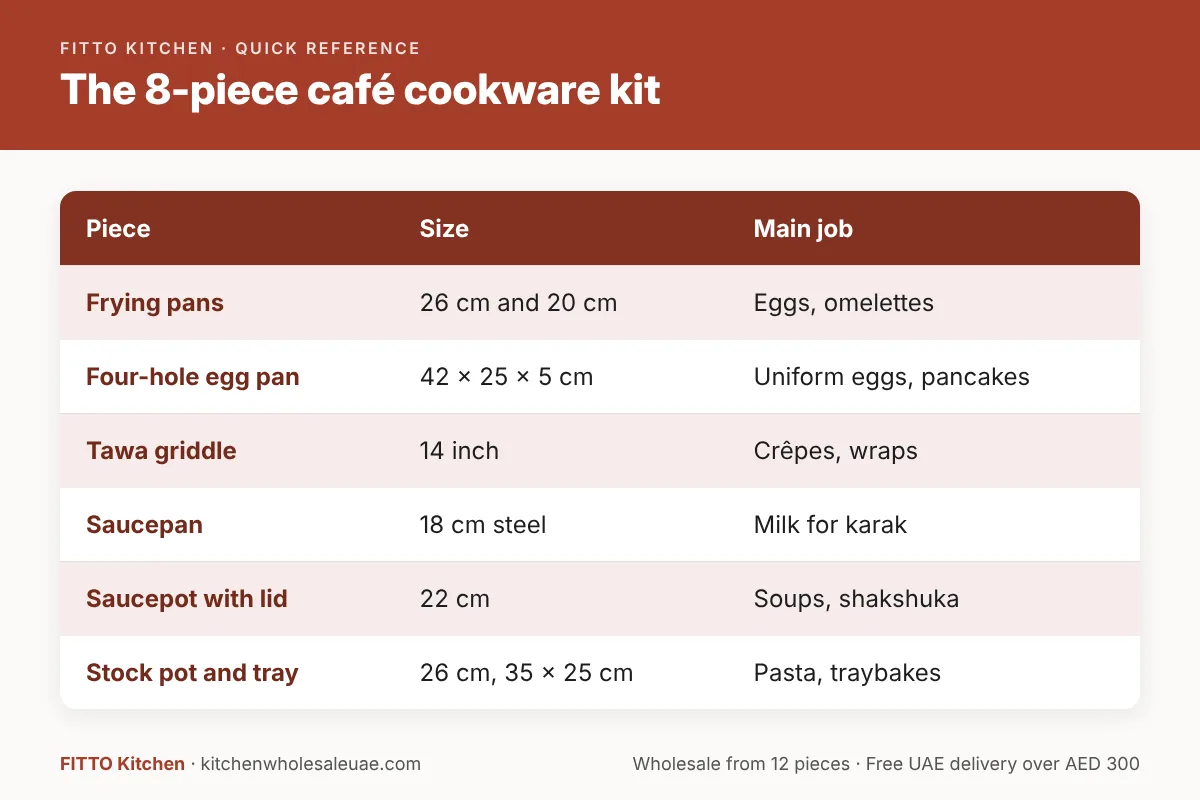
Café kitchen cookware for a compact line comes down to eight pieces: a 26 cm and a 20 cm non-stick frying pan, a four-hole egg and pancake pan, a 14-inch griddle, an 18 cm saucepan, a 22 cm lidded saucepot, a 26 cm stock pot and a deep roasting tray. Together they cover breakfast, lunch and baking.
Key takeaways
- Build the kit around your menu: breakfast-led cafés need more pans, lunch-led cafés more pots.
- Keep at least one spare of every non-stick pan, because coatings wear fastest in a busy café.
- Use stainless steel for liquids and boiling, and non-stick for eggs, pancakes and anything delicate.
- Eight well-chosen pieces fit on a two-burner or four-burner line without crowding.
Why does a café need its own cookware list?
Because a café kitchen is small, the menu is short and every piece of cookware must earn its space. Buying a restaurant-sized set wastes money and shelf room, while buying too little slows service at the breakfast rush.
Most cafés cook on two to four burners with little storage. A pan that is too large blocks a second burner, and a missing egg pan means omelettes queue behind shakshuka. This list settles which café cooking pans to buy first and why.
At FITTO Kitchen, a wholesale cookware supplier in the UAE, we supply café owners and small-menu kitchens (مقهى) from Abu Dhabi to Ras Al Khaimah. Every piece below is from our current range.
How did we choose these 8 pieces?
Each piece had to pass three tests: menu fit, footprint and durability for daily service.
- Menu fit: it must cook something on a typical UAE café menu, such as eggs, pancakes, sandwiches, soups, karak, pasta or traybakes.
- Footprint: it must fit a standard burner and a small shelf, with nothing larger than a 26 cm stock pot.
- Durability: stainless steel where heat and boiling are heavy, and non-stick only where easy release matters.
We left out large woks, cast iron and pressure cookers. They are heavy, slow to clean or too specialised for most small café lines.
| # | Piece | Size | Main jobs | Material |
|---|---|---|---|---|
| 1 | Granite-coated frying pan | 26 cm | Omelettes, halloumi, sautéed sides | Granite-style non-stick coating |
| 2 | Small non-stick frying pan | 20 cm | Single fried eggs, toppings | Aluminium, non-stick |
| 3 | Four-hole egg and pancake pan | 42 x 25 x 5 cm | Uniform eggs and mini pancakes | Non-stick |
| 4 | Tawa griddle | 14 inch | Pancakes, crêpes, wraps, paratha | Non-stick |
| 5 | Saucepan | 18 cm | Milk for karak, sauces, porridge | Stainless steel |
| 6 | Saucepot with glass lid | 22 cm | Soups, shakshuka base, stews | Aluminium, non-stick |
| 7 | Stock pot | 26 cm | Pasta, stock, batch soup | Stainless steel |
| 8 | Deep roasting tray | 35 x 25 x 5 cm | Traybakes, roast vegetables, baked eggs | Coated metal |
Which pans handle the breakfast rush?
Four pans do the breakfast work: two frying pans, a four-hole egg pan and a wide griddle. Together they let one cook run eggs, pancakes and wraps at the same time.
1. Granite-coated frying pan, 26 cm. The 26 cm granite-coated fry pan is the café workhorse for two-egg omelettes, halloumi and sautéed mushrooms. Buy two, so one is always clean.
2. Small non-stick frying pan, 20 cm. The 20 cm non-stick frying pan cooks a single fried egg or toppings for avocado toast without wasting heat or oil.
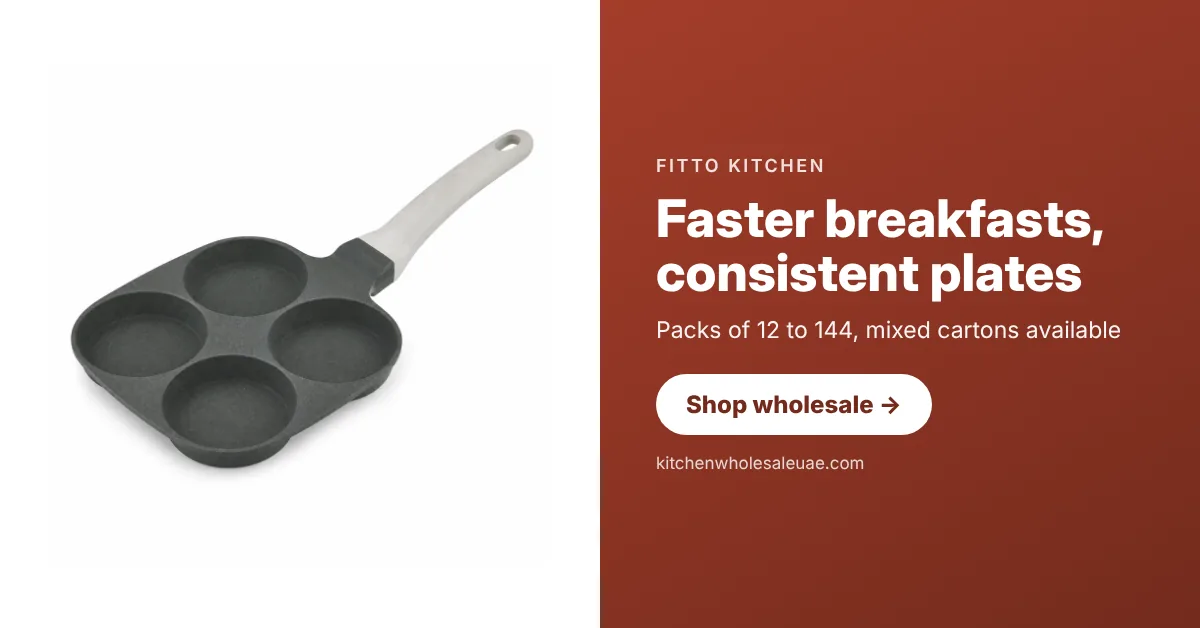
3. Four-hole egg and pancake pan. The four-hole non-stick pancake and egg pan measures 42 x 25 x 5 cm and cooks four round portions at once. Every egg or pancake comes out the same size, which keeps plates consistent for photos and delivery apps.
4. Tawa griddle, 14 inch. The 14-inch non-stick tawa handles pancakes, crêpes, wraps and paratha on one wide surface. It also warms tortillas for breakfast burritos in seconds.
Which pots cover drinks, soups and lunch?
Three pots cover the liquid side of a café menu: a small saucepan, a lidded saucepot and a stock pot.
5. Stainless steel saucepan, 18 cm. The 18 cm stainless steel saucepan heats milk for karak chai, makes sauces and cooks porridge. Stainless steel tolerates the constant boiling that would wear a coating, and the stackable shape saves shelf space.
6. Non-stick saucepot with glass lid, 22 cm. The 22 cm aluminium saucepot with glass lid suits soups, a shakshuka sauce base and stews. The lid lets you check progress without losing heat.
7. Stainless steel stock pot, 26 cm. The 26 cm stock pot measures about 26 x 32 x 22 cm including handles. It boils pasta, makes stock and holds a batch of lentil soup for lunch service. For larger volumes, see our catering cooking pot sizes guide.
Do cafés need oven trays?
Yes, if you have an oven: one deep tray turns spare oven space into traybakes, roast vegetables and baked eggs.
8. Deep roasting tray, 35 x 25 cm. The deep rectangular roasting tray has sides about 5 cm high. It bakes brownies and banana bread, roasts vegetables for salads and makes oven shakshuka for weekend brunch. Avoid metal scourers so the coating stays smooth.
How should a café look after this kit?
Protect the non-stick pieces, keep stainless steel for high heat, and replace coated pans before they cause sticking and complaints.
- Use wooden or silicone utensils on non-stick pans and trays.
- Keep non-stick pans at low to medium-high heat; save the stainless steel pans for fierce boiling.
- Let pans cool before washing; sudden cold water can warp thin bases.
- Check coatings weekly and rotate in spares when food starts to stick.
For the wider fit-out, our café equipment setup guide for Dubai covers coffee, refrigeration and prep, and our restaurant cookware guide helps as your menu grows.
FITTO Trade Pick: A café starter line in eight pieces Start with the 26 cm granite-coated frying pan, the four-hole egg and pancake pan and the 18 cm stainless steel saucepan. Packs run from 12 to 144 pieces, and mixed cartons are available on request, so a group of cafés can share one order.
The bottom line
A compact café line runs well on eight pieces: four breakfast pans, three pots and one oven tray. Choose non-stick for eggs and pancakes, stainless steel for boiling, and keep spares of the pans you use most.
Browse our cookware and pans range, request a quote for your café's full kit, or order a sample of the pans you use most. Delivery is free over AED 300, and the Trade Desk answers on WhatsApp at +971 55 672 6947. FITTO Kitchen: fit for the way you cook.
FAQ
What is the most important pan in a café kitchen?+
For most cafés it is the 24 to 26 cm non-stick or granite-coated frying pan, because eggs drive the breakfast menu. It cooks omelettes, scrambled eggs, halloumi and sautéed sides. Buy at least two, so one is always clean and ready during the morning rush.
Should a café buy non-stick or stainless steel pans?+
Both. Non-stick is best for eggs, pancakes and crêpes, because food releases cleanly with little oil. Stainless steel is best for boiling milk, pasta and stock, because it tolerates high heat and constant use without a coating to wear. A mix gives you speed and long life.
How many frying pans does a small café need?+
As a rule of thumb, plan one frying pan per burner used for breakfast, plus one spare. A two-burner café usually needs two 26 cm pans and one 20 cm pan. Add more if eggs and pancakes make up most of your orders.
How often should café non-stick pans be replaced?+
Replace them when food starts sticking, the coating is scratched through or the base has warped. In a busy café that can be months rather than years, depending on heat, utensils and washing. Rotating spares and using soft utensils makes each pan last noticeably longer.
What size stock pot does a small café need?+
A 24 to 26 cm stock pot suits most cafés. It boils pasta for several orders, makes stock and holds a batch of soup for lunch. Larger pots take longer to heat and need more storage, so only size up if soups or pasta dominate your menu.