Large cooking pots for catering: how to choose litres for 20, 50 and 100 guests
By FITTO Trade Desk · Last updated 29 October 2026
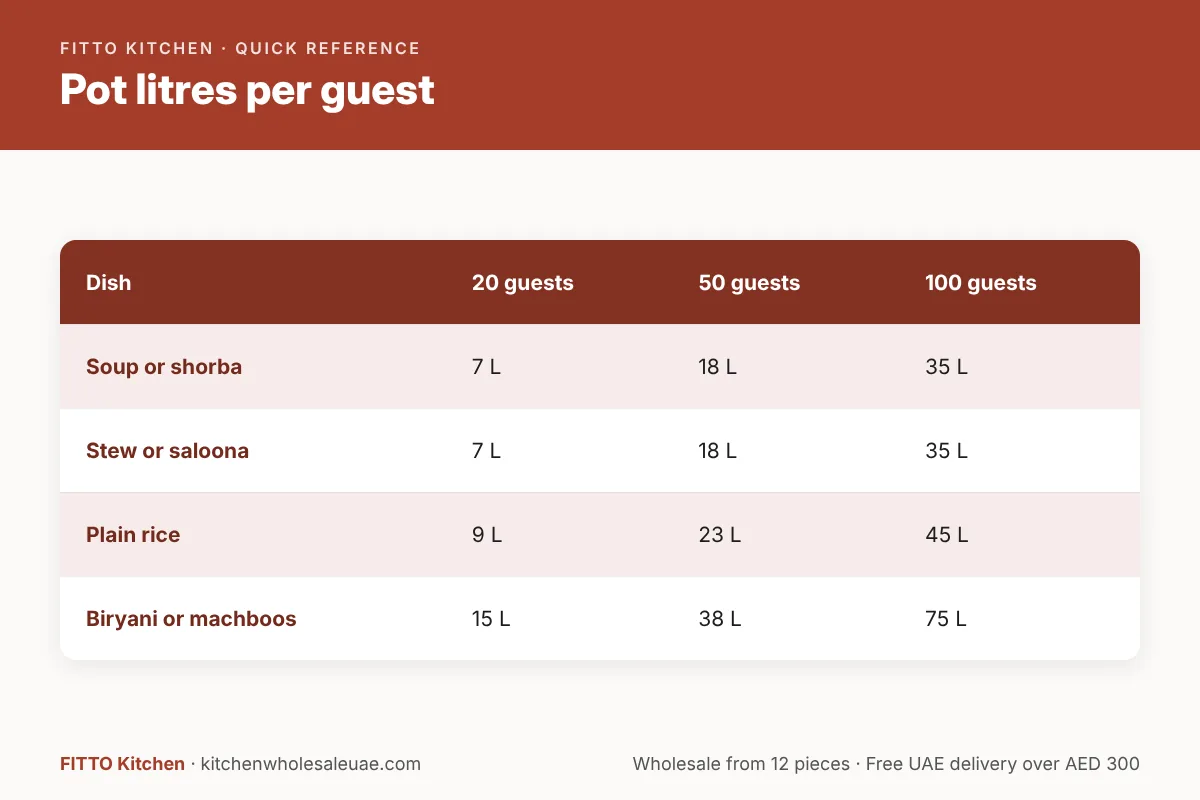
When choosing large cooking pots for catering, allow about 0.35 litres per guest for soup or stew. Allow 0.45 litres for plain rice and 0.75 litres for layered biryani or machboos. For biryani that means roughly 15, 38 and 75 litres for 20, 50 and 100 guests, split across pots two people can lift.
Key takeaways
- Size pots by litres per guest and by dish; the figures here already leave headroom so nothing boils over.
- Above about 35 litres, two or three pots beat one giant pot: they heat evenly, fit normal burners and are safer to lift.
- Aluminium is light and fast for rice; stainless steel suits tomato stews, stocks and holding food.
- A thick base or a flat tawa underneath stops rice scorching during dum.
- Check rivets, handle shape and lid fit before an event, not on the day.
Too small a pot means cooking in two rounds, with the second batch served late. Too big, and the base scorches before the top is hot, and nobody can lift it safely.
This guide gives caterers, event cooks, restaurants and majlis kitchens a litres-per-guest method for rice, stews and soups. At FITTO Kitchen, a wholesale cookware supplier in the UAE, we supply aluminium and stainless steel cooking pots (قدر طبخ كبير) from 26 cm up to 40 cm across.
How many litres of pot do you need per guest?
Plan about 0.35 litres of pot per guest for soups and stews, 0.45 litres for plain rice and 0.75 litres for layered rice with meat. These are rules of thumb for a buffet main course, headroom included.
| Dish | Cooked portion per guest | Pot litres per guest | 20 guests | 50 guests | 100 guests |
|---|---|---|---|---|---|
| Soup, shorba or lentil soup | 250-300 ml | 0.35 L | 7 L | 18 L | 35 L |
| Stew, saloona or curry | 250 ml with rice | 0.35 L | 7 L | 18 L | 35 L |
| Plain white rice | 80-100 g raw rice | 0.45 L | 9 L | 23 L | 45 L |
| Biryani or machboos with meat | 100 g raw rice + 150-200 g meat | 0.75 L | 15 L | 38 L | 75 L |
Cooked basmati takes about three times its raw volume, so rice needs more pot than soup. If you parboil rice the boil-and-drain way, plan 6-8 litres of water per kilo of rice. That needs a separate, larger pot than the one you layer in.
Adjust for the menu: guests eat less main course at an iftar that opens with soup and samosas, and more at a wedding where rice is the centrepiece.
Which large cooking pots for catering cover 20, 50 and 100 guests?
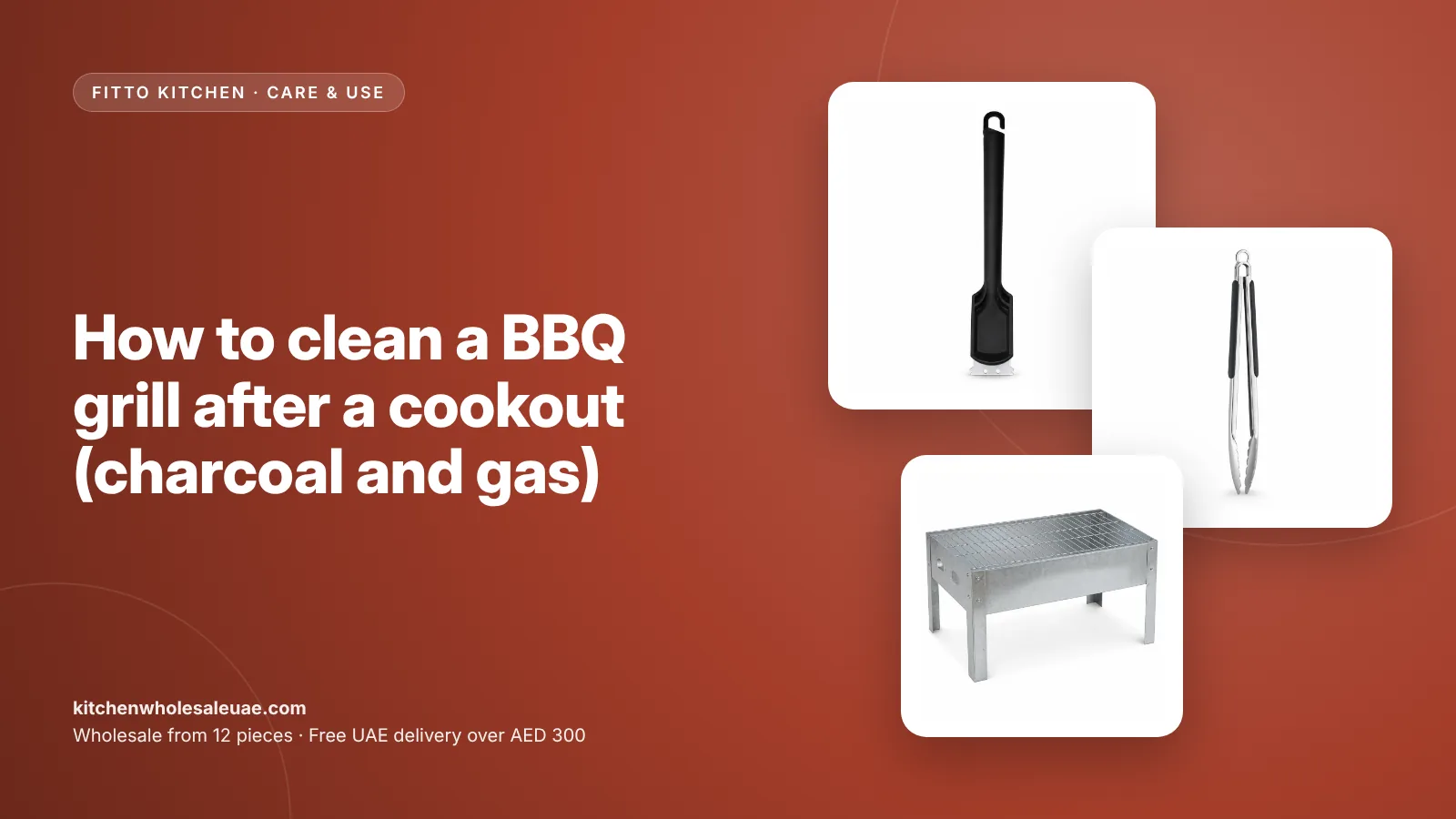
For 20 guests one 30 cm pot is enough; for 50 guests use two pots; for 100 guests work in three 38-40 cm pots. Diameter alone does not tell you litres, so we calculated brimful volume from each FITTO pot's listed diameter and height.
| FITTO pot | Material | Listed size | Approx. brimful volume | Good for |
|---|---|---|---|---|
| Stock pot with riveted handles | Stainless steel | 26 cm, about 22 cm high | About 11 L | Soup for 25-30 |
| Gold stock pot with domed lid | Stainless steel | 28 cm, about 22 cm high | About 13 L | Stews, serving at the table |
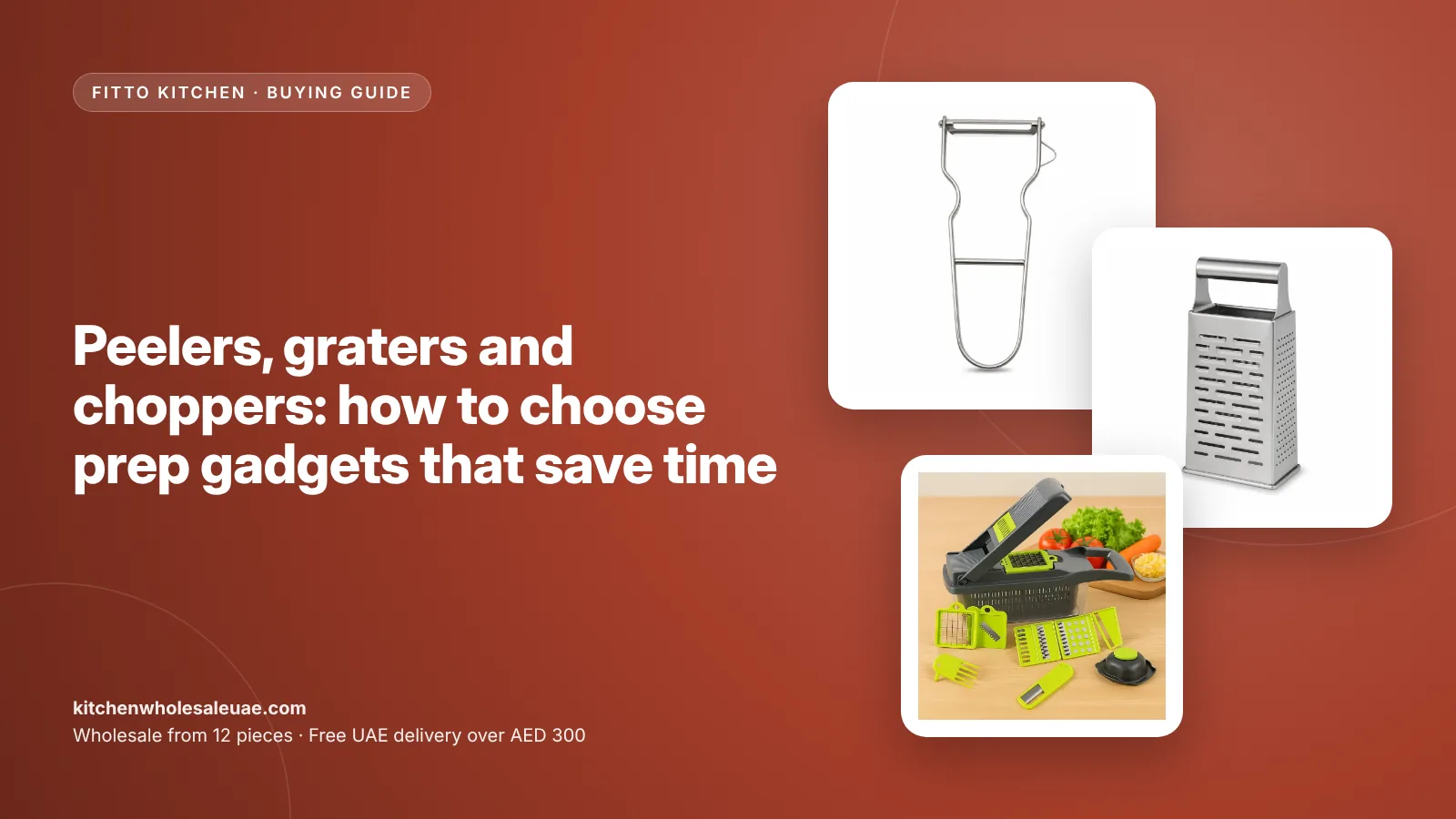
| Belly pot with lid | Aluminium | 32 cm, about 20 cm high | About 16 L | Rice for 30-35 |
| Anodised stockpot with lid | Anodised aluminium | 12 inch, 34 x 34 x 26 cm | Up to about 19 L | Biryani for 20-25 |
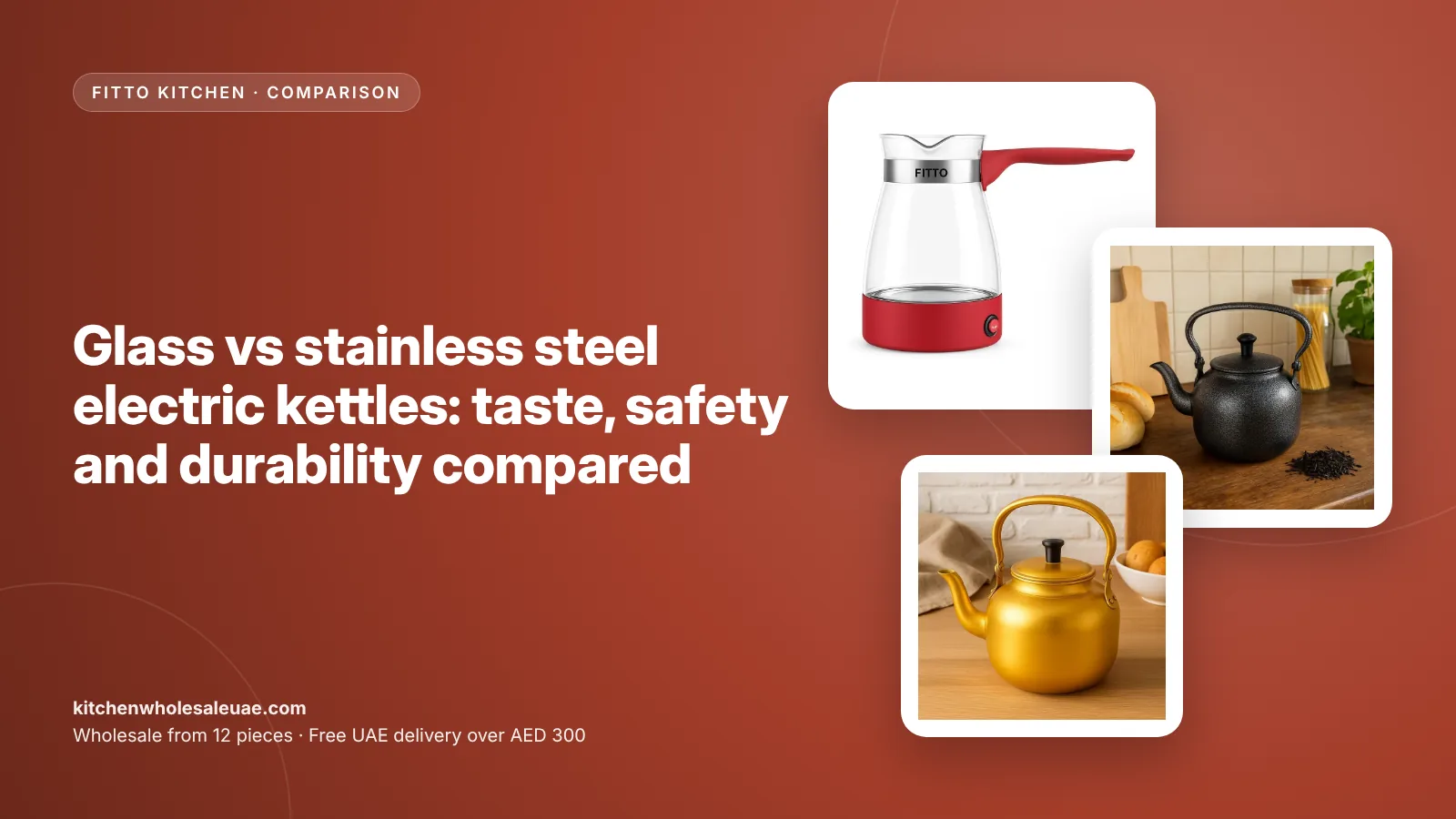
| Cooking pot with wire handles | Aluminium | 38 cm, about 28 cm high | Up to about 31 L | Biryani for 35-40 |
| Cooking pot with domed lid | Aluminium | 40 cm, about 28 cm high | Up to about 35 L | Biryani for 40-45 |
Volumes are our own calculation (3.14 × radius² × height). Where a listed height includes the lid, real capacity is lower. The per-guest figures above already include headroom, so divide brimful litres by them.
A simple plan:
- 20 guests: one 12-inch anodised aluminium stockpot for biryani, or a 26-28 cm stainless pot for soup.
- 50 guests: a 40 cm aluminium cooking pot for rice plus a 12-inch stockpot for the overflow or the stew.
- 100 guests: two 40 cm pots and one 38 cm pot with wire handles, plus a separate soup pot.
Aluminium, anodised or stainless steel: which material suits catering?
Choose aluminium for rice and big boils, anodised aluminium for a harder, easier-clean surface, and stainless steel for acidic stews, stocks and holding.
- Aluminium is light and spreads heat quickly, which is why most large rice pots in the region are aluminium. Our product pages advise against storing acidic food in plain aluminium for long, so move leftover tomato or tamarind dishes to a food container.
- Anodised aluminium has a hardened surface that is less reactive than plain aluminium. Wash it by hand, because strong dishwasher detergents can dull it.
- Stainless steel does not react with tomato, lemon or yoghurt, so it suits saloona, stocks and food held hot for service. It is heavier, and a thin base can catch rice.
Plain aluminium will not work on induction; see our guide to induction-compatible cookware and our comparison of cast iron vs aluminium pans.
What base and burner setup stops rice scorching?
Match the burner to the pot and put a flat heat spreader under rice during dum. A 40 cm pot on a small home ring heats only the centre, so the middle scorches while the edges stay cold.
- Use a wide commercial or outdoor ring for 35-40 cm pots.
- For the final dum stage, many cooks set the pot on a flat tawa such as our 34 cm aluminium tawa to spread low heat evenly.
- Add a little water or ghee to the base before the first rice layer.
What lids and handles are safe for heavy loads?
Look for tight riveted or sturdy wire handles, a lid that sits flat, and plan two-person lifts for anything over about 20 litres full. A 30-litre pot of biryani weighs roughly 25-30 kg before you count the pot.
- Handles: check that rivets do not wobble and that both handles sit level. Hot metal handles always need dry oven gloves.
- Lids: a domed lid gives room for layered rice. For dum, the lid must sit flat on the rim; seal it with dough or foil.
- Moving pots: never lift a full pot down from a high burner alone.
For the wider kitchen line-up, see our restaurant pots and pans guide.
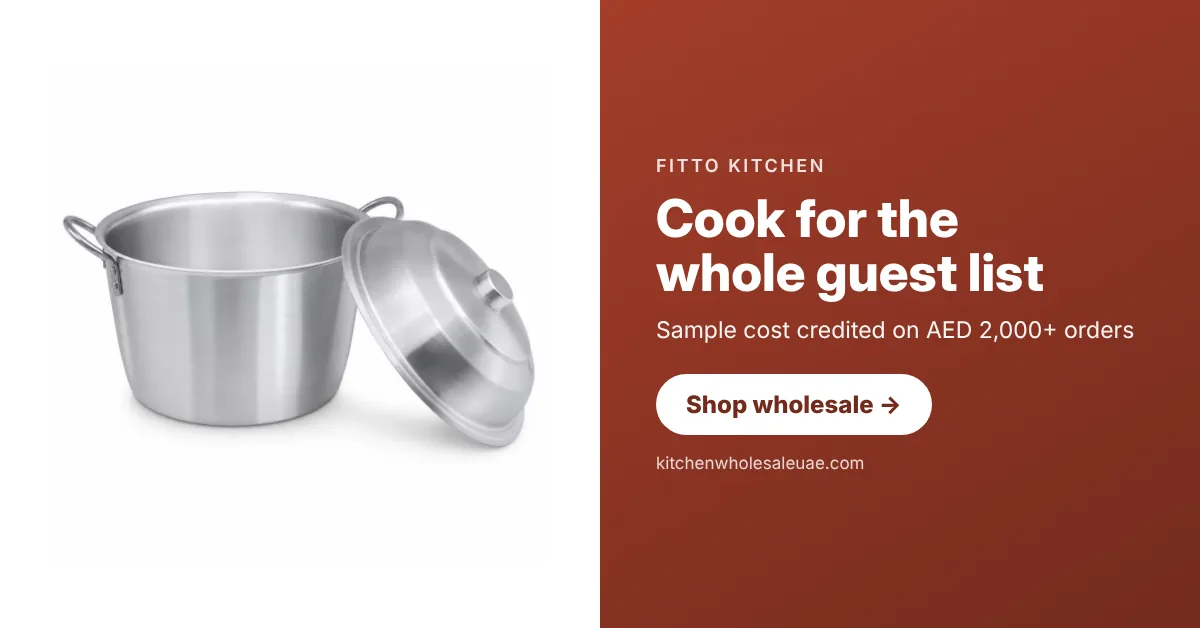
FITTO Trade Pick: A 100-guest pot line-up Build your catering set from the 40 cm aluminium pot, the 38 cm pot with wire handles and the 12-inch anodised stockpot. Order one sample at the single-piece price to test it on your burners; its cost is credited on a bulk order of AED 2,000 or more within 30 days.
The bottom line
Size catering pots by litres per guest and by dish, then split big volumes across two or three pots you can heat evenly and lift safely. Aluminium suits rice, stainless steel suits acidic stews, and the right base and burner stop scorching.
Browse our wholesale cookware and pans and kitchen utensils for ladles and skimmers, request a quote for a mixed carton of pot sizes, or order a sample first. Wholesale prices start from 12 pieces, delivery is free across the seven emirates over AED 300, and the Trade Desk answers on WhatsApp at +971 55 672 6947. FITTO Kitchen: fit for the way you cook.
FAQ
What size pot do I need for biryani for 50 people?+
Plan about 38 litres of pot, based on roughly 100 g of raw rice and 150-200 g of meat per guest. In practice that is one 40 cm pot plus a 12-inch stockpot, or two pots of 20-25 litres.
How much rice should I cook per guest at an event?+
As a rule of thumb, allow 80-100 g of raw rice per guest when rice is the main dish, and less when there are several mains.
Is aluminium or stainless steel better for a catering pot?+
Aluminium is lighter and heats faster, so it suits rice, boiling and big batches. Stainless steel does not react with acidic food, so it suits tomato stews, stocks and holding food hot.
How full should I fill a large cooking pot?+
Fill to about three-quarters for rice, stews and soups, and leave more space for anything that foams, such as boiling lentils or pasta. That headroom stops boil-overs and spills.
How do I stop biryani sticking to the bottom of a big pot?+
Use a pot with a sound base, add a little water or ghee before the first layer and cook the dum stage on low heat. A flat tawa underneath and a burner as wide as the pot prevent a hot spot in the centre.