Cast iron vs aluminium vs carbon steel pans: weight, heat and care compared
By FITTO Trade Desk · Last updated 29 October 2026
Cast iron vs aluminium pan comes down to heat against weight. Cast iron stores the most heat for searing but often weighs two to three times more and rusts if left wet. Aluminium heats fastest, weighs least and suits everyday frying and resale. Carbon steel sits between: lighter than cast iron, sears well, needs seasoning.
Key takeaways
- Searing and grill work: choose cast iron or carbon steel, because both hold heat when cold meat hits the pan.
- Eggs, pancakes and fish: choose coated aluminium, because it heats in a minute or two and releases food easily.
- In UAE humidity, rust is the real risk: dry and oil cast iron and carbon steel after every wash.
- For resale shelves, coated aluminium in 24 and 28 cm is the easiest sell, with carbon steel as the step-up line.
Pick the wrong pan material and you pay twice: a heavy pan sits unused, and a light one steams meat instead of browning it. This guide settles which metal fits which job.
It is for chefs choosing station pans, resellers deciding what to stock and home cooks who want one frying pan (مقلاة) that lasts. At FITTO Kitchen, a wholesale cookware supplier in the UAE, we supply aluminium, carbon steel and black iron pans across the seven emirates.
What is the real difference between cast iron, aluminium and carbon steel?
The difference is how each metal stores and moves heat. Aluminium moves heat quickly and evenly. Cast iron stores a lot of heat but moves it slowly, and carbon steel does a little of both.
Aluminium conducts heat roughly three to four times better than cast iron, so a 28 cm aluminium pan reaches frying heat in one to two minutes. Cast iron is usually around 4–5 mm thick, so it preheats slowly but stays hot. Carbon steel, rolled to about 1.5–3 mm, heats faster and weighs far less.
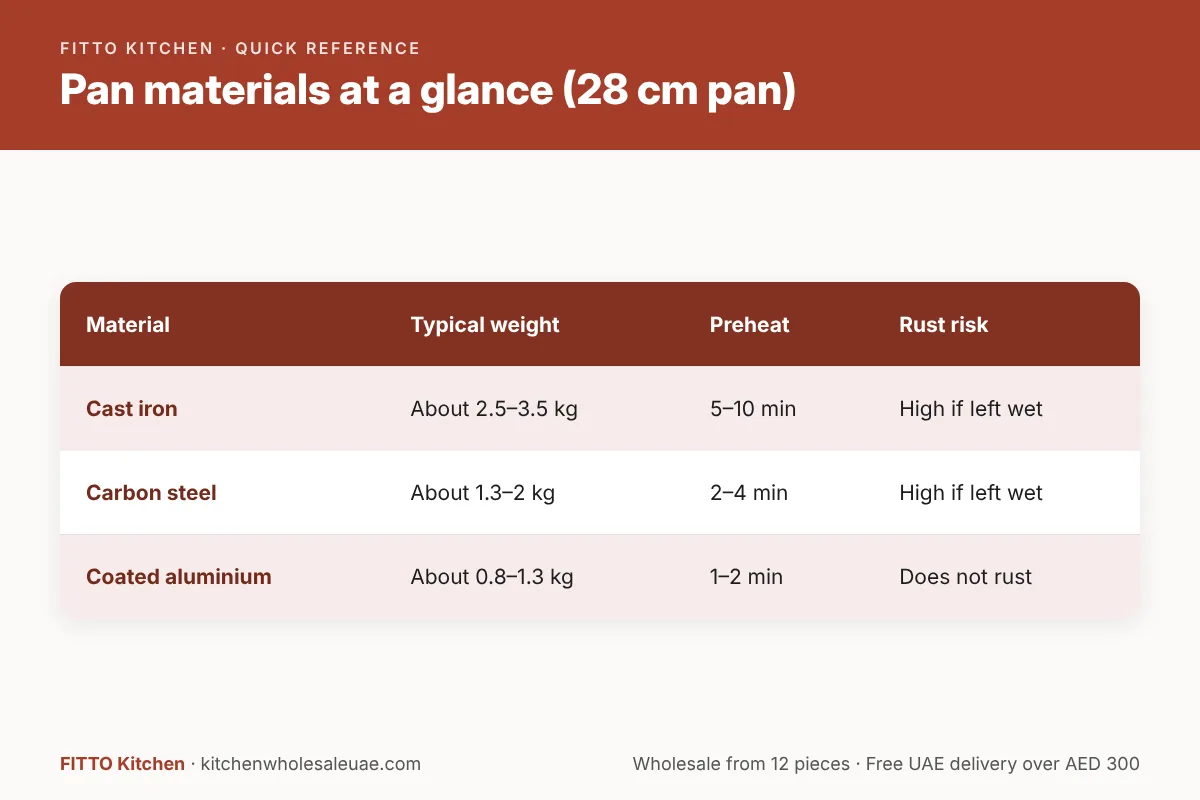
| Factor | Cast iron | Carbon steel | Coated aluminium |
|---|---|---|---|
| Typical weight, 28 cm pan | About 2.5–3.5 kg | About 1.3–2 kg | About 0.8–1.3 kg |
| Preheat on a medium flame | 5–10 min | 2–4 min | 1–2 min |
| Heat retention | Excellent | Good | Low to moderate |
| Rust risk | High if left wet | High if left wet | Does not rust |
| Seasoning | Needed | Needed | Not needed |
| Induction hob | Works | Works | Only with an induction base |
| Lifespan | Decades with care | Decades with care | Until the coating wears |
Weights and times are typical ranges (rules of thumb), so check each product page.
Which pan is best for searing steaks, burgers and kebab meat?
For searing, choose cast iron or carbon steel. Both hold enough heat that a cold 2 cm steak does not drag the pan temperature down, so the surface browns instead of stewing.
A thin aluminium pan loses heat the moment you load it, and the meat releases liquid. For grill and burger kitchens, carbon steel is usually the practical station pan: it heats faster than cast iron and lifts one-handed. Cast iron, at 2.5–3.5 kg for 28 cm, usually needs two hands, so it earns its place for oven-finished dishes and sizzling plates.
For stainless steel and granite options, see our stainless steel vs non-stick cookware comparison.
Which pan suits everyday frying in a café or home kitchen?
Coated aluminium suits everyday frying best. It heats in a minute or two, weighs around a kilo, and eggs and fish release without a seasoning routine.
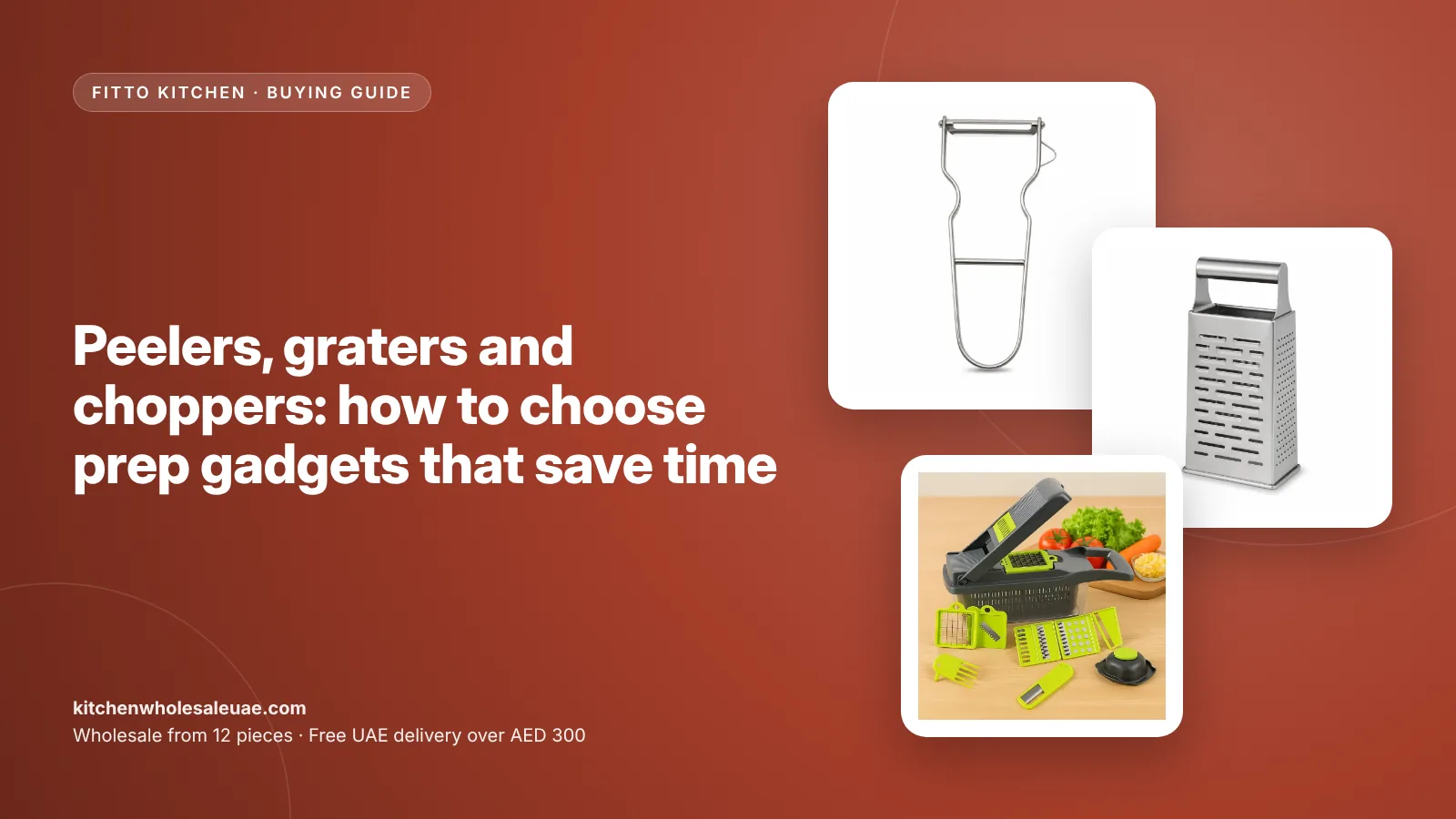
On a breakfast line, a cook flipping eggs for four hours feels every extra kilo. Forged aluminium has a thicker body than thin pressed pans, so it resists warping on strong gas flames. Sizes of 24 and 28 cm cover most café and family cooking; our non-stick frying pan guide covers coatings in detail.
The trade-off is lifespan: a coated pan lasts until the coating wears, so keep metal utensils and empty-pan high heat away.
Where does a black iron tawa fit?
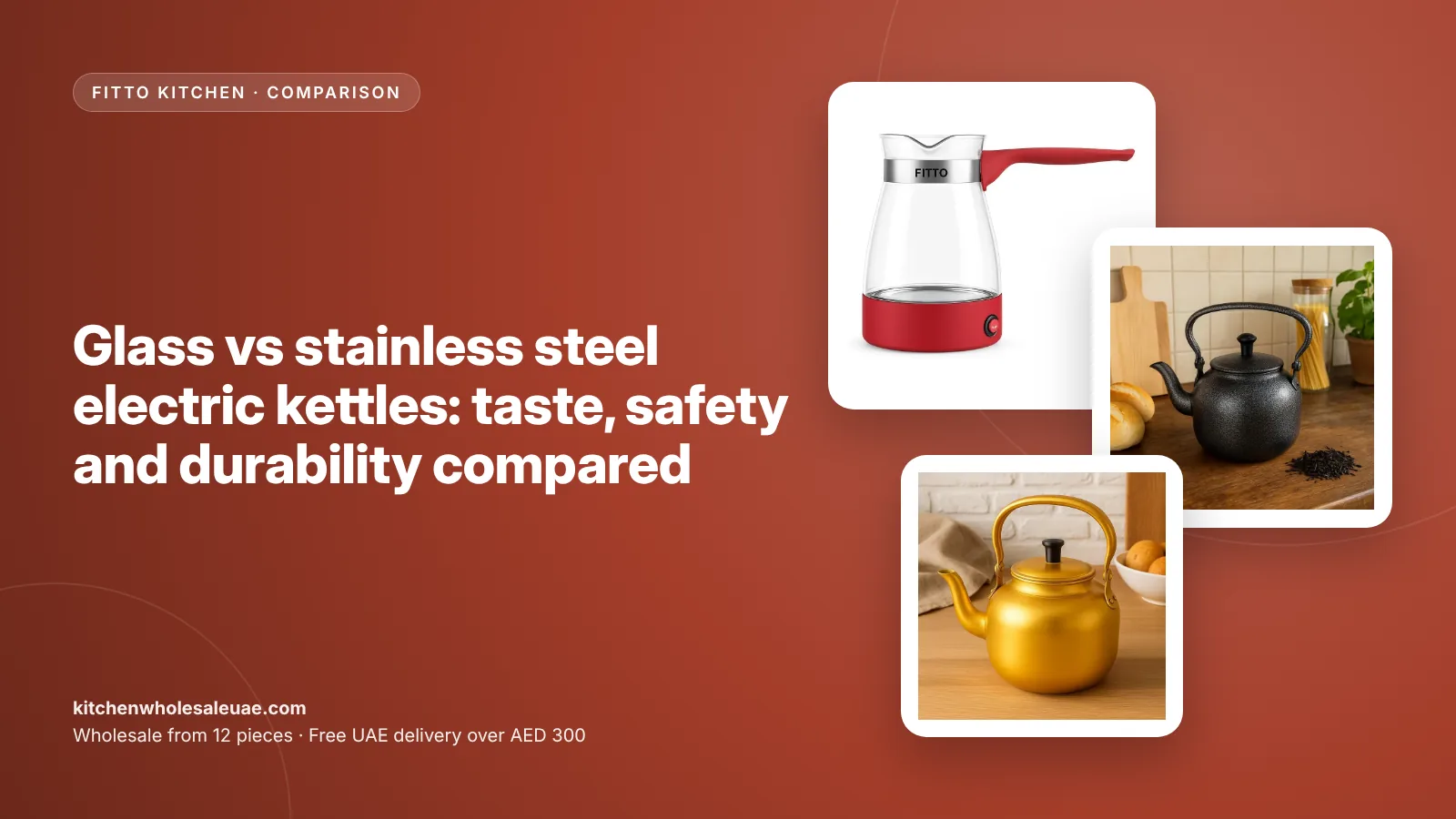
A black iron tawa is a flat, bare-metal griddle that behaves like carbon steel. It needs the same seasoning and drying, and browns flatbreads evenly.
At 14 inches (about 36 cm), it fits chapati, paratha and dosa for a family or small line. Cooks who dislike seasoning can use a coated aluminium tawa instead, without metal scrapers.
How does UAE humidity affect cast iron and carbon steel?
Humidity is the main enemy of bare iron and steel pans. Cast iron and carbon steel can show rust spots overnight if left to drip-dry, especially in coastal cities during the humid late-summer months.
Follow this routine after every wash:
- Rinse the pan with hot water while it is still warm.
- Dry it with a cloth, then set it on low heat for 1–2 minutes.
- Wipe a few drops of neutral oil, such as sunflower, over the cooking surface.
- Heat until the oil just starts to smoke, then let it cool.
- Store pans with paper towel between them, away from sink steam.
Never put cast iron or carbon steel in a dishwasher or leave it to soak. Resellers should store cartons off the floor in a dry room.
Cast iron vs aluminium pan: which should you choose for each job?
Choose by the job, not by fashion. Most kitchens need an iron-based pan for searing and a coated aluminium pan for everyday frying.
| Job | Best choice | Why |
|---|---|---|
| Searing steaks and burgers | Cast iron or carbon steel | Holds heat when food goes in |
| Stir-fry and tossing | Carbon steel wok | Light, takes high heat |
| Flatbread, paratha and dosa | Black iron or aluminium tawa | Wide, flat, even surface |
| Eggs, pancakes and fish | Coated aluminium | Fast heat, easy release |
| Resale fast mover | Coated aluminium, 24 and 28 cm | Light, no care routine |
What should resellers and restaurants stock?
Lead with coated aluminium and add carbon steel for high-heat cooks. Cast iron is a specialist line for enthusiasts.
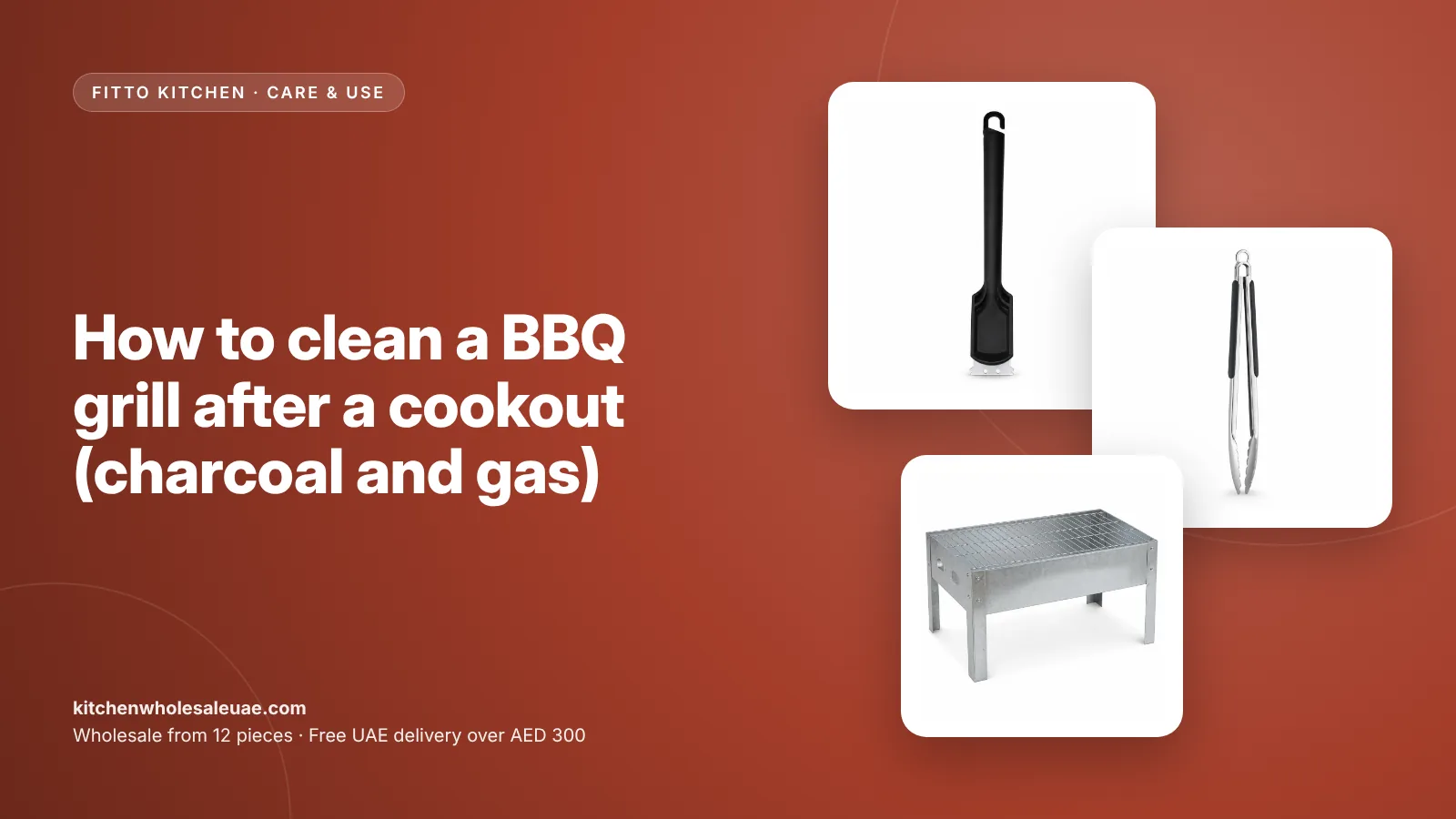
We do not list cast iron skillets at the time of writing; our iron-based options are carbon steel woks, including a 50 x 36 x 12 cm carbon steel wok for volume lines, and the black iron tawa. Shelve iron pans beside a care card: dry, oil, store dry. Planning a full line? Use our restaurant cookware guide.
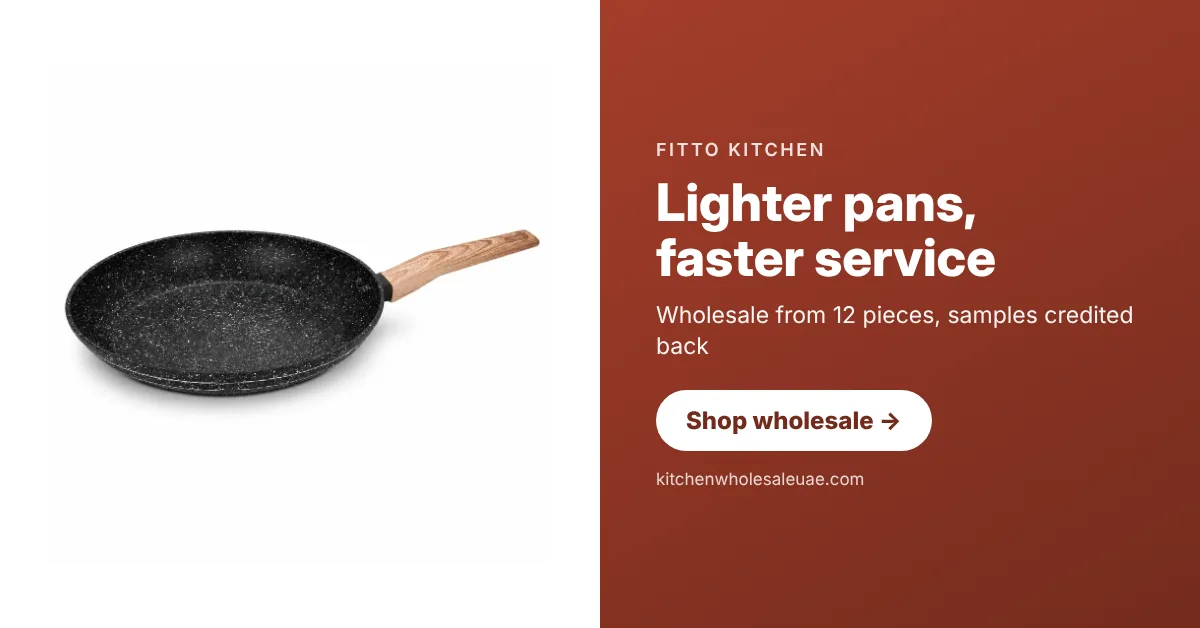
FITTO Trade Pick: Pans that suit the job For searing and stir-fry, the carbon steel wok with wooden handle and the 14-inch black iron tawa take high heat and season with use. For fast daily frying, the 28 cm forged aluminium frying pan and the 30 cm non-stick aluminium frying pan stay light in the hand. Not sure which suits your line? Order one sample first; we credit its cost on a bulk order of AED 2,000+ within 30 days.
The bottom line
Cast iron wins on stored heat, aluminium on speed and weight, and carbon steel on balance. Most kitchens need two of the three. Your care routine decides lifespan more than the price tag.
Browse our wholesale cookware and pans, request a quote for a mixed carton, or order a sample to feel the weight first. Wholesale prices start from 12 pieces, delivery is free across the seven emirates over AED 300, and the Trade Desk answers on WhatsApp at +971 55 672 6947. FITTO Kitchen: fit for the way you cook.
FAQ
Is cast iron better than aluminium for frying?+
Cast iron is better for searing because it stores more heat and keeps browning meat when food goes in. Aluminium is better for everyday frying because it heats in one to two minutes, weighs about a third as much and, when coated, releases eggs easily.
Does carbon steel rust in the UAE?+
Yes. Carbon steel is mostly iron, so it rusts if left wet, and humid coastal summers speed this up. Dry the pan straight after washing, warm it on low heat for a minute and wipe on a thin layer of oil. Light rust scrubs off.
Can aluminium pans be used on induction hobs?+
Plain aluminium does not work on induction because it is not magnetic. It works only with a steel induction plate fused to the base. Hold a fridge magnet to the base: if it sticks firmly, the pan will work. Cast iron and carbon steel work on induction without an extra base.
How do you season a new carbon steel pan?+
Wash off the factory coating with hot soapy water and dry the pan fully. Heat it, wipe a thin layer of neutral oil over the inside and heat until it smokes lightly. Let it cool and repeat two or three times. The surface darkens with use.
Which pan material lasts the longest?+
Cast iron and carbon steel last longest, often decades, because there is no coating to wear out; rust can be scrubbed off and the pan re-seasoned. Coated aluminium lasts until the non-stick surface wears, which depends on heat, utensils and washing. Gentle heat and wooden or silicone tools extend its life.