Wok vs frying pan: which pan does your kitchen need?
By FITTO Trade Desk · Last updated 29 October 2026
In the wok vs frying pan choice, the wok wins for stir-fries, fried rice and noodles, because its sloped sides let you toss food over high heat. The frying pan wins for eggs, searing and shallow frying, thanks to its wide flat base. For curries and deep frying, a deeper kadai is often better than either.
Key takeaways
- Choose a wok for fast, high-heat stir-frying and tossing; choose a frying pan for flat, even contact.
- A kadai is deeper with steeper sides, which suits curries, gravies and deep frying.
- Carbon steel woks suit restaurants with strong gas burners; non-stick woks suit home cooks.
- Most kitchens need both: one 28 to 30 cm wok and one 24 to 28 cm frying pan.
Why does the shape of the pan matter?
Because shape decides where the heat is, how much oil you need and how food moves. Buy the wrong shape and you either crowd and steam food that should sear, or splash oil across the hob.
Home cooks often buy one pan and force it to do everything, then blame the coating when results disappoint. Restaurants lose speed when the line uses the wrong pan for the dish, and resellers get returns when customers buy a shape that does not suit their cooking. This comparison settles which pan does what, with a verdict for stir-fry, curry and everyday frying.
At FITTO Kitchen, a wholesale cookware supplier in the UAE, we supply woks, kadais and frying pans to homes, Asian and Indian restaurants and resellers across the emirates.
What is the difference between a wok and a frying pan?
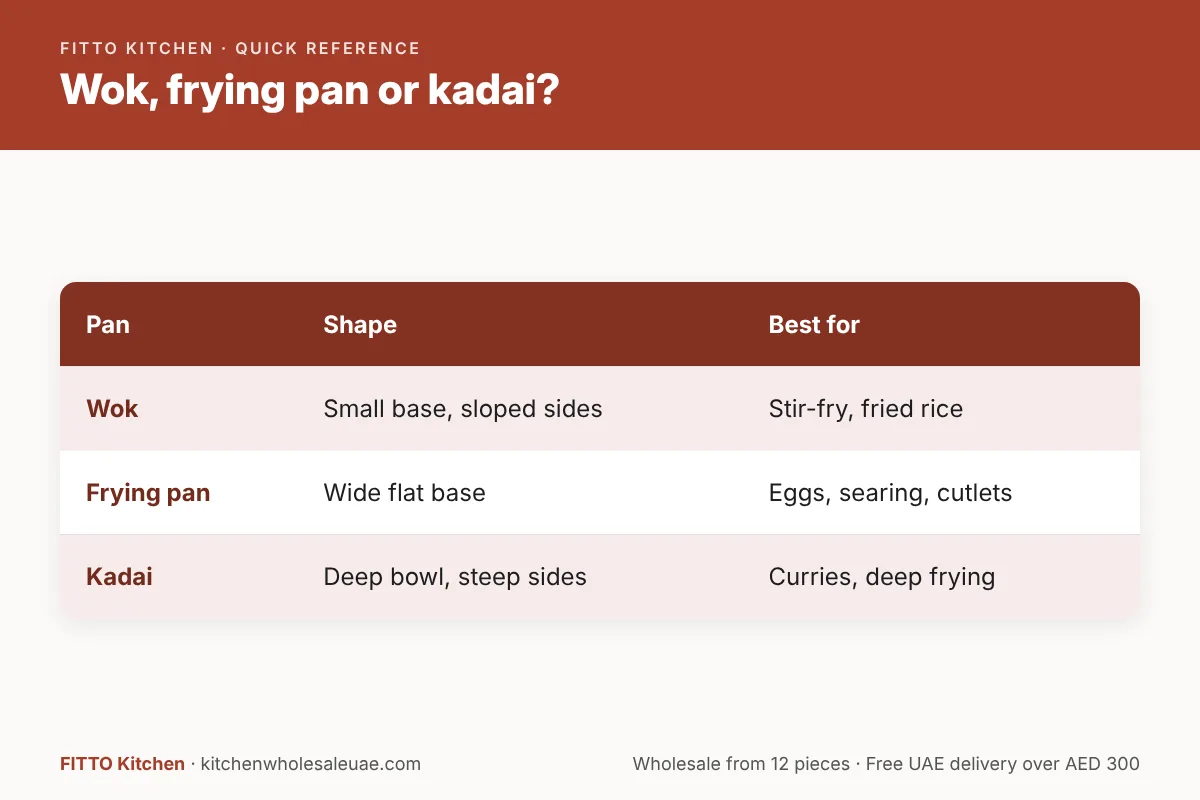
A wok has a small base and tall, sloped sides; a frying pan (مقلاة) has a wide flat base and low sides. The wok concentrates heat in the centre and keeps the sides cooler, while a frying pan spreads heat across one even surface.
| Feature | Wok | Frying pan | Kadai |
|---|---|---|---|
| Shape | Small base, wide sloped sides | Wide flat base, low sides | Deep bowl, steep sides |
| Heat zones | Very hot centre, cooler sides | Even across the base | Hot base, deep body |
| Oil for frying | Little for stir-fry, moderate for deep frying | Thin layer for shallow frying | Generous for deep frying |
| Best dishes | Stir-fries, fried rice, noodles | Eggs, steaks, pancakes, cutlets | Curries, gravies, pakoras |
| Typical handles | One long handle or two loops | One long handle | Two loop handles |
| Common sizes | 28-36 cm | 20-30 cm | 21-34 cm |
When is a wok the better choice?
Use a wok when the dish needs high heat, constant movement and room to toss, such as stir-fries, fried rice and noodles. You push cooked food up the cooler sides while new ingredients hit the hot centre.
The sloped sides also mean a stir-fry needs only a spoonful or two of oil, and food stays in the pan when you toss it. For deep frying, the bowl shape lets you reach a usable depth with less oil than a straight-sided pot of the same width.
Choose the material for the kitchen:
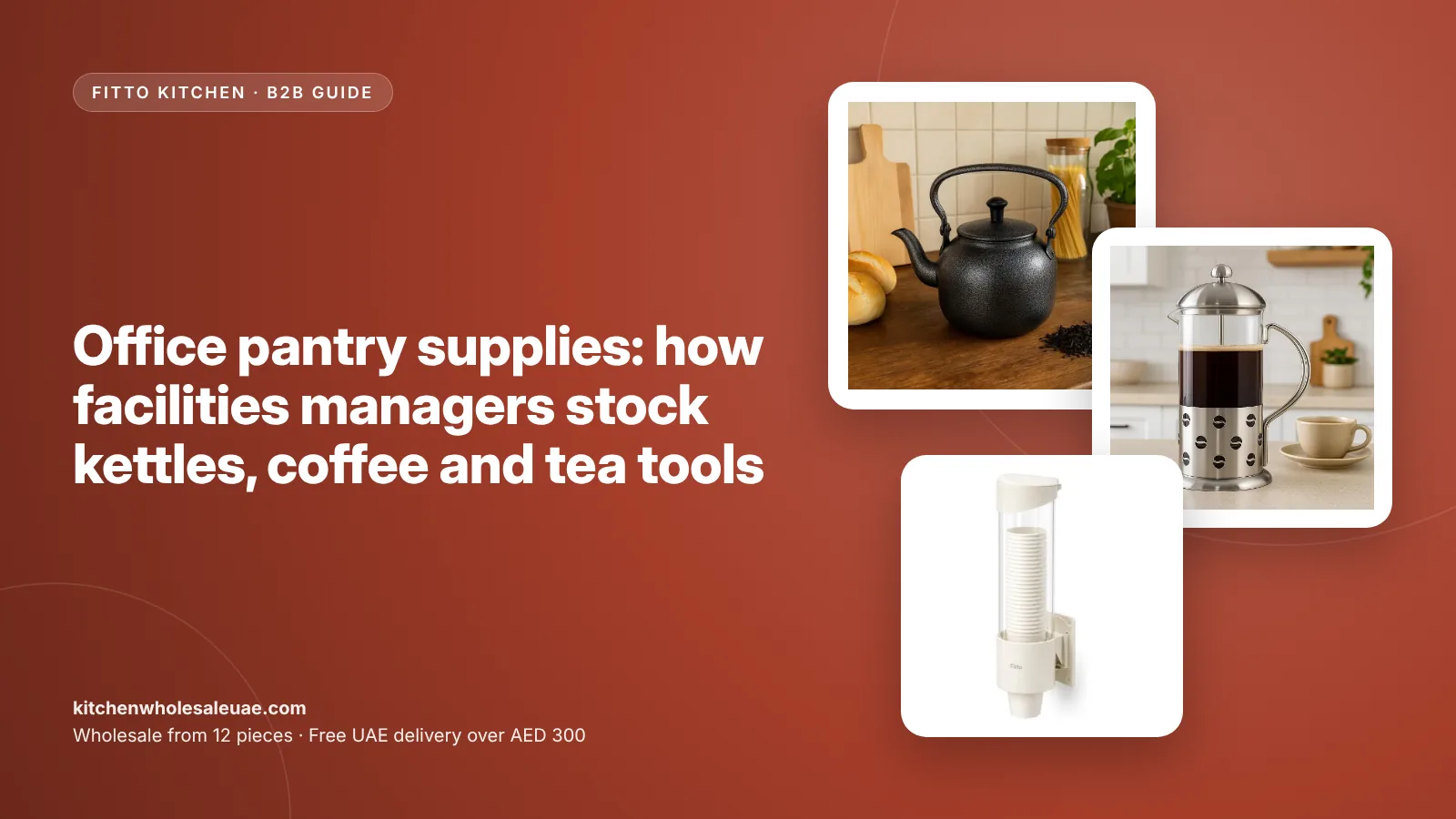
- Carbon steel: heats fast and handles very high heat, and it builds a natural non-stick layer once seasoned. The carbon steel wok with handle, listed at 50 x 36 x 12 cm, suits Asian restaurant lines. It must be dried and lightly oiled after washing to prevent rust.
- Non-stick: easier for home cooks and needs no seasoning. The 28 cm non-stick wok frying pan with wooden handle is a practical family size. Keep the heat at medium to medium-high and use wooden or silicone utensils.
- Stainless steel: durable and good for big batches. The 34 cm stainless steel wok with two loop handles lifts with both hands when full. Food sticks more easily, so preheat the pan before adding oil.
When is a frying pan the better choice?
Use a frying pan whenever food needs full, flat contact with the heat: eggs, steaks, chicken breasts, cutlets, pancakes and shallow frying. A wok's small base can only sear a few pieces at a time.
The flat base gives even browning, and low sides make it easy to slide a turner under food. A frying pan also works on every hob type, while a round-bottomed wok needs a wok ring on gas and does not suit flat electric or induction hobs.
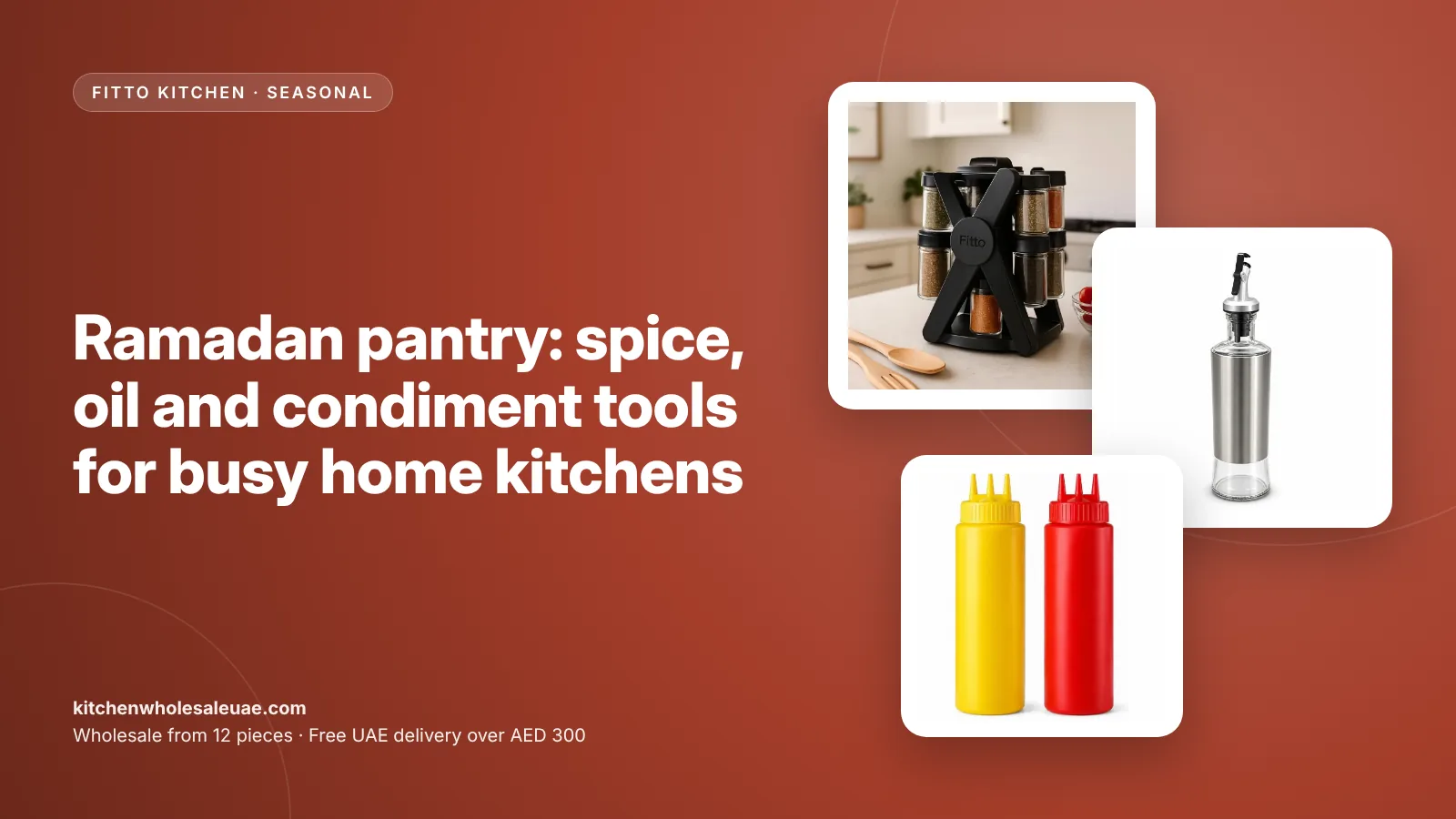
For most households and cafés, a 28 cm non-stick frying pan with long handle covers daily cooking for a family of four. Our non-stick frying pans buying guide compares sizes and coatings in more detail.
Kadai vs wok: which suits Indian and Arabic cooking?
For curries, gravies and deep-fried snacks, a kadai usually beats a wok, because it is deeper with steeper sides. The extra depth holds sauces and hot oil safely, while a wok's wide mouth suits tossing rather than simmering.
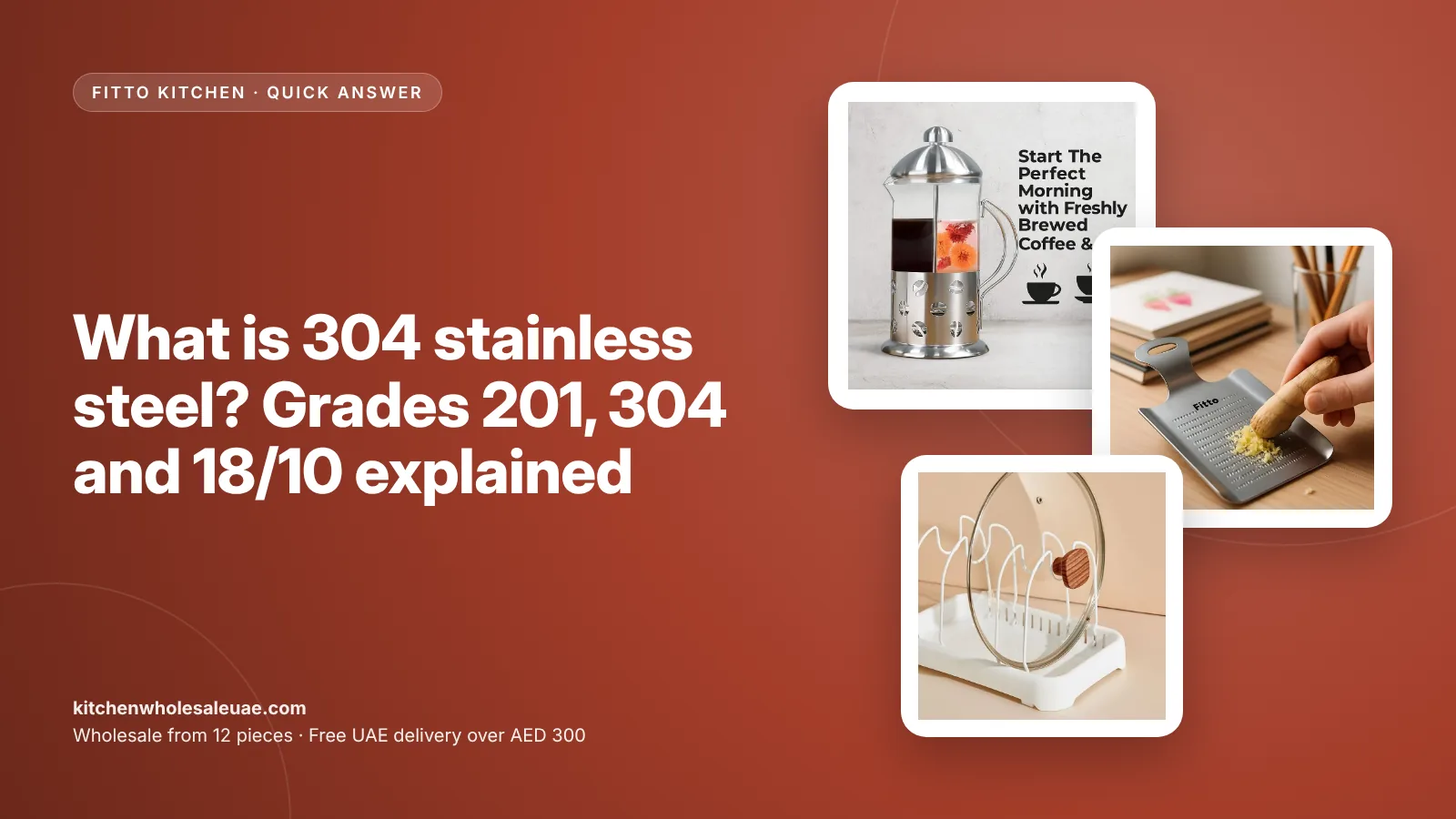
During Ramadan, kitchens deep-fry samosas and pakoras most evenings, and a kadai keeps oil contained. The 26 cm non-stick kadai deep frying pan has two side handles for steady lifting. For stainless steel, the 21 cm deep frying kadai with copper bottom suits smaller batches.
A wok still works for Indian dry dishes, such as stir-fried vegetables or chilli chicken, and many Indo-Chinese restaurants use both pans side by side.
Which pans should restaurants and resellers stock?
Restaurants should match the pan to the menu; resellers should stock one wok and one frying pan in the sizes customers ask for most.
- Asian restaurants: carbon steel woks on high-output gas burners, plus a few frying pans for eggs and garnishes.
- Indian restaurants: kadais in several sizes for curries and frying, plus a wok for Indo-Chinese dishes.
- Cafés and home-style kitchens: frying pans of 24 to 28 cm, with one non-stick wok for stir-fries and pasta.
- Resellers: the 28 cm non-stick wok and 24, 26 and 28 cm frying pans cover most household demand.
Before selling any pan for induction hobs, check that the base is flat and magnetic. Our induction-compatible cookware guide explains the quick magnet test.
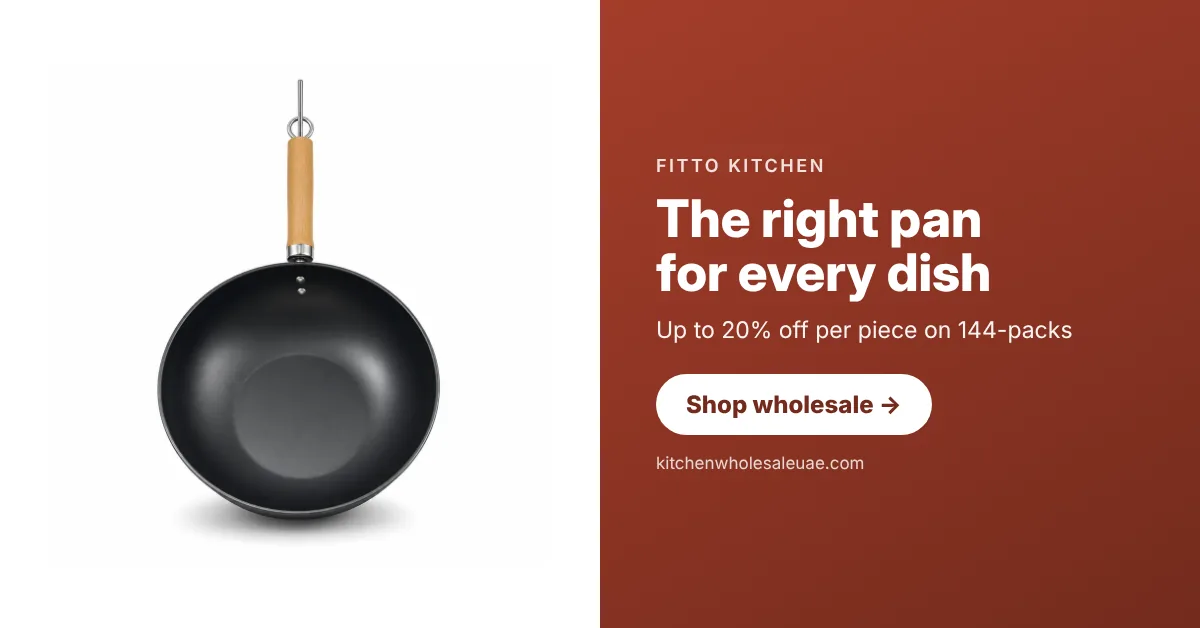
FITTO Trade Pick: The two-pan starter pair Stock the 28 cm non-stick wok frying pan alongside the 28 cm non-stick frying pan and sell them as a pair. Packs run from 12 to 144 pieces, with up to 20% off per piece on the largest pack.
The bottom line
Buy a wok for stir-fries and tossing, a frying pan for eggs, searing and shallow frying, and a kadai for curries and deep frying. Most kitchens are best served by one 28 to 30 cm wok and one 24 to 28 cm frying pan.
Browse our cookware and pans range, request a quote for a mixed order of woks and pans, or order a sample to test the shape first. Delivery is free over AED 300, and the Trade Desk answers on WhatsApp at +971 55 672 6947. FITTO Kitchen: fit for the way you cook.
FAQ
Can I use a wok instead of a frying pan?+
For stir-fries, sautéed vegetables and pasta, yes. For eggs, pancakes or steaks it is a poor substitute, because the small base only browns a few pieces at a time and food slides to the centre. A flat-bottomed wok gets closer to a frying pan, but a dedicated pan still gives better results.
What size wok is best for a family?+
A 28 to 30 cm wok suits most families of three to five people. It holds a stir-fry for four without crowding, which would steam rather than fry the food. Larger 32 to 36 cm woks suit big families, gatherings and restaurant batches, but need a large burner to heat evenly.
Is a carbon steel wok better than a non-stick wok?+
Carbon steel is better for very high heat and lasts for years if seasoned and dried after washing. Non-stick is easier for home cooks and needs no seasoning, but it should be used at moderate heat with soft utensils. Restaurants usually prefer carbon steel; most households prefer non-stick.
Does a wok use less oil than a frying pan?+
For stir-frying, a wok needs only a spoonful or two of oil, similar to a frying pan. For deep frying, the bowl shape reaches a usable depth with less oil than a straight-sided pot. For shallow frying cutlets, a flat frying pan uses oil more evenly.
Do woks work on induction hobs?+
Only if the base is flat and made of a magnetic material, such as carbon steel or some stainless steels. Round-bottomed woks and most plain aluminium pans will not work. Hold a magnet to the base: if it sticks firmly, the pan should work on induction.