What is 304 stainless steel? Grades 201, 304 and 18/10 explained
By FITTO Trade Desk · Last updated 29 October 2026
304 stainless steel kitchenware is made from steel with about 18% chromium and 8% nickel, which resists rust and does not react with food. 18/8 and 18/10 are names for this same family. Grade 201 swaps much of the nickel for manganese, so it costs less but rusts more easily when left wet.
Key takeaways
- The first number in 18/8 or 18/10 is chromium, the second is nickel, both in per cent.
- 201 is a budget grade: fine for dry-use racks, weaker against salt, acids and bleach.
- A magnet cannot tell 201 from 304; only the stated grade or a test report can.
Two stainless steel ladles can look identical yet age very differently after months of salty stews. This quick answer explains the numbers so you can read a product title with confidence.
At FITTO Kitchen, a wholesale kitchen utensils and gadgets supplier in the UAE, we wrote this for buyers who check specs before they order.
What do the numbers in stainless steel grades mean?
Grades such as 201, 304 and 430 are standard alloy codes; ratios such as 18/10 describe the chromium and nickel content.
Steel becomes stainless at about 10.5% chromium, which forms a thin, self-healing oxide film. Nickel adds toughness, shine and corrosion resistance.
| Grade | Approx. chromium / nickel | Magnetic? | Rust resistance | Typical kitchen use |
|---|---|---|---|---|
| 304 (18/8, 18/10) | 18-20% / 8-10.5% | Generally no | Good | Cookware, presses, utensils, sinks |
| 316 | 16-18% / 10-14%, plus molybdenum | Generally no | Very good against salt | Premium and marine-grade items |
| 201 | 16-18% / 3.5-5.5%, plus manganese | Generally no | Moderate | Racks, organisers, budget utensils |
| 430 (18/0) | 16-18% / under 1% | Yes | Moderate | Budget cutlery, induction bases |
| 410 / 420 | About 12-14% / under 1% | Yes | Lower | Knife blades, which need hardness |
Is 18/10 better than 304?
18/10 is 304 with nickel at the top of the range, so it is slightly shinier and more corrosion resistant. 18/8 is standard 304. In daily cooking the difference is small; the big gap is between the 304 family and 201.
Is 201 stainless steel safe for kitchenware?
201 is widely used and works well for items that stay dry, but it spots more easily in wet, salty or acidic use.
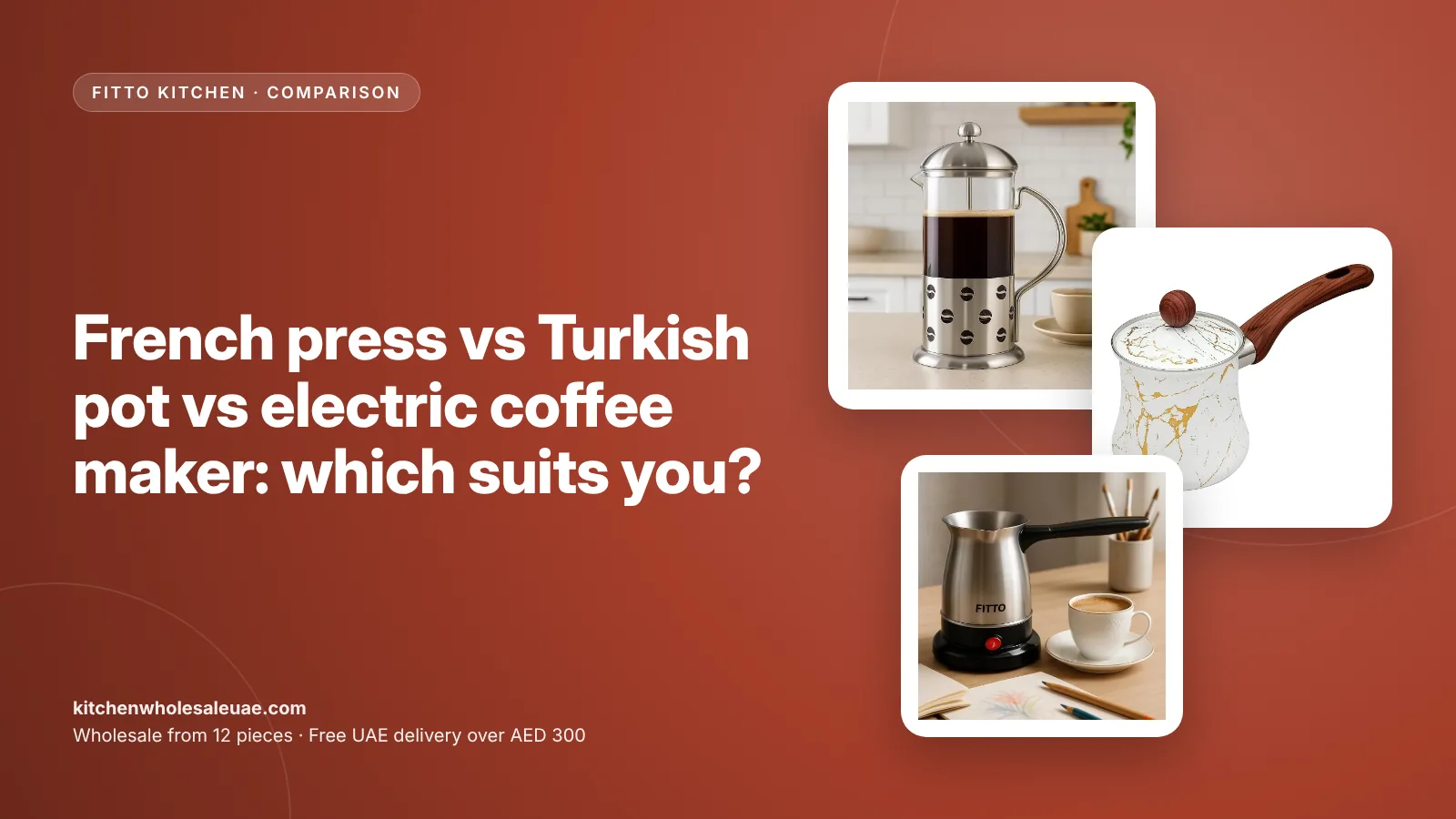
That makes 201 a sensible saving on a pan and lid organiser rack with 201 stainless steel dividers. For pots, ladles and anything that meets brine, lemon or tomato, 304 lasts longer.
Humid coastal air, chlorinated sanitisers and long dishwasher cycles in UAE kitchens expose lower grades sooner.
How do you read 304 stainless steel kitchenware titles?
Trust a grade only when the title or specification names it.
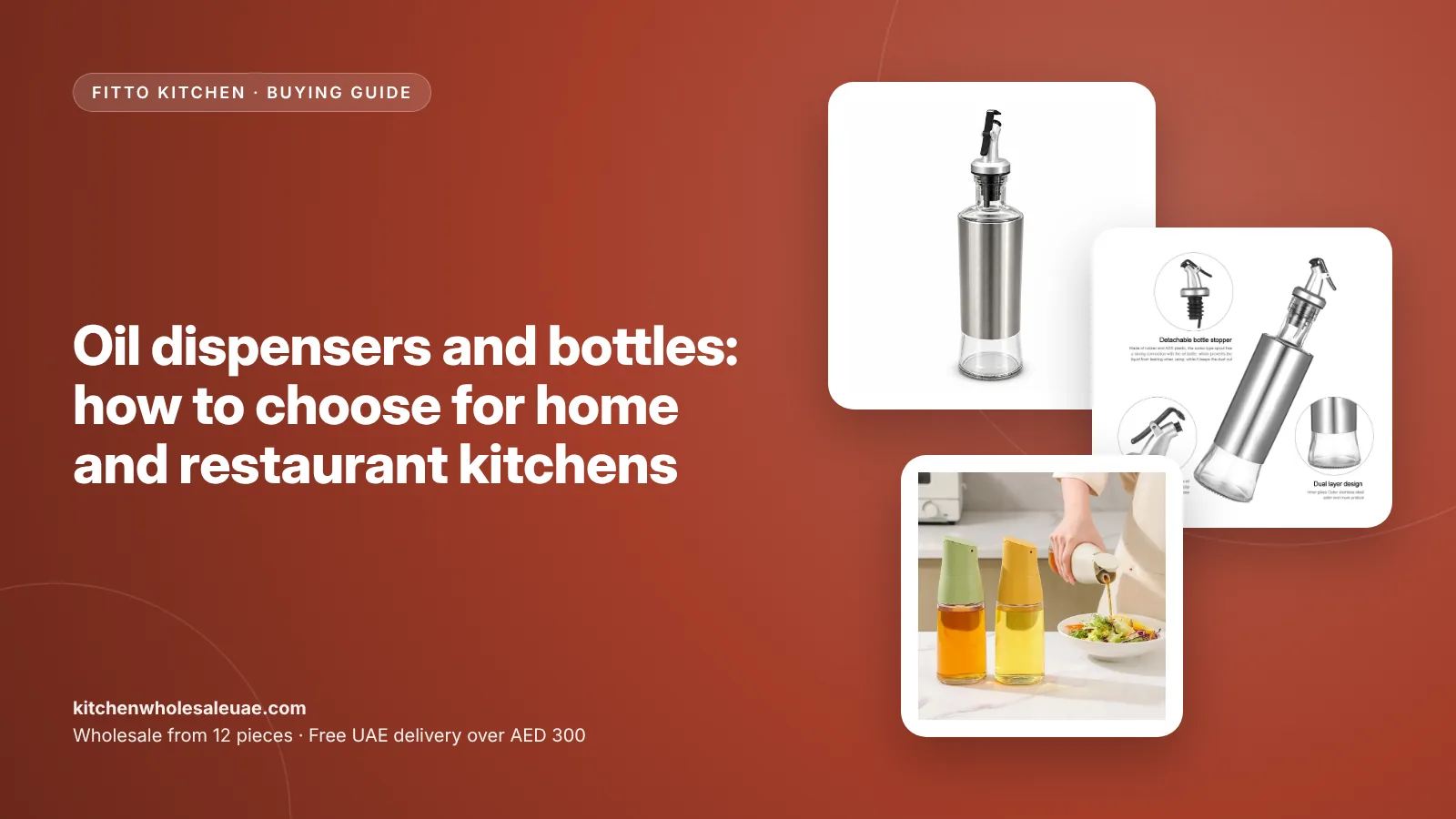
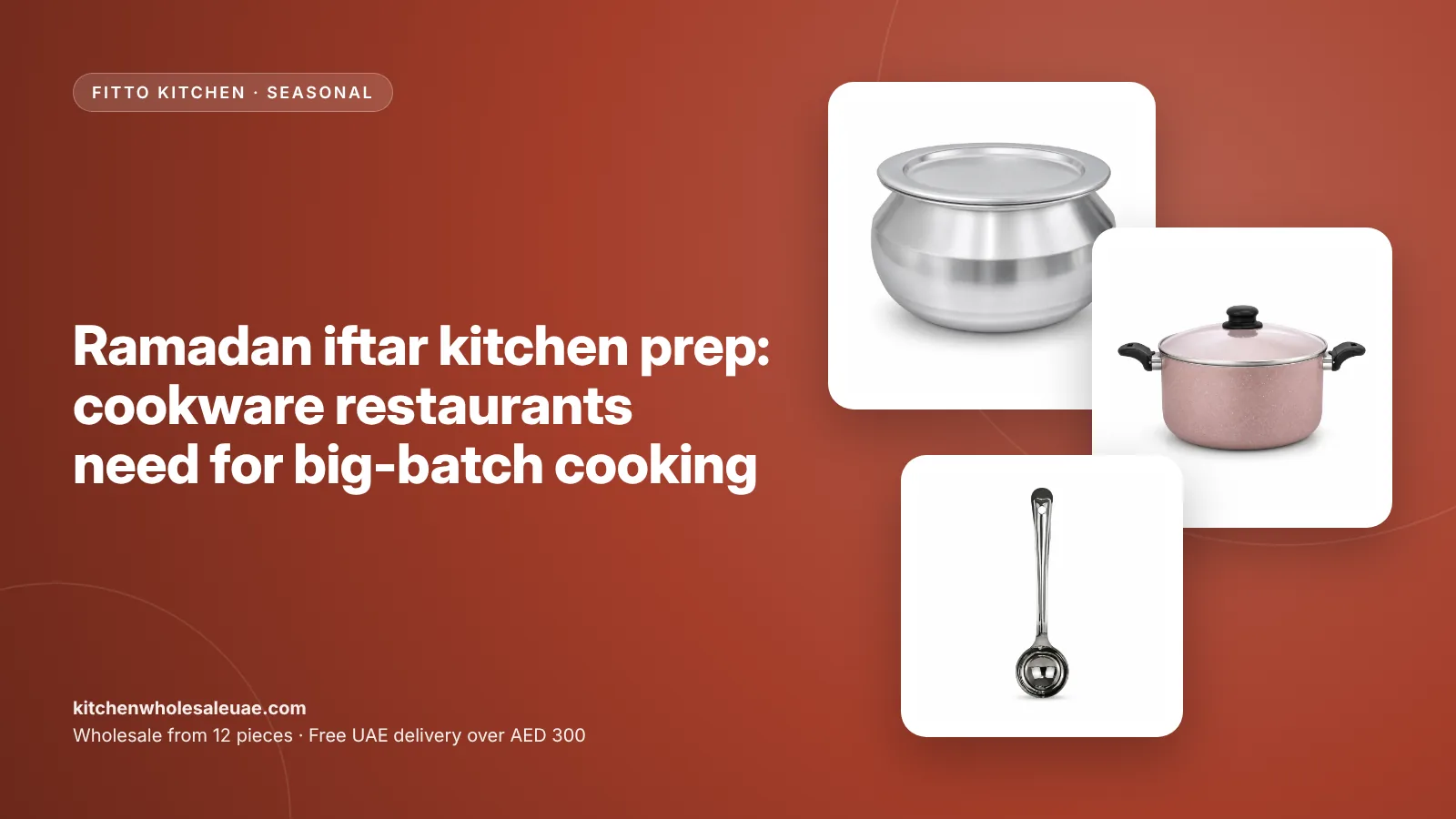
- Look for "304", "18/8", "18/10" or "316". The FITTO insulated coffee press, for example, is listed as 304 grade, and the small stainless steel grater as 18/8.
- If no grade is given, judge by use: a cupboard rack needs less than a soup ladle.
- Do not rely on a magnet. 201 and 304 are both usually non-magnetic; a magnet only separates them from 400-series steels.
- For bulk orders, ask for the grade in writing or test a sample.
A sticking magnet is not bad news: induction hobs need magnetic steel, so many pans use a 430 base. Our guide to induction-compatible cookware explains how to check.
How do you stop stainless steel from rusting?
Wash off salt and acid promptly, dry items after washing and avoid bleach.
Most "rust" on good stainless steel is surface staining from salt, hard water or iron particles. A baking soda paste usually lifts it; avoid steel wool, which leaves iron behind.
Comparing materials? Read our cookware materials comparison.
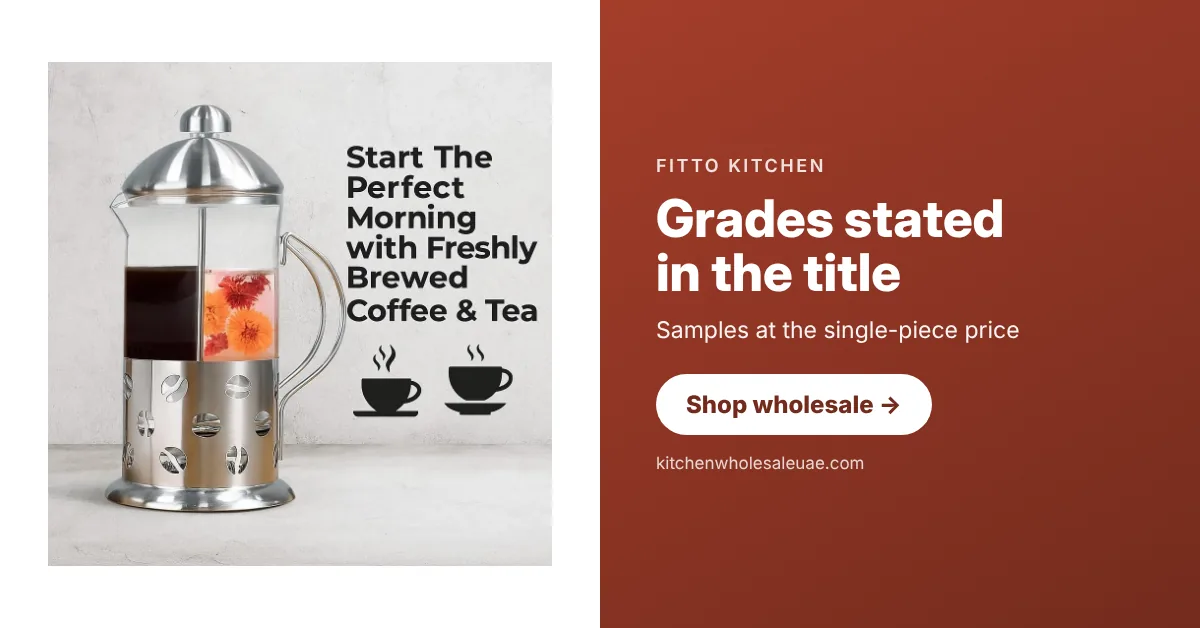
FITTO Trade Pick: Grades stated in the title Stock the 304-grade insulated coffee press and the 18/8 stainless steel grater for spec-checking buyers. Order a sample at the single-piece price to inspect the finish first.
The bottom line
304, 18/8 and 18/10 are the same reliable family for wet kitchen use, and 201 is a budget grade best kept for dry jobs. Read the title for the grade, and ask when it is missing.
Browse our kitchen utensils and gadgets range, request a quote with your grade requirements, or order a sample to check a product in hand. Delivery is free over AED 300, and the Trade Desk answers on WhatsApp at +971 55 672 6947. FITTO Kitchen: fit for the way you cook.
FAQ
Is 18/8 the same as 304 stainless steel?+
In practice, yes. 18/8 means roughly 18% chromium and 8% nickel, the composition of grade 304. Makers often use the ratio on cutlery and the grade number on cookware, but both describe the same corrosion-resistant family. 18/10 simply has a little more nickel.
Why does my stainless steel pot have rust spots?+
Usually because salt, acid or iron particles sat on the surface, or the pot stayed wet. Lower grades such as 201 and 430 spot more easily than 304. Scrub gently with baking soda paste, rinse and dry; spots that keep returning suggest a lower grade.
Is 304 stainless steel (ستانلس ستيل 304) food safe?+
304 is one of the most widely used grades for food contact, from home cookware to commercial kitchens, because it resists corrosion and does not react with most foods. Follow the care instructions and avoid storing very salty or acidic food in it for days.
Which stainless steel grade is best for kitchen knives?+
Knife blades usually use hardenable grades such as 420 or higher-carbon steels, not 304. They hold a sharper edge but resist rust less, so wash and dry knives straight after use and never leave them soaking in the sink.