Ramadan iftar kitchen prep: cookware restaurants need for big-batch cooking
By FITTO Trade Desk · Last updated 29 October 2026
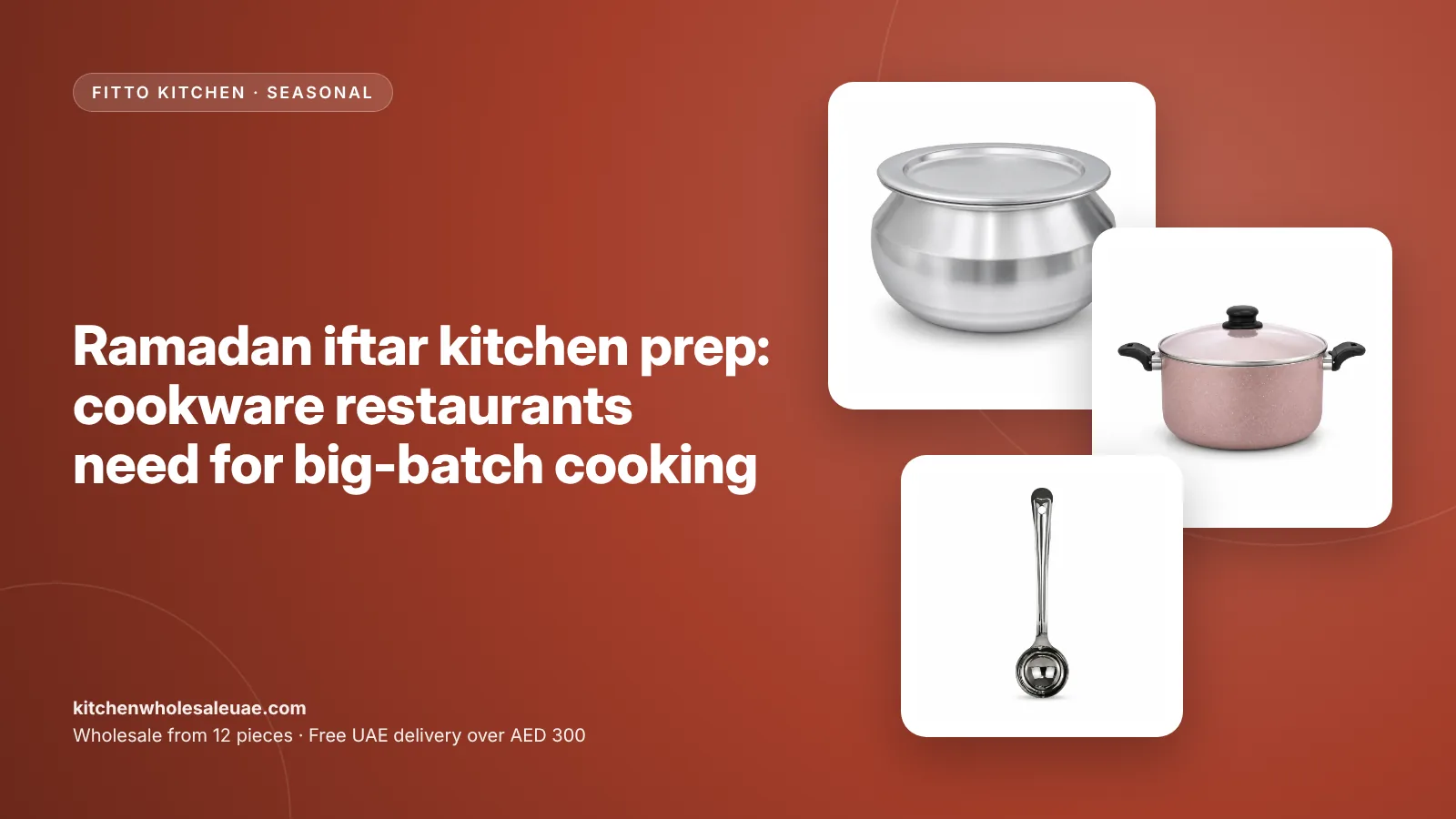
Ramadan iftar cookware planning starts with covers, not catalogues. Count the meals you serve at sunset, then size stockpots for soup and harees, wide pots for rice, pressure cookers for meat and pulses, and kadais for frying. Ramadan 2027 is expected to begin around 8 February, so order in January and test everything before the first fast.
Key takeaways
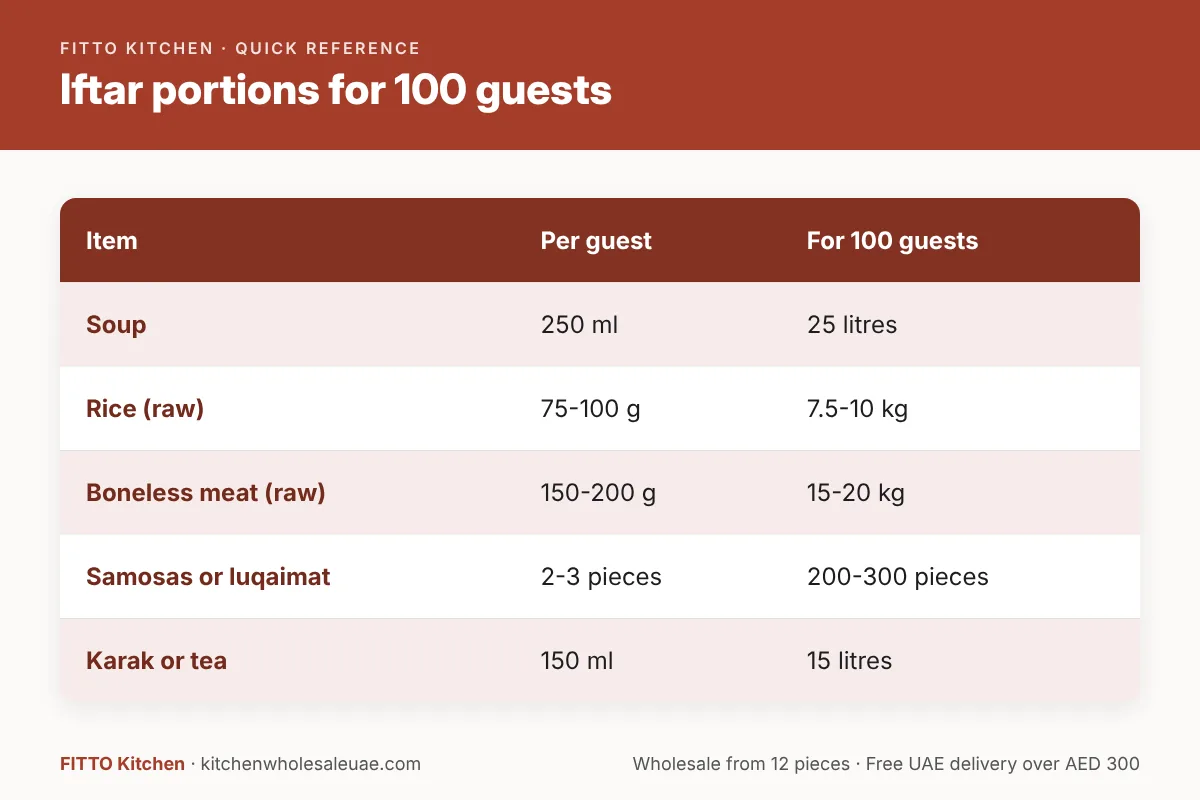
- Plan from portions: as a rule of thumb, 250 ml of soup, 75-100 g of raw rice and 150-200 g of boneless meat per guest.
- Fill pots to about three-quarters at most, so a 14 litre pot really serves about 40 bowls of soup.
- Split big batches across several medium pots: they heat faster, scorch less and are safer to lift.
- Order in January; the start date depends on the moon sighting, and the first iftar leaves no time for missing lids.
On day one of Ramadan, iftar orders double, the biggest pot scorches the harees and staff ladle soup with a cup. Each gap costs food, time and goodwill at the busiest hour of the year.
This guide is for restaurants, caterers, mosques and charity iftar kitchens. At FITTO Kitchen, a wholesale cookware supplier in the UAE, we help kitchens across the emirates scale their large pots (قدور كبيرة), ladles and pans for the holy month.
How much cookware do you need for iftar volumes?
Work out litres from your covers, then divide by usable pot capacity. A pot's usable capacity is roughly three-quarters of its brim volume, leaving room to stir and boil.
To find brim volume, measure the inside diameter and depth in centimetres. Use: 3.14 × radius × radius × depth ÷ 1,000 = litres. A pot 30 cm across and 20 cm deep holds about 14 litres to the brim, or about 10.5 litres in practice.
| Iftar item | Portion per guest (rule of thumb) | For 100 guests | Cookware to plan |
|---|---|---|---|
| Lentil or chicken soup | 250 ml | 25 litres | Two or three large stockpots |
| Harees | 250-300 g | 25-30 kg | Heavy-based stockpots, stirred often |
| Rice, biryani or machboos | 75-100 g raw rice | 7.5-10 kg raw rice | Several wide biryani pots |
| Meat or chicken (boneless) | 150-200 g raw | 15-20 kg raw | Pressure cookers and stockpots |
| Samosas, sambousek or luqaimat | 2-3 pieces | 200-300 pieces | Deep kadais, skimmers |
| Karak or tea | 150 ml | 15 litres | Large kettles |
Bone-in meat needs more weight per guest, so add roughly a third. Charity iftar tents often serve boxed meals, which makes portion ladles more important than serving bowls.
Which pots and pans handle big-batch iftar cooking?
Large anodised aluminium stockpots for rice and soup, stainless steel deep pots for long simmers, and pressure cookers for meat and pulses.
- Rice and biryani: the 14-inch anodised aluminium biryani stockpot and the 12-inch stockpot, about 34 x 34 x 26 cm, both come with lids. Aluminium heats quickly and is light to lift when full.
- Soups and harees: the stainless steel deep cooking pot, 28 x 28 x 22 cm, suits long simmers and tomato-based soups. As a general rule, do not store acidic or salty food in uncoated aluminium for hours.
- Meat and pulses: the 7.5 litre aluminium pressure cooker cuts lamb and chickpea cooking time sharply. Never fill a pressure cooker beyond the maker's maximum line, and check gaskets before Ramadan starts.
- Frying: a 26 cm non-stick kadai or a 23 cm stainless steel kadai with copper bottom fries samosas in batches.
For more on capacities, read our catering cooking pot sizes guide.
Which utensils stop the iftar rush from stalling?
Long-handled ladles, skimmers and spare lids, in more numbers than you think. Iftar orders peak in the minutes around sunset, and missing tools slow every station.
The 36 cm basting ladle, size No. 7, reaches the bottom of deep pots without burnt knuckles. The 35 cm slotted skimmer lifts samosas and meat out of oil or broth.
As a rule of thumb, keep two ladles per soup pot and one skimmer per fryer, plus spares for dishwashing. Use one ladle size per dish so every takeaway box gets the same portion.
What about suhoor and takeaway prep?
Suhoor uses smaller pans and fast reheating; takeaway needs consistent portions.
Suhoor menus lean on foul, eggs and balaleet, so saucepans and medium pots matter more than giant stockpots. Cook beans in a pressure cooker in the afternoon, then reheat to order.
For iftar takeaway, cook in the same large pots, then portion from a covered pot kept hot. Keep hot food above 60°C and cool leftovers quickly before refrigerating. Follow the guidance of Dubai Municipality or your emirate's food authority.
A 5 litre stainless steel whistling kettle keeps tea and karak flowing after iftar without tying up a stockpot.
When should you order Ramadan cookware?
Order in early to mid-January, so stock is in, washed and tested by the end of the month.
- Early January: count expected covers and list each dish with its pot.
- Mid-January: place your order, including spare lids, ladles and gaskets.
- Late January: wash new pots, run a test batch and label each pot by dish.
- First week of February: brief staff, set up the line and stage takeaway tools.
Our restaurant kitchen equipment checklist helps you spot gaps beyond cookware.
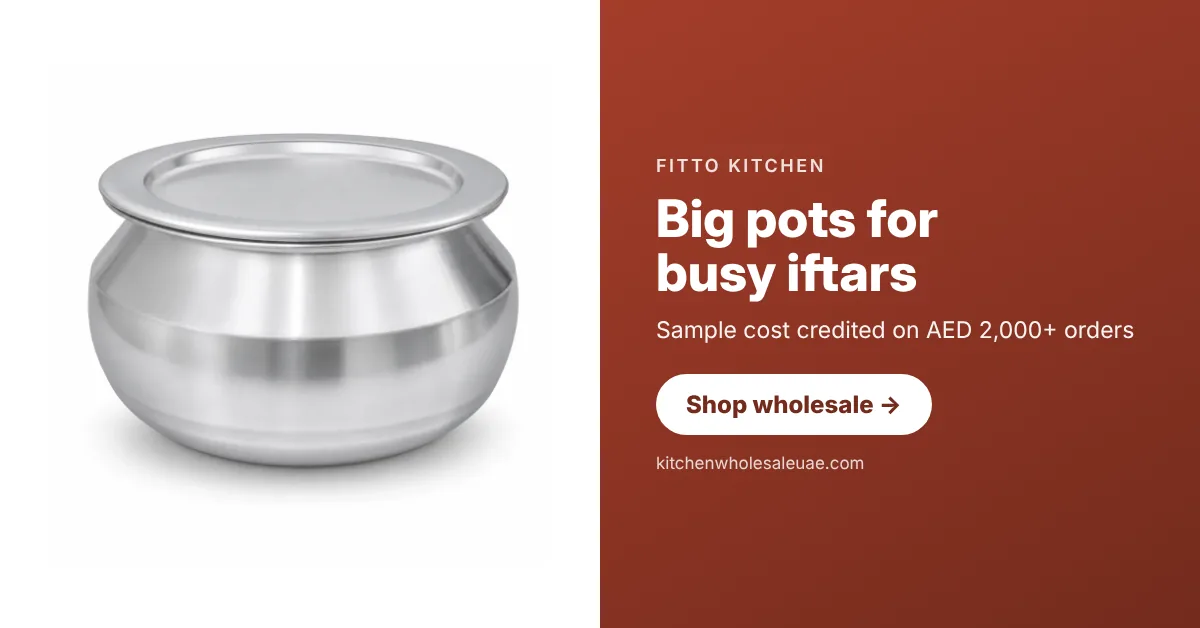
FITTO Trade Pick: Big pots for busy iftars Stock the 14-inch biryani stockpot for rice and the 7.5 litre pressure cooker for meat and pulses. Order a sample first, and its cost is credited on a bulk order of AED 2,000 or more within 30 days.
The bottom line
Iftar cooking succeeds when pots match covers. Size each pot from portions, split big batches across several pots, and order in January so everything is tested before the first sunset meal.
Browse our cookware and pans range, request a quote for a full Ramadan kitchen list, or order a sample of the pot you plan to standardise on. Most orders are dispatched from Dubai within 2-3 working days, and the Trade Desk answers on WhatsApp at +971 55 672 6947. FITTO Kitchen: fit for the way you cook.
FAQ
When does Ramadan 2027 start in the UAE?+
Ramadan 2027 is expected to begin around 8 February 2027, but the exact date depends on the official moon sighting announced the evening before. Plan your kitchen as if it starts a day or two earlier. That way, new cookware is washed, tested and on the line before the first iftar, whatever the announcement.
What size pot do I need to cook rice for 100 people?+
Allow about 7.5-10 kg of raw rice for 100 adults. Rice roughly triples in volume once cooked and needs room for steam, so most kitchens split it across three or four large biryani pots. Smaller batches cook more evenly, scorch less and are safer for staff to lift.
Is aluminium or stainless steel better for iftar cooking?+
Both have a place. Aluminium heats fast and is light when full, which suits rice and frying. Stainless steel is heavier but handles long simmers and acidic dishes such as tomato soup without reacting. Many kitchens use anodised aluminium for rice and stainless steel for soups, harees and anything held hot for hours.
How do I stop harees from burning in large batches?+
Use a heavy-based pot, keep the flame low once it boils and stir from the bottom every 10-15 minutes with a long ladle. Soaking the wheat overnight shortens cooking time, which also reduces scorching. Splitting one huge batch into two medium pots helps, because heat reaches the centre faster.