Ramadan pantry: spice, oil and condiment tools for busy home kitchens
By FITTO Trade Desk · Last updated 29 October 2026
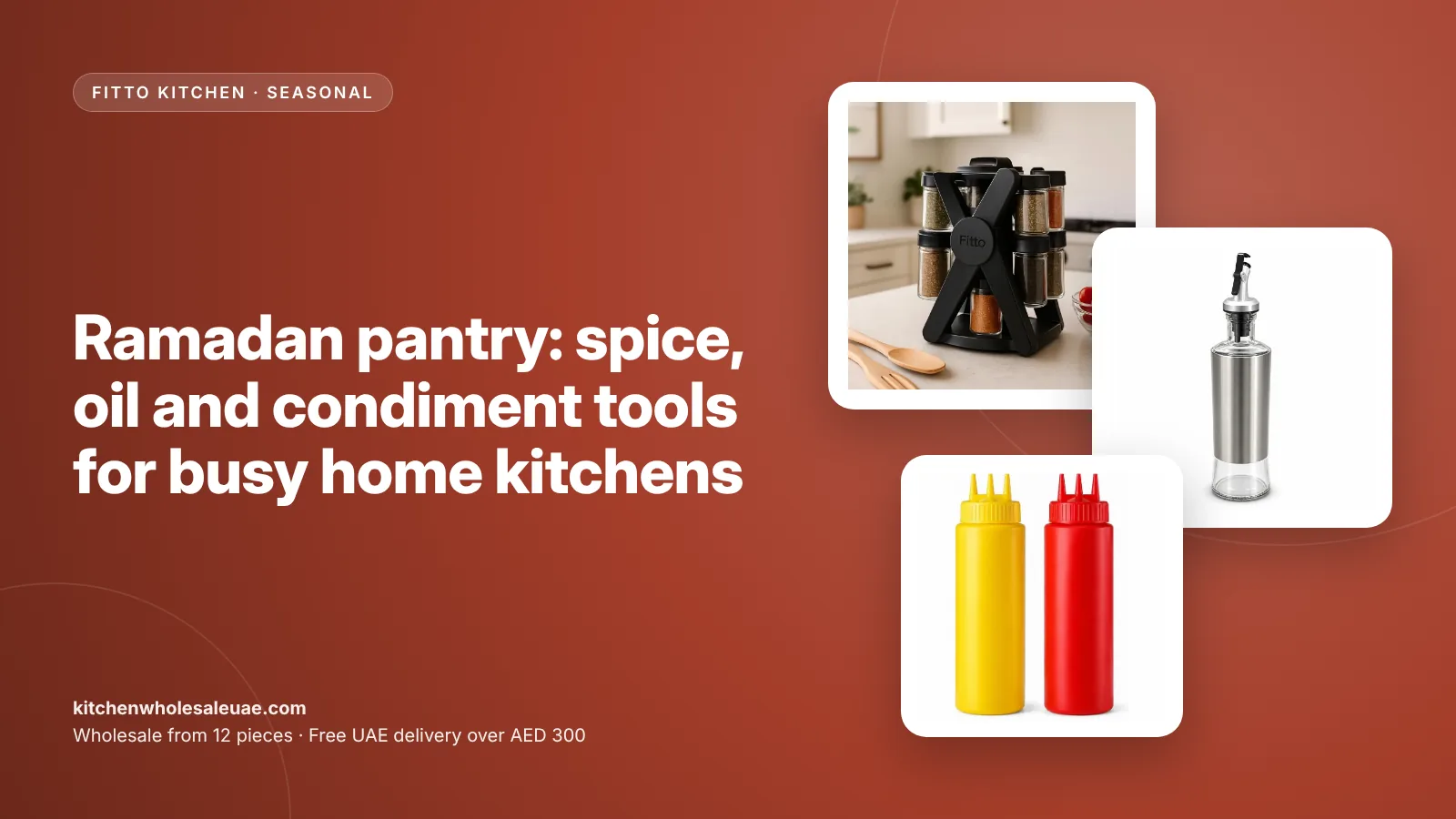
The Ramadan kitchen spice tools worth setting up are a rotating spice rack or jar set by the stove, a spice grinder for fresh blends, a pouring oil dispenser and squeeze bottles for sauces. Set them up before the first iftar, and shops should have this stock on shelves in January, before the pre-Ramadan rush.
Key takeaways
- Build one spice and condiment station within arm's reach of the hob before Ramadan starts.
- Decant oil into a 500 ml dispenser and keep the large bulk bottle in a cool cupboard.
- Grind whole spices in small batches; a weekly blend keeps iftar dishes tasting fresh.
- Shops should stock spice storage, grinders and dispensers in January for February demand.
Why set up a spice station before Ramadan?
Because iftar cooking happens against the clock, and hunting for cumin at 6 pm wastes minutes. A spice station puts every daily seasoning, oil and sauce in one place.
Many households cook a full iftar every evening in Ramadan, often for guests. Every search through a cluttered cupboard costs minutes, and spilled oil adds cleaning time. This guide settles which tools make the station work.
At FITTO Kitchen, a wholesale spice, oil and condiment tools supplier in the UAE, we see spice storage and dispensers move fastest in the weeks before Ramadan. Ramadan 2027 is expected to begin in early February, subject to moon sighting.
Which spice storage works best for iftar cooking?
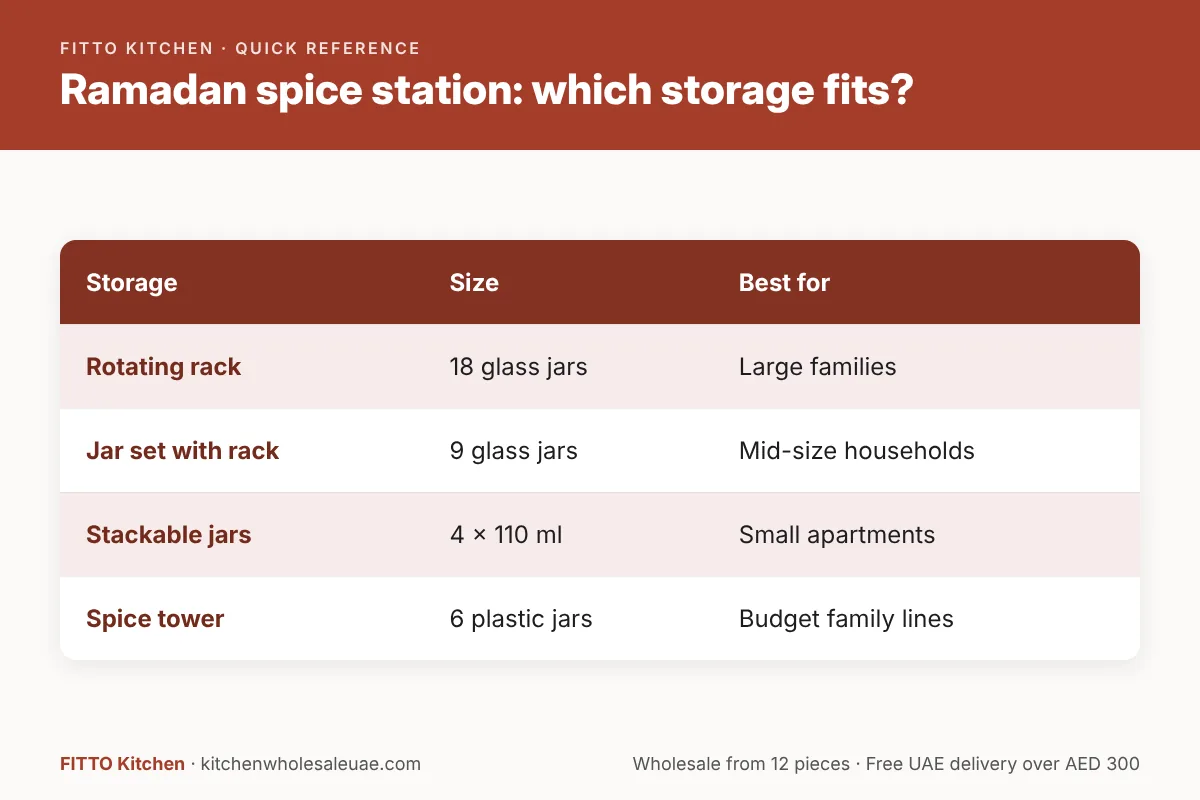
Choose storage you can see into and reach with one hand: a rotating rack for 15 or more spices, a stackable jar set for a short list.
Match the storage to how many spices (بهارات) the household uses each week.
| Storage option | Real FITTO size | Best for | Watch out for |
|---|---|---|---|
| 360-degree rotating spice rack with 18 glass jars | 18 jars | Large families, cooks of several cuisines | Needs counter space away from the hob |
| Spice jar set with rack, 9 glass containers | 38 x 30 x 16 cm | Mid-size households | Fixed number of jars |
| Stackable glass spice and condiment jars | 4 x 110 ml, silicone lids | Small apartments, daily blends | Small capacity, refill often |
| Rotating spice tower, 6 plastic jars | 6 transparent jars | Budget and family lines | Plastic can stain from turmeric |
As a rule of thumb, keep ground spices for about six months to a year and whole spices for one to two years. After that they are safe but lose aroma, so smaller jars refilled often beat one large tin.
How do you keep cooking oil handy without the mess?
Decant oil into a 500 ml dispenser with a pouring spout, and keep the bulk bottle in a cupboard away from the hob. A spout gives control, so you use less oil and wipe up fewer drips.
Large bulk bottles are cheaper but awkward to pour into a hot pan. The glass oil dispenser with stainless steel sleeve holds 500 ml and measures 9 x 9 x 32 cm. The stainless steel oil and vinegar dispenser suits the iftar table for fattoush and salads.
Follow three habits during the month:
- Keep oil away from heat. Do not park the dispenser right beside the burner or in afternoon sun; heat and light speed up rancidity.
- Empty before refilling. Wash and dry the bottle between fills, rather than topping old oil up with new.
- Label two bottles. One for frying oil and one for olive oil saves guesswork during the evening rush.
For more on spouts, glass and capacity, see our oil dispensers buying guide.
Do you need a spice grinder for Ramadan cooking?
Yes, if you make your own blends such as baharat, garam masala or coffee spiced with cardamom. Freshly ground whole spices smell stronger, and a weekly batch never goes stale.
- Electric grinder: the multi-functional electric grinder with four stainless steel blades handles spices and coffee beans in one press.
- Manual grinders: the five-piece manual spice grinder set lets you fill separate mills with salt, black pepper and dried chilli for the table.
- Mortar and pestle: best for small batches of garlic, ginger and chilli paste.
Our spice, oil and condiment tools guide compares grinders and mills in more detail.
How should sauces and condiments be set up for iftar?
Use labelled squeeze bottles for the sauces you serve every night, and keep them together on one tray. Bottles pour faster than jars and keep the table cleaner.
The 800 ml squeeze bottle set comes as a red and yellow pair with a three-nozzle cap. It suits tahini, garlic sauce and chilli sauce. Keep garlic and yoghurt sauces refrigerated and wash bottles every few days.
If you are also planning pots and pans for the month, read our Ramadan iftar cookware guide.
What should shops stock for Ramadan, and when?
Stock spice storage, grinders and oil dispensers in January, and have shelves full before the last two weeks before Ramadan. Households set up their kitchens before the first fast, so late stock misses the peak.
A practical plan for a kitchenware shop or online seller:
- Early January: order core lines, such as rotating racks, jar sets, oil dispensers and squeeze bottles.
- Mid January: build a "Ramadan kitchen" display that pairs a jar set, an oil dispenser and a grinder.
- Late January: reorder fast sellers and add gift-ready sets for Eid visits.
- During Ramadan: keep squeeze bottles and refill jars near the till for add-on sales.
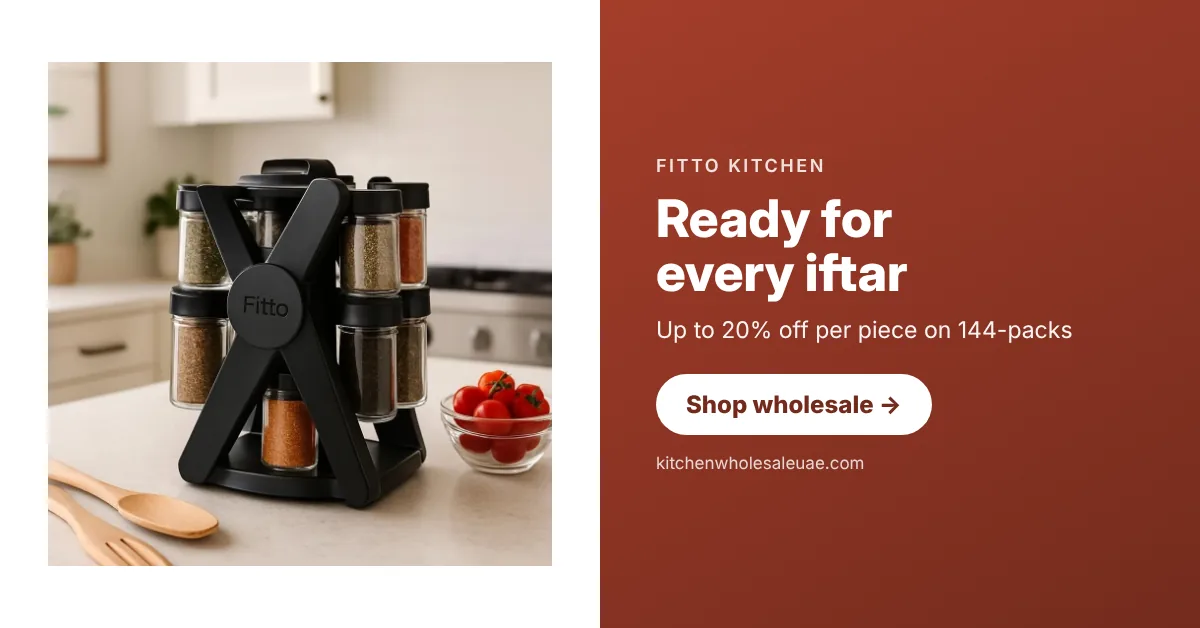
FITTO Trade Pick: A ready-made Ramadan spice station Pair the 18-jar rotating spice rack with the 500 ml glass oil dispenser for a counter display that sells as a set. Every product comes in packs of 12 to 144 pieces, with up to 20% off per piece on the 144 pack.
The bottom line
A Ramadan spice station needs four things: visible spice storage, a pouring oil dispenser, a grinder for fresh blends and labelled sauce bottles. Set it up before the first iftar, and stock it in shops by January.
Browse our spice, oil and condiment range, request a quote for a pre-Ramadan order, or order a sample before you stock up. Delivery is free over AED 300, and the Trade Desk answers on WhatsApp at +971 55 672 6947. FITTO Kitchen: fit for the way you cook.
FAQ
What spices should be on hand for Ramadan cooking?+
Most UAE households keep cumin, coriander, turmeric, cardamom, cinnamon, black pepper, paprika, dried chilli and a baharat or garam masala blend. Add sumac and za'atar for salads, and saffron for rice and desserts. Keep daily spices in the station and occasional ones in a cupboard.
Are glass or plastic spice jars better?+
Glass is better for long-term storage because it does not hold odours or stain from turmeric and chilli. Food-grade plastic is lighter, cheaper and safer around children. Many households use glass jars in the station and plastic shakers for the table or lunch boxes.
How do I stop my oil dispenser from getting sticky?+
Wipe the spout after each use and wash the bottle fully every time it is empty. Dry it completely before refilling, because water left inside spoils the oil faster. A dispenser with a cap or flip-top keeps dust out.
Can I use one grinder for spices and coffee?+
You can, but strong spices such as cloves and cumin leave flavour behind. Grinding a spoonful of dry rice helps clean the chamber. If you grind Arabic coffee with cardamom often during Ramadan, a dedicated coffee grinder is worth having.
How early should I prepare my kitchen for Ramadan?+
Start one to two weeks before the first fast. That gives you time to clear out stale spices, wash jars, set up the station and buy refills, so busy iftar evenings run smoothly.