Café equipment in Dubai: the coffee and tea tools you need before opening
By FITTO Trade Desk · Last updated 29 October 2026
Beyond the espresso machine and a commercial burr grinder, a 20–40 seat café in Dubai needs milk pitchers, a backup milk frother, two kettles, teapots and strainers, press makers, warmer pots for Turkish coffee and milk, a dallah for Arabic coffee and somewhere to dry cups. Buy enough to cover the busiest hour plus one full wash cycle.
Key takeaways
- The espresso machine and grinder get the budget, but missing smallwares are what slow service in the first week.
- Plan quantities for the busiest hour plus one wash cycle, not for the number of seats.
- Keep espresso grinding on a commercial burr grinder; use a small electric grinder for Turkish coffee or spices only.
- Add Arabic coffee and karak tea tools if your menu or your guests call for them.
- Check every electric item has a UK-style three-pin plug and suits 220–240 V.
Opening day is when you find out the café has one milk pitcher, no spare teapot and nowhere to dry cups. The queue grows, drinks slow down and first reviews mention the wait.
This guide lists the smallwares a new café, coffee kiosk or cart needs beyond the espresso machine, with quantities for a 20–40 seat café. At FITTO Kitchen, a wholesale coffee and tea equipment supplier in the UAE, we help new café owners in Dubai and across the emirates kit out the counter before opening.
What café equipment do you need beyond the espresso machine?
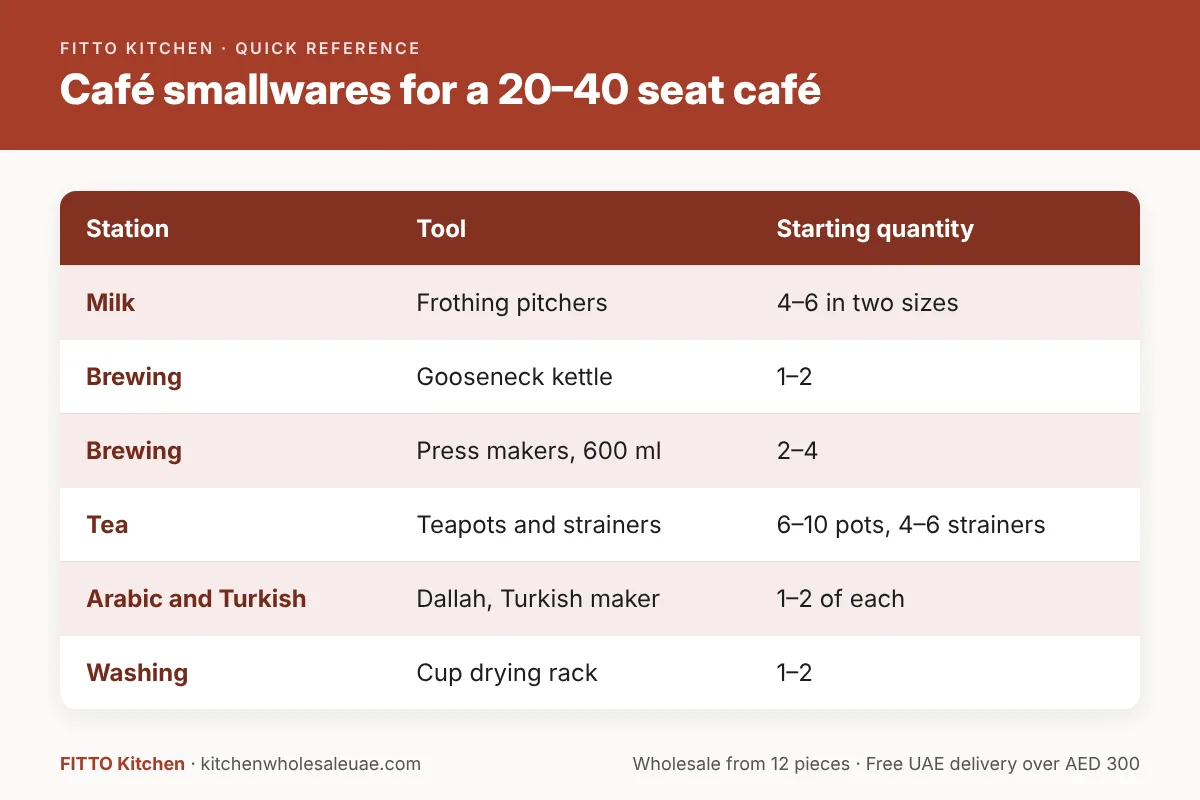
You need tools for five jobs: milk, brewing, tea, Arabic and Turkish coffee, and washing and drying. The table gives a starting count for a 20–40 seat café.
| Station | Tool | Starting quantity | Why |
|---|---|---|---|
| Milk | Stainless steel frothing pitchers | 4–6 in two sizes | One per drink in progress, plus spares in the wash |
| Milk | Electric milk frother and steamer | 1 | Cold foam and backup if the steam wand is busy |
| Brewing | Gooseneck kettle | 1–2 | Controlled pouring for pour-over |
| Brewing | Insulated press coffee makers, 600 ml | 2–4 | Table-share coffee and a fallback brew method |
| Tea | Electric kettle, 2 litre | 1–2 | Fast hot water for tea and Americano top-ups |
| Tea | Teapots and fine tea strainers | 6–10 pots, 4–6 strainers | Pot service at tables |
| Arabic and Turkish | Dallah, Turkish coffee maker, warmer pots | 1–2 of each | If gahwa or Turkish coffee is on the menu |
| Washing | Cup and glass drying rack | 1–2 | Cups dry fast and stay off the counter |
These are planning figures, not rules. A takeaway kiosk needs more pitchers and fewer teapots; a tea-led café needs the reverse.
Which milk tools does a café counter need?
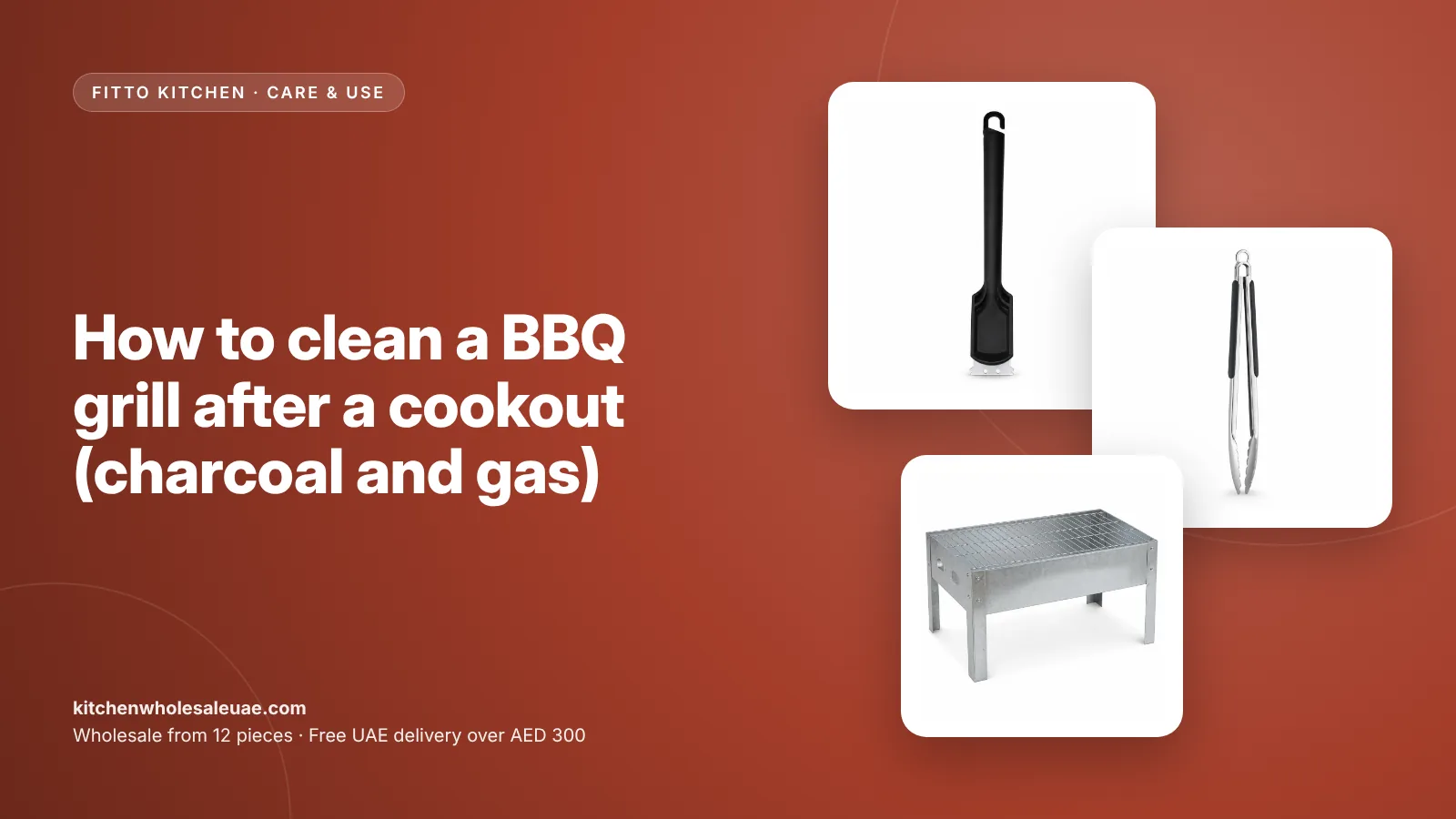
Buy enough stainless steel pitchers that a barista never waits for one to be washed. Two sizes cover most menus: a small pitcher for single drinks and a larger one for two at once.
Straight-walled pitchers help milk swirl evenly under the steam wand, and a sharp spout makes latte art easier. An electric frother and steamer earns its place for cold foam on iced drinks, which suit the UAE's long hot season, and as a backup when the steam wand is busy or down.
Do you need a separate coffee grinder?
Yes: espresso needs a commercial burr grinder, and that is not the same as a small electric grinder. Burr grinders give the even particle size espresso needs; blade grinders do not.
A compact 300 W electric grinder still has uses behind the counter. It suits grinding cardamom for gahwa, spices for karak, or a small batch for Turkish coffee. Keep it separate from your espresso grinder and label it, because spice oils carry into the next batch.
Which kettles and teapots suit café tea service?
Use an electric kettle for volume and a gooseneck kettle for precision. Then choose teapots by how you serve: individual pots for tables, a large glass pot for batch tea.
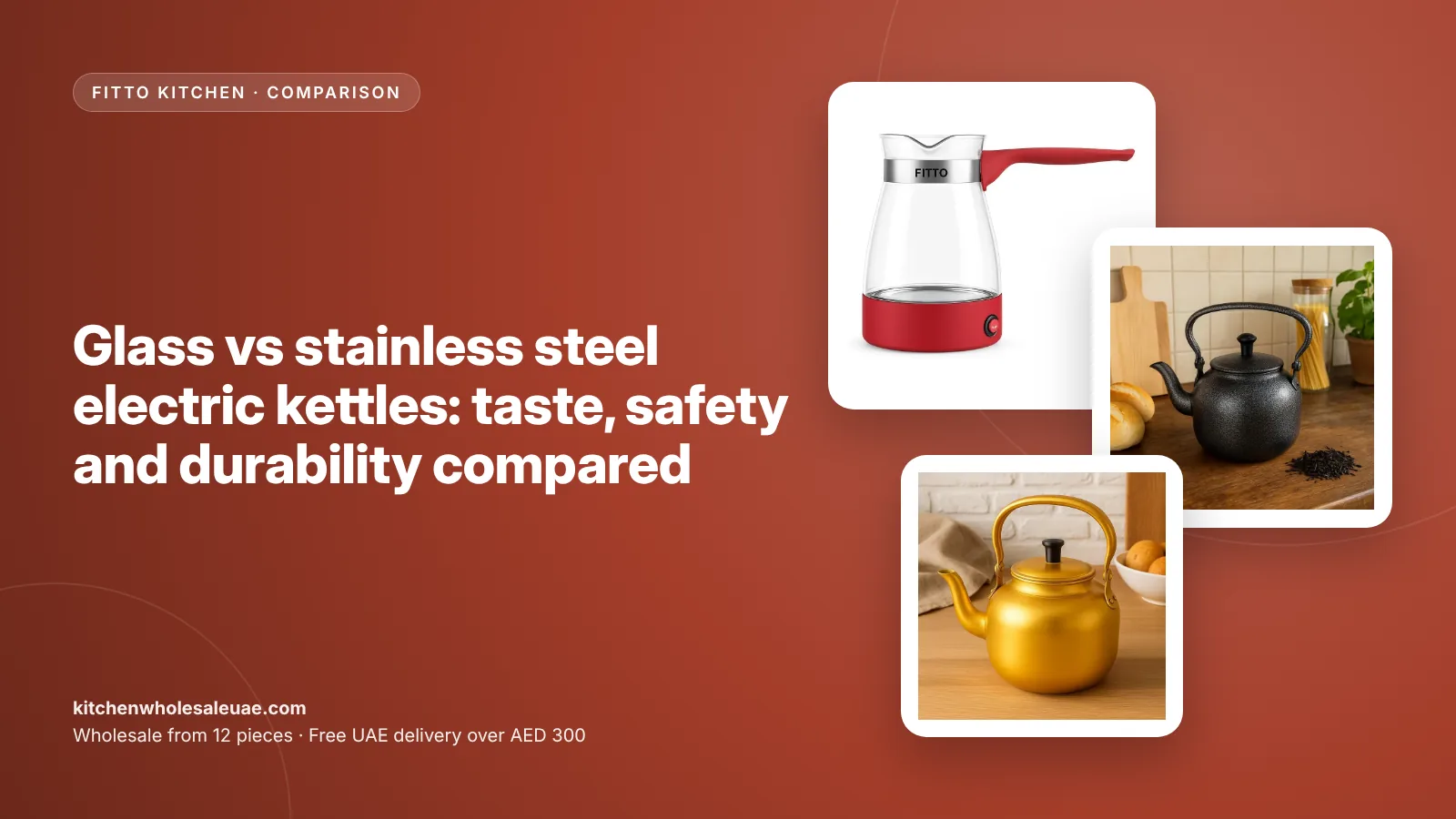
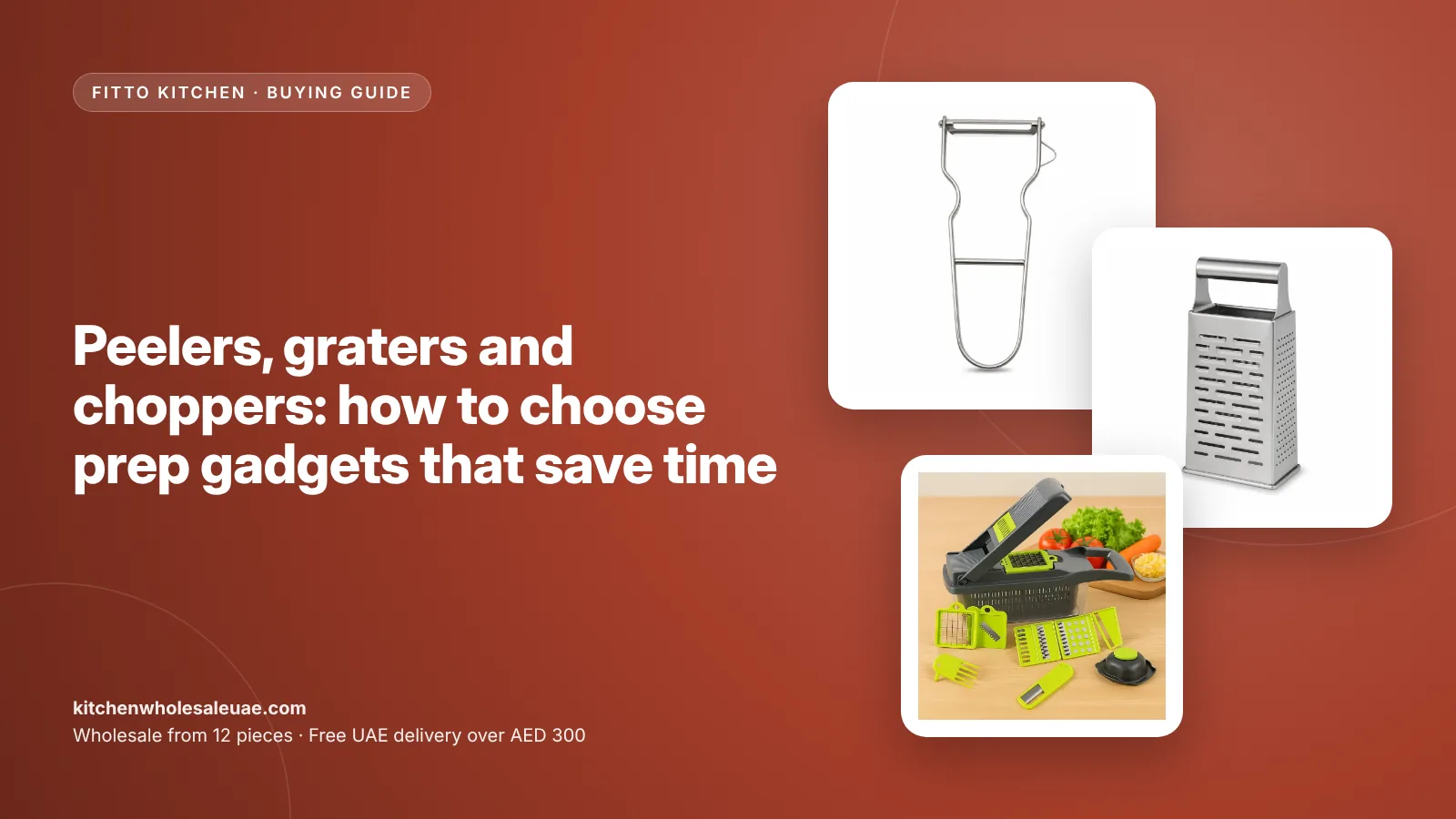
A 2-litre electric kettle with a temperature display helps staff hit the right heat for green tea, which tastes better below boiling. A gooseneck kettle gives the slow, steady pour that pour-over coffee needs. Glass teapots show the colour of the brew, which suits display service; a 2.4-litre glass pot with an infuser serves a group or a counter batch of tea.
Descale kettles on a regular schedule. Filtered water improves taste and slows mineral build-up inside the element.
Should a Dubai café serve Arabic and Turkish coffee?
If your guests expect it, yes, and the tools are inexpensive compared with the espresso set-up. A dallah (دلة) for gahwa and a Turkish coffee maker cover most requests.
An electric Turkish coffee maker with a 600 ml pot makes up to five cups in one batch, which keeps the stove free. Stainless steel warmer pots of 12 or 24 oz work for heating milk or serving Turkish coffee at the table. For gahwa, a stainless steel dallah keeps heat and survives daily washing; see our Arabic dallah coffee pots guide for sizes and finishes.
How do you plan the opening order?
Order samples of the counter tools first, test them during staff training, then order the full quantities. This avoids buying 12 pitchers that do not fit your steam wand.
- List every drink on the menu and the tool each one needs.
- Count the busiest hour you expect and add one wash cycle of spares.
- Order one sample of each counter tool and use them during training week.
- Place the bulk order; most orders leave Dubai within 2–3 working days, then arrive within 1–3 working days.
- Keep a small reserve of pitchers, strainers and teapots for breakage.
For the full kitchen beyond the counter, use our restaurant kitchen equipment checklist. Our coffee and tea equipment guide explains each tool in more depth.
FITTO Trade Pick: Kit out the counter before opening Set up the counter with stainless steel milk frothing pitchers, the 500 W milk frother and steamer for cold foam and backup, a gooseneck pour-over kettle and the 2.4 litre glass teapot with infuser for tea service. Order one of each as a sample before opening; we credit the sample cost on a bulk order of AED 2,000+ within 30 days.

The bottom line
The espresso machine makes the coffee, but pitchers, kettles, teapots and drying racks keep the queue moving. Plan for your busiest hour plus a wash cycle, test the tools during training, and add Arabic and Turkish coffee tools if your guests expect them.
Browse our wholesale coffee and tea equipment, then request a quote for a mixed opening carton, or order a sample of the counter tools first. Wholesale prices start from 12 pieces, delivery is free across the seven emirates over AED 300, and the Trade Desk answers on WhatsApp at +971 55 672 6947. FITTO Kitchen: fit for the way you cook.
FAQ
How many milk pitchers does a café need?+
As a rule of thumb, plan two pitchers per steam wand in each size you use, plus two spares for the wash. A single-group machine in a 20–40 seat café usually manages with four to six. Busy takeaway counters with two steam wands need more, because pitchers spend time in the sink during a rush.
Can a home-style milk frother replace a steam wand?+
Not for a busy café. A countertop frother makes one jug at a time and suits cold foam, specialty drinks or backup service. Your espresso machine's steam wand stays the main tool for hot milk drinks. Use the frother to take pressure off the wand rather than as a replacement.
What plug and voltage do café appliances need in the UAE?+
The UAE uses 220–240 V and mostly UK-style three-pin plugs. Check the plug and voltage on every electric kettle, frother and grinder before you order in bulk, and avoid relying on adaptors behind a busy counter. Ask an electrician to confirm your counter sockets can handle several appliances at once.
How do I keep glass teapots from breaking in service?+
Warm the pot with hot water before adding boiling water, avoid putting a hot pot on a cold or wet surface, and store pots upright with space between them. Keep a few spares on the shelf, because even careful teams break glass during a rush.
How far ahead should I order café equipment before opening?+
Aim to have smallwares on site at least two weeks before soft opening, so staff can train with them. Order samples a week or two before that, test them, then place the bulk order. Leave extra time for custom quantities or mixed cartons.