Arabic dallah coffee pots: how to choose size, finish and quality
By FITTO Trade Desk · Last updated 29 October 2026
To choose an Arabic dallah coffee pot, start with how many guests you serve at once, then pick the finish for the setting. Polished stainless steel suits daily majlis, office and hotel service. Gold-tone, enamel and textured finishes suit gifting and festive trays. Check the spout pours a thin, steady stream and the handle gives a firm grip.
Key takeaways
- Size by service, not by guest count alone: one or two serving dallahs, refilled from a brewing pot or flask, cover most gatherings.
- Polished stainless steel is the workhorse finish; gold-tone and enamel finishes are for display and gifting.
- A beak spout gives the thin, controlled pour that finjan service needs.
- Hand wash every dallah with mild soap and dry it fully, inside and out.
A dallah (دلة) is the first thing a guest sees in the majlis. A pot that dribbles, tarnishes or burns the server's hand undoes that welcome in seconds. For a hotel, café or gift shop, the wrong style also means stock that sits on the shelf.
At FITTO Kitchen, a wholesale coffee and tea supplier in the UAE, we supply dallahs to majlis hosts, hotels, cafés, offices and gift retailers. This guide is for anyone choosing dallahs to use every day or to sell.
What is a dallah, and how is it used today?
A dallah is the traditional Arabic coffee pot, with a long beak spout, a side handle and a fitted lid, used to pour gahwa into small finjan cups. It is a symbol of hospitality across the UAE and the Gulf.
Traditionally, coffee was boiled in one pot and poured into another for serving. Many hosts still work this way. They brew on the stove, in a stainless steel pot or an electric Turkish coffee maker, then pour the coffee into a dallah for service. Others keep brewed coffee hot in a flask and use the dallah to pour.
That matters when you buy. Unless the product page says a dallah is made for the stove, treat it as a serving pot and brew separately.
What size dallah do you need?
For most homes and offices, one medium serving dallah plus a brewing pot is enough; for big gatherings, add serving dallahs per server rather than buying one huge pot. A full large dallah is heavy and tiring to pour from for an hour.
Arabic coffee is served in small amounts. As a rule of thumb, each pour is about 30–40 ml, and a guest may take up to three cups before shaking the finjan to signal they are done. Use that to plan the coffee you need to brew.
| Guests | Coffee to brew (rule of thumb) | Serving set-up |
|---|---|---|
| 5–10 | About 0.5–1 litre | 1 serving dallah, 1 brewing pot |
| 20 | About 2 litres | 2 serving dallahs, refilled from a flask |
| 50 | About 5 litres | 3–4 serving dallahs, 2 servers, large flasks |
| 100+ | About 10 litres | 6+ serving dallahs, a refill station |
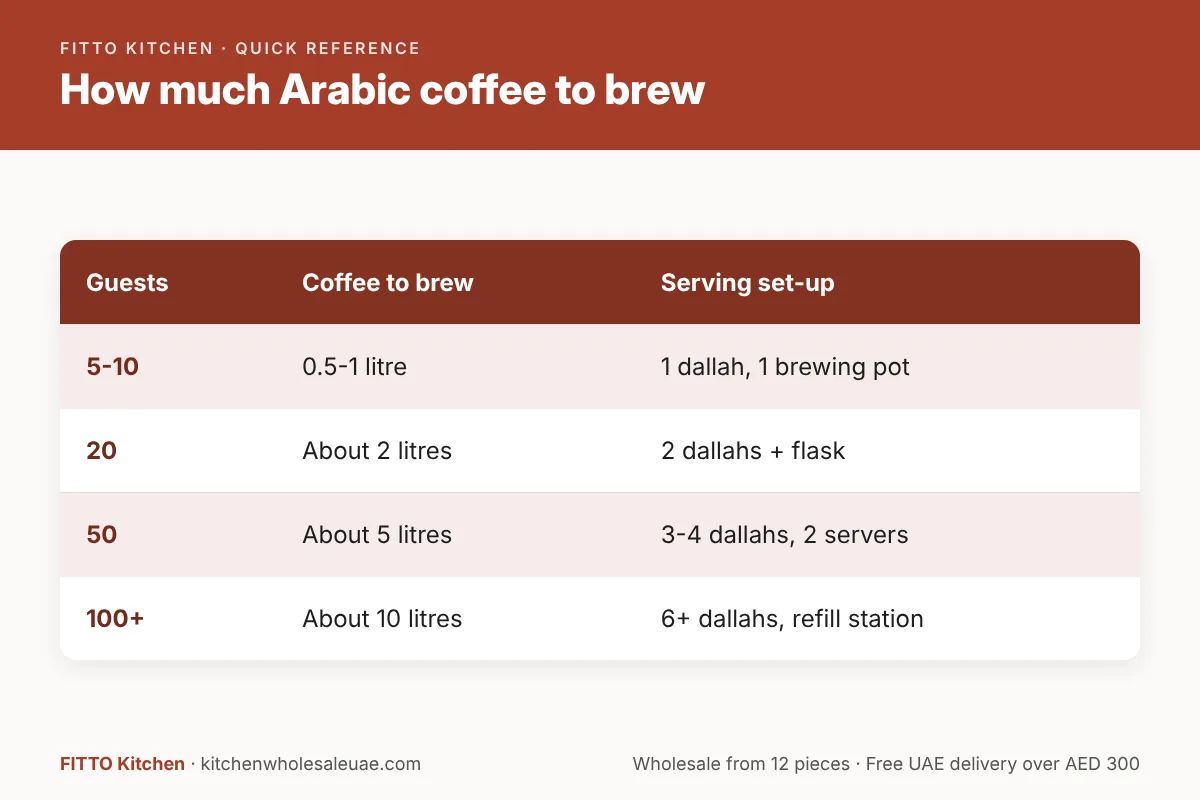
Product titles describe shapes such as small, tall or conical rather than exact litres. If exact capacity matters, ask the Trade Desk to confirm it before you order in bulk. A tall, slim dallah usually holds more than a small squat one, but the shape of the base matters too.
Which finish should you choose: stainless, gold-tone or enamel?
Choose polished stainless steel for daily service, and gold-tone, enamel or textured finishes for gifting, weddings and festive trays. Stainless steel takes daily washing best; decorative finishes need gentler care.
| Finish | Best for | Care | Watch out for |
|---|---|---|---|
| Polished stainless steel | Daily majlis, hotels, offices, cafés | Hand wash, dry fully | Water spots if left to air-dry |
| Ribbed or textured stainless | Majlis display with daily use | Hand wash, soft brush in grooves | Coffee residue in deep patterns |
| Gold-tone finish | Gifts, Eid, weddings, National Day | Hand wash gently, no scouring | Finish can wear with abrasives |
| Enamel finish | Modern majlis, gifting | Hand wash, avoid knocks | Enamel can chip if dropped |
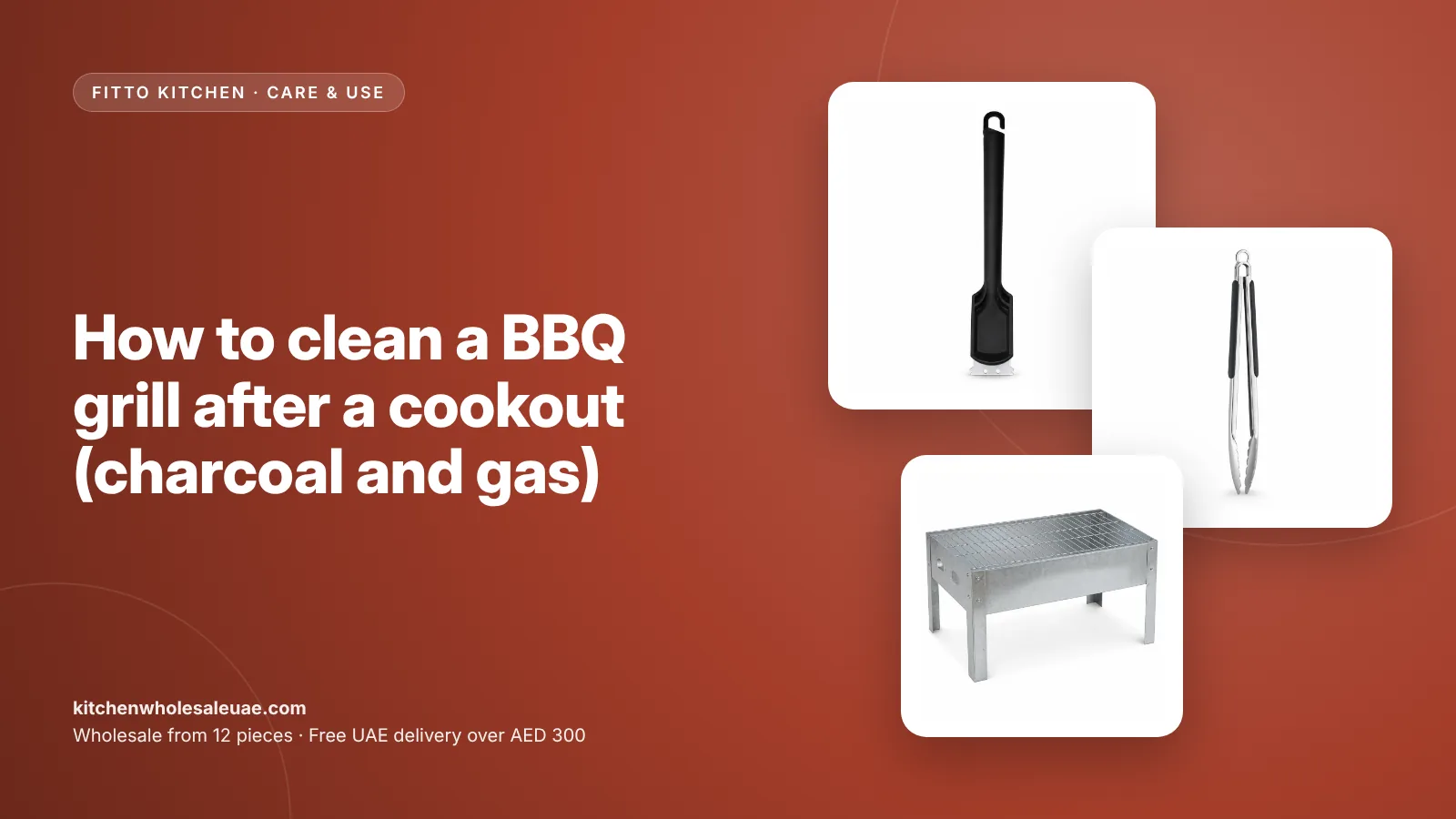
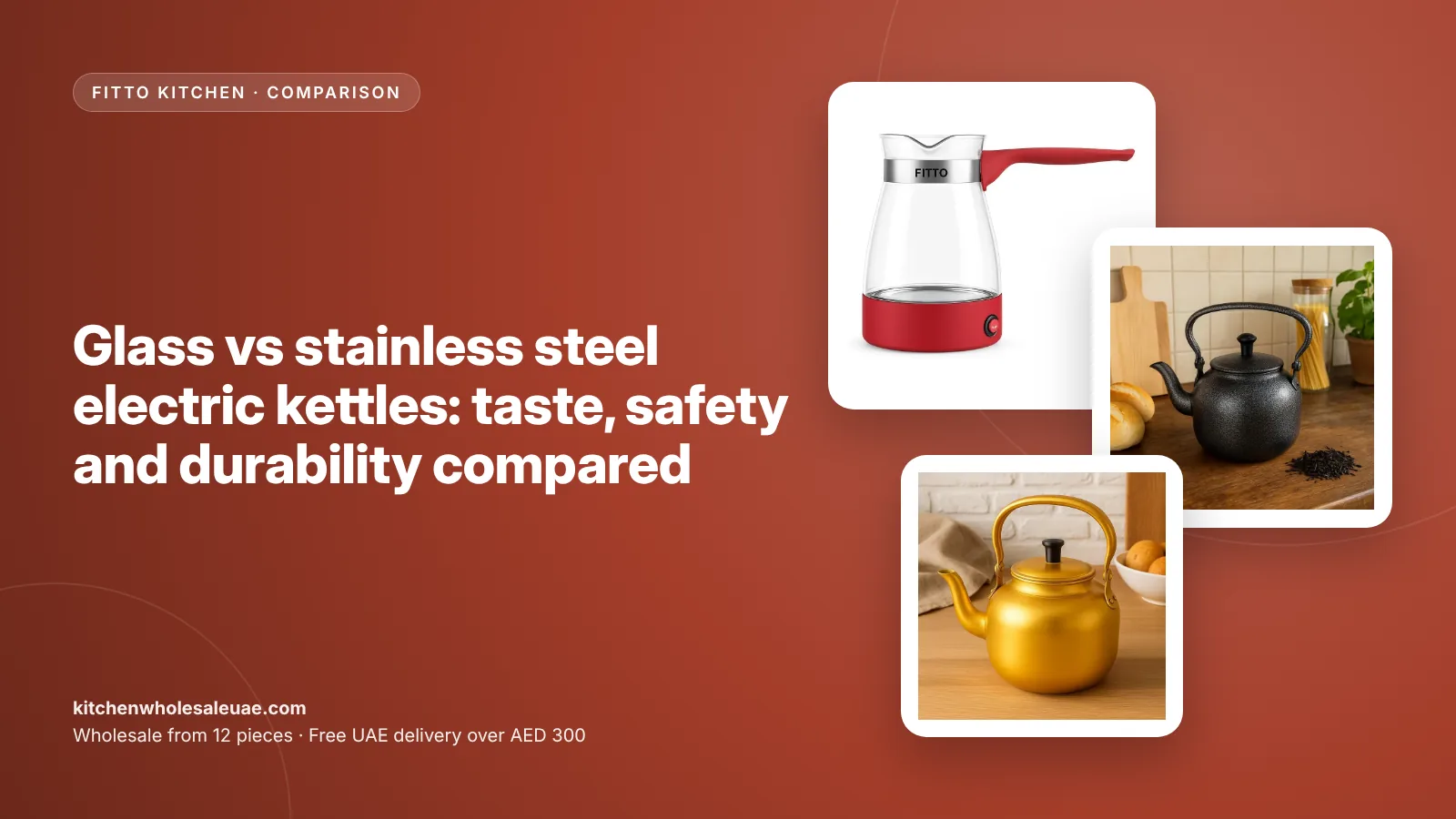
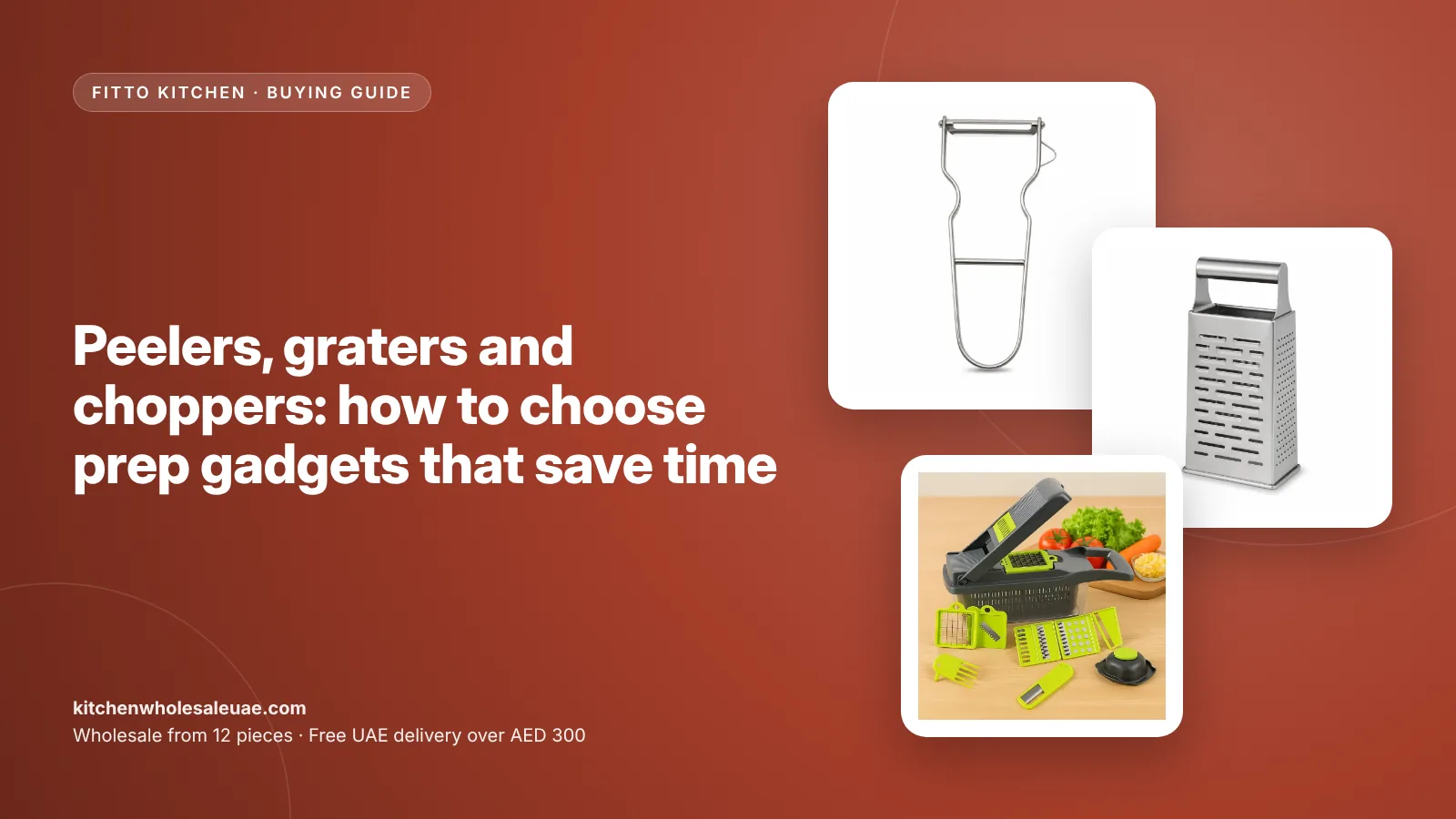
In our range, the tall ribbed stainless steel dallah is a practical choice for daily service. The dallah pitcher with cream enamel finish brings a softer, modern look. Gold-tone pieces such as the hammered teardrop-pattern dallah suit festive trays and gifts.
What makes a well-made dallah?
A good dallah pours in a thin stream without dripping, has a lid that stays put while pouring and a handle that stays steady in the hand. Check these four points in person or on a sample.
- Spout. A triangular beak spout gives the thin, controlled stream that finjan service needs. Pour water into a cup to test for dribbles.
- Lid. Tilt the empty pot to a pouring angle. The lid should stay seated, whether it is flat, cone-shaped or domed.
- Handle. A curved side handle should sit far enough from the body to keep knuckles clear. Metal handles get warm, so servers often hold a small cloth.
- Base and seams. The dallah should stand level, with smooth joins and no sharp edges inside the rim.
Some hosts push a small plug of palm fibre into the spout to hold back cardamom and grounds. A 7 cm stainless steel tea strainer over the dallah opening does the same job when you transfer coffee from the brewing pot.
How do you care for a dallah?
Rinse soon after service, hand wash with mild soap, and dry inside and out before storing with the lid off. Coffee oils and cardamom leave a film that turns bitter if left overnight.
Avoid steel wool and harsh powders on any finish, especially gold-tone and enamel. A soft bottle brush reaches the base, and a pipe cleaner clears the spout. In humid coastal months, dry the inside with a cloth rather than leaving it to drip.
Which dallahs sell best for gifting and for daily service?
Gift buyers choose by look and presentation; hospitality buyers choose by durability and matching sets. Most shops need both on the shelf.
Gold-tone and boxed pieces move fastest before Eid, Ramadan hosting, weddings and UAE National Day on 2 December. The boxed gold-finish dallah coffee jug is ready to wrap. For seasonal timing, see our White Friday kitchenware stock guide. Hotels, offices and cafés usually standardise on one plain stainless model, so they can reorder the same piece and keep trays matching. For opening a new venue, our restaurant kitchen equipment checklist covers the wider coffee station.
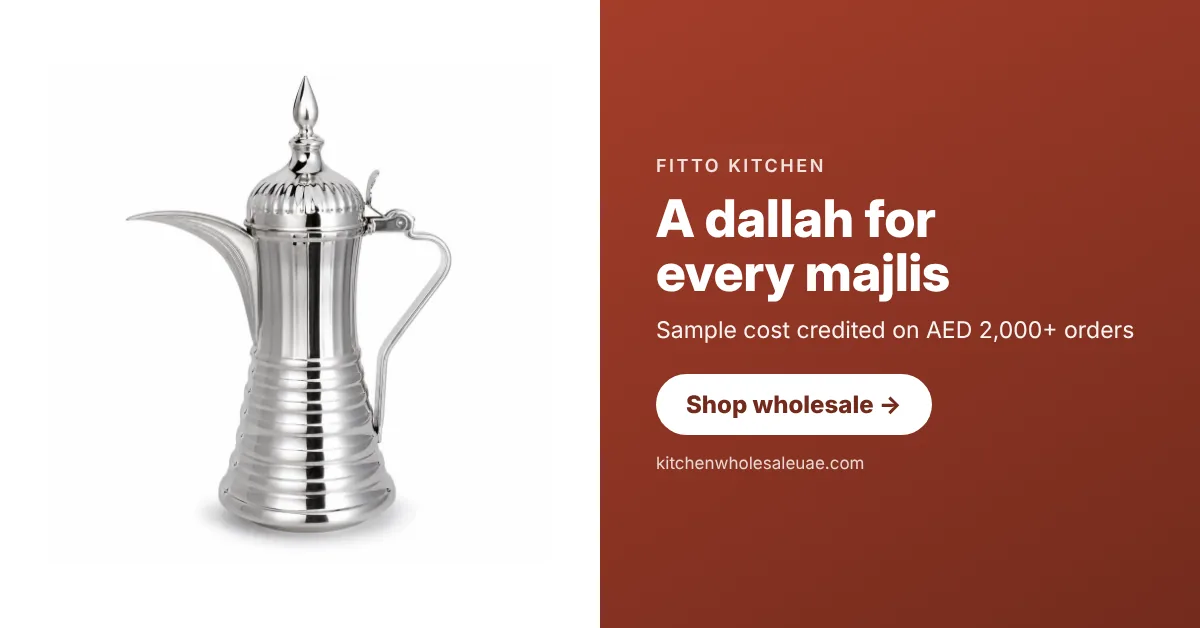
FITTO Trade Pick: A dallah for every majlis Stock the tall ribbed stainless steel dallah for daily service and the boxed gold-finish dallah jug for gifting. Not sure which style your customers prefer? Order a sample first, and we credit it on a bulk order of AED 2,000+ within 30 days.
The bottom line
Pick the dallah for the job: plain stainless steel for daily pouring, decorative finishes for gifts and festive trays. Plan coffee by cups per guest, use a separate pot to brew, and test the spout and lid before you buy in bulk.
Browse our coffee and tea range, request a quote for mixed styles, or order a sample to see the finish first. Delivery is free over AED 300, and the Trade Desk is on WhatsApp at +971 55 672 6947. FITTO Kitchen: fit for the way you cook.
FAQ
Can you put a dallah on the stove?+
Only if the product says it is made for stovetop use. Most decorative dallahs, especially gold-tone and enamel finishes, are serving pots. Brew the coffee in a stainless steel pot or an electric coffee maker, then pour it into the dallah through a fine strainer. This also keeps the serving dallah cleaner and its finish looking new for longer.
How many cups does a dallah serve?+
It depends on the pot size, but Arabic coffee is poured in small amounts. As a rule of thumb, each pour is about 30–40 ml, so one litre gives roughly 25–30 pours. Most guests take one to three cups, so plan around three per guest and refill the dallah from a flask.
What is the difference between a silver and a gold dallah?+
The difference is mostly the finish and the use. Polished stainless steel dallahs handle daily washing and suit offices, hotels and family majlis. Gold-tone dallahs are chosen for festive trays, weddings and gifts. Treat gold-tone finishes gently: hand wash with mild soap and avoid scouring pads.
How do you remove coffee stains from a dallah?+
Soak the inside with warm water and a spoon of baking soda for 30 minutes, then use a soft bottle brush. Rinse well and dry inside and out. Avoid steel wool, bleach and harsh powders, which scratch stainless steel and can wear gold-tone or enamel finishes.