What is granite cookware and is it safe to use?
By FITTO Trade Desk · Last updated 29 October 2026
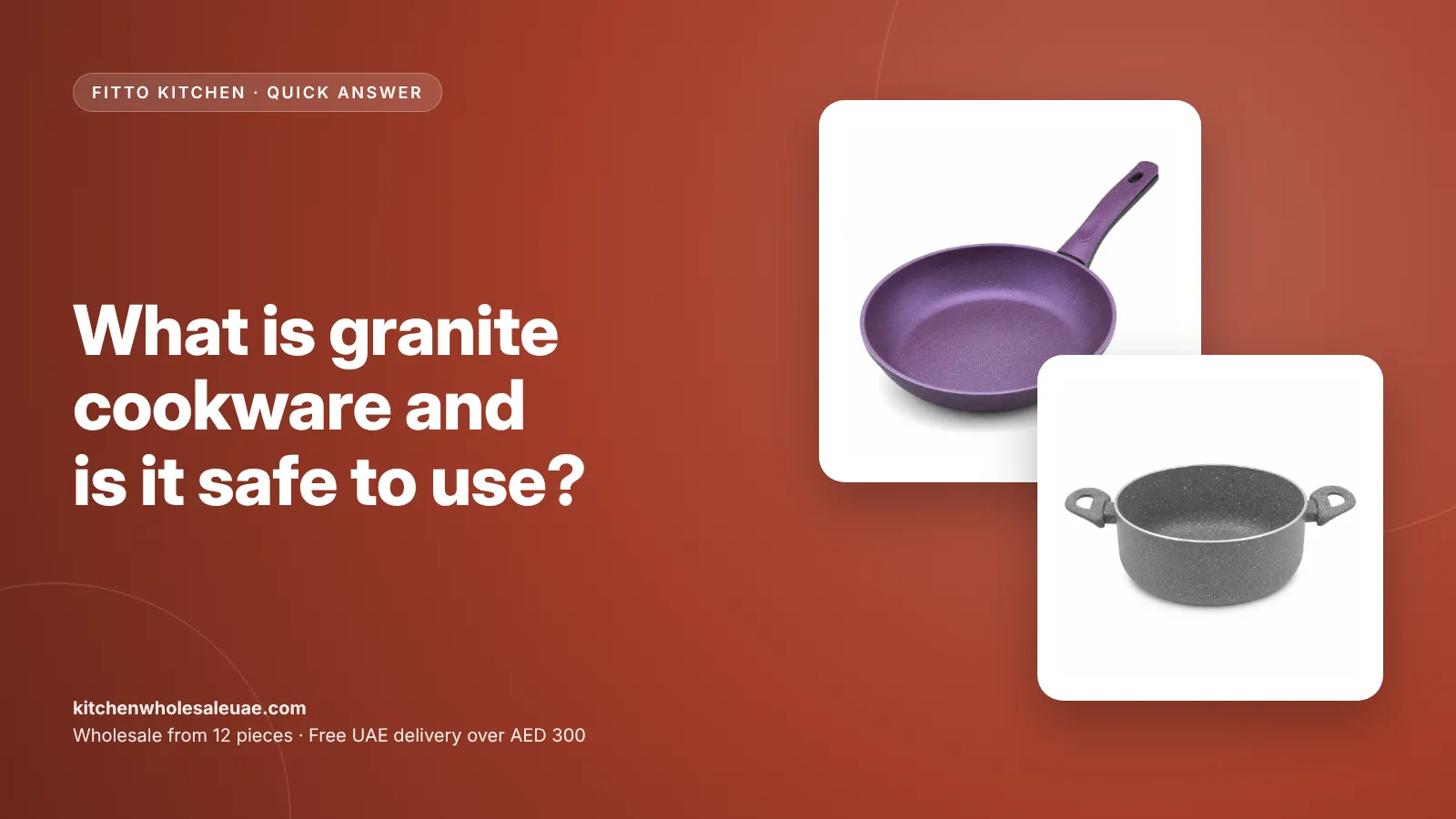
What is granite cookware? It is usually an aluminium pan with a speckled, stone-look non-stick coating, not a pan cut from granite. Used as the maker intends, it is generally considered safe for everyday cooking: keep to low or medium heat, never preheat it empty on high, use wooden or silicone tools and replace it once the coating flakes.
Key takeaways
- "Granite" and "marble" describe the look of a non-stick coating; the body underneath is normally aluminium.
- Read the label for the coating type, the maximum temperature and which hobs it suits.
- Most coating damage comes from high heat, metal tools, harsh scrubbing and sudden cooling.
Shoppers see "granite" or "marble" on a box and expect a tougher, natural-stone pan. The name sells the look, not the material, so buyers often overheat the pan and return it scratched.
This quick answer is for home cooks and shoppers comparing coated pans (أواني الجرانيت). At FITTO Kitchen, a wholesale cookware supplier in the UAE, we stock granite-coated fry pans, casseroles and cooking pots.
What is granite cookware made of?
A metal body, usually pressed or forged aluminium, coated inside with a non-stick layer that has a speckled stone finish. The speckles are decorative; the coating does the non-stick work.
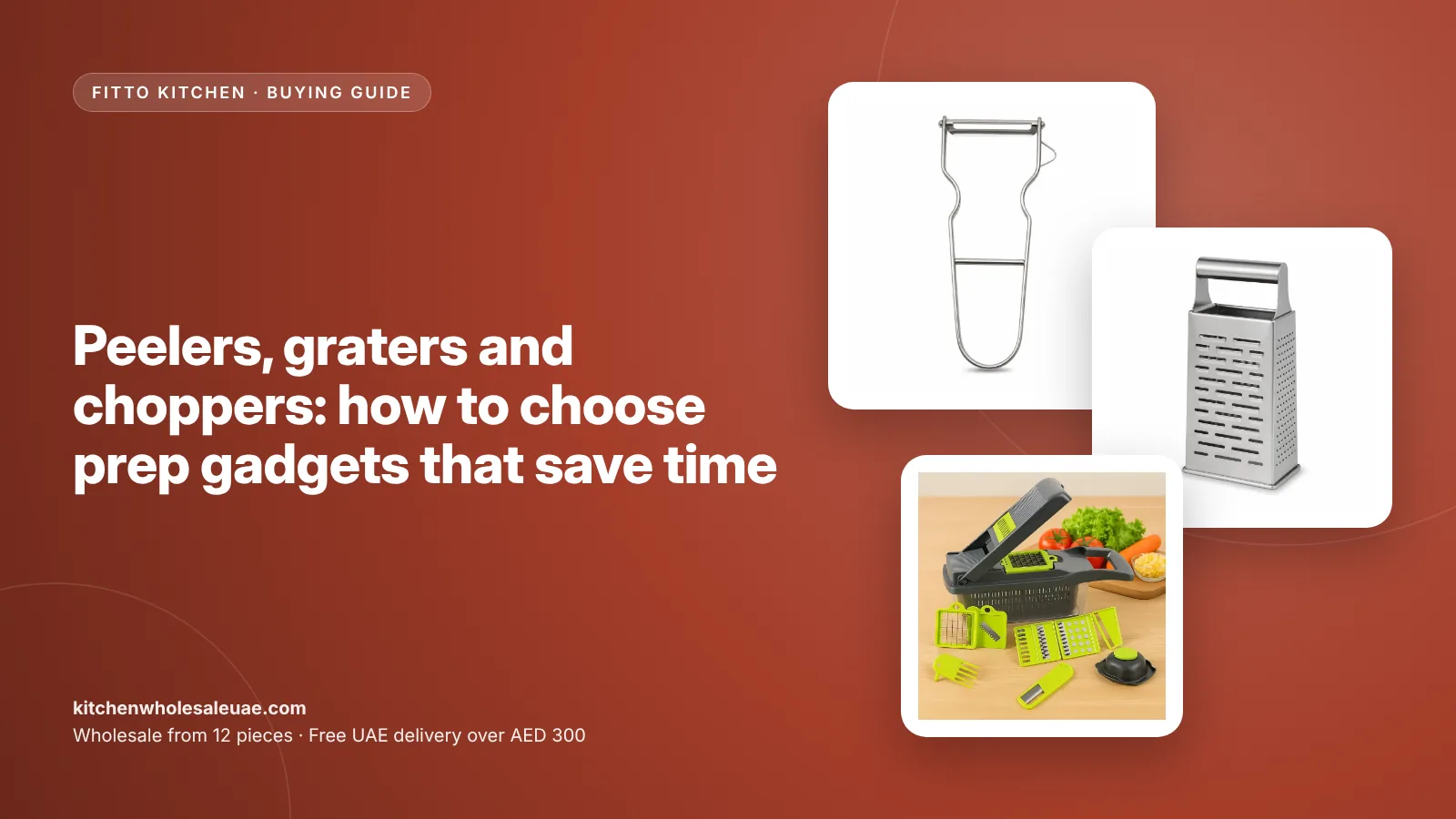
Our 26 cm granite non-stick casserole pot is a typical example: a light aluminium body with a granite-look coating.
The coating itself is typically one of two families. PTFE-based coatings give the slickest release. Ceramic-type (sol-gel) coatings handle higher heat but tend to lose their release sooner.
Do not confuse this with older "graniteware", which is speckled enamel fused onto steel. That is a different, glass-like surface.
How does granite compare with other pans?
A granite pan behaves like any coated non-stick pan; only the look differs.
| Type | Body | Cooking surface | Heat | Utensils | Induction |
|---|---|---|---|---|---|
| Granite-coated | Aluminium | Stone-look non-stick coating | Low to medium | Wood or silicone | Only with a steel base plate |
| Plain non-stick | Aluminium | Smooth non-stick coating | Low to medium | Wood or silicone | Only with a steel base plate |
| Enamel ("graniteware") | Steel | Glass-like enamel | Low to medium | Avoid knocks | Usually yes |
| Stainless steel | Steel layers | Bare metal | Any | Any | If the base is magnetic |
For a deeper comparison, read our stainless steel, non-stick and granite cookware guide. To check a pan for induction, see our guide to induction-compatible cookware.
Is granite cookware safe to use?
Coatings made for food contact are generally considered safe for normal cooking, provided you stay within the temperatures the maker states. The main risk is overheating, not the granite look.
PTFE-type coatings can start to break down when overheated, at roughly 260 °C and above. An empty pan on a high flame can reach that in a few minutes, so add oil or food before heating and keep the extractor on.
Before you buy, check the box or product page for:
- the coating type and any "PFOA-free" statement;
- the maximum safe temperature, including for oven use;
- which hobs the base suits;
- care instructions, including whether the maker allows dishwashers.
Once the coating is scratched through or flaking, replace the pan.
How do you make a granite pan last?
Gentle heat, soft tools and hand washing keep the coating working longest.
- Wash the pan before first use and dry it.
- Heat on low to medium with a little oil; never preheat it empty on high.
- Cook with wooden or silicone utensils.
- Let the pan cool before washing, because cold water on a hot pan can warp the base.
- Hand wash with a soft sponge; skip steel wool and abrasive powder.
- Stack with a cloth or pan protector between pans.
For more on choosing and caring for coated pans, see our non-stick frying pan guide.
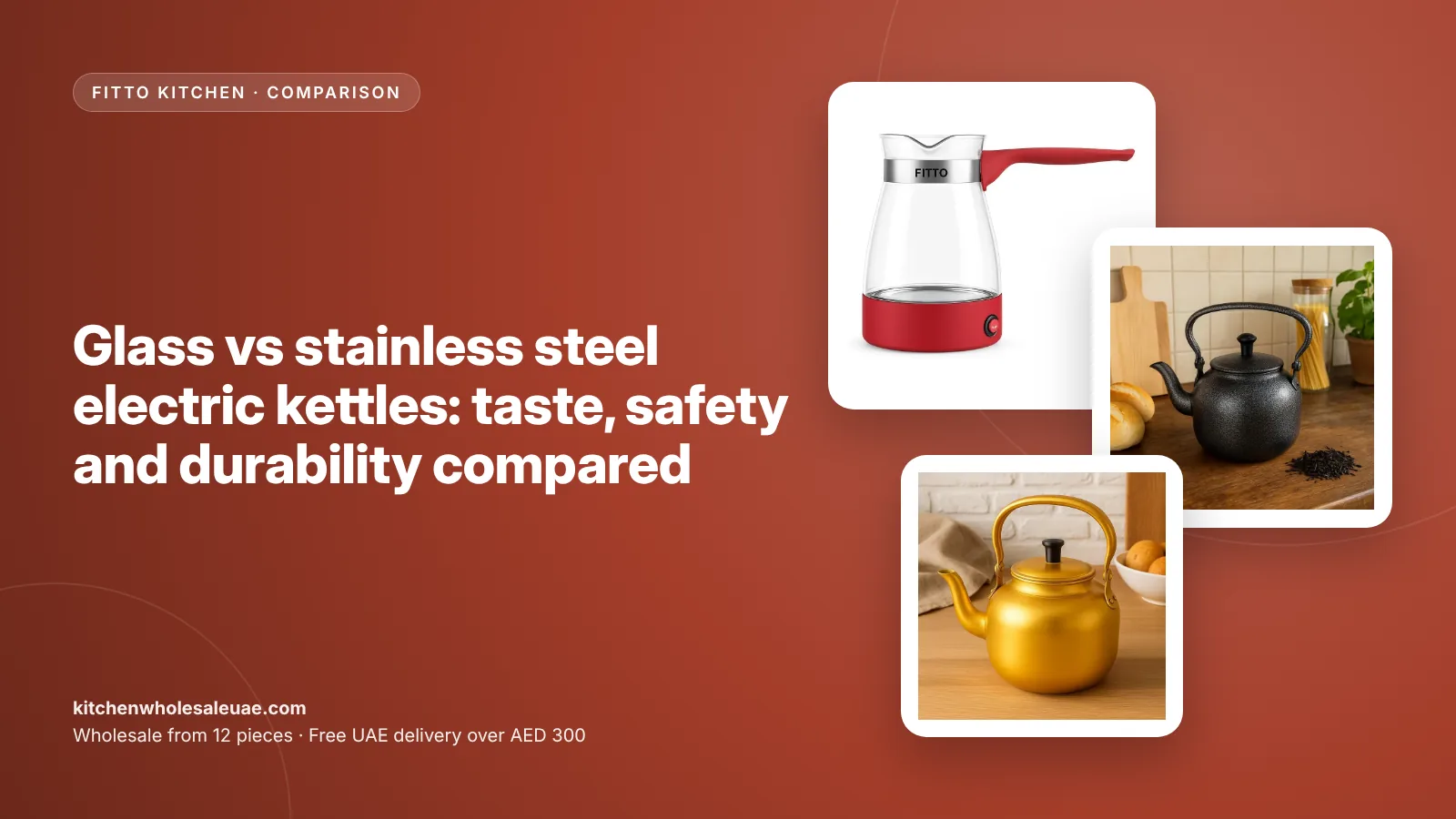
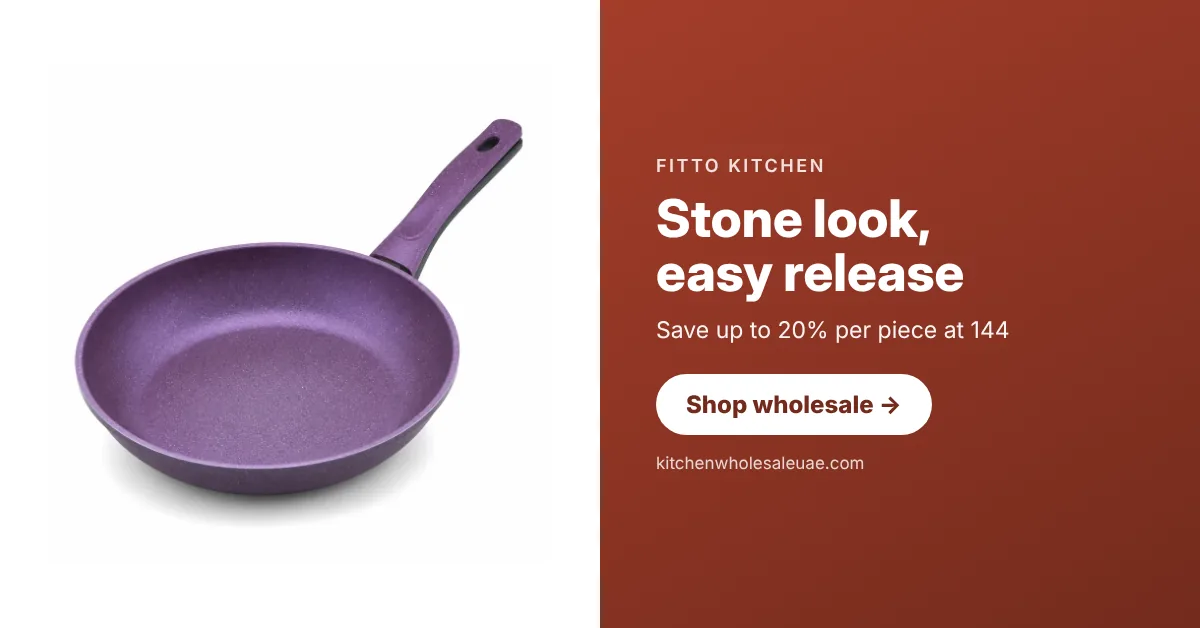
FITTO Trade Pick: Granite-coated pans in two shapes Stock the 28 cm granite-coated fry pan for everyday frying and the 26 cm granite non-stick casserole pot for stews and rice. Bigger packs cut the price per piece by up to 20% at 144 pieces.
The bottom line
Granite cookware is coated non-stick cookware with a stone look, usually on an aluminium body. Treat it like any non-stick pan, with moderate heat and soft tools, and it is a practical everyday choice.
Browse our wholesale cookware and pans, request a quote for a mixed carton of sizes, or order a sample to check the coating yourself. Wholesale prices start from 12 pieces, delivery is free across the seven emirates over AED 300, and the Trade Desk answers on WhatsApp at +971 55 672 6947. FITTO Kitchen: fit for the way you cook.
FAQ
Is granite cookware better than regular non-stick?+
Not by material: both are coated pans, and the granite finish is mainly a look. What matters is the quality and thickness of the coating, the base and how you use it.
Does granite cookware work on induction hobs?+
Only if the base contains magnetic steel, usually a bonded plate on the underside. Plain aluminium granite pans will not heat on induction. Check the box for an induction symbol, or hold a magnet to the base: if it sticks firmly, the pan will work.
Can granite pans go in the oven or dishwasher?+
Only if the maker says so on the box or product page. Plastic or wooden handles often limit oven use, and dishwasher detergents are harsh on coatings. Hand washing is the safe default.
Is a marble-coated pan the same as a granite pan?+
Essentially, yes. "Marble" and "granite" are both names for stone-look non-stick coatings, usually on an aluminium body. Compare them by coating type, base thickness and care instructions rather than by the stone name on the box.