Granite vs ceramic coated cookware: which coating lasts longer?
By FITTO Trade Desk · Last updated 29 October 2026
In the granite vs ceramic cookware choice, a good granite-coated pan usually keeps its non-stick release longer, as long as it stays on low to medium heat. Ceramic coatings are PTFE-free and very slick when new, but tend to lose release sooner. For daily cooking and steady resale, granite is the safer default; ceramic suits buyers who want PTFE-free pans.
Key takeaways
- "Granite" describes the look: an aluminium pan with a speckled non-stick coating, not real stone.
- Most granite-look coatings are PTFE-based; ceramic coatings are silica-based and PTFE-free.
- Ceramic releases food best when new but usually fades faster with daily use.
- Heat is the main coating killer for both: cook on low to medium and never heat an empty pan on high.
- Wooden or silicone tools, hand washing and slow cooling add years to either coating.
A coated pan that stops releasing eggs after six months is money wasted, whether you cook at home or sell pans in a shop. Customers rarely blame the burner; they blame the pan and the seller.
At FITTO Kitchen, a wholesale cookware supplier in the UAE, we stock a wide granite-coated range and a ceramic non-stick sauce pan. This comparison is for home cooks choosing a daily pan and retailers deciding what to put on the shelf.
What is the difference between granite and ceramic coated cookware?
Granite cookware is a metal pan, usually aluminium, with a speckled non-stick coating that looks like stone; ceramic cookware has a smooth, glass-like coating made mainly from silica. Neither is solid granite or solid ceramic.
Most granite-look coatings are PTFE-based non-stick layers with mineral particles added for colour and toughness. Some makers apply a ceramic-type coating and finish it with a granite pattern, so check the packaging for the coating type. Our granite cookware quick answer covers this in more detail.
Ceramic coatings are made with a sol-gel process and contain no PTFE. That is their main selling point for buyers who prefer to avoid PTFE in the kitchen. In Arabic, shoppers often search for granite pans as مقلاة جرانيت.
Which coating releases food better?
Ceramic is usually the slicker of the two when new, but a granite coating keeps a steadier release over time. Fresh ceramic lets an egg slide with almost no oil; after months of daily use, it often needs more oil to do the same.
PTFE-based granite coatings are slightly softer but naturally low-friction, so small wear marks affect them less. Ceramic coatings are harder but brittle. Once their surface roughens or collects burnt-on oil, release drops quickly. A thin film of oil or butter helps both coatings, and it is the habit that protects ceramic most.
How much heat can each coating take?
Keep both coatings on low to medium heat; ceramic tolerates brief high heat better, but high heat speeds up wear on both. No coated pan is designed for searing on full flame.
PTFE-based coatings start to break down above about 260°C, and an empty pan on a high gas flame can pass that in a few minutes. Ceramic coatings do not give off PTFE fumes, but repeated overheating still makes them lose release faster. Aluminium bodies heat quickly, so medium on a UAE gas hob is usually enough.
| Factor | Granite (PTFE-based) | Ceramic (sol-gel) |
|---|---|---|
| Release when new | Very good | Excellent |
| Release after a year of daily use | Usually still good | Often reduced |
| Heat limit | Low to medium; avoid empty preheating | Medium; tolerates brief high heat |
| Scratch resistance | Fair; reinforced layers help | Hard surface but can chip |
| PTFE-free | No (check the packaging) | Yes |
| Typical life with good care (rule of thumb) | About 2–5 years | About 1–2 years |
| Best for | Daily eggs, sauces, family cooking | PTFE-free buyers, moderate heat |
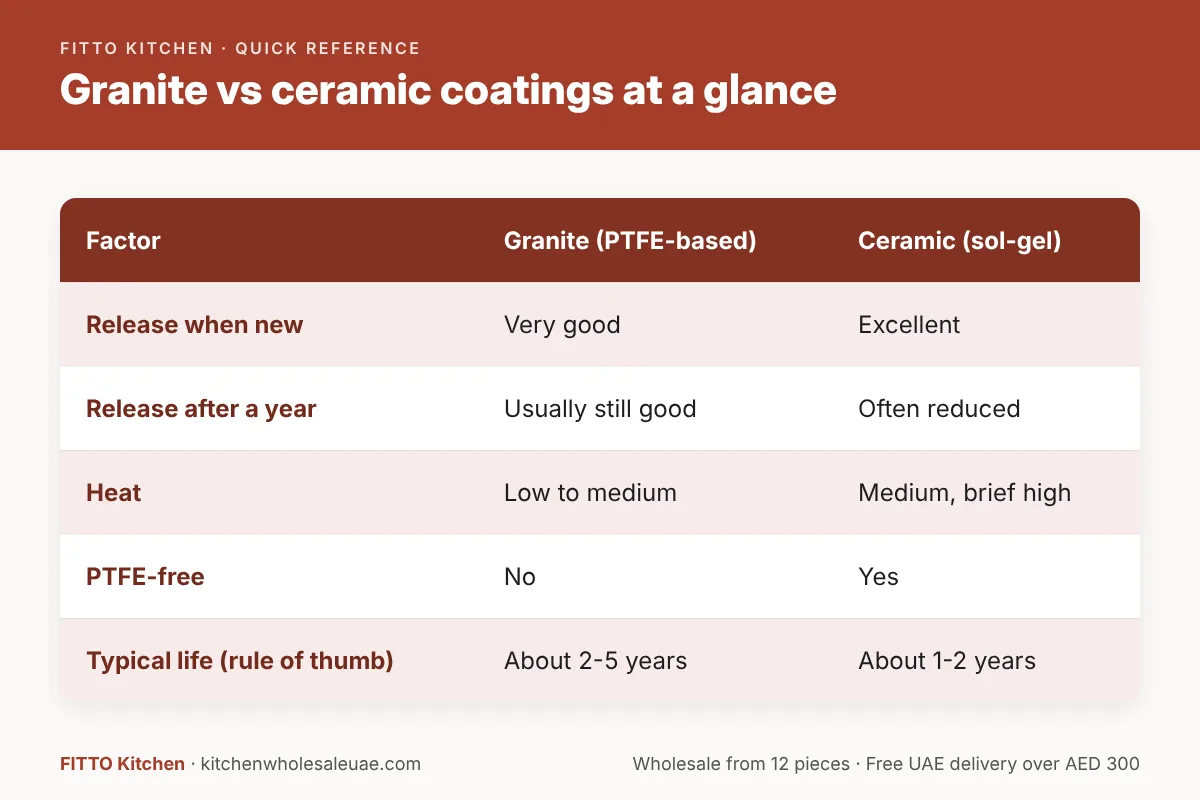
These are rules of thumb from how the coatings behave, not test results for one brand. Body thickness, the number of coating layers and how the pan is treated matter as much as the coating type.
Which coating resists scratches better?
Neither coating survives metal utensils for long; with wooden or silicone tools, a reinforced granite coating usually wears more slowly. Ceramic is harder, but a knock or a metal spatula can chip it.
The real scratch risk in most kitchens is a steel spoon, steel wool or stacking pans without a protector. Switch to wooden or silicone tools; our silicone vs wooden utensils comparison helps you choose. When storing, put a paper towel or cloth between stacked pans.
How should you care for coated pans to make them last?
Cook on low to medium heat, use a little oil, let the pan cool before washing and hand wash with a soft sponge. Those four habits matter more than which coating you buy.
- Add a little oil or butter before heating, and never preheat an empty pan on high.
- Use wooden, silicone or nylon tools only.
- Let the pan cool before it touches water; sudden temperature changes can warp the base and stress the coating.
- Hand wash with warm water, mild soap and a soft sponge. Skip abrasive powders.
- Avoid aerosol cooking sprays on ceramic, because they leave a sticky film that kills release.
- Store with a pan protector or cloth between stacked pans.
FITTO's granite product pages give the same advice: avoid metal scourers and sudden temperature changes, and let the pan cool before washing.
Granite vs ceramic cookware: which suits resale and daily cooking?
For daily cooking and most retail shelves, granite is the stronger choice; add ceramic as a PTFE-free option for buyers who ask for it. Granite also offers more shapes and colours to build a range from.
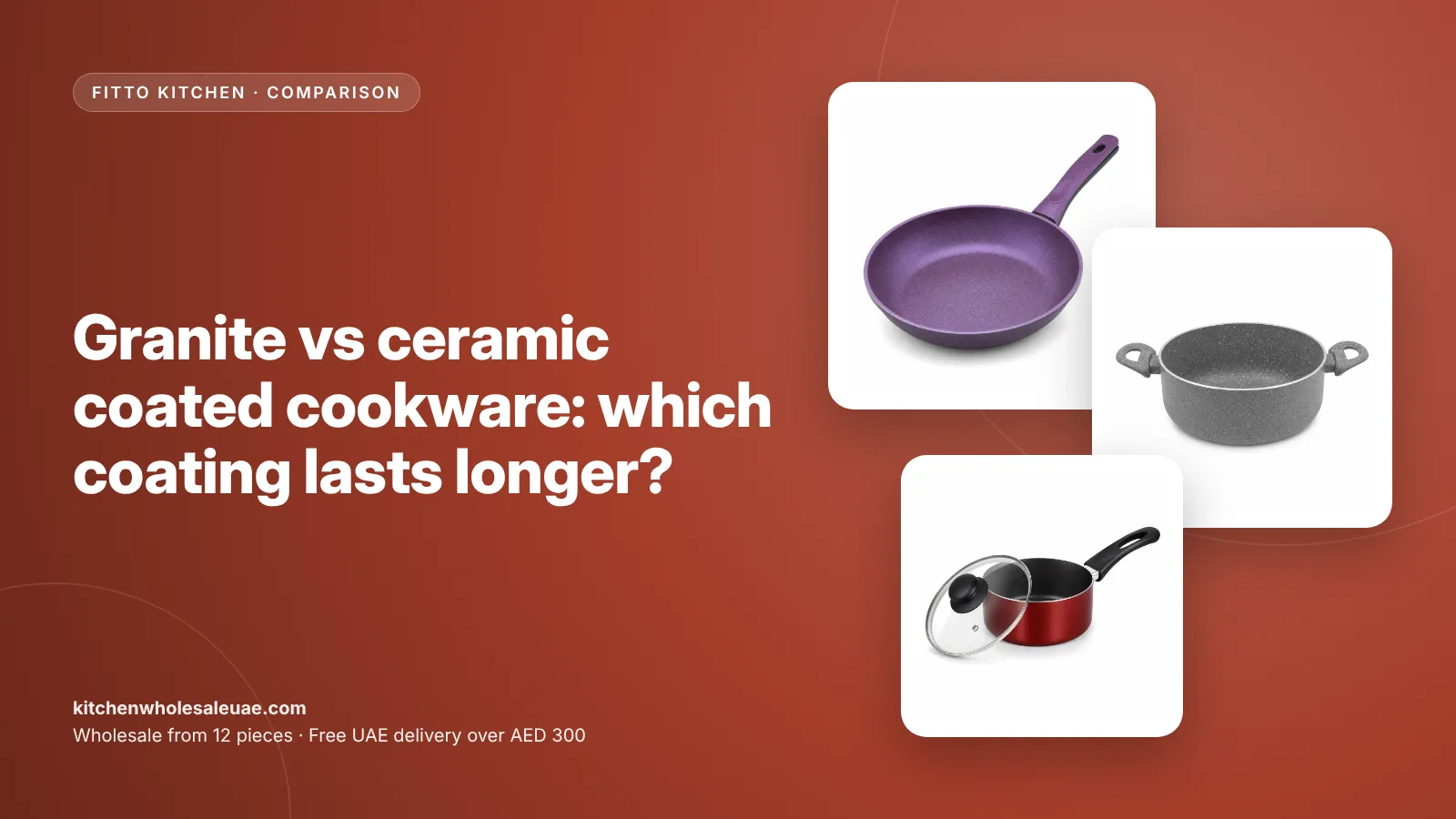
Our granite range covers fry pans from 24 cm to 30 cm in purple and brown. Highlights include the 28 cm granite-coated fry pan, a 26 cm granite non-stick casserole pot for stews and rice, and a 32 cm granite wok. That spread lets a shop sell a complete matching look. For the ceramic shopper, the 20 cm ceramic non-stick sauce pan with lid covers sauces, milk and small portions.
Retailers should brief staff on care. A short line at the till, "medium heat and wooden spoons", prevents most returns on coated pans of either type. For the wider picture, including stainless steel, see our stainless, non-stick and granite cookware comparison.
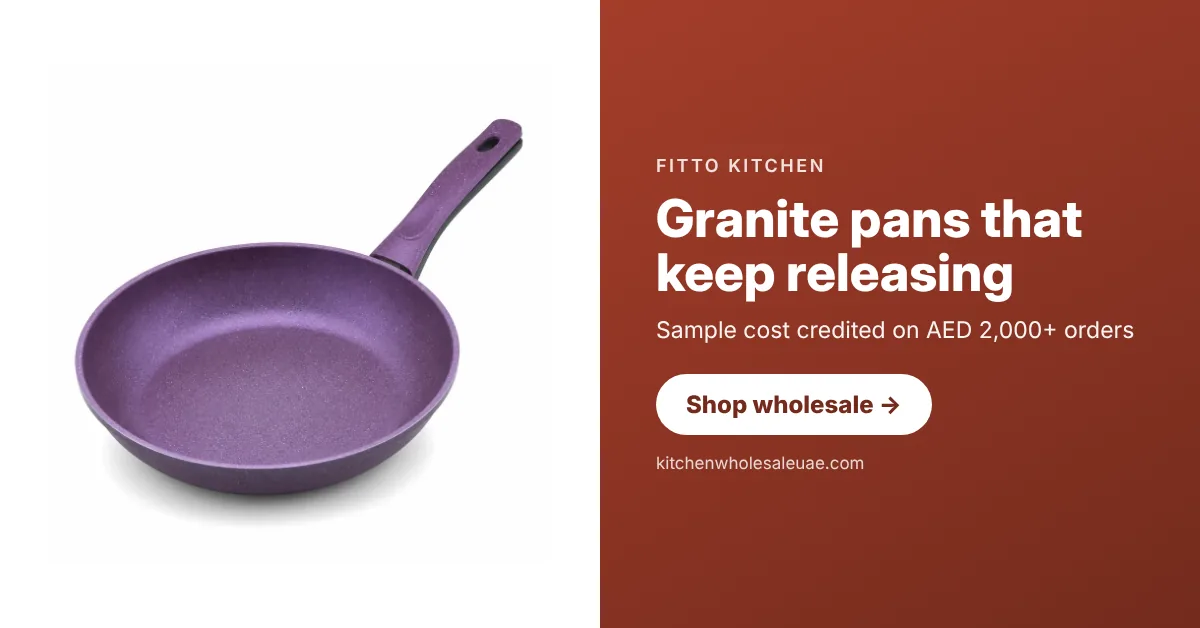
FITTO Trade Pick: Granite pans that keep releasing Build your coated range around the 28 cm granite-coated fry pan and the 26 cm granite casserole pot, and add the ceramic sauce pan for PTFE-free buyers. Order a sample first, and its cost is credited on a bulk order of AED 2,000+ within 30 days.
The bottom line
Granite-coated cookware usually lasts longer in daily use, while ceramic gives a PTFE-free option that releases beautifully at first but fades sooner. Whichever you choose, low to medium heat, gentle tools and slow cooling decide how long the coating lasts.
Browse our cookware and pans range, request a quote for a mixed coated range, or order a sample to test the coating yourself. Delivery is free over AED 300, and the Trade Desk is on WhatsApp at +971 55 672 6947. FITTO Kitchen: fit for the way you cook.
FAQ
Is granite cookware actually made of granite?+
No. Granite cookware is usually an aluminium pan with a speckled non-stick coating that looks like stone. The name describes the appearance. Most of these coatings are PTFE-based with mineral particles added, though some use a ceramic-type base. Check the packaging or product details if the coating type matters to you or your customers.
Is ceramic cookware healthier than granite cookware?+
Ceramic coatings are PTFE-free, which is why some buyers prefer them. PTFE coatings used in normal cooking at low to medium heat are widely considered safe, but they should never be overheated empty. The practical rule for both types is the same: moderate heat, no metal tools and replace any pan whose coating is flaking.
Why has my ceramic pan stopped being non-stick?+
The usual causes are high heat, aerosol cooking sprays and burnt-on oil building up on the surface. Try cleaning it with a paste of baking soda and water on a soft sponge, then rinse and dry. From then on, cook on medium heat with a little oil. A ceramic coating that is badly worn cannot be restored.
Can coated pans go in the dishwasher?+
Some are labelled dishwasher safe, but hand washing is kinder to any coating. Strong detergents and high water temperatures dull both granite and ceramic surfaces over time, and the bare aluminium rim can discolour. Wash with warm soapy water and a soft sponge once the pan has cooled.
How do I know when to replace a coated pan?+
Replace it when the coating is flaking, deeply scratched to the metal, or when food sticks even with oil at medium heat. Small surface marks are normal and do not affect cooking. A warped base that rocks on the hob is another sign, because it heats unevenly and strains the coating further.