Commercial cutting boards: how to choose size, material and colour for a busy kitchen
By FITTO Trade Desk · Last updated 29 October 2026
Commercial cutting boards should be plastic (HDPE or PP) for raw proteins, sized to the station, at least 10–13 mm thick and colour-coded so raw and ready-to-eat food never share a board. Plan one board per colour in use per station, plus spares for the wash cycle, and replace any board with deep grooves, cracks or warping.
Key takeaways
- Use plastic boards for raw meat, poultry and fish, because they go through hot washing and sanitising without cracking.
- Match board size to the station: small for bar and garnish, mid-size for general prep, large and thick for butchery.
- Colour-code by food group and follow the scheme your food safety plan uses, then train every new starter on it.
- Replace boards when grooves stay stained after scrubbing, or when a board cracks or will not lie flat.
A cheap board looks like a minor buy until an inspector finds raw chicken juice in the scratches of the salad board. Worn, mixed-up boards are easy to spot and cheap to fix.
This guide is for restaurant and hotel kitchens, butchers and caterers choosing commercial cutting boards (لوح تقطيع) in bulk. At FITTO Kitchen, a wholesale knives and cutting boards supplier in the UAE, we supply plastic, TPU and wooden boards to kitchens across the seven emirates.
Which material should commercial cutting boards be?
For raw proteins, choose plastic: HDPE or PP. Both are non-porous enough to clean and sanitise between tasks, and they tolerate commercial dishwashers that would crack wood.
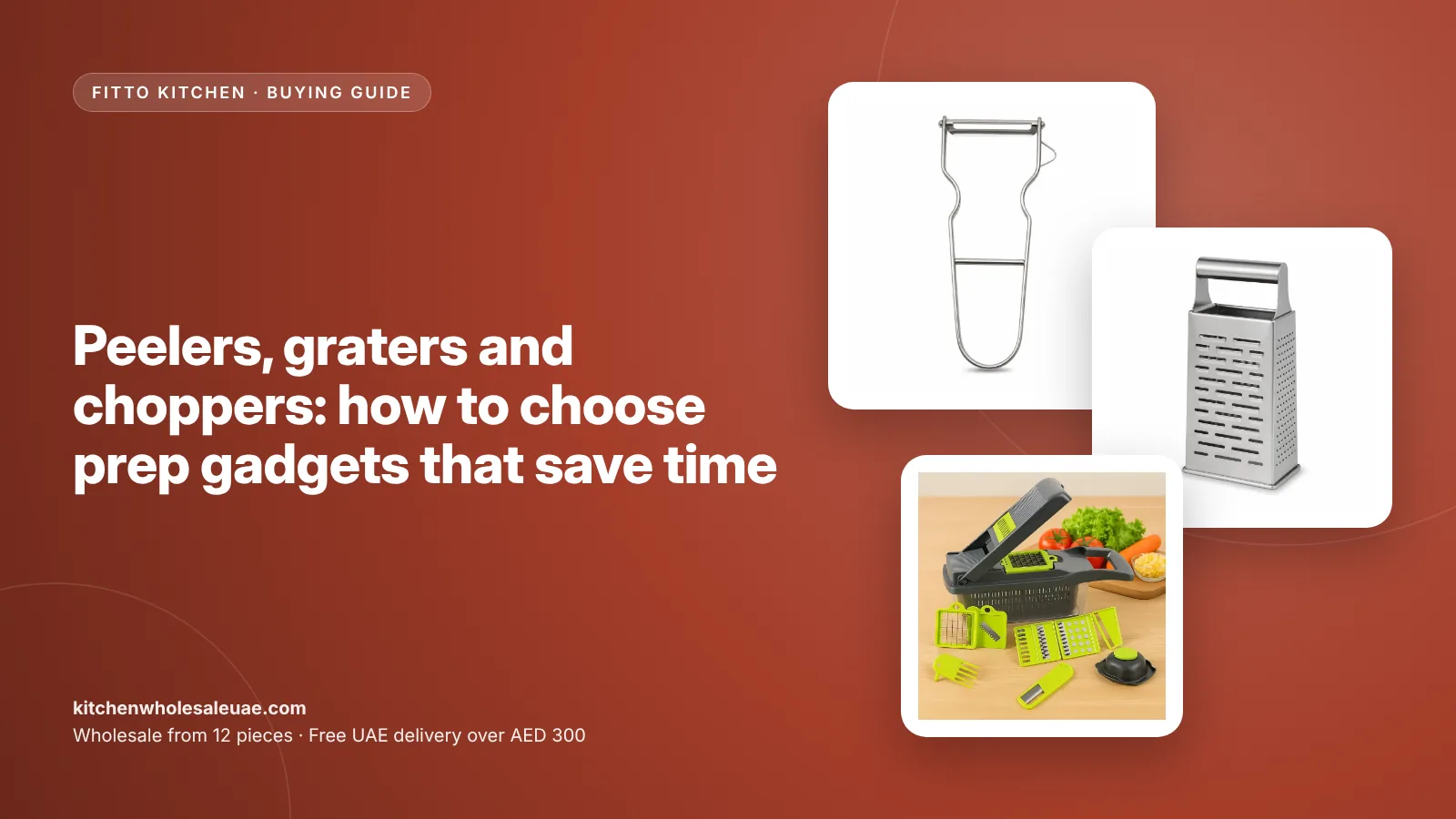
Wood is kinder to knife edges and looks good, but it needs hand washing, drying and oiling. Many commercial kitchens keep wood for bread, cheese and serving, and use plastic for everything raw. TPU and silicone boards are light and flexible, which suits small tasks and home use more than a heavy butchery line.
| Material | Best station | Strengths | Watch out for |
|---|---|---|---|
| HDPE / PE plastic | Raw meat, poultry, fish, general prep | Dishwasher-safe, colour options, low cost | Grooves build up; replace when scored |
| PP plastic | Fruit, vegetables, light prep | Light, easy to lift and wash | Thinner boards can warp in hot washes |
| Wood | Bread, cheese, serving | Gentle on knives, looks good at the pass | Hand wash only; can crack if soaked |
| TPU / silicone | Garnish, small tasks | Light, flexible, double-sided options | Less stable for heavy chopping |
For a deeper side-by-side, read our wooden vs plastic cutting boards comparison.
What size cutting board does each station need?
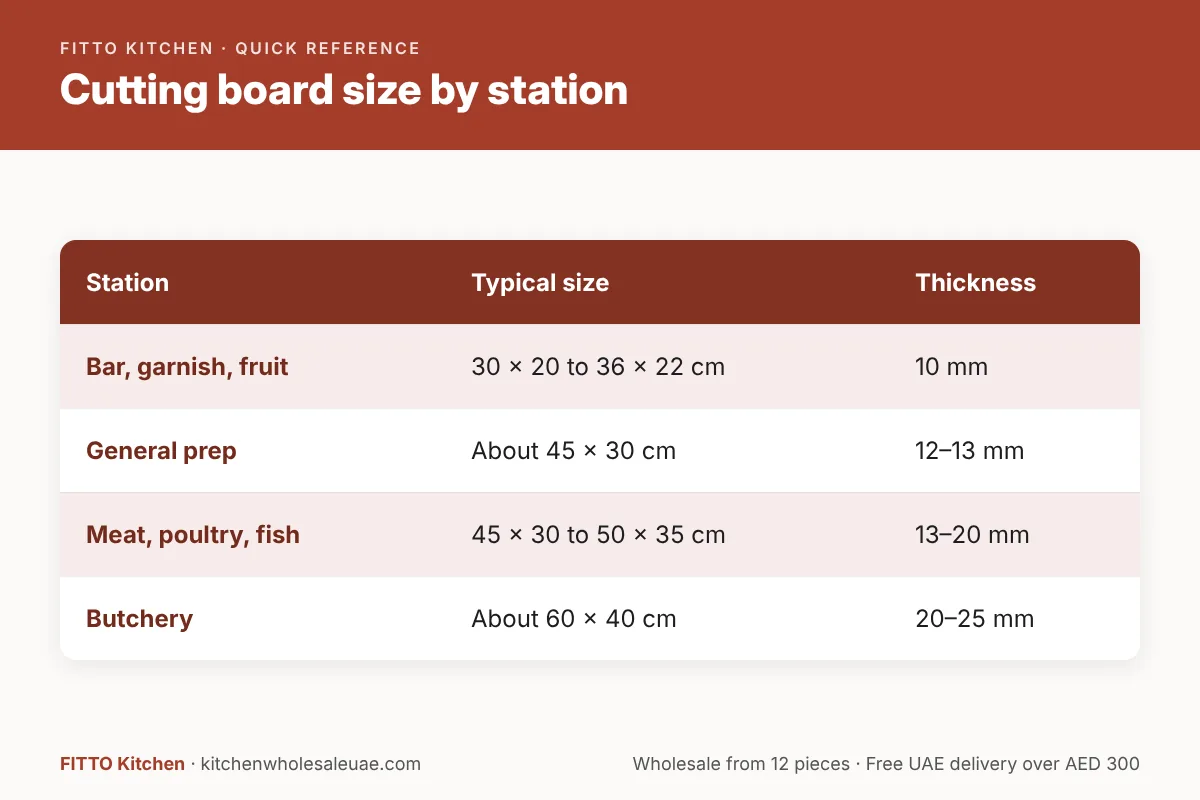
Size the board to the biggest item the station cuts, with room left to move food aside. A board that is too small pushes food onto the counter; one that is too large will not fit the sink or dishwasher rack.
These are typical commercial sizes, used as a planning rule of thumb:
| Station | Typical board size | Typical thickness |
|---|---|---|
| Bar, garnish, fruit | About 30 x 20 to 36 x 22 cm | 10 mm |
| General prep and vegetables | About 45 x 30 cm | 12–13 mm |
| Meat, poultry and fish prep | About 45 x 30 to 50 x 35 cm | 13–20 mm |
| Butchery and whole cuts | About 60 x 40 cm | 20–25 mm |
Measure your dishwasher rack and sink before ordering large boards.
How thick should a commercial cutting board be?
Around 10–13 mm suits most prep stations; 20 mm or more suits heavy chopping and cleavers. Thicker boards resist warping in hot washes and stay flat under force.
Thin boards flex under a heavy knife and can warp after repeated hot cycles, and a warped board rocks on the counter. Whatever the thickness, put a damp cloth or non-slip mat under the board so it cannot slide.
How does colour coding work in a commercial kitchen?
Colour coding gives each food group its own board so raw and ready-to-eat food never meet. The scheme matters less than using one scheme consistently.
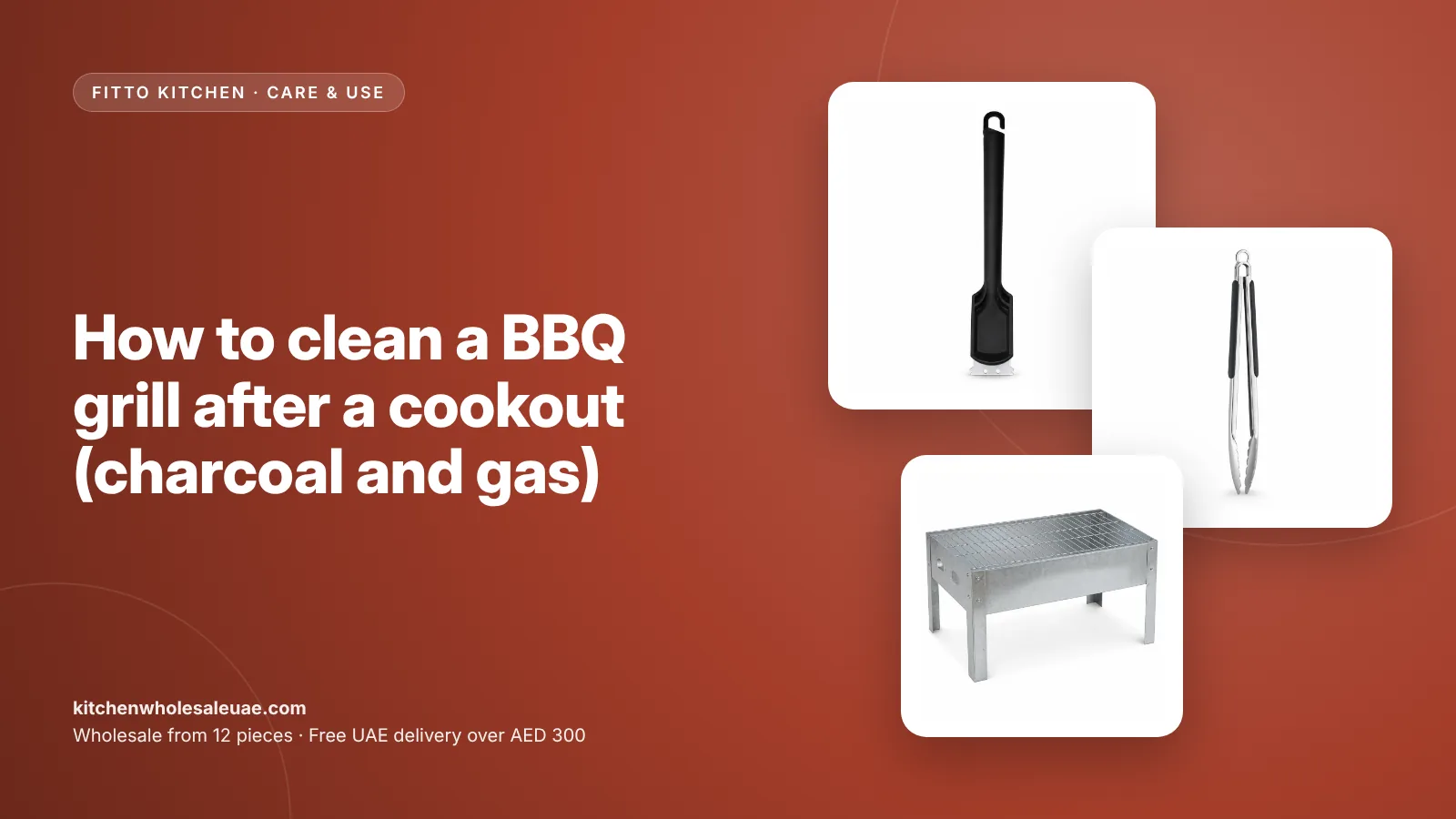
Two schemes are common. The UK-style scheme uses red for raw meat and poultry, blue for raw fish, yellow for cooked meat, green for salad and fruit, brown for vegetables and white for bakery and dairy. The US-style scheme uses yellow for raw poultry and tan for cooked food, and purple often marks allergen-free prep. Check which scheme your food safety plan and local inspectors expect before you buy colours.
To make colour coding work day to day:
- Choose one scheme and print it as a wall chart above each prep station.
- Buy enough of each colour for every station that handles that food group.
- Store boards by colour in a vertical rack so staff grab the right one.
- Match knife handles or labels to the boards where you can.
- Include the chart in induction training for every new starter.
How many cutting boards does a kitchen need?
As a rule of thumb, plan one board per colour in use per station, then add 50–100% spares for the wash cycle. Boards should not be rushed out of the dishwasher wet.
| Kitchen | Example board plan |
|---|---|
| Café, 20–40 seats | 2 green, 1 white, 1 red, 1 blue, plus 2–3 spares |
| Restaurant, 60–100 covers | 2–3 per colour across 3–4 stations, plus 6–8 spares |
| Hotel banquet kitchen | Per-station sets for each outlet, plus a spare rotation |
| Butcher shop | Large thick boards per block, plus 1–2 spares each |
Adjust for your menu. A grill restaurant needs more red boards; a juice bar may need only green and white. For the knives that pair with each board, see our chef knives for restaurants guide.
When should you replace a commercial cutting board?
Replace a board when cleaning no longer restores the surface. Deep knife grooves hold moisture and food residue that a sanitiser cannot reach.
Signs it is time:
- Grooves stay stained or smell after a full wash and sanitise.
- The board has cracks, splits or chipped edges.
- It no longer lies flat after washing.
- Colours have faded so much that staff confuse groups.
Check boards weekly and budget replacements as a regular cost, not a surprise.
How should boards be cleaned and stored?
Wash, rinse, sanitise and dry boards upright after every task change. Flat stacking traps moisture between boards, especially in humid weather.
Scrape off food, wash in hot soapy water or a commercial dishwasher, rinse, apply your approved sanitiser and air-dry on edge. Keep wood out of the dishwasher and oil it occasionally with food-safe oil. Store boards in a vertical rack away from the sink splash zone. Our knives and cutting boards guide covers board hygiene and knife care together.
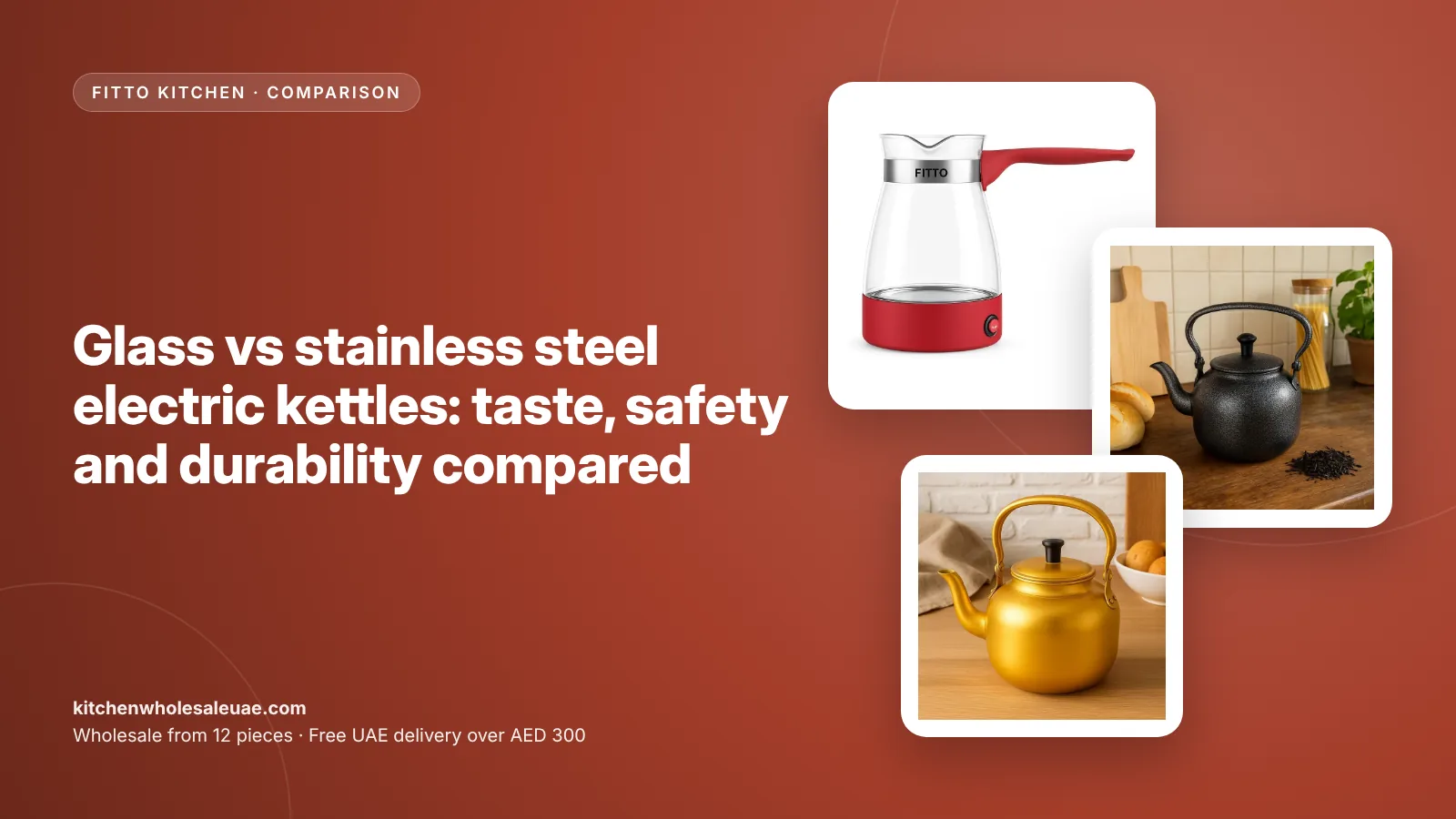
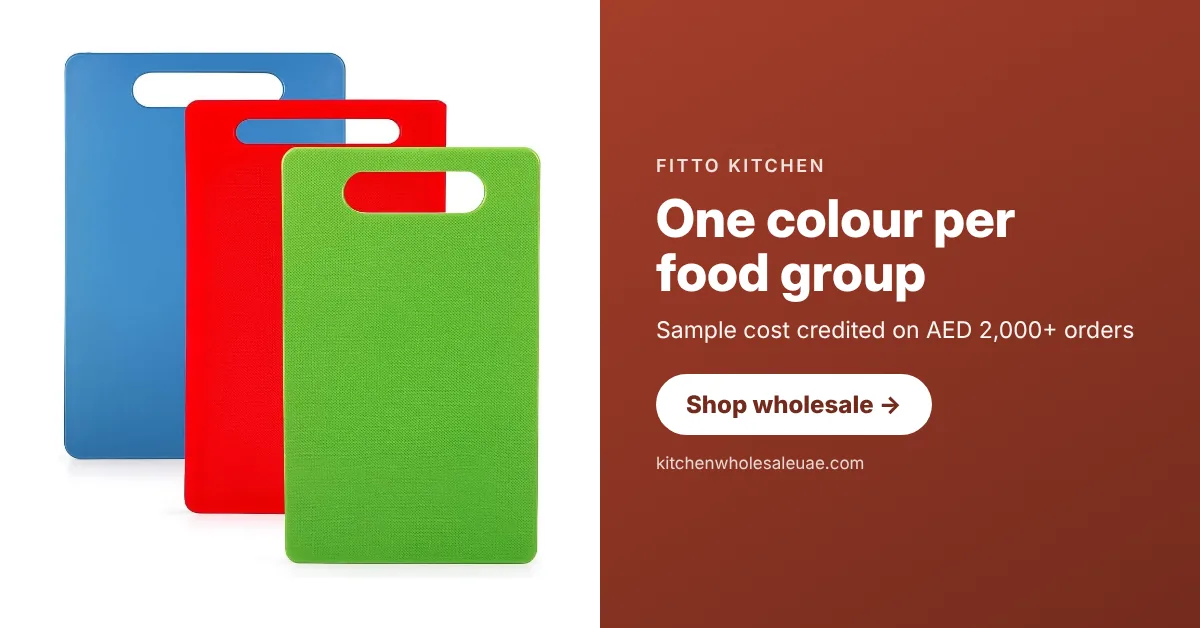
FITTO Trade Pick: Colour-coded boards for every station For colour-coded prep, start with the 10 mm thick colourful plastic cutting boards and add the dishwasher-safe white plastic board for bakery and dairy. A vertical TPU board storage rack keeps boards upright and drying between uses. Test the thickness and grip with a sample; we credit its cost on a bulk order of AED 2,000+ within 30 days.
The bottom line
Choose plastic boards for raw food, size them to the station, and colour-code them in one consistent scheme. Plan spares for the wash cycle and replace boards before grooves become a hygiene risk.
Browse our wholesale knives and cutting boards, then request a quote for a colour mix across your stations, or order a sample to check thickness first. Wholesale prices start from 12 pieces, delivery is free across the seven emirates over AED 300, and the Trade Desk answers on WhatsApp at +971 55 672 6947. FITTO Kitchen: fit for the way you cook.
FAQ
Are plastic or wooden cutting boards better for restaurants?+
Plastic boards are the usual choice for raw meat, poultry and fish because they handle hot commercial washing and sanitising. Wooden boards are gentler on knives and suit bread, cheese and serving. Many restaurants use both: plastic in prep, wood at the pass. Follow your food safety plan if it names a material.
What colour cutting board is used for raw chicken?+
It depends on the scheme. In the UK-style scheme, raw poultry shares the red board with raw meat and yellow means cooked meat. In the US-style scheme, yellow is for raw poultry. Because the two clash, confirm which one your food safety plan follows, print it at every station and train staff on it.
Can plastic cutting boards go in a commercial dishwasher?+
Most plastic boards labelled dishwasher-safe can, and that is one reason kitchens choose them. Thin boards may warp after many hot cycles, so choose 10 mm or thicker for daily commercial washing. Load boards on edge so water reaches both sides, and let them dry fully before stacking.
Can a scored plastic cutting board be restored?+
Light surface scratches are normal and clean out with a scrub brush. Deep grooves that stay stained after sanitising mean the board should be replaced. Some kitchens plane or sand thick boards to resurface them, but for standard 10–13 mm boards, replacement is usually simpler and cheaper.