Wooden vs plastic cutting boards: hygiene, durability and cost compared
By FITTO Trade Desk · Last updated 29 October 2026
In the wooden vs plastic cutting board debate, neither material wins everywhere. Plastic boards are lighter, dishwasher-safe and easy to colour-code, so they suit raw meat and busy commercial kitchens. Wooden boards are kinder to knife edges and last for years with oiling, so they suit bread, vegetables and serving. Most kitchens need both.
Key takeaways
- Use plastic for raw meat, poultry and fish: it goes through a hot dishwasher and can be colour-coded.
- Use wood for bread, vegetables, herbs and serving: it is gentle on edges and looks good at the table.
- Both are hygienic when cleaned, dried and replaced on time; deep knife grooves are the real risk.
- Never put a wooden board in the dishwasher, and oil it monthly so it does not crack in air-conditioned rooms.
Pick the wrong cutting board (لوح تقطيع) and you pay twice. A deeply grooved plastic board is hard to clean, and a soaked wooden board warps and splits within weeks. For a restaurant, it can also mean a note from the food-safety inspector.
At FITTO Kitchen, a wholesale knives and cutting boards supplier in the UAE, we supply both materials to restaurants, butchers, cafés and kitchenware shops. This comparison is for anyone choosing what to use, or what to stock, for each job.
Wooden vs plastic cutting board: how do they compare side by side?
Plastic wins on dishwasher use, weight and colour coding; wood wins on knife care, looks and lifespan when looked after. Hygiene depends more on cleaning and replacement than on the material.
| Factor | Plastic board | Wooden board |
|---|---|---|
| Knife wear | Moderate; harder plastics dull edges faster | Gentle; edges stay sharp longer |
| Hygiene | Very good while the surface is smooth | Very good when cleaned, dried and oiled |
| Dishwasher | Usually yes; check the product label | No; hot water and heat warp and split wood |
| Weight | Light and easy to carry to the sink | Heavier and more stable on the counter |
| Colour coding | Easy; boards come in several colours | Not practical |
| Care | Wash, sanitise, replace when deeply scored | Hand wash, dry upright, oil monthly |
| Lifespan | Shorter; replace once grooves stay stained | Longer with regular oiling and sanding |
| Look | Practical, back-of-house | Warm, good for serving and display |
As a rule of thumb, plastic boards are the cheaper per-board choice in a commercial kitchen, while a good wooden board costs more but is replaced less often.
Which cutting board is more hygienic, wood or plastic?
Both can be hygienic; the condition of the surface matters more than the material. A smooth, clean board of either type is safe, while a deeply scarred one of either type traps food and moisture.
Plastic has one clear advantage: it can go through a commercial dishwasher, where hot water and detergent reach the whole surface. That is why most commercial kitchens use plastic for raw proteins.
Wood cannot go in the dishwasher, but it dries fast when stored upright. The risk is moisture: a board left wet or soaking can crack and trap residue in the splits.
For restaurants, follow your local food-safety authority's guidance. Inspectors generally expect separate boards for raw and ready-to-eat foods, and colour-coded plastic boards make that easy to prove.
Which board is better for your knives?
Wood is kinder to knife edges; plastic is acceptable; glass, stone and marble boards are the worst. A softer surface lets the edge sink in slightly instead of rolling over.
If your chefs use good blades, give them a wooden board for vegetable and herb prep. Plastic still protects edges far better than glass or granite slabs. Whatever the board, a damp cloth underneath stops it sliding. For more on blades, see our guide to chef knives for restaurants.
Which board should you use for each job?
Match the board to the food: plastic for raw proteins, wood for bread and serving, either for vegetables.
| Job | Best choice | Why |
|---|---|---|
| Raw meat and poultry | Plastic, colour-coded | Goes in the dishwasher; separates raw from cooked |
| Raw fish | Plastic, own colour | Keeps fish odours and juices off other boards |
| Vegetables and fruit | Either; wood is kinder to knives | Low-risk food; choose by knife care and budget |
| Bread and pastries | Wood | Stable, crumbs brush off, no dishwasher needed |
| Cheese, mezze and serving | Wood | Looks good at the table; easy to carry with a handle |
| Butcher counter, heavy chopping | Thick plastic or heavy wood | Needs weight and thickness to absorb cleaver blows |
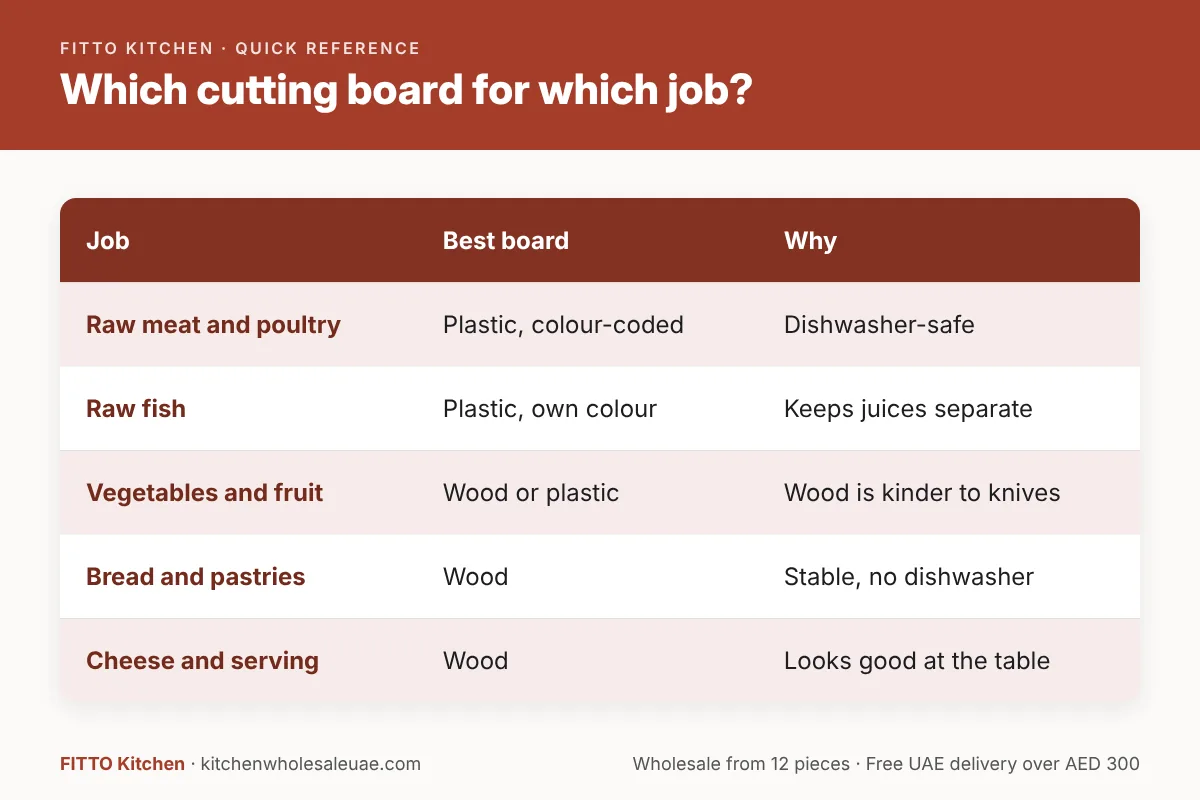
Home cooks can manage with two boards: one plastic board kept for raw meat and one wooden board for everything else. A café or restaurant needs a set per station, with one colour per food group.
How do UAE conditions affect wooden and plastic boards?
Air-conditioned rooms dry wood out, and humid coastal months swell it, so wood needs oiling to stay stable. Plastic is not affected by humidity, but it scratches faster under heavy use.
Dry air-conditioning pulls moisture from wood and can open small cracks; humid coastal summers do the opposite. A thin coat of food-safe mineral oil once a month keeps it stable. Store wooden boards upright, away from the sink and direct sun.
Keep plastic boards away from hobs and ovens, where heat can warp them. A vertical board storage rack keeps boards apart so they dry properly between uses.
When should you replace a cutting board?
Replace a plastic board when grooves stay stained after washing; replace a wooden board when it cracks through or warps so it rocks.
- Look at the washed board under good light. Dark lines in knife grooves mean food is trapped.
- Run a fingernail across it. If it catches in deep cuts, the board is past its best.
- Check that it sits flat. A rocking board is unsafe under a knife.
- Smell dry wood. A sour smell that oiling does not fix means it is time to go.
Light scratches on wood can be sanded out and re-oiled. Plastic cannot be repaired that way, so kitchens treat plastic boards as a regular reorder item. For a full knife and board overview, read our kitchen knives and cutting boards guide.
What should a kitchenware shop stock?
Stock both materials: colour plastic boards for practical buyers and wooden boards with handles for gifting and serving. The two sit on the same shelf but sell to different needs.
Plastic boards move fastest with restaurants, cafés and families who want dishwasher-safe boards. Wooden boards with handles sell as gifts and serving pieces before Ramadan and Eid hosting. A short "raw meat on plastic, bread on wood" shelf card answers the question most shoppers ask.
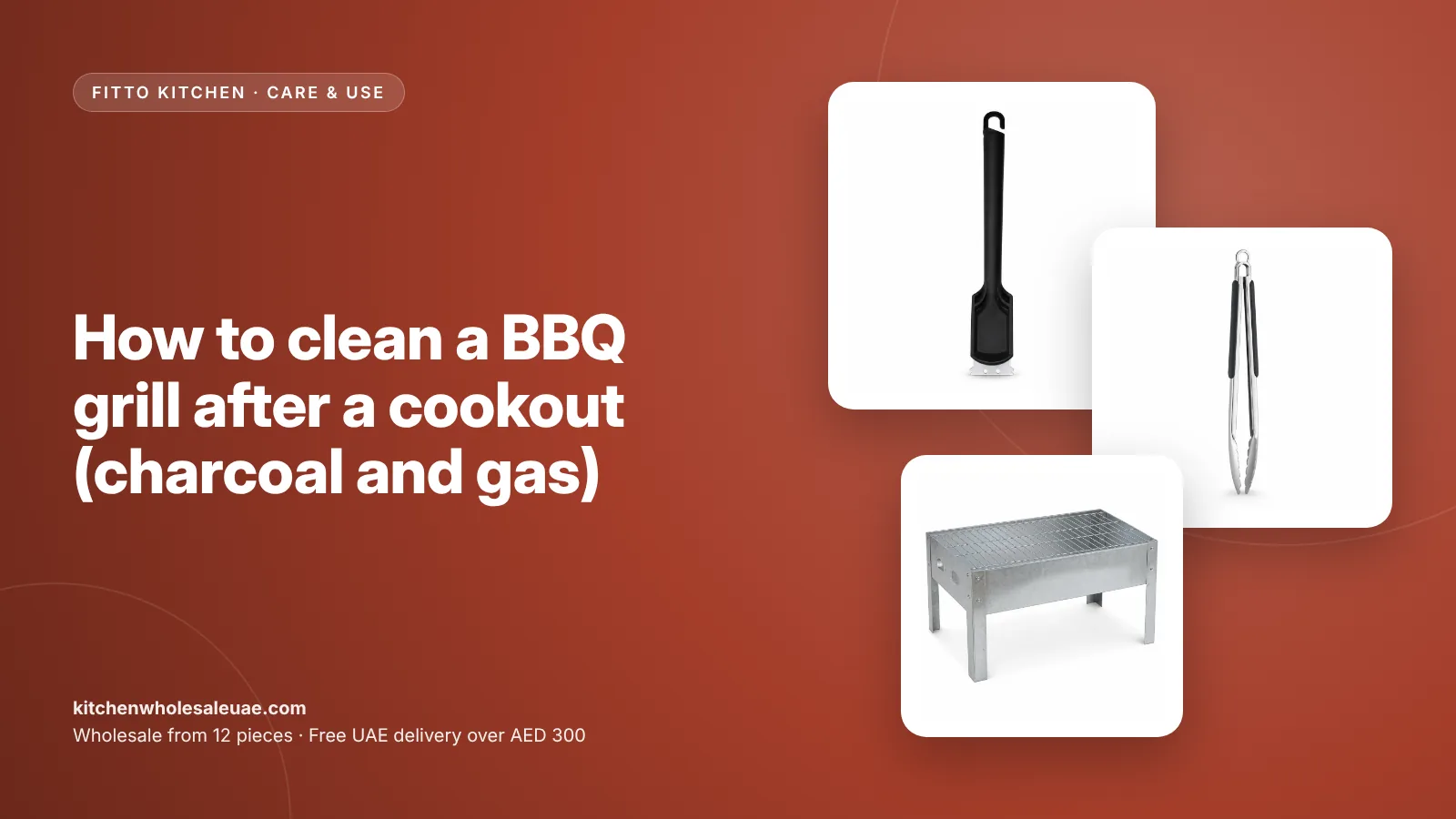
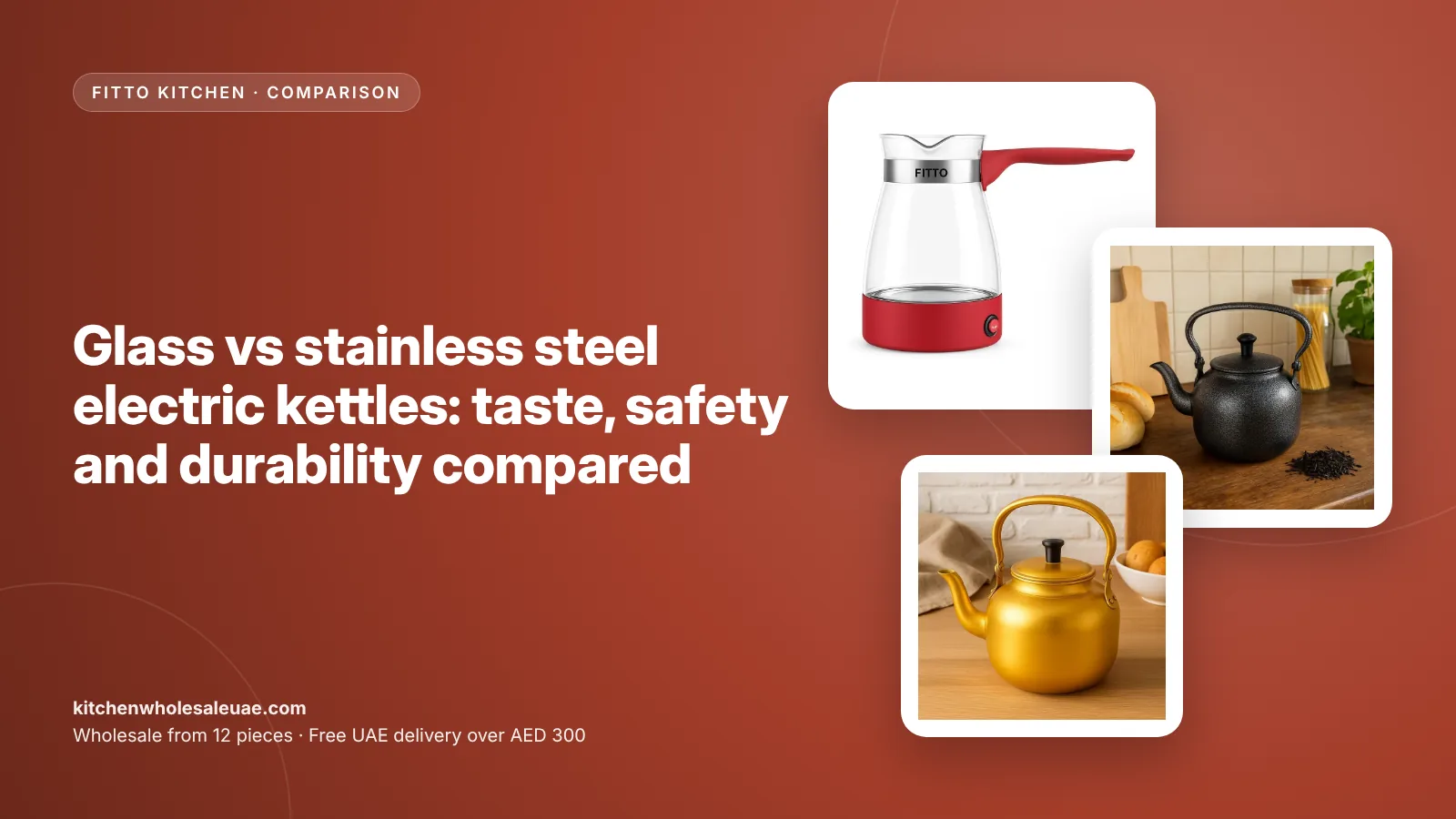
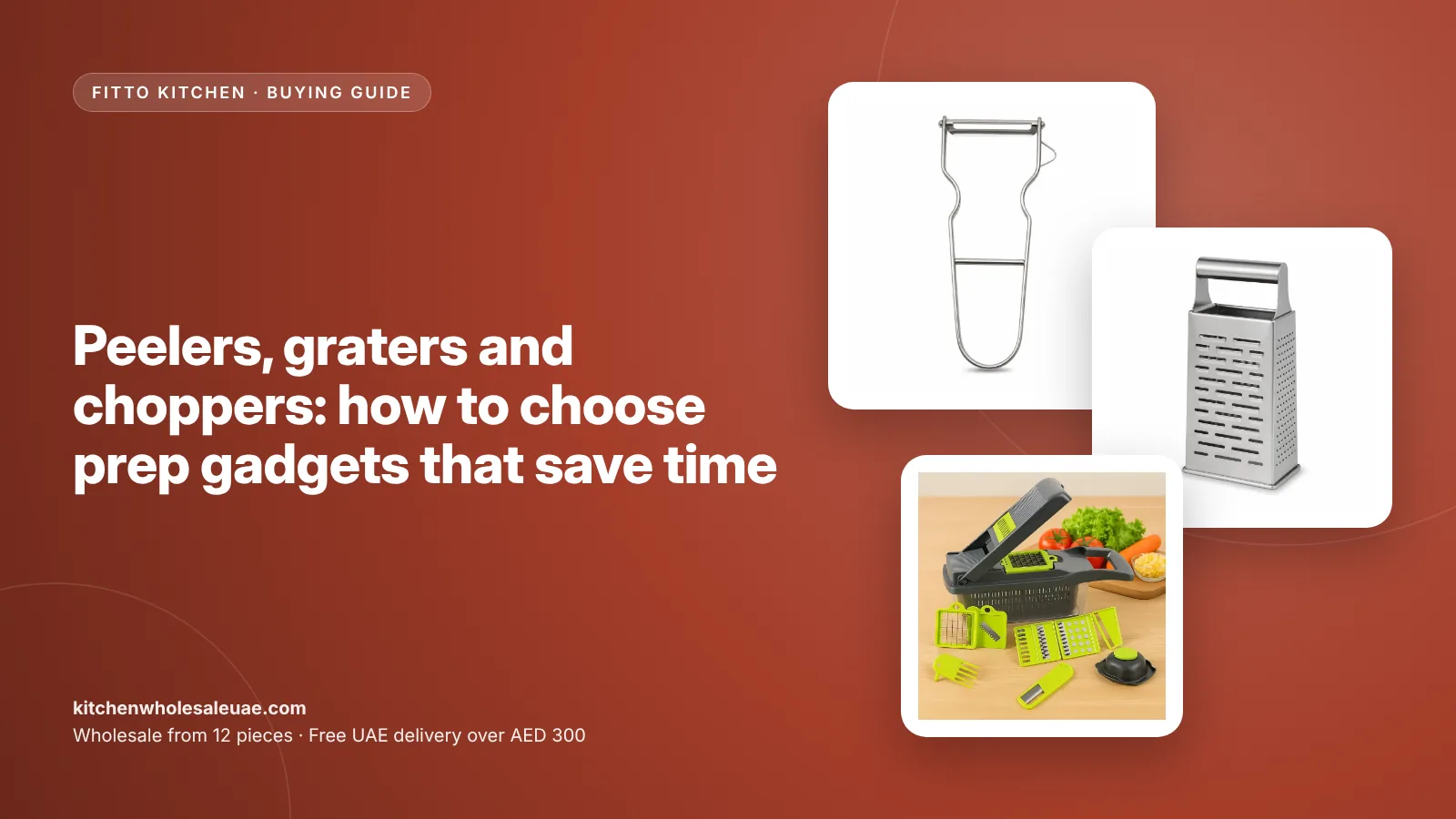
FITTO Trade Pick: One board for every job Pair the white non-slip plastic cutting board and the 10 mm colour plastic board for raw prep with the large wooden cutting board with handle for bread and serving. Wholesale packs run from 12 to 144 pieces, with up to 20% off per piece on the largest pack.
The bottom line
Plastic is the safer default for raw proteins and busy kitchens, and wood is the better board for knives, bread and serving. Keep both, clean them properly and replace them before the grooves go deep.
Browse our knives and cutting boards range, request a quote for a mixed set of boards, or order a sample to test both materials first. Delivery is free over AED 300, and the Trade Desk is on WhatsApp at +971 55 672 6947. FITTO Kitchen: fit for the way you cook.
FAQ
Is a wooden or plastic cutting board better for raw meat?+
Plastic is the better everyday choice for raw meat, poultry and fish. It can go through a hot dishwasher and you can keep one colour for raw proteins only. A wooden board can be used for meat at home if it is scrubbed with hot soapy water and dried straight away, but keep it separate from bread and salad boards.
Can wooden cutting boards go in the dishwasher?+
No. Long soaking, hot water and drying heat make wood swell, warp and split, and the cracks then trap food. Wash a wooden board by hand with hot soapy water, rinse, wipe dry and stand it upright to air. Oil it with food-safe mineral oil about once a month to keep it from drying out.
How often should you oil a wooden cutting board?+
As a rule of thumb, oil a wooden board about once a month, and more often if it looks pale or dry. Air-conditioned UAE homes and kitchens dry wood faster. Apply a thin coat of food-safe mineral oil, leave it overnight, then wipe off the excess. Avoid cooking oils, which can turn rancid.
Do plastic cutting boards dull knives?+
Plastic boards dull knives a little faster than wood, but far less than glass, marble or granite boards. Softer plastic boards are kinder to edges than very hard ones. Hone your knife regularly and use a wooden board for long vegetable prep if you want to keep edges sharp for longer.