Kitchen organisation and racks: a complete guide for small UAE kitchens and shops
By FITTO Trade Desk · Last updated 29 October 2026
Kitchen organizer racks work best when each one solves a single job: drying, holding tools, storing pans or freeing the counter. Start at the sink with a dish rack and caddy, then move tools to holders and walls, and lift appliances onto shelves. In humid UAE kitchens, choose stainless steel, coated metal or plastic that drains.
Key takeaways
- Organise by zone (wash, prep, cook and store) and buy for the zone that overflows first, usually the sink.
- Measure before you buy: counter depth, the gap under wall cabinets and sink width decide which rack fits.
- In humid months, rust starts where coatings chip, so choose stainless steel or plastic near the sink.
- Renting? Freestanding, over-sink and adhesive racks avoid drilling into tiles.
- Shops sell more organisers when they show them as a complete small-kitchen set, not as single items.
A cluttered counter costs more than looks. Wet dishes sit in the sink, knives go blunt in a drawer, and a 60 cm worktop loses half its space to things that belong on a wall. In a café or restaurant, the same clutter slows service and draws comments from inspectors.
This guide settles which racks, holders and shelves fit a small kitchen, which materials survive UAE humidity and how much space each one needs. It is for apartment and villa households, restaurant and café kitchens, and kitchenware shops deciding what to stock. At FITTO Kitchen, a wholesale kitchen organisation supplier in the UAE, we supply dish racks, holders, caddies and shelving across the seven emirates.
What does a well-organised small kitchen need?
A small kitchen needs one storage answer for each work zone: wash, prep, cook and store. Buy for the zone that overflows first, which is usually the sink.
Clutter comes from items with no fixed home. A kitchen rack (رف مطبخ) gives each group of items one place to return to. Plan around four zones:
- Wash zone: dish rack, drip tray, sink caddy and sponge holder.
- Prep zone: knife storage, a board rack and a utensil holder within arm's reach.
- Cook zone: ladles, spatulas and lids close to the hob, plus a pan and lid organiser in the cabinet below.
- Store zone: shelves, trolleys and appliance racks for everything you use less than daily.
In a typical UAE apartment, the wash and prep zones share one stretch of counter. That is why compact, vertical racks matter more than extra cabinets.
Which dish rack suits your counter and sink?
Choose a dish rack by how many plates you wash at once and how much counter you can give up. A couple manages with a compact rack; a family of five needs two or three tiers, or a frame over the sink.
| Rack type | Example size | Best for | Watch out for |
|---|---|---|---|
| Compact single rack | About 30 x 20 x 15 cm | 1-2 people, office pantries | Fills up after one meal |
| Dish-drying basket with tray | About 45 x 30 x 15 cm | Small families | Tray needs emptying daily |
| 2-tier rack with drainage tray | Varies by model | Families short of counter | Top tier suits cups and bowls, not platters |
| 3-tier stainless rack | Varies by model | Large families, majlis crockery | Needs height under wall cabinets |
| Over-sink frame | 85 x 25 x 90.5 cm | Small counters, big wash loads | Must match sink and counter width |
Sizes in the table are taken from FITTO product listings where given; check each product page for the exact model.
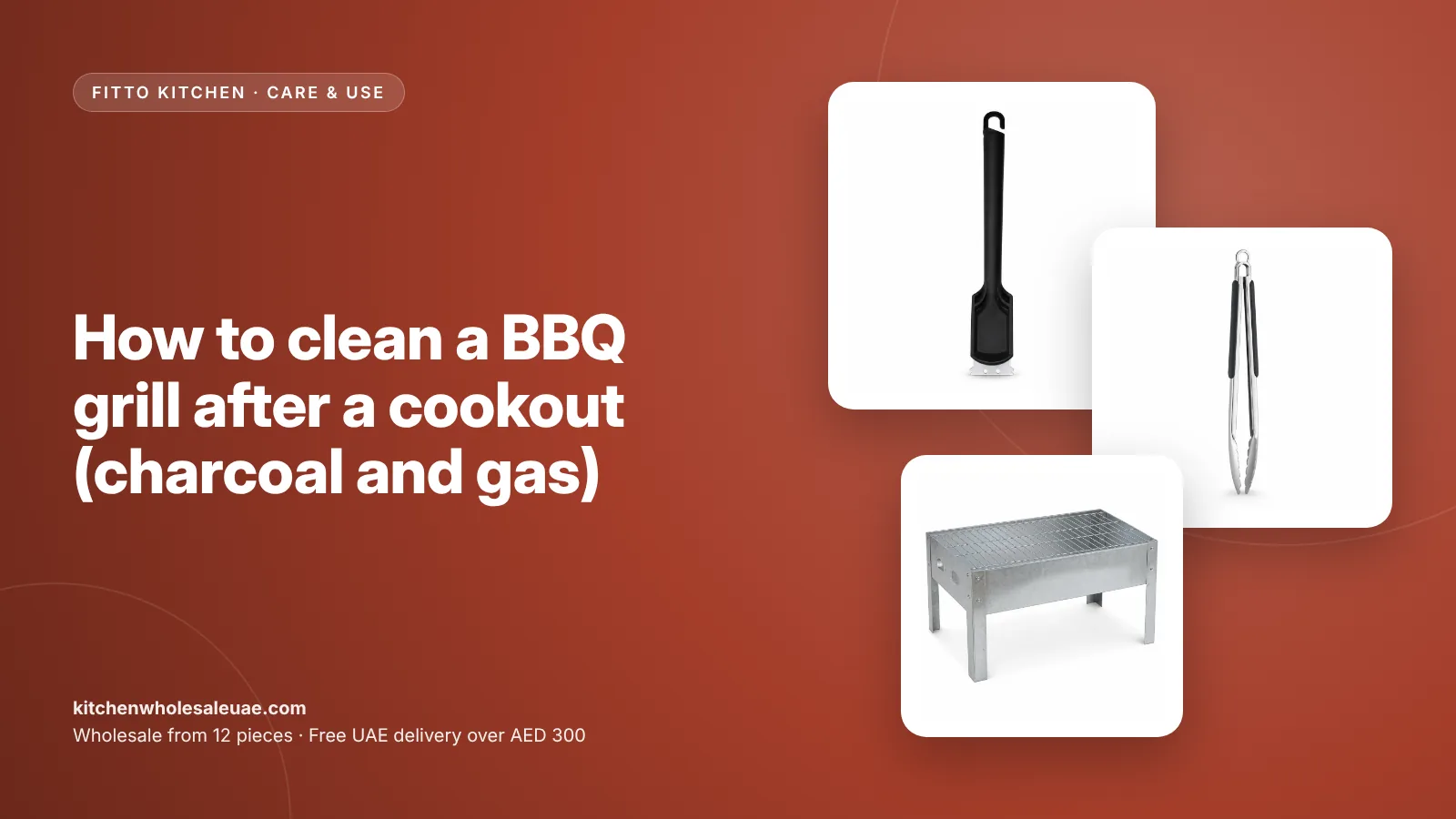
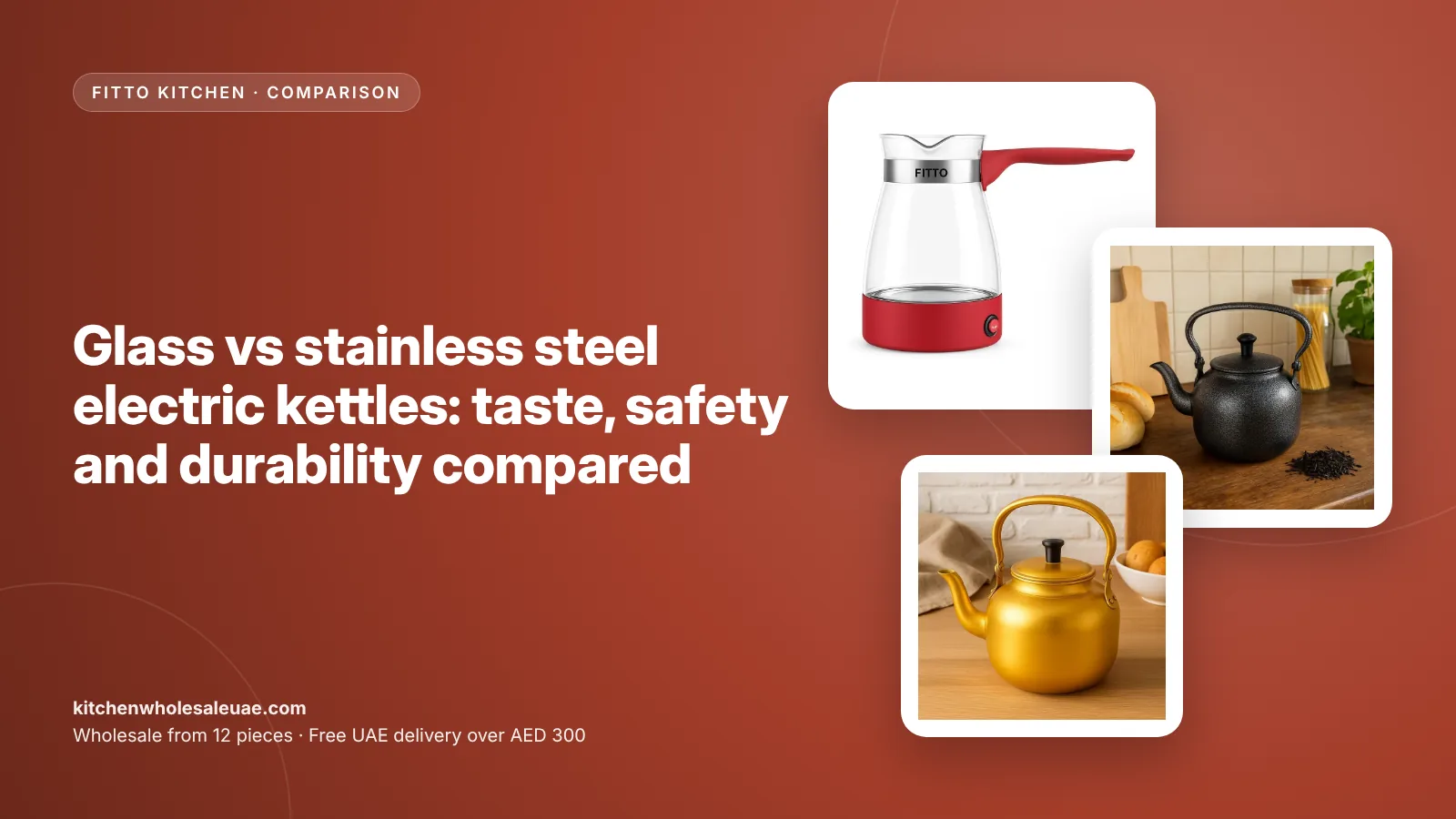
Our over-the-sink dish drying rack measures 85 × 25 × 90.5 cm, with separate holders for cups, plates and utensils. Measure the sink run and wall-cabinet clearance first. The stainless steel 3-tier dish drying rack stands on rubberised non-slip feet and has set places for plates, bowls, cups and utensils.
Drainage matters more than capacity. A rack without a tray or spout leaves standing water on the counter, which marks stone worktops and lets mould grow in grout lines. Look for a tray that slides out for emptying, or a spout that points into the sink.
How do you organise utensils, cutlery and knives?
Keep daily cooking tools upright in a holder beside the hob, cutlery in a drawer tray and knives on a wall magnet or in a block. Never store sharp knives loose in a drawer.
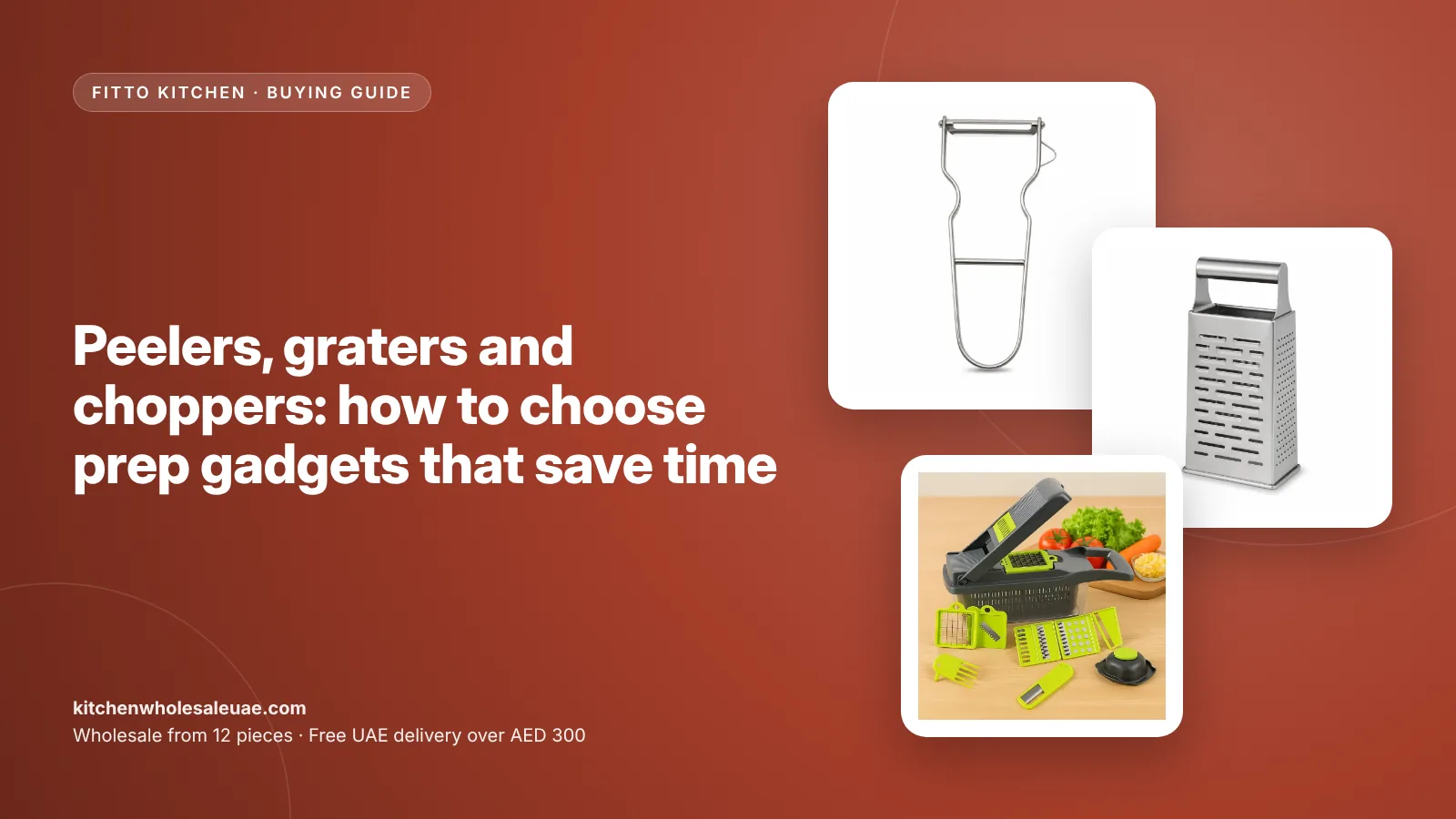
A three-compartment holder separates spatulas, whisks and spoons, so the cook grabs the right tool first time. Our stainless steel utensil holder with three compartments has a non-slip base that stays put when you pull a ladle out. For cutlery straight from the sink, a cutlery bucket with a drainage spout lets water run out rather than pool at the bottom.
Bamboo and wooden holders look warm on open shelves, but they should hold dry tools only. Wood that stays damp in a humid kitchen can grow mould.
For drawers, an expandable cutlery tray adjusts to different drawer widths. FITTO's black drawer organiser has seven compartments, expandable sides and a non-slip base. Measure the drawer's inside width first.
Knives belong on a magnetic strip or in a block, with blades apart. A strip such as our 33 cm wall-mount magnetic knife holder keeps knives visible and lets them dry in the air. As a rule of thumb, a strip of that length holds four to six knives, depending on blade width. Mount it away from the hob and out of children's reach. Our kitchen knives and cutting boards guide covers board storage and knife care in more detail.
Do you need a sink caddy and sponge holder?
Yes: a sink caddy gives sponges, brushes and soap one draining home, so the sink edge stays dry. Choose one with drainage holes or a tray that sends water back into the basin.
A wet sponge sitting in a puddle starts to smell within days in summer heat. FITTO's sink caddy organiser measures 23 x 11 x 14 cm, with separate compartments and a front panel with drainage openings. Our stainless steel sponge rack, about 20 x 10 x 12 cm, has a built-in water tray so drips run back into the sink.
Soap-pump caddies combine a dispenser and a sponge holder in one unit. They suit office pantries, where several people share one sink. Let sponges dry between uses and replace them often; weekly is a common rule of thumb for a sponge used every day.
How do wall rails, hooks and adhesive racks free up the counter?
Walls are the most underused storage in a small kitchen. One rail with hooks above the worktop can take several utensils, a towel and a few cups off the counter.
Our wall-mounted kitchen rack with hooks and towel bar measures 43 cm long, 17 cm wide and 13 cm deep. It combines a small raised shelf, hooks and a towel bar in one unit. Hang daily ladles and spatulas there, and keep occasional tools in a drawer.
Renting changes the choice. Most tenancy contracts restrict alterations without the landlord's consent, so check yours before drilling into tiles. Adhesive racks avoid drilling: FITTO's adhesive wall-mounted tool rack fixes with an adhesive backing.
As a rule of thumb, keep adhesive racks away from the hob and kettle, where heat and steam weaken the bond, and load them lightly.
Which shelves, trolleys and appliance racks suit small kitchens?
Build upwards with freestanding shelves: an appliance rack lifts the microwave off the counter, and a slim trolley fills the gap beside the fridge.
Four pieces solve most small-kitchen storage problems:
- Appliance rack: our 3-layer microwave storage rack is about 50 x 35 x 85 cm in powder-coated black metal. It holds a microwave on one level and a rice cooker or air fryer on another. Check your microwave's depth against the shelf, and follow the appliance manual on clearance around vents.
- Rolling trolley: a 3-tier rolling rack of 50 x 28.5 x 75 cm with side baskets fits beside a fridge or in a pantry corner. The wheels let you pull it out and clean behind it.
- Corner rotating rack: a 2-tier rack on a 360-degree rotating base uses the dead corner of an L-shaped counter for spices, bottles and jars.
- Pan and lid organiser: our organiser with seven adjustable 201 stainless steel dividers stores pans and lids upright inside a cabinet, so you lift one pan without moving the whole stack.
For spice jars, grinders and oil bottles, our spice, oil and condiment tools guide explains which racks and jars keep flavour longest.
Which rack materials resist rust in UAE humidity?
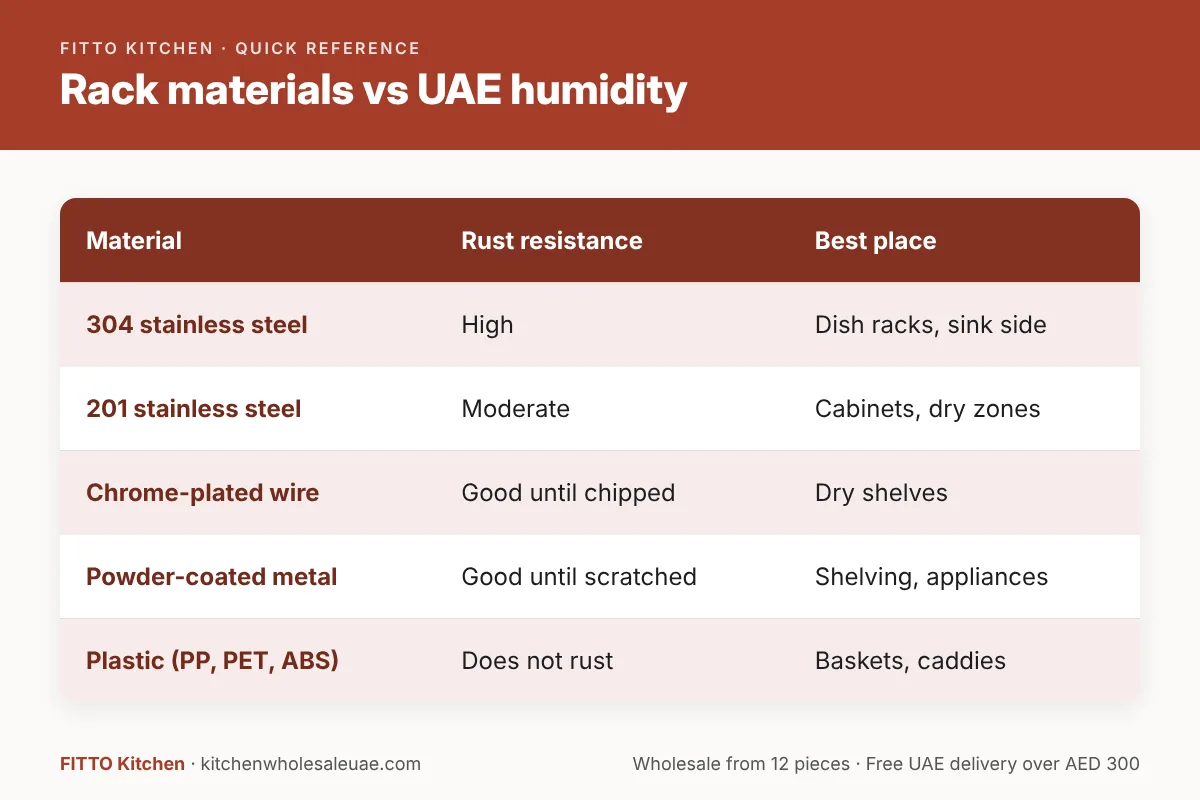
Stainless steel and plastic resist rust best near the sink; chrome-plated and painted wire last only as long as the coating stays intact. In coastal cities, humid late-summer months turn small chips into rust spots quickly.
| Material | Rust resistance | Strengths | Weak points | Best place |
|---|---|---|---|---|
| 304 (18/8) stainless steel | High | Durable, easy to wipe | Higher price | Dish racks, sink side |
| 201 stainless steel | Moderate | Strong, lower cost | Can show surface rust if left wet | Cabinet organisers, dry zones |
| Chrome-plated steel wire | Good until chipped | Bright, low cost | Rusts where plating chips | Dry shelves, cutlery stands |
| Powder-coated metal | Good until scratched | Sturdy, many colours | Scratches expose bare steel | Shelving, appliance racks |
| Plastic (PP, PET, ABS) | Does not rust | Light, drains, low cost | Can stain or crack if overloaded | Dish baskets, caddies, drawer trays |
| Bamboo and wood | Does not rust | Warm look | Mould if kept wet | Dry utensils, paper towels |
These are general material properties. Product titles name the steel grade only on some items, so check the product page before relying on it for a wet area.
A simple routine adds years to any rack:
- Empty the drip tray every day, before the water goes stale.
- Wipe the joints and feet weekly, because water gathers where wires meet.
- Dry stainless steel after wiping to avoid hard-water marks.
- Keep racks a few centimetres from the wall so air can move behind them.
- Replace a coated rack once rust spreads near plates and cups.
How do you plan kitchen organiser racks before buying?
Measure first and buy second: counter depth, the gap under wall cabinets and the sink width decide what fits. A rack that does not fit ends up in a cupboard, not on the counter.
- Measure usable counter depth. Many worktops are about 60 cm deep, but splashbacks and sockets reduce the usable space.
- Measure from the worktop to the underside of the wall cabinets. Tall 3-tier racks and appliance racks need this height.
- Measure the sink width and the counter on each side if you are considering an over-sink frame.
- Mark sockets and switches, so racks do not block them.
- Check that cabinet doors, the fridge door and the oven door still open fully.
- Keep one clear stretch of counter for chopping; at least 60 cm is a useful rule of thumb.
How should restaurants and cafés organise back-of-house?
In commercial kitchens, organise for hygiene and speed: keep items off the floor, separate raw and ready-to-eat food, and give every tool a labelled home.
Food-safety rules expect food and equipment to be stored off the floor and in cleanable conditions. Check the current guidance from your emirate's food authority, such as Dubai Municipality or the Abu Dhabi Agriculture and Food Safety Authority, before planning shelving.
- Choose stainless steel or plastic racks that can be washed and sanitised; keep wood out of wet areas.
- Give each prep station one magnetic knife strip, so knives stay visible and easy to count at closing.
- Use tiered drying racks to keep clean crockery apart from the dirty-return area.
- Label shelves and rotate stock first in, first out.
Opening a new site? Our restaurant kitchen equipment checklist lists storage alongside cookware and prep tools, station by station.
What should kitchenware shops stock for organisation?
Stock the problem-solvers first: dish racks, sink caddies, utensil holders and drawer organisers suit almost every household.
| Item | Why it sells | Display tip |
|---|---|---|
| Dish racks (basket, 2-tier, over-sink) | Every kitchen needs one | Show one loaded with plates |
| Sink caddies and sponge holders | Low price, impulse buy | Place beside cleaning products |
| Utensil holders and cutlery buckets | Gift and move-in purchase | Group by finish: steel, bamboo, colour |
| Drawer organisers | Easy add-on | Display next to cutlery |
| Appliance racks and trolleys | Solves the small-flat problem | Build a corner display |
| Spice racks | Gift appeal | Fill with jars so shoppers see capacity |
Demand tends to rise when families move or set up homes, such as after the summer break, and before Ramadan when households reorganise for daily iftar cooking. Show racks as a complete small-kitchen set, with sizes on the shelf card.
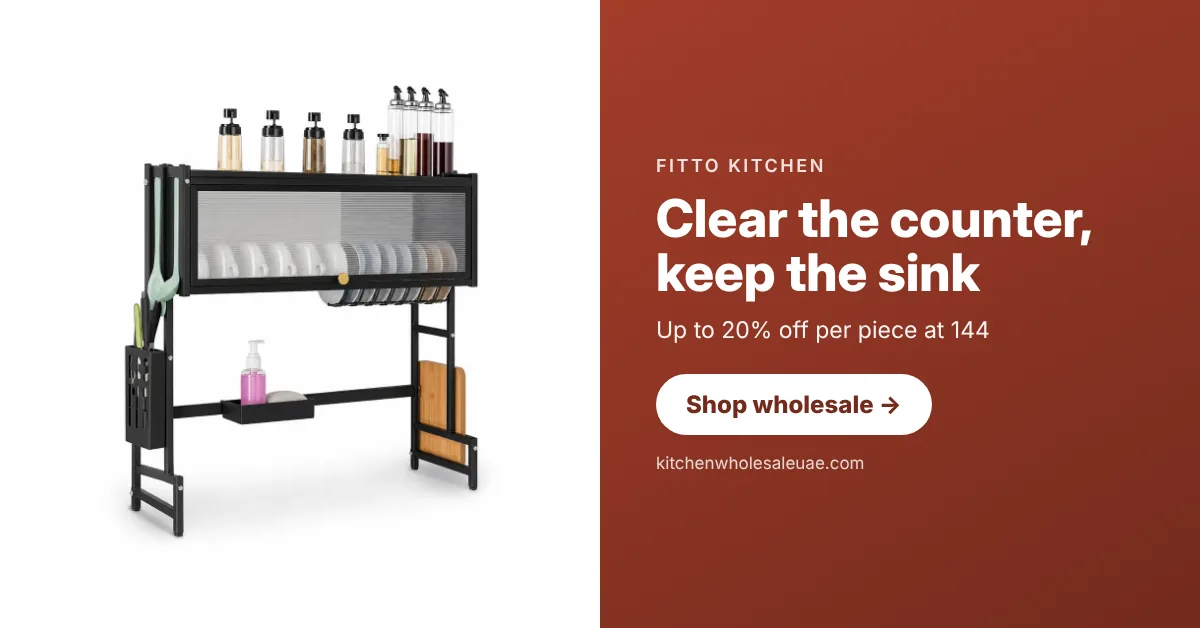
FITTO Trade Pick: A tidy small-kitchen set Pair the over-the-sink dish drying rack with the three-compartment stainless steel utensil holder and the 43 cm wall rack with hooks to clear a counter in a weekend. Bigger packs lower the price per piece, with up to 20% off at 144 pieces.
The bottom line
Organise by zone, measure before you buy and choose materials that drain and resist rust near the sink. A small kitchen rarely needs more cabinets; it needs the right racks in the right places.
Browse our kitchen organisation and racks range, request a quote for a mixed carton, or order a sample to check the fit first. Wholesale prices start from 12 pieces, delivery is free across the seven emirates over AED 300, and the Trade Desk answers on WhatsApp at +971 55 672 6947. FITTO Kitchen: fit for the way you cook.
FAQ
How do I stop a dish rack from rusting?+
Empty the drip tray daily, wipe the joints weekly and keep the rack a few centimetres from the wall so it dries. Rust usually starts where chrome plating or paint has chipped, so check those spots. In humid coastal months, stainless steel or plastic racks near the sink need the least care.
What is the best dish rack for a small kitchen?+
For a small kitchen, a two-tier rack with a drainage tray or a frame over the sink saves the most counter. Two tiers stack cups and bowls above plates on the same footprint. An over-sink frame uses the space above the basin, but measure the sink and counter width first, because frames need a set span.
Can I put up kitchen racks without drilling in a rented flat?+
Yes. Freestanding racks, over-sink frames, trolleys and adhesive racks all avoid drilling. Adhesive racks hold best on smooth, clean and dry tiles, and should be kept away from the hob and kettle, where heat and steam weaken the bond. Most tenancy contracts restrict alterations, so check yours before drilling.
Is 201 stainless steel good enough for kitchen racks?+
For dry areas such as cabinet organisers and pan dividers, 201 stainless steel is usually fine and costs less. It contains less nickel than 304, so it is more likely to show surface rust spots if left wet for long periods. Near the sink, 304 stainless steel or plastic is the safer choice.
Where should a microwave go in a small kitchen?+
A freestanding appliance rack lifts the microwave off the counter and frees work space below. Choose a shelf deeper than the microwave, keep heavy appliances on the lower tiers and place the rack on a level floor. Follow the microwave manual on clearance around vents, so it does not overheat in a tight corner.