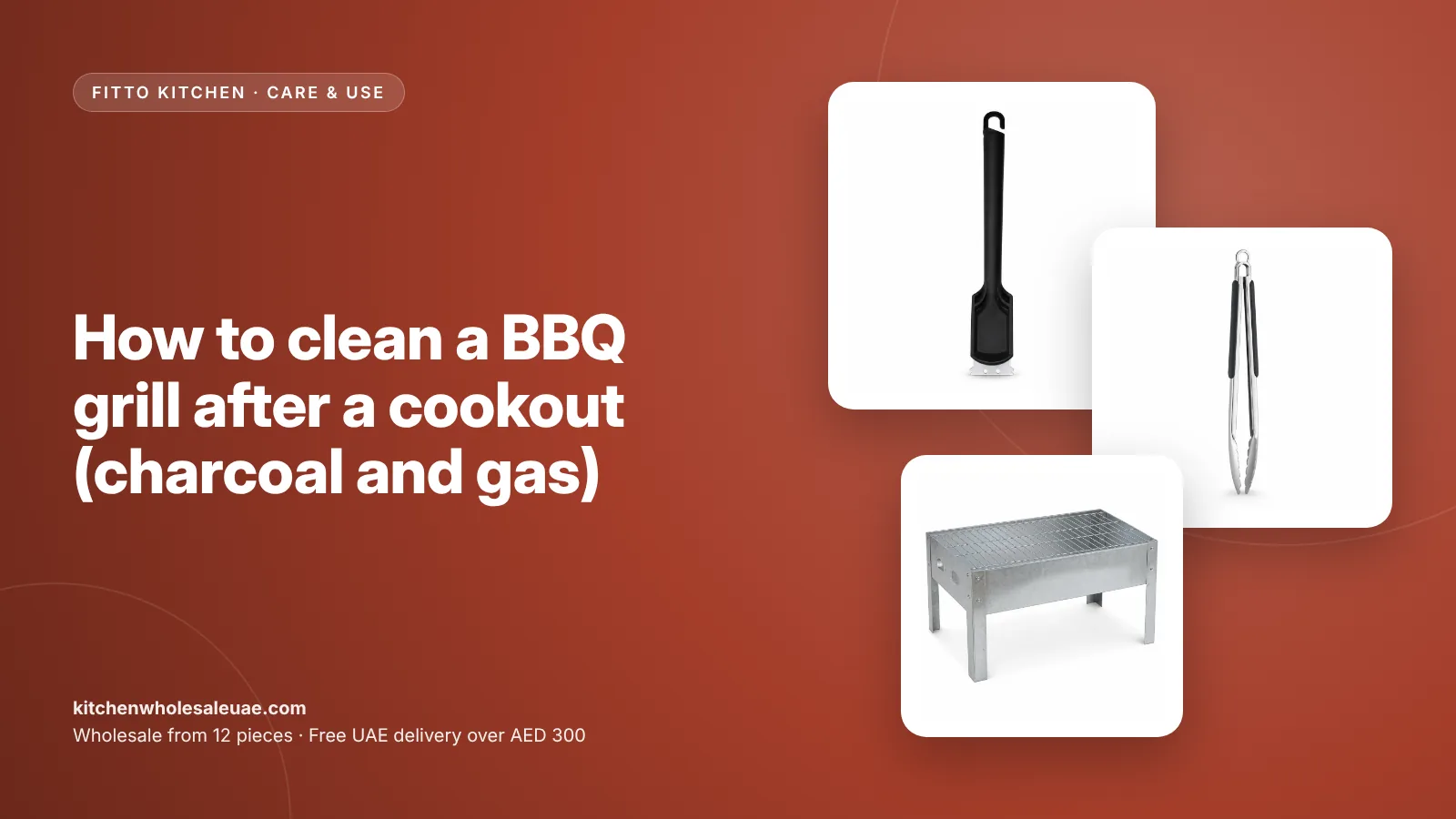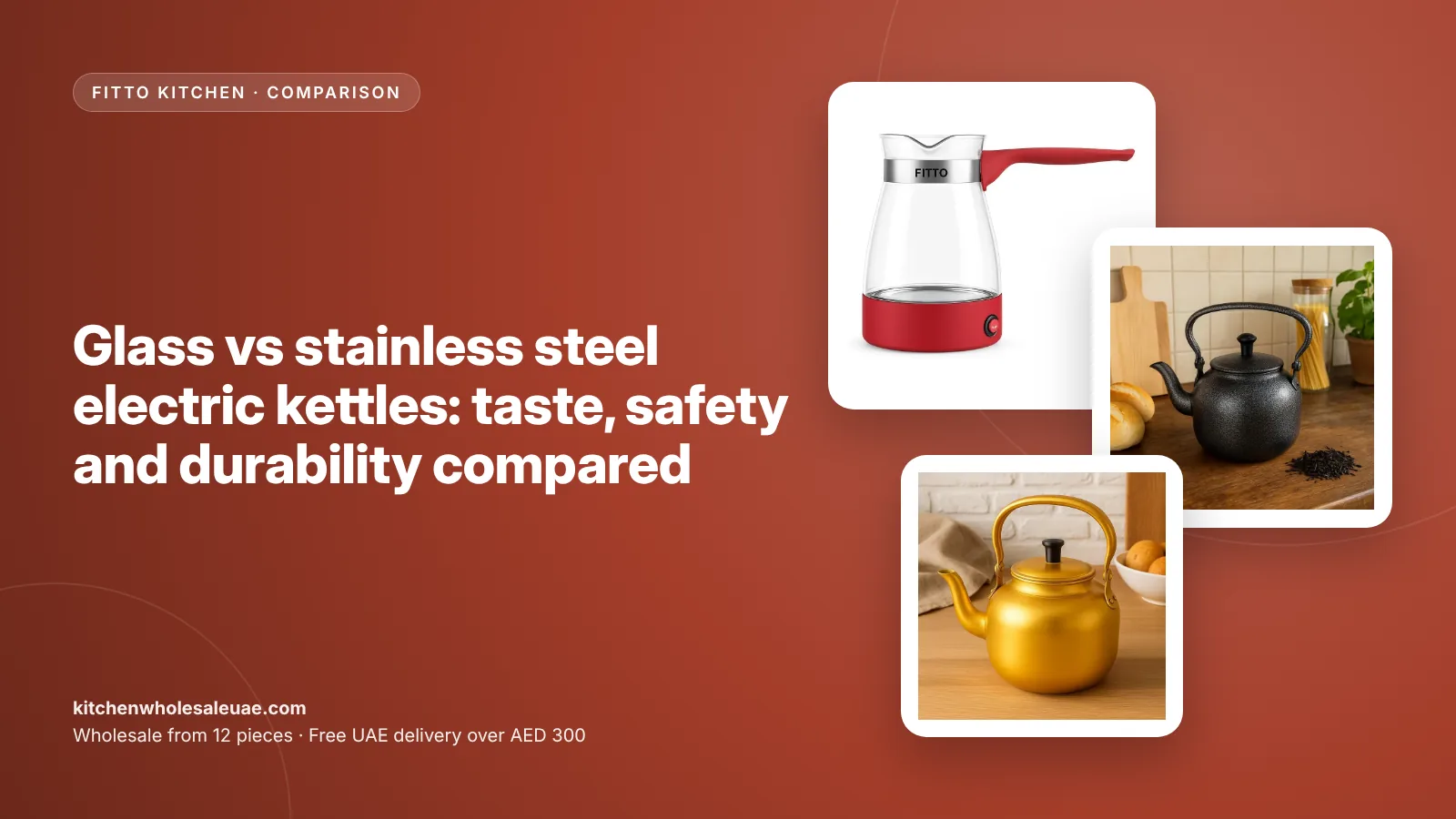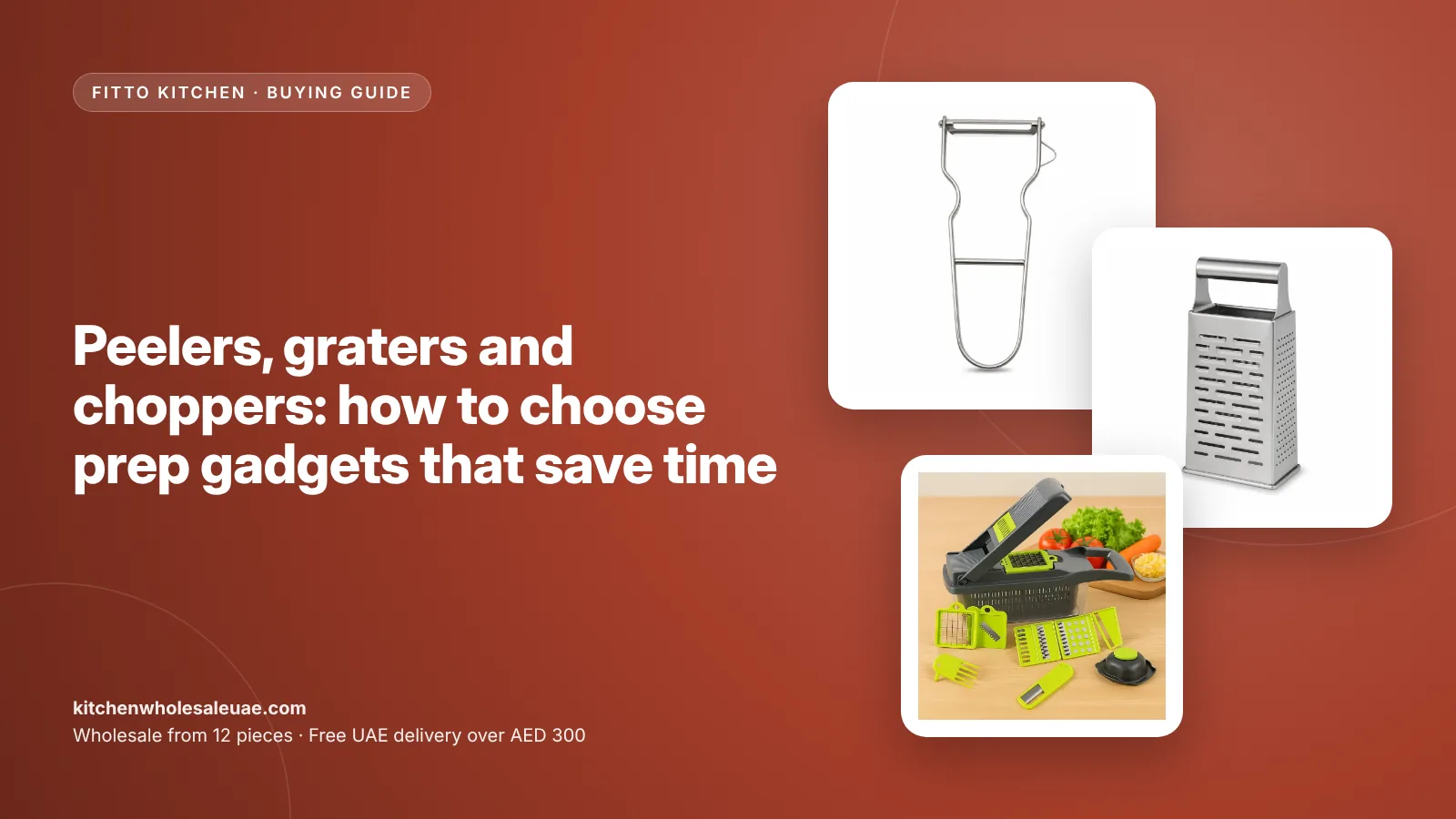
Hotel kitchen supplies: how to plan cookware and utensil orders across outlets
By FITTO Trade Desk · Last updated 29 October 2026
To plan hotel kitchen supplies in the UAE, set a par level for each outlet and standardise a short list of pot, pan and utensil sizes. Then reorder to par on a fixed monthly cycle. Then combine every outlet's needs into one mixed order, with each line tagged to its outlet for cost tracking.
Key takeaways
- Par level = items in use at peak + items in the wash + a buffer for loss and breakage.
- As a rule of thumb, hold about 1.5 times the peak count for pans and twice the peak count for ladles and tongs.
- Standardise sizes: lids fit across outlets, shelving stays simple and banquets can borrow from restaurants on big nights.
- Count smallwares monthly, review breakage quarterly and build stock before Ramadan, Eid and the winter wedding season.
- Ask any supplier for tax invoices that show their TRN and your PO number, so finance can recover input VAT.
A hotel rarely runs short of cookware because of one big failure. It runs short because ladles walk between outlets, pans warp quietly and nobody owns the count. The result is panic buying at retail prices the week before a gala dinner.
This guide is for hotel purchasing managers and executive chefs who supply several outlets from one budget. At FITTO Kitchen, a wholesale cookware supplier in the UAE, we supply hotel kitchens with stainless steel and aluminium cookware, ladles, skimmers and tongs (أدوات المطبخ للفنادق).
How do you set a par level for each outlet?
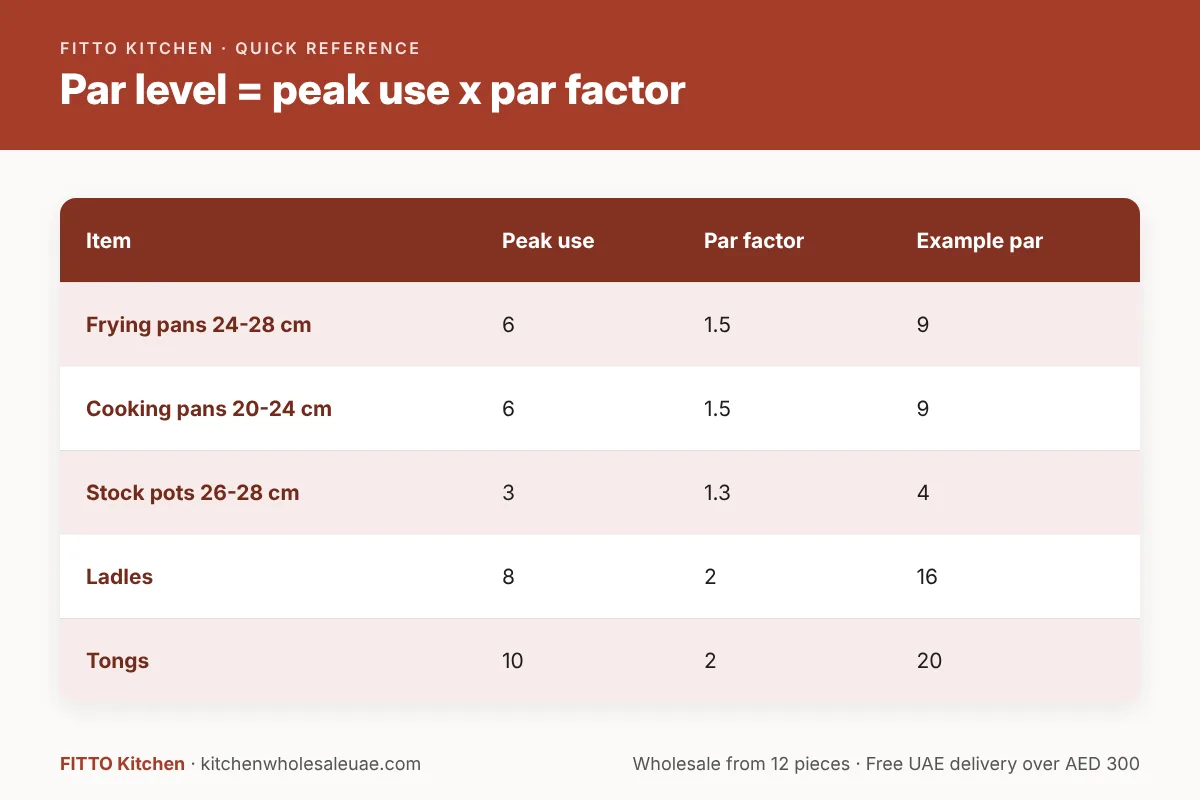
Count what each outlet uses at its busiest service, then multiply by a par factor that covers items in the wash and a loss buffer. Write the par on a sheet per outlet and per item size.
Smallwares cycle through the dish-wash area, so the factor is higher for utensils than for pans. The multipliers below are rules of thumb; adjust them after three months of counts.
| Item | In use at peak (example) | Par factor | Example par for an all-day dining outlet |
|---|---|---|---|
| Frying pans, 24-28 cm | 6 | 1.5 | 9 |
| Stainless cooking pans, 20-24 cm | 6 | 1.5 | 9 |
| Stock pots, 26-28 cm | 3 | 1.3 | 4 |
| Ladles, one size per portion | 8 | 2 | 16 |
| Tongs | 10 | 2 | 20 |
| Skimmers | 4 | 2 | 8 |
Banquet kitchens follow the same method, but peaks come from event size. For a 300-cover banquet, size rice and stew pots with our catering pot sizes guide, then add utensils to match.
Which cookware does each outlet need?
Every outlet shares a core of pans, pots and utensils, but sizes and quantities shift with the menu.
| Outlet | Cookware focus | Sizes to standardise |
|---|---|---|
| All-day dining and buffet | Stock pots, cooking pans, ladles, serving tongs | 20-24 cm pans, 26-28 cm pots |
| À la carte restaurant | Frying pans, small cooking pans, skimmers | 24 cm and 28 cm frying pans, 16-20 cm pans |
| Banquet kitchen | Large pots, long ladles, skimmers | 38-40 cm pots, No. 6-7 ladles |
| Staff canteen | Large aluminium pots, tawa, rice strainers | 32-40 cm pots |
| Room service and pantry | Small pans, milk pots, kettles | 16-18 cm pans |
| Lobby café | Pitchers, warmer pots, strainers | See our café counter tools list |
For a full station-by-station list, use our restaurant kitchen equipment checklist.
Why standardise sizes across restaurants and banquets?
Fewer sizes mean interchangeable lids, simpler shelving, easier counts and bigger orders per line. It also lets a busy banquet borrow from a quiet restaurant without hunting for matching pieces.
Pick one series and stick to it. Our stainless steel cooking pan with copper bottom comes in 16, 18, 20, 24, 26 and 29 cm, and a plain-bottom version comes in matching sizes. Choose three of those diameters for the whole hotel rather than six.
Ladles work the same way. Our stainless steel basting ladles run in numbered sizes from No. 1 (24 cm) to No. 7 (36 cm). Assign one ladle size to each portion, such as the No. 5 ladle (32 cm) for sauces, so portions match in every outlet. Pair them with the No. 7 skimmer for banquet pots.
On materials, stainless steel suits most hotel lines because it does not react with acidic sauces and survives heavy washing. Aluminium is the lighter choice for big rice pots in banquets and staff canteens.
How should reorder cycles work?
Count every outlet monthly, reorder up to par, and review breakage and loss every quarter. A fixed rhythm turns panic buying into routine purchase orders.
- Monthly count: each outlet counts against its par sheet on the same day each month.
- Reorder to par: purchasing combines the shortfalls into one order.
- Quarterly review: if one outlet loses far more tongs than others, fix the cause, such as tools leaving with banqueting staff.
- Season build: raise pars before Ramadan iftar and suhoor service, Eid, New Year galas and the cooler-month wedding season.
- Low-season replacement: replace warped pans and dented pots in the quieter summer months.
How do VAT invoices and approvals fit in?
Finance needs a valid tax invoice for every purchase to recover input VAT, so set the paperwork rules before the first order.
A UAE tax invoice should show the supplier's tax registration number (TRN), the date, item descriptions, quantities and the VAT amount. Send your PO number with each quote request and ask for it on the invoice, so accounts can match them without chasing. Our prices are in AED and include 5% VAT, and a tailored quote sets out the total before you approve it.
How do you order for several outlets at once?
Combine outlets into one mixed order, then split it on delivery using the outlet tag on each line.
Every FITTO product comes in packs from 12 to 144 pieces, and sets count as one piece. Mixed cartons, different pack sizes and regular supply are arranged through a quote. Most orders are dispatched from Dubai within 2-3 working days, so a monthly cycle leaves plenty of margin.
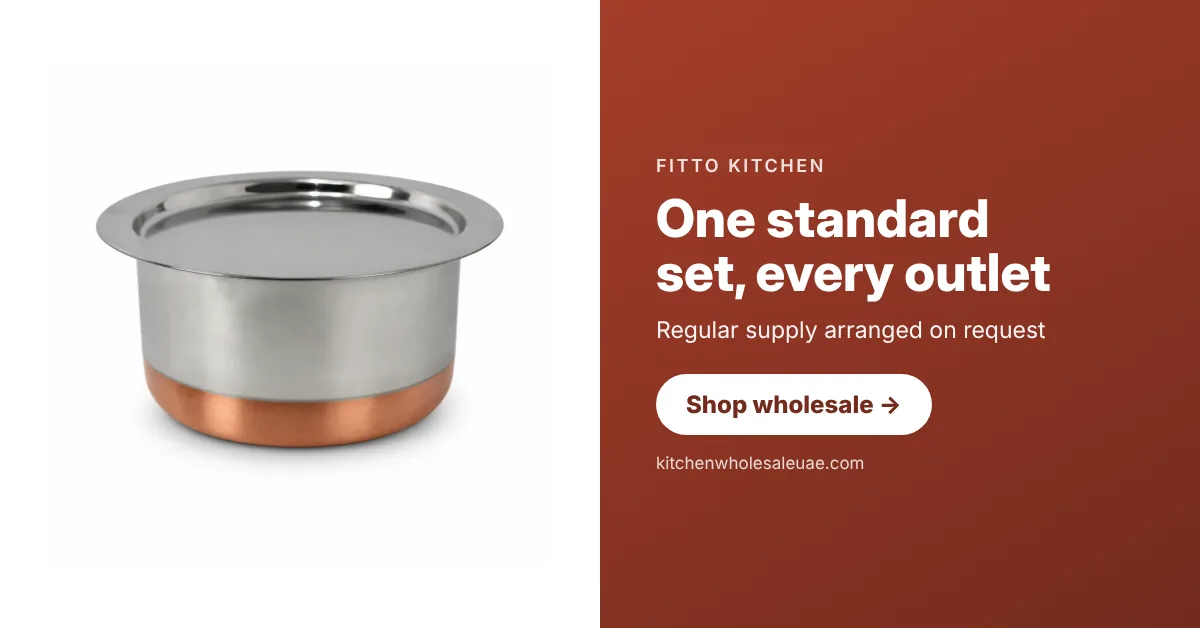
FITTO Trade Pick: One standard set for every outlet Standardise on the 24 cm stainless steel cooking pan with copper bottom, the No. 5 basting ladle and the No. 7 skimmer. Bigger packs cut the price per piece by up to 20% at 144, and a regular supply arrangement keeps every outlet at par.
The bottom line
Hotel kitchens stay supplied when every outlet has a written par, sizes are standardised and orders follow a monthly cycle. Combine outlets into one tagged order and agree invoice details up front, and purchasing becomes routine rather than rescue.
Browse our wholesale cookware and pans and kitchen utensils, request a quote for a multi-outlet order, or order samples for chef approval; the sample cost is credited on a bulk order of AED 2,000 or more within 30 days. Wholesale prices start from 12 pieces, delivery is free across the seven emirates over AED 300, and the Trade Desk answers on WhatsApp at +971 55 672 6947. FITTO Kitchen: fit for the way you cook.
FAQ
How often should a hotel kitchen count its cookware and utensils?+
Monthly works for most hotels, with a quick weekly spot check of fast-moving items such as tongs and ladles. Count on the same day each month, against a written par for each outlet. Quarterly, compare losses between outlets to find where items go missing.
What par level should a banquet kitchen hold for ladles and tongs?+
As a rule of thumb, hold about twice the number in use at your largest regular event, because half will be in the wash at any moment. Add extra before the wedding season and Ramadan, when back-to-back events leave little time to wash and reset.
Should hotel kitchens choose stainless steel or aluminium cookware?+
Stainless steel is the usual hotel choice for pans, stock pots and utensils, because it does not react with acidic sauces and survives heavy washing. Aluminium is lighter and heats fast, so it suits large rice pots in banquet kitchens and staff canteens.
Can different outlets' items go in one mixed order?+
Yes. Ask our sales team for a mixed carton through a quote request, and list each item with its outlet name. Receiving can then split the delivery straight to each kitchen, and purchasing tracks spend per outlet against budget.
How do we prepare cookware stock for Ramadan?+
Raise pars for large pots, ladles and serving tongs a few weeks before Ramadan, because iftar buffets and suhoor tents run at high volume every night. Check existing stock for warped bases and loose handles, and replace them before the season starts.