12 commercial kitchen utensils every cooking line needs
By FITTO Trade Desk · Last updated 29 October 2026
The commercial kitchen utensils every cooking line needs are tongs, flat and slotted turners, a skimmer, a spider, ladles, fine mesh strainers, a balloon whisk, a silicone spatula, a bench scraper, kitchen scissors and squeeze bottles. Choose stainless steel for heat and hygiene, silicone for non-stick pans, and stock two to three of each per station.
Key takeaways
- Stainless steel is the default on a hot line: it takes high heat, does not absorb odours and cleans fast.
- Keep silicone or nylon heads for non-stick and coated pans, and check the heat rating on each tool.
- Plan two to three of the most-used tools per cook, because one is always in the dish pit.
- Use separate tongs for raw and cooked food to cut cross-contamination risk.
- Long handles of 30-37 cm keep hands away from fryers, grills and deep pots.
A line that runs short of tongs mid-service slows every ticket, and cooks grab the wrong tool or reach too close to hot oil. A clear utensil list prevents that and keeps replacement spending predictable.
This list is for chefs, kitchen managers and new restaurants planning a first order. At FITTO Kitchen, a wholesale kitchen utensils and gadgets supplier in the UAE, we supply cooking tools (أدوات المطبخ) to restaurants, cafeterias, hotels and caterers across the emirates.
How we chose these 12 utensils
We picked tools a cook reaches for every service, judged on heat, durability and hygiene.
- Heat: the tool must work over open flame, griddles or fryers without melting or warping.
- Durability: welded or one-piece heads, no thin rivets that loosen after a few weeks of washing.
- Hygiene: smooth, non-porous surfaces that dry quickly and survive repeated hot washing.
We left out specialist pastry and garnishing tools.
Which commercial kitchen utensils does a cooking line need?
These 12 tools cover turning, lifting, draining, portioning, mixing and finishing on a hot line. The quantities are a rule of thumb for one station with one or two cooks.
| # | Utensil | FITTO size example | Material | Per station |
|---|---|---|---|---|
| 1 | Spring tongs | 25 cm and 30 cm | Stainless steel, silicone tips | 3-4 pairs |
| 2 | Flat turner | 37 x 7.5 cm | Stainless steel | 2 |
| 3 | Slotted turner | 33 x 8 cm | Stainless steel | 2 |
| 4 | Slotted skimmer | 34 cm | Stainless steel | 1-2 |
| 5 | Spider strainer | Long wooden handle | Stainless steel mesh | 1 per fryer |
| 6 | Ladles | 28 cm | Stainless steel | 2-3 sizes |
| 7 | Fine mesh strainers | 16, 18 and 20 cm | Stainless steel mesh | 1 set |
| 8 | Balloon whisk | 32 cm | Stainless steel | 1-2 |
| 9 | Silicone spatula | 27 cm | Silicone | 2 |
| 10 | Bench scraper | 11.7 x 12 cm | Stainless steel blade | 1 |
| 11 | Kitchen scissors | 22 cm | Metal blades | 1 |
| 12 | Squeeze bottles | 16 oz | BPA-free plastic | 4-6 |
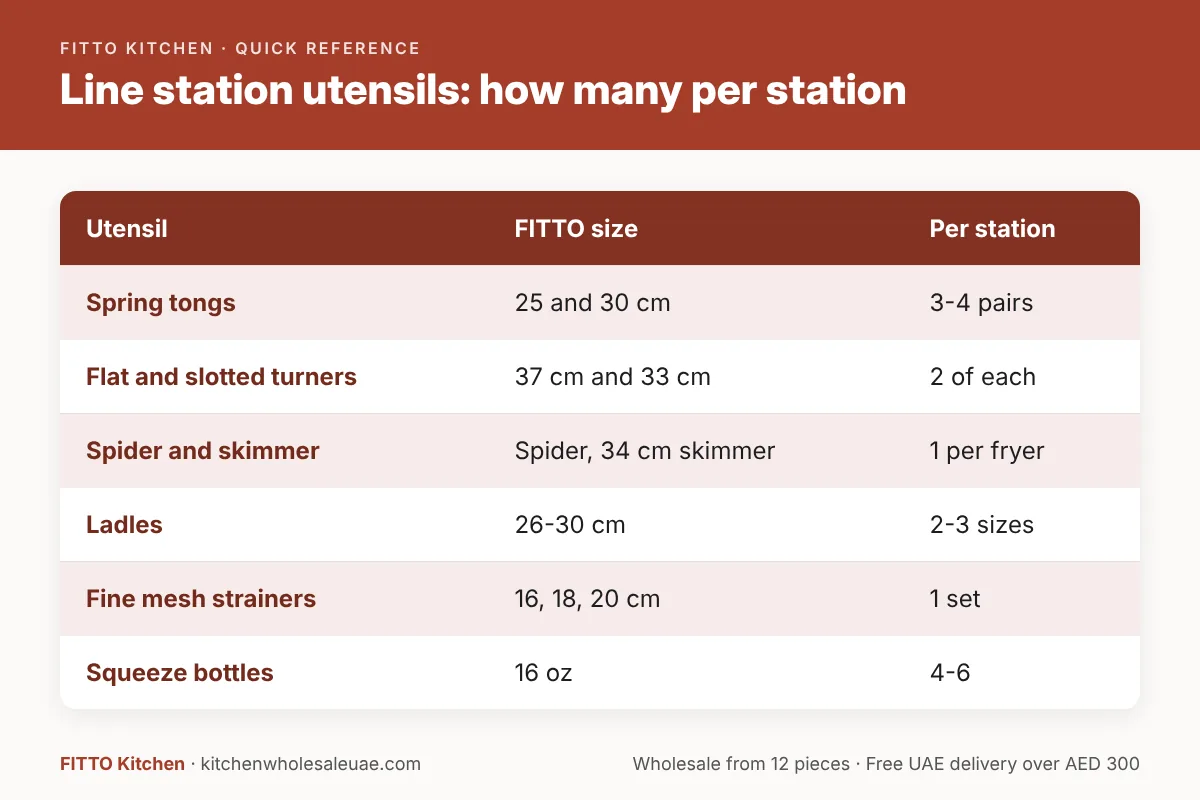
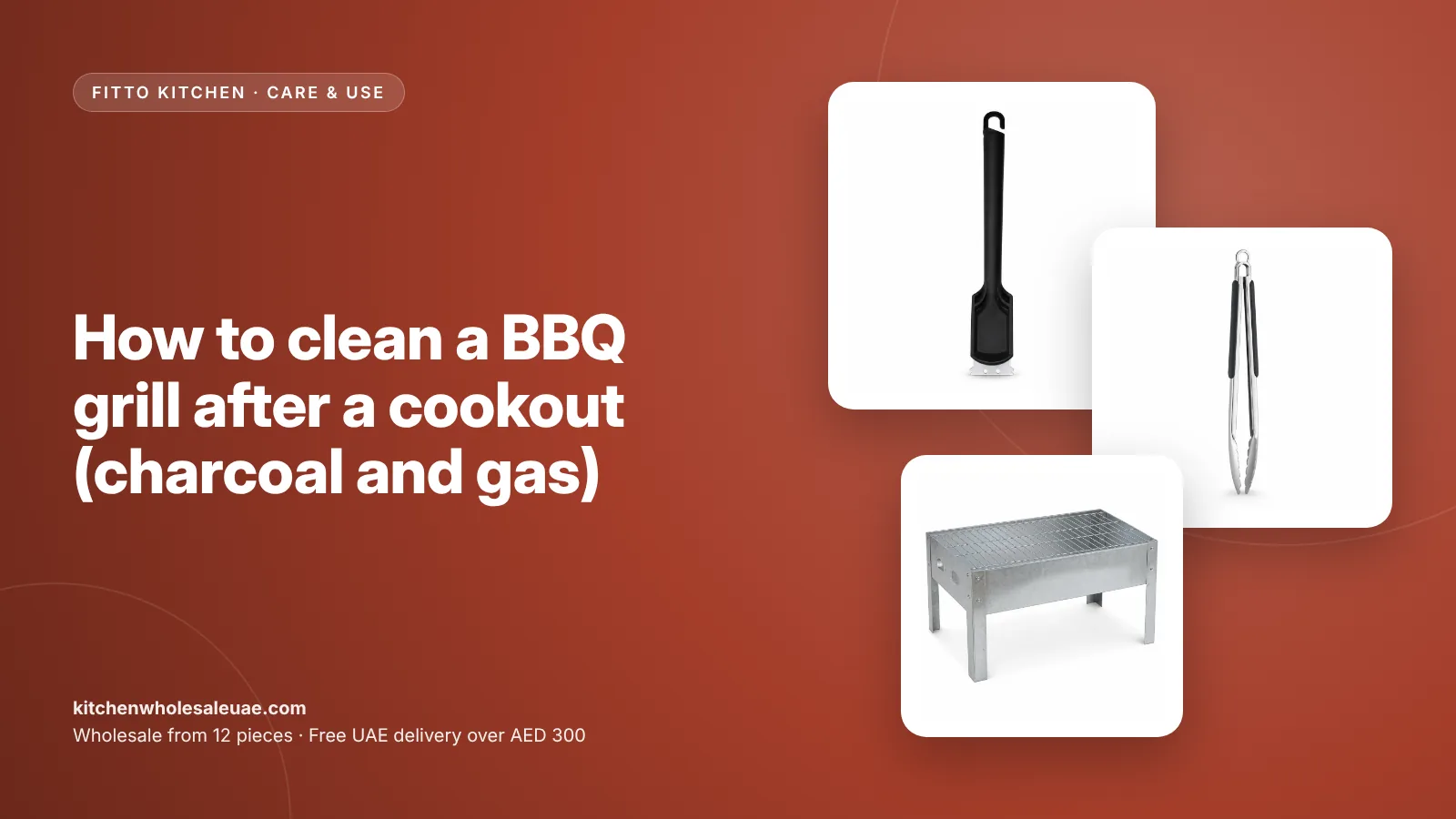
1. Spring tongs: the most-used tool on the line
Tongs turn chicken, flip kebabs, plate pasta and lift bread, so buy more pairs than you think.
The all-steel 25 cm spring-type kitchen tongs suit grills and serving. For non-stick pans, the 30 cm tongs with red silicone tips grip without scratching.
2. Flat turner: for griddles and large items
A broad, thin stainless turner slides under burgers, fish and hash browns without breaking them. The 37 x 7.5 cm stainless steel flat turner gives reach across a flat-top griddle.
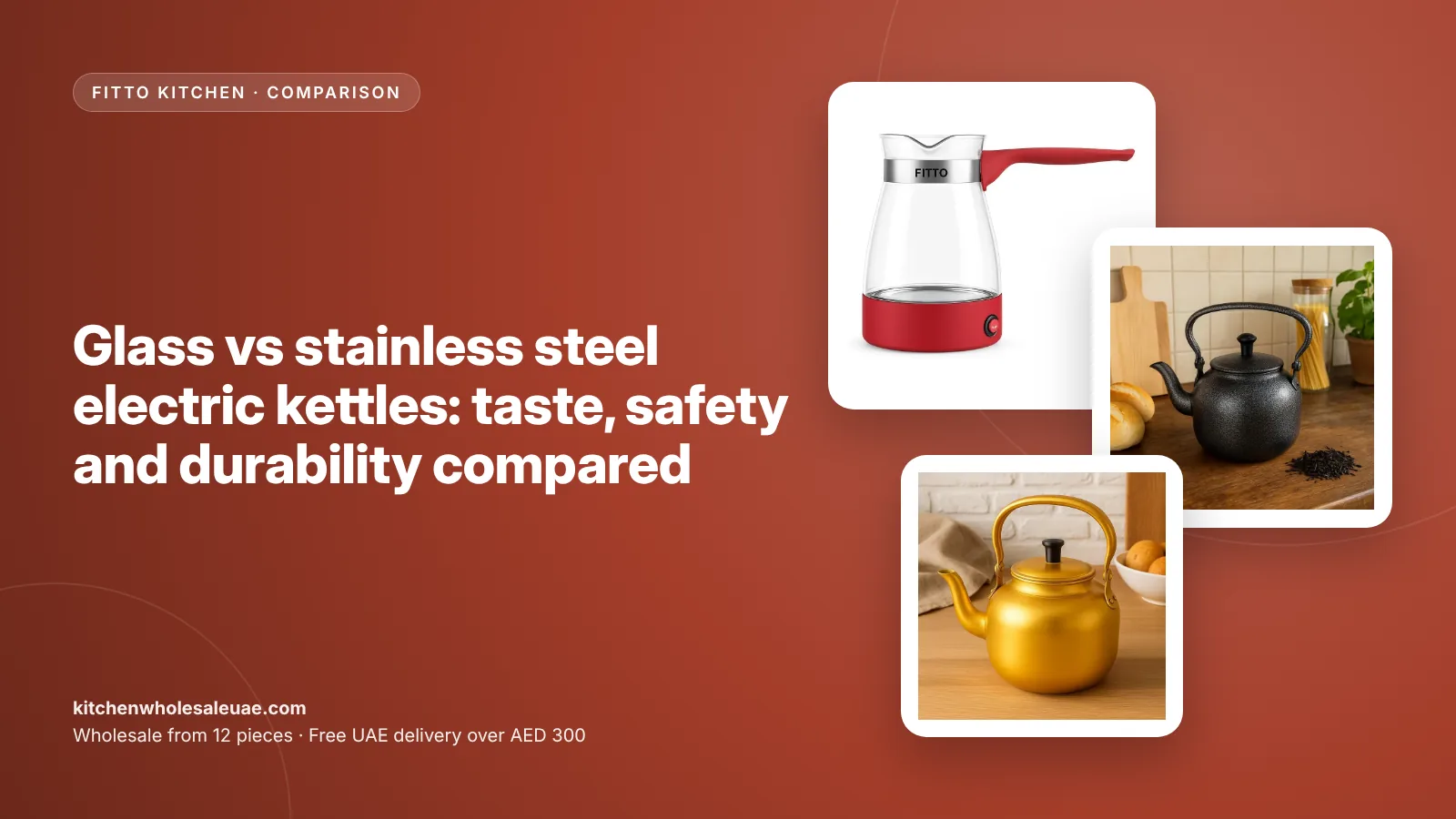
3. Slotted turner: lift and drain in one move
Slots let oil and juices fall back into the pan as you lift. The 33 x 8 cm stainless slotted turner handles fried eggs, kebab patties and fish fillets, and hangs by its loop beside the stove.
4. Slotted skimmer: for boiling water and shallow oil
A round, perforated skimmer lifts dumplings, vegetables and pasta out of liquid without a colander. The 34 cm FITTO stainless skimmer spoon reaches into deep stock pots.
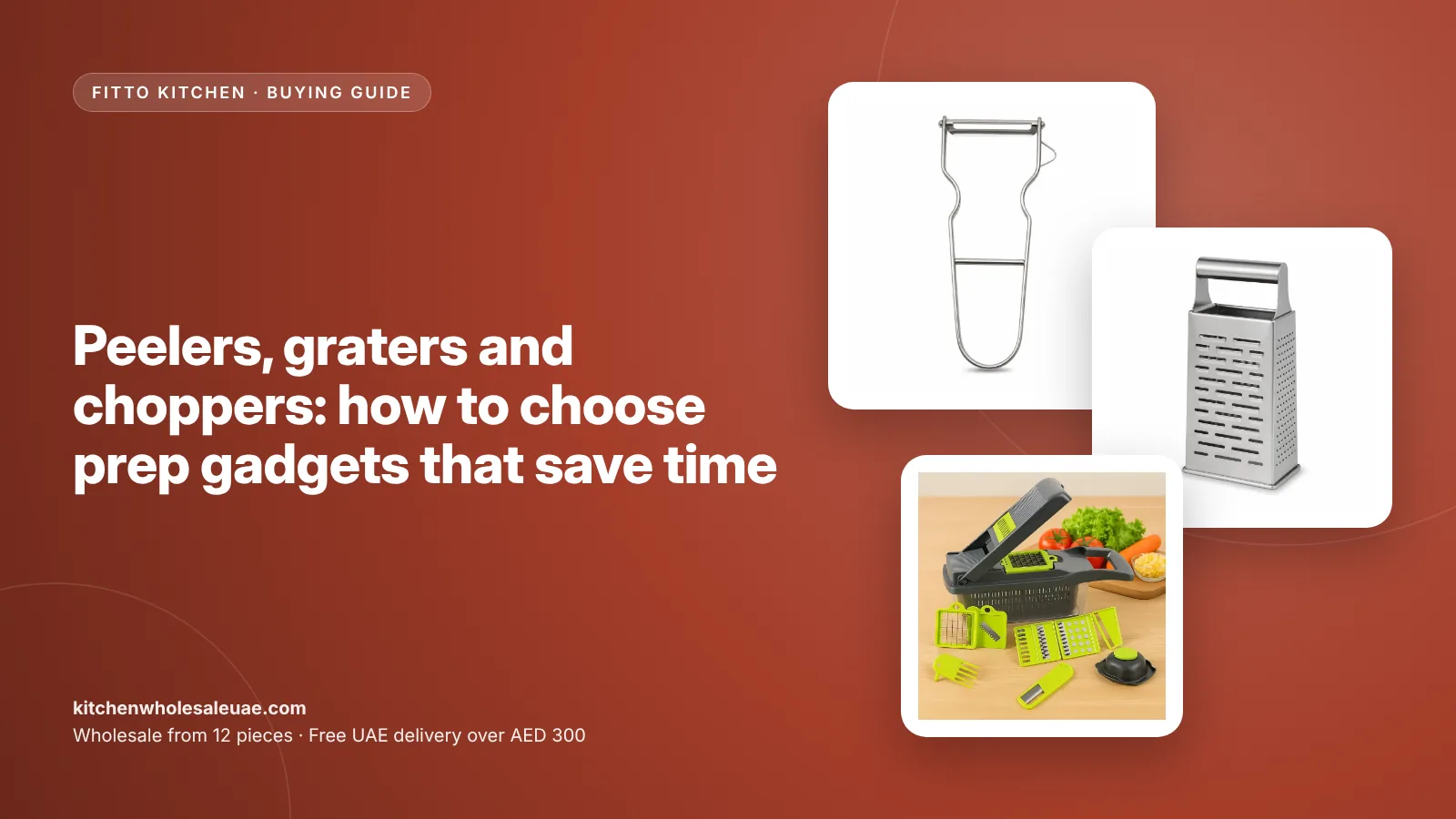
5. Spider strainer: the fryer's partner
A spider's wide mesh basket lifts fries, samosas and fried chicken in one scoop and drains them fast. The stainless steel spider strainer with wooden handle has a fine spiral mesh that holds small pieces. Dry the wooden handle after washing, and never leave it soaking.
6. Ladles: portion control in three sizes
Ladles do two jobs: stirring big pots and portioning sauce, soup and curry. Matching ladle to portion size keeps food cost steady.
FITTO basting ladles come in numbered sizes from No. 2 (26 cm) to No. 4 (30 cm), and deep curry ladles run from 23.5 cm to 30 cm. Stock at least a small, medium and large size per station.
7. Fine mesh strainers: sauces, stocks and rice
Fine mesh catches lumps, seeds and grains that a colander lets through. A nesting set saves space: the 3-piece mesh strainer set in 20, 18 and 16 cm has a hook that rests across a pot, leaving both hands free to pour.
8. Balloon whisk: sauces, batters and eggs
A 30 cm or longer whisk reaches the bottom of deep bowls and pots. The 32 cm all-steel FITTO balloon whisk handles omelette mix, batter and béchamel. For large stock pots, a 40-45 cm whisk keeps hands further from the heat.
9. Silicone spatula: scraping and non-stick work
A flexible silicone head scrapes bowls and pans clean, so less sauce ends up in the bin. Most food-grade silicone tools are rated to roughly 200-230°C, so check the rating and keep them off direct flame. A 27 cm length suits both bowls and pans.
10. Bench scraper: portion, lift and clean
A stainless bench scraper divides dough, lifts chopped vegetables into the pan and clears the board in seconds. The FITTO 11.7 x 12 cm bench scraper and cutter earns its place on prep and pizza stations alike.
11. Kitchen scissors: herbs, packaging and poultry
Heavy-duty kitchen scissors open vacuum packs, snip herbs and trim chicken faster than a knife. A 22 cm pair covers most jobs.
12. Squeeze bottles: sauces, oils and dressings
Squeeze bottles put oil, sauces and dressings exactly where the plate needs them. The 16 oz red and white squeeze bottle set is food-grade, BPA-free plastic. Label each with contents and date.
How many of each should you order for a new restaurant?
Multiply the per-station numbers by stations, then add about 25% spares for washing and losses. That buffer is a rule of thumb, not a fixed standard.
A café with one hot station may need only 3-4 pairs of tongs; a restaurant with grill, fry and sauté stations needs the full list three times over. See the restaurant kitchen equipment checklist for the wider order, the kitchen utensils wholesale guide for materials, and our silicone vs wooden vs stainless steel utensils comparison.
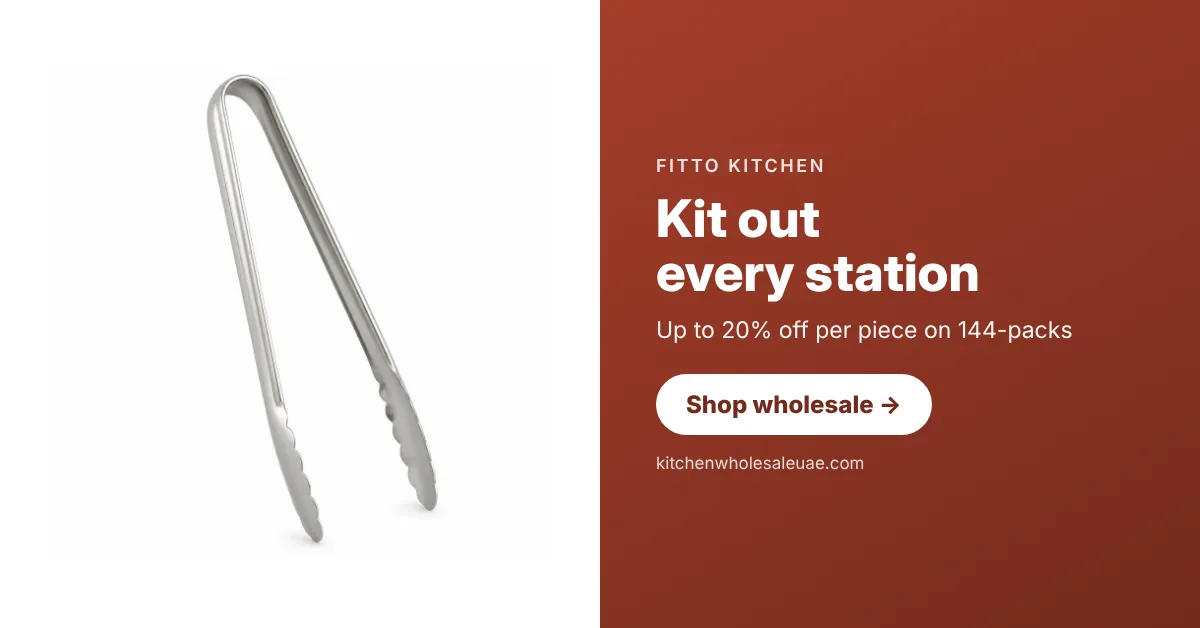
FITTO Trade Pick: Kit out a full station in one order Start with the 25 cm spring tongs, the 33 cm slotted turner and the spider strainer, then add ladles and strainers. Wholesale prices start from 12 pieces, with up to 20% off per piece in packs of 144.
The bottom line
A working line needs these 12 commercial kitchen utensils in stainless steel, with silicone where non-stick pans are used. Order two to three of the busiest tools per cook and keep spares, so service never waits on the dish pit.
Browse our kitchen utensils and gadgets range, request a quote for a full station list, or order a sample to test a tool on your line. Delivery is free over AED 300, and the Trade Desk answers on WhatsApp at +971 55 672 6947. FITTO Kitchen: fit for the way you cook.
FAQ
Are stainless steel or silicone utensils better for a restaurant?+
Use both. Stainless steel suits grills, griddles, fryers and stainless pans because it handles high heat and is easy to sanitise. Silicone and nylon protect non-stick pans, so most lines keep a few at the sauté and egg stations.
How long do commercial kitchen utensils last?+
All-steel tongs, turners and ladles can last years; silicone heads and plastic handles wear faster with heat and hot washing. Replace any tool with cracks, loose joints, melted edges or rust spots, because damaged surfaces are hard to clean properly.
Should utensils with wooden handles go in a commercial dishwasher?+
Wooden handles last longer when washed by hand and dried straight away, because long, hot cycles can crack the wood. Where everything goes through the machine, choose all-steel versions for the busiest tools.
Why should a kitchen keep separate tongs for raw and cooked food?+
Tongs that touch raw chicken or meat can carry bacteria onto cooked food. A marked pair for raw items and another for cooked food is a simple, common food-safety habit; coloured tips or handle tags make it easy to see.
What length of utensil is safest near a fryer or grill?+
As a rule of thumb, 30 cm or longer keeps the hand out of oil splash and grill heat. Turners and skimmers of 33-37 cm and 30 cm tongs suit fryers, flat-tops and charcoal grills; 25 cm tongs are fine for plating.