Chef knife vs santoku vs cleaver: which knife does which job?
By FITTO Trade Desk · Last updated 29 October 2026
Chef knife vs santoku comes down to cutting style. A 20 cm chef knife rocks through herbs and slices meat, and is the best single all-rounder. A 17-18 cm santoku push-cuts vegetables quickly and suits smaller hands. A cleaver is the only one of the three for chopping through chicken and lamb bone.
Key takeaways
- One knife only? Choose an 8 inch (20 cm) chef knife: it handles vegetables, boneless meat and herbs well.
- Santoku blades are flatter and shorter, so they excel at straight push cuts, thin slices and fine dicing.
- Only a heavy cleaver should meet bone; a chef knife or santoku edge will chip.
- Kitchens that portion chicken or lamb daily need a cleaver as well as a chef knife or santoku.
A chef knife chipped on a chicken carcass, or a cleaver crushing tomatoes, means wasted time and an early replacement. Most knife problems are the wrong blade for the job.
This comparison is for home cooks, chefs, butchers and resellers deciding which knife to buy or stock. At FITTO Kitchen, a wholesale knives and cutting boards supplier in the UAE, we stock 6 and 8 inch chef knives and 7 inch santoku knives. We also carry cleavers from 6 to 8 inches.
What is the difference between a chef knife, a santoku and a cleaver?
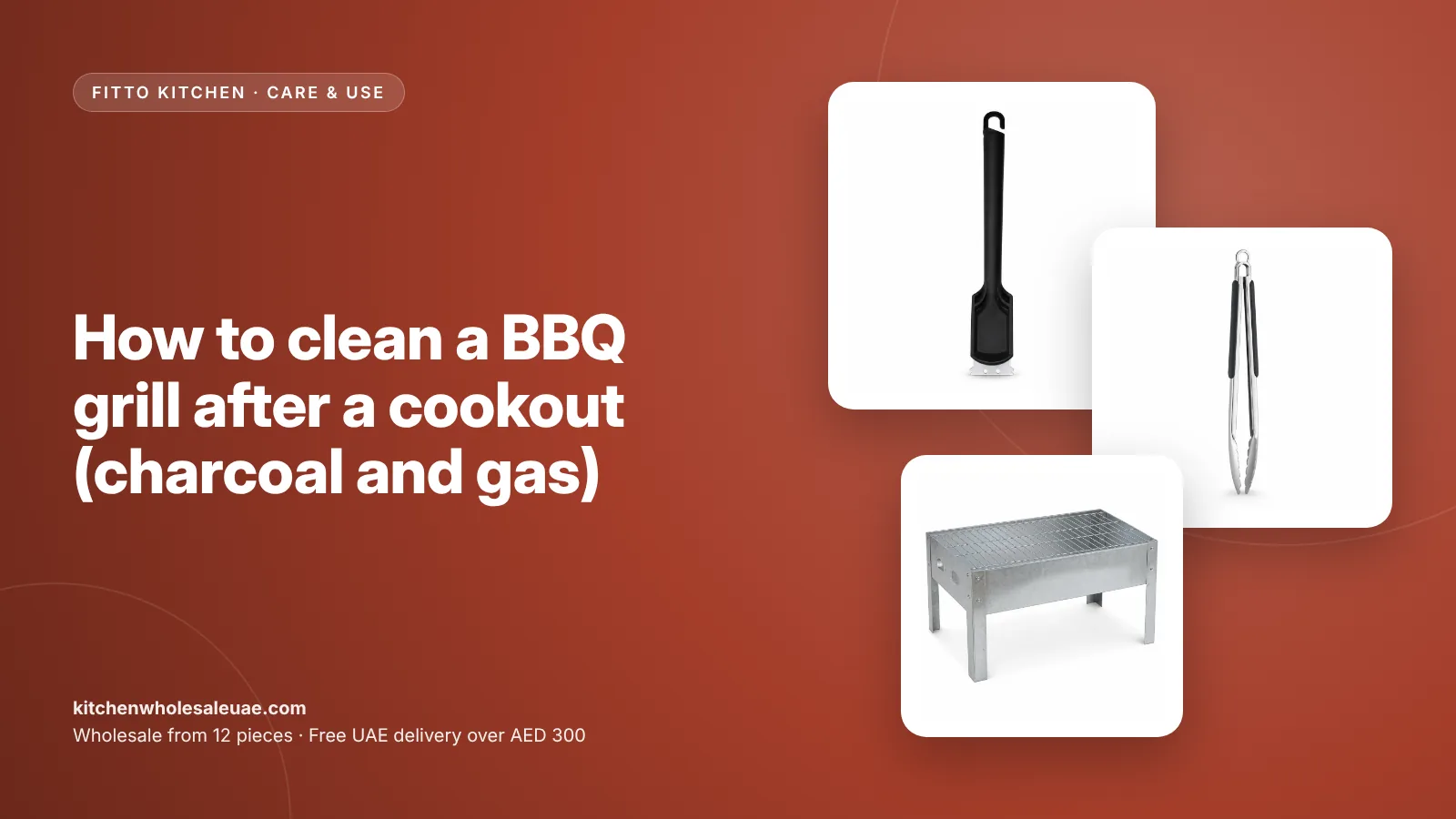
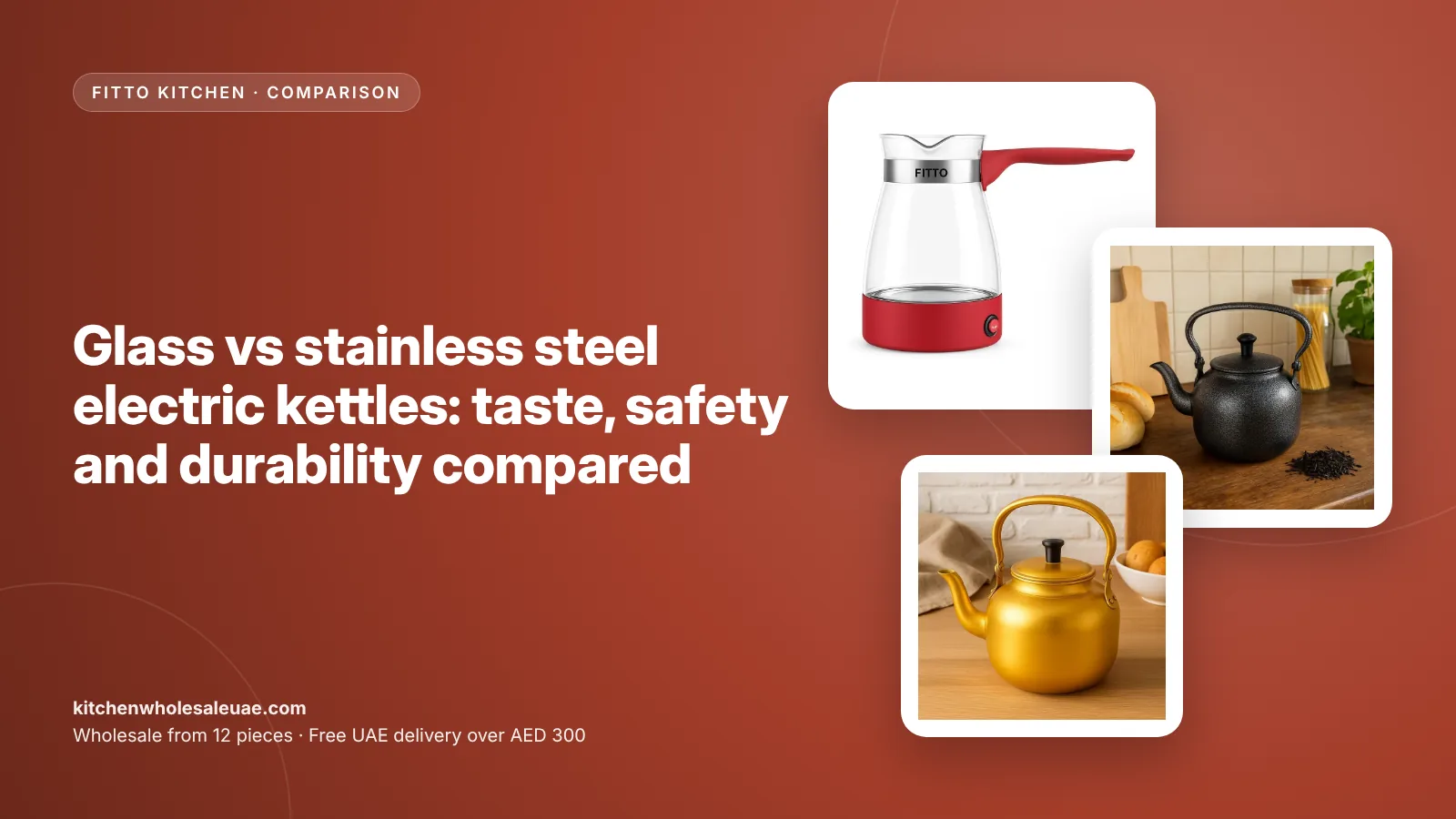
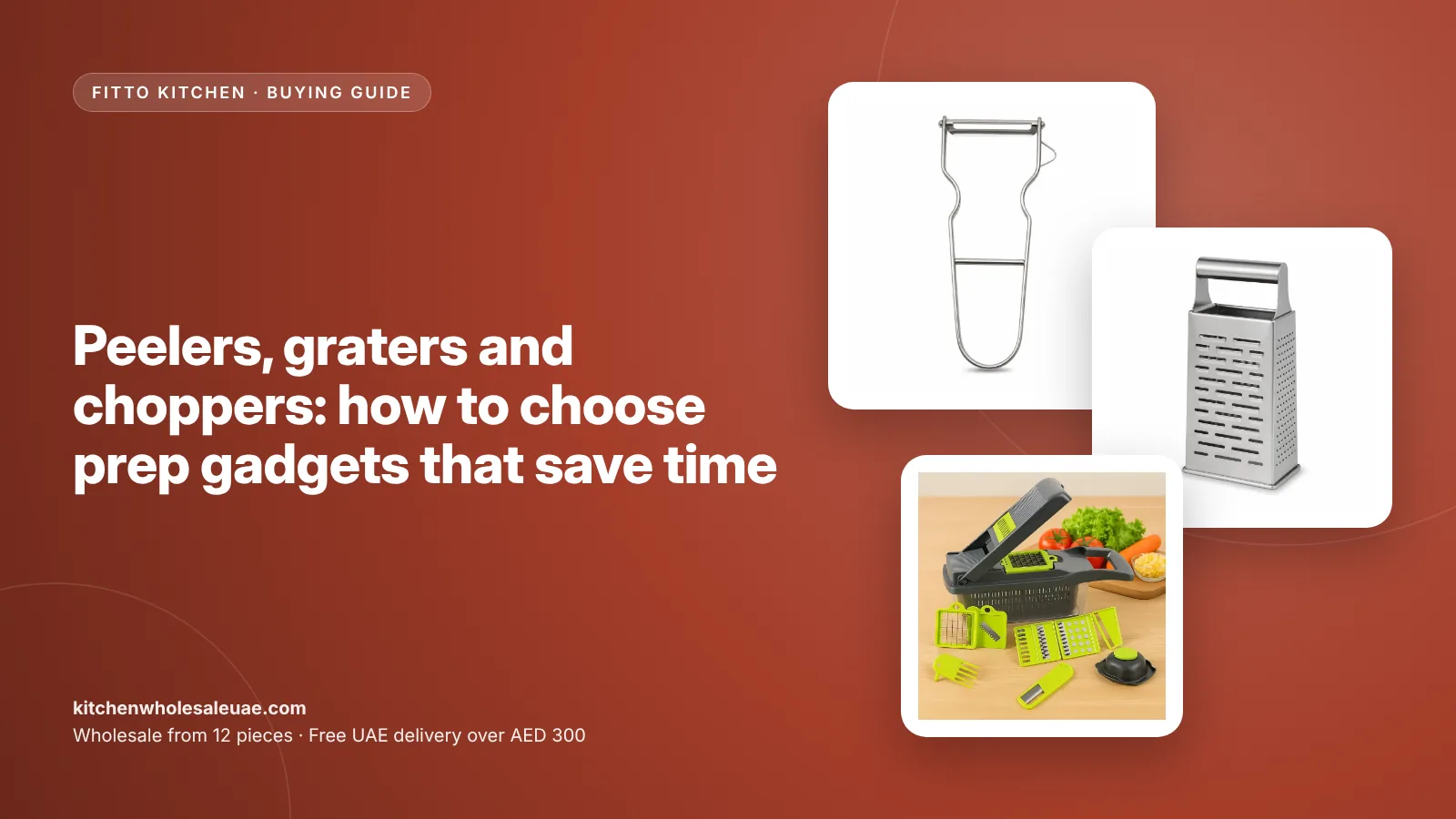
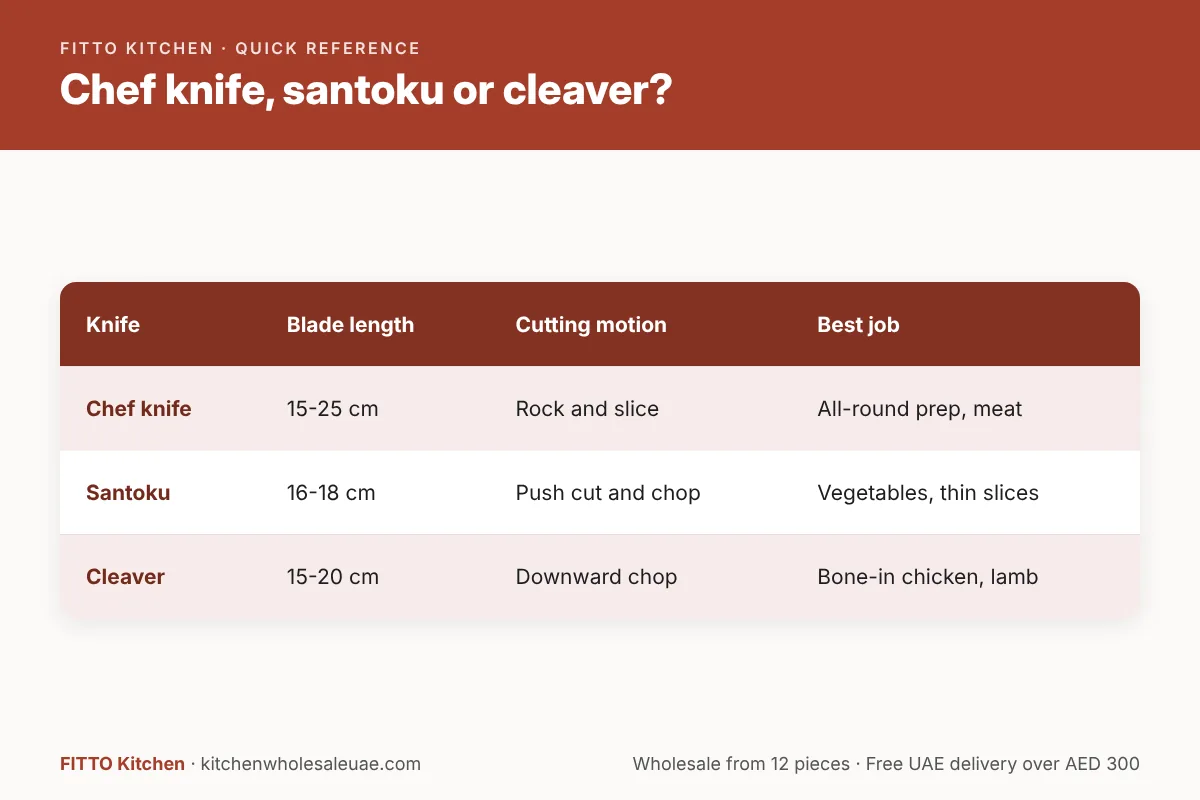
The difference is blade shape. A chef knife has a curved edge and pointed tip, a santoku a flatter edge and rounded tip, and a cleaver a tall, heavy rectangular blade. Shape decides the cutting motion each one does best.
| Feature | Chef knife | Santoku | Cleaver |
|---|---|---|---|
| Typical blade length | 15-25 cm (8 inch most common) | 16-18 cm (7 inch most common) | 15-20 cm (6-8 inch) |
| Edge profile | Curved belly, pointed tip | Flatter edge, rounded tip | Straight, tall rectangle |
| Main cutting motion | Rocking and slicing | Push cut and chop | Downward chop |
| Typical weight | Light to medium | Light | Heavy |
| Best tasks | All-round prep, herbs, onions, slicing meat | Vegetables, thin slices, fine dice | Bone-in chicken and lamb, big squash |
| Avoid | Bones, frozen food | Bones, frozen food, hard squash | Fine slicing and delicate herbs |
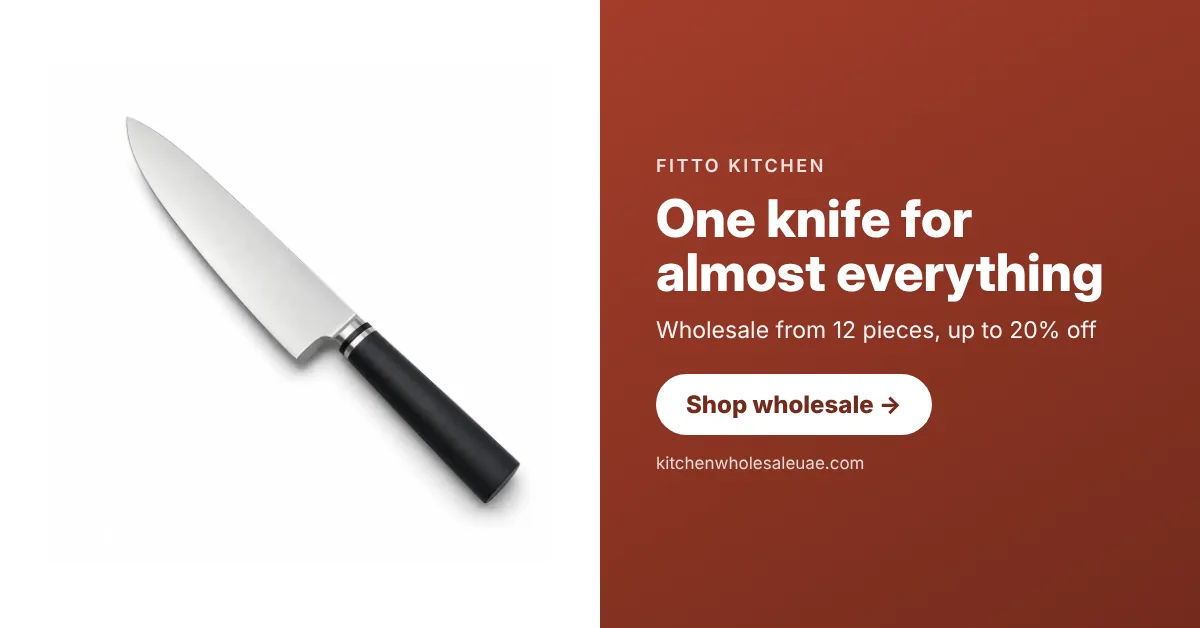
Weights vary by steel and handle. For reference, our 8 inch chef knife with black handle weighs about 190 g and is about 34 cm long overall.
When should you choose a chef knife?
Choose a chef knife when you want one knife for almost everything. Its curved edge lets you rock the blade over herbs and garlic, and its length draws long slices through chicken breast or beef.
The pointed tip handles small work such as scoring meat or trimming fat. An 8 inch (20 cm) blade suits most hands and boards; 6 inch versions suit smaller boards and cooks who find 8 inch tiring.
The trade-off is that a curved edge leaves some food connected when you push straight down. Cooks who prefer push cuts often find a santoku faster for big vegetable prep. For more on choosing chef knives for a busy kitchen, see our guide to chef knives for restaurants.
When is a santoku the better choice?
Choose a santoku when most of your cutting is vegetables and you prefer straight up-and-down push cuts. Its flatter edge meets the board along more of its length, so onions, cucumbers and carrots separate cleanly.
Santoku blades are usually shorter, about 17-18 cm, and often lighter, which many home cooks find easier to control. Many have a dimpled or hollow edge, like our 7 inch santoku with dimpled blade. The dimples are designed to reduce sticking on potato and cucumber slices; they help, but do not stop it completely.
The rounded tip is less useful for point work, and the thin edge must never meet bone or frozen food.
When do you need a cleaver?
You need a cleaver when you regularly cut through bone: jointing whole chickens, portioning lamb for machboos or mandi, or splitting ribs. Its weight does the work, so the edge is thicker and tougher than a chef knife.
A Western meat cleaver (ساطور) is thick and heavy for bone. Chinese-style vegetable cleavers look similar but are thin and are meant for slicing, not bone. Check the blade thickness before using any cleaver on bone.
Safe cleaver technique:
- Use a heavy, stable board on a damp cloth so it cannot slide.
- Hold the food flat and keep your guiding hand well back.
- Strike with one firm, straight chop; do not twist the blade in the bone.
- For thick joints, place the blade first, then tap the spine with the heel of your other hand.
- Leave large beef and leg bones to a butcher's band saw.
Our cleaver with riveted wooden handle is about 34 cm long overall and has a hanging hole for storage on a hook. A 6 inch cleaver with black handle is about 28 cm overall and suits home kitchens.
Chef knife vs santoku vs cleaver: which wins for vegetables, meat and bone?
For vegetables, the santoku edges ahead; for boneless meat, the chef knife; for bone, only the cleaver. For a single-knife kitchen, the chef knife is the best all-rounder.
| Job | Best choice | Runner-up | Why |
|---|---|---|---|
| Onions, carrots, cucumbers | Santoku | Chef knife | Flat edge makes clean push cuts |
| Herbs, garlic, parsley for tabbouleh | Chef knife | Santoku | Rocking motion minces quickly |
| Boneless chicken, beef, fish | Chef knife | Santoku | Longer blade for long slicing strokes |
| Whole chicken, lamb ribs, bone-in cuts | Cleaver | None | Weight and thick edge resist chipping |
| Pumpkin, cabbage, watermelon | Cleaver or chef knife | Santoku | Large, hard produce needs weight or length |
| One knife for a small kitchen | Chef knife | Santoku | Covers the widest range of tasks |
A sensible home set is a chef knife or santoku plus a paring knife, with a cleaver added if you cook bone-in meat. A 3-piece set with paring knife, chef knife and cleaver covers all three in one box.
What should resellers and butchers stock?
Stock 8 inch chef knives as the volume line, 7 inch santokus for home cooks and gift sets, and cleavers in two sizes for butchers and family cooking. Plan cleaver stock ahead of Ramadan and Eid al-Adha, when more families portion lamb and chicken at home.
Coloured handles help kitchens that follow a colour-coding system for raw and cooked foods. Pair knives with boards that will not ruin the edge; our wooden vs plastic cutting boards comparison explains which board suits which knife.
FITTO Trade Pick: Three blades, every job covered Stock the 8 inch chef knife, the 7 inch santoku and the wooden-handle cleaver as a complete knife line for home cooks and butchers. Wholesale prices start from 12 pieces, with up to 20% saving per piece on 144-piece packs.
The bottom line
Buy a chef knife if you want one knife for everything and a santoku if you mostly push-cut vegetables. Add a cleaver as soon as bone is on the board. Keep each blade to its job and all three last much longer.
Browse our wholesale knives and cutting boards, request a quote for a mixed knife order, or order samples to feel the weight first. Delivery is free across all seven emirates over AED 300, and the Trade Desk answers on WhatsApp at +971 55 672 6947. FITTO Kitchen: fit for the way you cook.
FAQ
Is a santoku better than a chef knife for beginners?+
Many beginners find a santoku easier because it is shorter, lighter and uses a simple up-and-down cut. A chef knife takes a little practice to rock smoothly, but it handles more tasks. If you will own only one knife, the chef knife is the safer choice; if you mostly cut vegetables, a santoku works well.
Can I use a cleaver for vegetables?+
Yes. The wide blade chops large, hard vegetables such as pumpkin and cabbage well, and the broad face scoops chopped food from the board into the pot. A heavy meat cleaver is tiring for fine dicing, though. For everyday vegetable prep, a chef knife or santoku is quicker and more precise.
Why does my chef knife keep chipping?+
Chips usually come from hard contact: bones, frozen food, glass or stone boards, or a dishwasher where blades knock against other items. Use a cleaver for bone, thaw food first, and cut on wood or plastic boards. Hand wash and dry knives straight after use.
What size chef knife should I buy?+
An 8 inch (20 cm) chef knife suits most cooks and most boards. Choose 6 inches if you have small hands, a small board or mostly cut small items. Longer 10 inch blades suit professional kitchens slicing large cuts of meat, but they need more board space and more control.
How often should I sharpen these knives?+
At home, a few strokes on a honing rod before cooking keeps the edge aligned; sharpen when it no longer slices a tomato cleanly. Busy restaurant knives may need sharpening weekly. Cleavers need it less often because their thicker edge is meant for force, not fine slicing.