
Dish drying racks: how to choose size, material and drainage
By FITTO Trade Desk · Last updated 29 October 2026
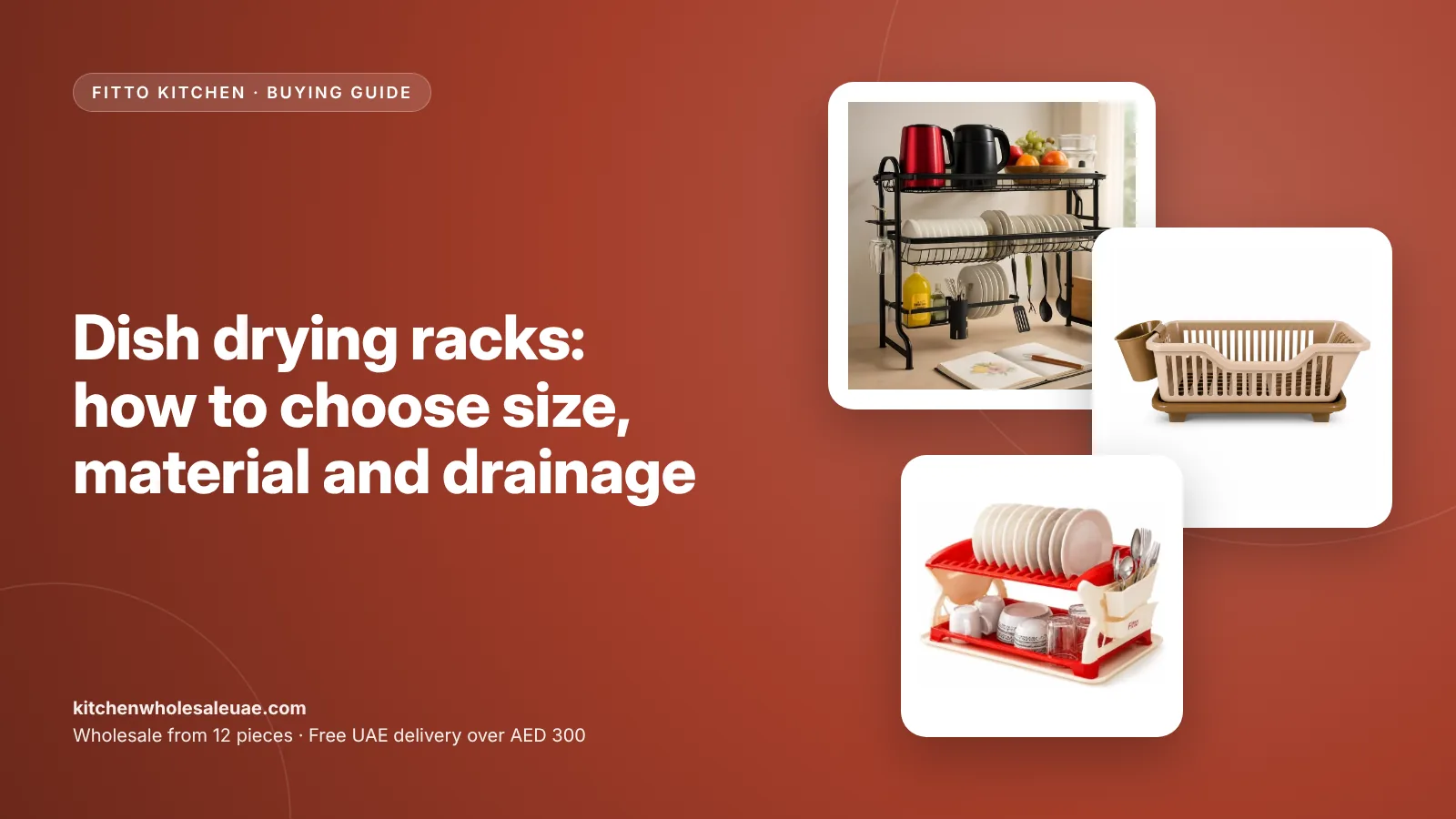
Choose a dish drying rack by household size, counter or sink space, and drainage. A compact single-tier rack suits one or two people; families and office pantries need a two-tier, three-tier or over-sink rack. In humid UAE kitchens, pick stainless steel or plastic and a drip tray that is easy to empty.
Key takeaways
- Size by household: measure the counter first, then pick single-tier, multi-tier or over-sink.
- Two-tier racks roughly double capacity on the same footprint, but the lower tier needs a good drip tray.
- Stainless steel and plastic resist rust better than coated wire, which rusts where the coating chips.
- Standing water causes most smells and mould, so empty and rinse the drip tray daily.
A dish rack (نشافة صحون) that is too small leaves plates stacked wet, and one that pools water smells within days. Rust spots on the feet then mark the counter, and the rack ends up in the bin within a year.
At FITTO Kitchen, a wholesale kitchen organisation supplier in the UAE, we supply dish racks to households, office pantries and home stores. This guide settles which size, material and drainage set-up to buy.
What size dish drying rack do you need?
Match the rack to the dishes you wash in one go. A compact rack suits one or two people, and a 45 cm basket or two-tier rack suits a family. Large households and shared pantries need a three-tier or over-sink rack. Measure the counter beside the sink before you choose.
| Rack | Type | Size (cm) | Material | Best for |
|---|---|---|---|---|
| Compact dish rack | Single-tier with cutlery section | 30 × 20 × 15 | Plastic and coated metal | Studios, couples |
| Dish-drying basket with cutlery holder | Single-tier with base tray | 45 × 30 × 15 | Plastic | Families of 3–4 |
| 2-tier dish rack with drainage tray | Two-tier | See listing | Not stated; check listing | Families, small pantries |
| Stainless steel 3-tier dish drying rack | Three-tier | See listing | Stainless steel | Large families, offices |
| Over-the-sink dish drying rack | Over-sink, multi-section | 85 × 25 × 90.5 | Not stated; black finish | Small counters, big loads |
| Vertical plate drying rack | Upright plate tiers | 30 × 12 × 28 | PP plastic | Extra plate space |
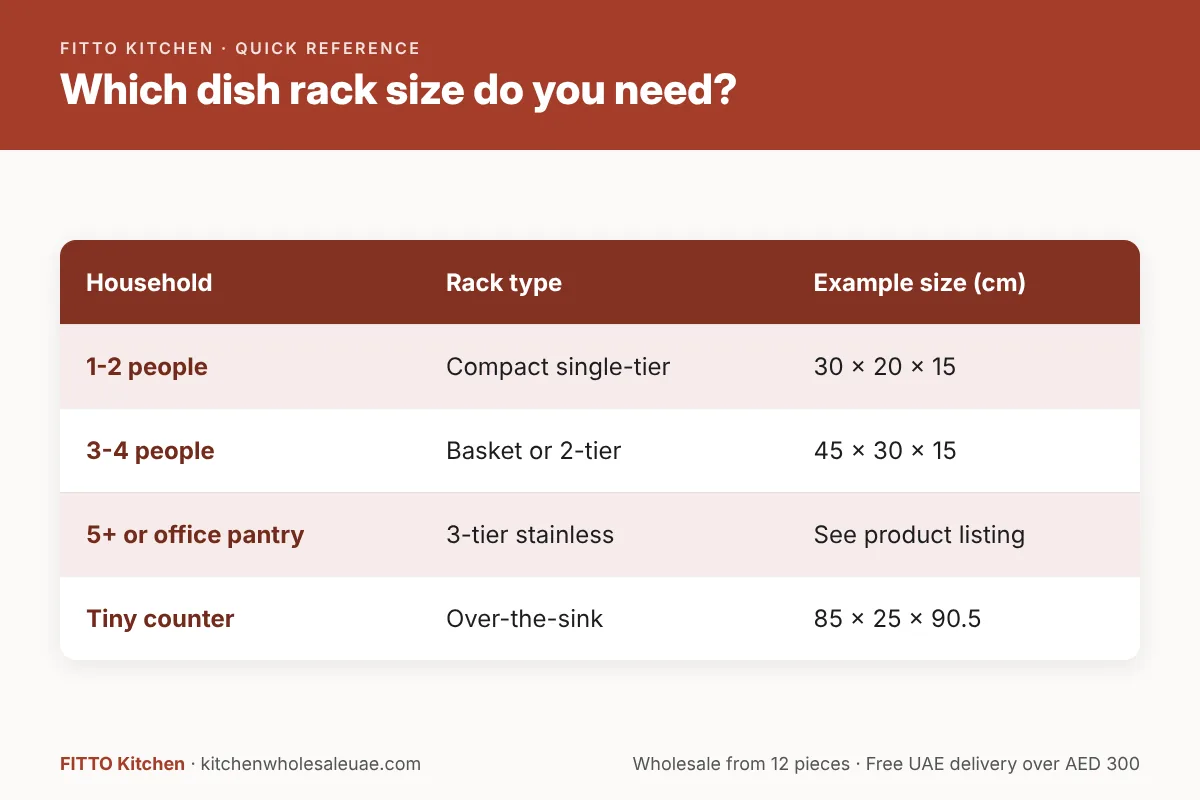
As a rule of thumb, a family of four uses 12–16 plates and bowls, plus cups and cutlery, over one meal. A single-tier 45 × 30 cm basket handles about one meal's load. If you wash up once a day rather than after each meal, go a size up.
Single-tier or two-tier: which is better?
Choose single-tier when you have counter width and want the simplest cleaning; choose two-tier or three-tier when counter space is short. Extra tiers add capacity upwards, not outwards.
A 2-tier dish rack with a drainage base tray puts plates and bowls on one level and cups on the other. The trade-off is that water from the top tier drips onto the lower one, so load cups and glasses on top and give each item a minute to drain.
For the smallest kitchens, an over-sink rack takes drying off the counter entirely. At 85 cm wide and 90.5 cm high, the over-the-sink dish drying rack needs a matching sink run and clearance above the tap. Our list of space-saving kitchen organisers has more ideas for tight kitchens.
Stainless steel, coated wire or plastic: which material lasts?
Stainless steel lasts longest in humid kitchens, plastic never rusts but needs regular cleaning, and coated wire is the cheapest but rusts once the coating chips. Choose by how much water your rack sees and how often you clean it.
| Material | Rust risk | Care | Watch out for |
|---|---|---|---|
| Stainless steel | Low | Wipe dry weekly | Grade varies; lower grades can spot |
| Plastic (PP) | None | Wash weekly, scrub corners | Mould in crevices, staining |
| Coated or chrome-plated wire | Medium to high | Avoid scraping, dry the feet | Rust where coating chips |
| Wood or bamboo | None; can warp | Wipe dry, never soak | Mould if left wet |
The stainless steel 3-tier dish drying rack has an anti-rust finish and rubberised non-slip feet, which keep the frame off a wet counter. The 45 × 30 × 15 cm plastic dish-drying basket cannot rust at all and has its own cutlery cup.
Stainless steel comes in different grades. Grade 304 resists corrosion better than grade 201, so ask the supplier which grade a rack uses if it will sit in a damp spot.
Why does drainage matter so much?
Most rack problems, from smells to mould to rust, start with water sitting in the tray. Good drainage sends water to the sink or into a tray you can empty in seconds.
There are two main designs. A sloped tray with a spout runs water straight into the sink, so it needs the rack to sit right beside the sink. A flat, removable tray collects water to tip away, which works anywhere but must be emptied daily.
In UAE summers, coastal humidity often stays high, and a tray left full overnight can start to smell within a day or two. A 50 × 38 cm absorbent dish drying mat under a rack catches stray drips, but it needs washing and drying too.
How do you stop a dish rack from rusting or smelling?
Keep water moving and the rack dry between loads. A weekly five-minute clean adds years to any rack.
- Empty and rinse the drip tray every evening.
- Once a week, soak the tray and rack in warm water with a cup of white vinegar for 15 minutes.
- Scrub corners, cutlery cups and joints with an old toothbrush.
- Dry the feet and the base of each wire before putting the rack back.
- Touch up or replace coated racks once rust shows through, as rust spreads under the coating.
Run the extractor fan while washing up, and avoid placing the rack in a corner with no air flow.
Which dish racks suit office pantries and home stores?
Office pantries need capacity for mugs and quick drainage; home stores need a spread of sizes and materials. The right mix depends on who washes up.
Office pantries do well with a three-tier stainless rack plus a cup rack, such as the gold-tone cup and glass drying rack with six holders. Pair them with the kettle station from our electric kettles for offices and hotels guide.
Home stores should stock three price levels: a compact plastic rack, a two-tier rack and a stainless steel three-tier rack. Our kitchen organisation and racks guide shows how dish racks fit into a wider storage range.
FITTO Trade Pick: A dry rack for every kitchen Stock the stainless steel 3-tier dish drying rack for families and pantries, and the 45 cm plastic dish-drying basket as the rust-free everyday option. Wholesale prices start from 12 pieces, with up to 20% off per piece in packs of 144.

The bottom line
Pick the dish drying rack by load and counter space first, then by material and drainage. Stainless steel or plastic with an easy-to-empty tray will stay clean and rust-free far longer in a humid UAE kitchen than cheap coated wire.
Browse our kitchen organisation and racks range, request a quote for mixed rack sizes, or order a sample to check the build first. Delivery is free over AED 300, and the Trade Desk is on WhatsApp at +971 55 672 6947. FITTO Kitchen: fit for the way you cook.
FAQ
What is the best material for a dish drying rack?+
Stainless steel is the most durable choice for humid kitchens, especially in a higher grade such as 304. Plastic racks never rust and cost less, but need regular scrubbing to prevent mould. Coated wire racks are cheap but rust once the coating chips. For most UAE homes, stainless steel or plastic is the safer buy.
How often should I clean my dish rack?+
Empty and rinse the drip tray every day, and give the whole rack a deeper clean once a week. Soak it in warm water with white vinegar, scrub joints and cutlery cups with a brush, then dry it fully. In humid months, daily tray rinsing is what stops the musty smell.
Is a two-tier dish rack worth it?+
Yes, if counter space is tight. A two-tier rack holds more dishes on the same footprint by stacking cups and bowls above the plates. Load lighter, faster-drying items on top so less water drips onto the lower tier, and choose a model with a drip tray that is easy to empty.
How do I remove rust from a dish rack?+
For light rust on stainless steel, scrub with a paste of baking soda and water, then rinse and dry. On coated wire, rust usually means the coating has broken, and it will keep spreading underneath. Treat small spots with a rust remover, but plan to replace a coated rack once rust appears in several places.